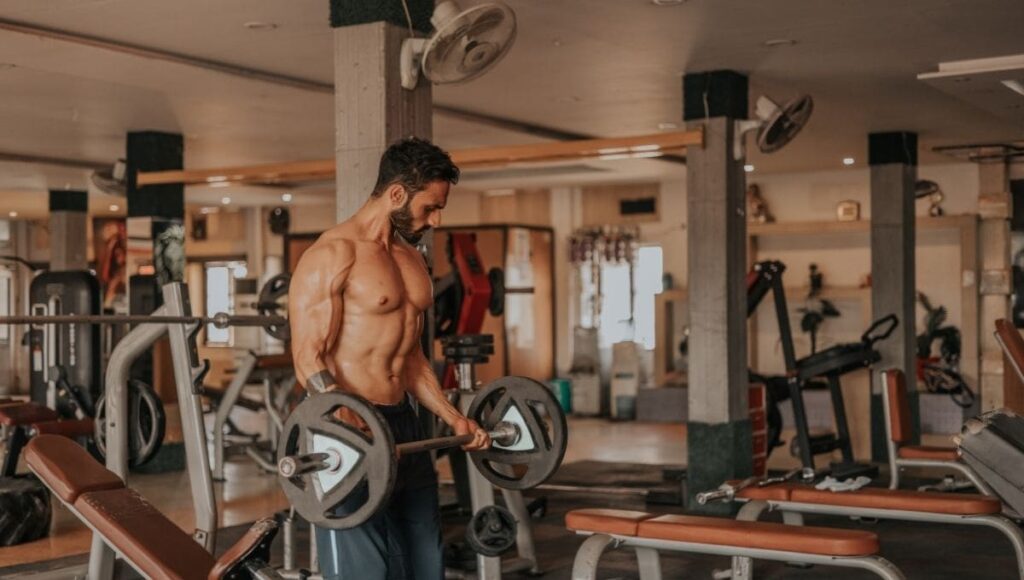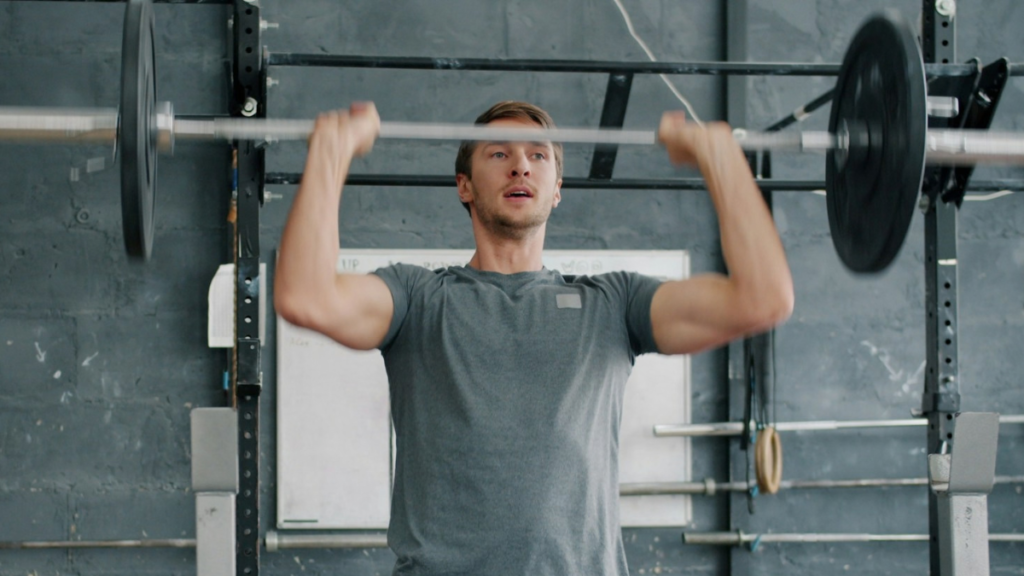


Some chest exercises are easy to recognize by the amount of weight on the bar. The Svend press is different. It uses a pair of weight plates pressed together, and the most noticeable part may be the effort it takes to keep them from slipping apart.
That squeezing action gives the exercise a distinctive feel. But does feeling your chest work mean the movement is a good choice for building it? And how does it compare with a machine chest press, a dumbbell press, or a pushup when you are new to strength training?
What Is the Svend Press?
The Svend press is usually performed standing while you hold two small weight plates together in front of your chest. You press the plates into each other, then extend your arms forward and bring them back toward your chest while keeping the squeezing pressure.
The Svend Press can be performed with both dumbbells and weight plates.
The exercise is named after strongman Svend Karlsen, who popularized the movement. It is sometimes performed with a single plate or a purpose made plate, but the main feature is the same: you press your hands inward against an object while moving your arms forward.
Your pectoralis major, the large muscle across your chest, helps bring your upper arms toward the front and center of your body. The front of your shoulders and your triceps also help with the forward pressing motion. The inward squeeze adds another demand, although it is difficult to isolate one muscle completely during a compound movement.
One important detail is that pressing the plates together does not automatically mean the chest is receiving a strong muscle building stimulus. The exercise may feel intense because the plates are awkward to hold and your hands are working hard. That sensation alone does not tell you how much useful tension the chest is receiving.
What Does the Research Say?
There is little direct research on the Svend press itself. I could not find a controlled training study comparing it with other chest exercises for strength or muscle growth, or a published electromyography study measuring its chest muscle activity. That means claims that it is uniquely effective for the inner chest, or superior to other beginner exercises, are not established by direct evidence.

Research on other chest pressing exercises can still offer useful context. Studies comparing bench press angles and chest press variations show that the contribution of the pectoral muscle can change with the angle, grip, and exercise setup. This supports the idea that different presses can train the chest in slightly different ways, but it does not prove that the Svend press produces a special effect.
It is also important not to treat muscle activity readings as proof that an exercise will build more muscle over time. Electromyography measures electrical activity during a specific exercise session. It can help researchers compare movement patterns, but an acute reading does not establish which exercise produces the most growth after months of training.
Resistance training research provides a broader guide. A range of loads and exercises can support muscle growth when the training is challenging and repeated over time. Strength gains, however, tend to be more specific to the loads and movements you practice. So if your main goal is to become stronger at pressing, a movement that lets you gradually increase the resistance is useful.
Is It Beginner Friendly?
The Svend press has a few qualities that may appeal to someone new to lifting. It requires little equipment, does not involve a bench, and uses a simple forward pressing motion. You can also start with light plates and focus on controlling the movement.
There is a catch: the load may be limited by your grip and ability to keep the plates together before your chest muscles are challenged enough. A beginner might find the plates uncomfortable or awkward to hold. When the weights get heavier, maintaining a secure grip can also become difficult. These issues are not unique to beginners, but they can make the exercise less convenient as your strength improves.
Expert guidance on beginner exercise selection includes options such as the machine chest press, dumbbell chest press, and band chest press. These exercises allow a beginner to practice pressing with manageable resistance. The Svend press may be a reasonable accessory, but it is not one of the commonly recommended starting points in that expert consensus work.
That does not make it a bad exercise. It means there is a difference between an exercise being simple to try and being the most practical main lift for a beginner. The Svend press is easy to understand, but it can be harder to load progressively than presses designed to hold heavier weights.
How to Do the Svend Press
Stand with your feet about shoulder width apart and hold two small plates together in front of your chest. Keep your wrists straight and press the plates firmly into each other. Your elbows should bend naturally, with your upper arms held comfortably near your sides.
Keep your torso steady as you extend your arms forward. Stop before your elbows lock forcefully, then bring the plates back toward your chest under control. Maintain inward pressure throughout the repetition. Use a load you can hold securely, and stop if you cannot keep the plates stable.
You do not need to push the plates as far forward as possible. A comfortable range of motion that you can control is more useful than forcing a position that makes your shoulders or wrists uncomfortable. Breathe steadily, and avoid leaning backward to help move the weight.
Start with a light load and practice smooth repetitions. If the plates slip, your wrists bend, or you have to jerk your body to move them, reduce the weight or choose another exercise. For a beginner, consistent control matters more than making the movement look difficult.
Common Mistakes to Avoid
A common mistake is choosing plates that are too heavy to hold securely. The exercise should challenge your pressing muscles, but the plates should remain stable in your hands. If your grip gives out first, you may not be training the intended movement effectively.
Another mistake is treating the inward squeeze as the whole exercise. Pressing the plates together can make the set feel demanding, but you still need controlled arm movement. If your hands barely move forward and back, you are performing a mostly static squeeze rather than the full press.
Some lifters also push their arms so far forward that their shoulders roll excessively or their torso leans back. Keep your ribs stacked over your pelvis and move only through a range you can control. A smaller, smooth movement is a better choice than adding range by changing your posture.
Finally, do not assume that a strong chest pump proves the exercise is best for chest growth. Pump and effort can be motivating, but they do not tell you how the Svend press compares with other exercises over a training program.
How to Use It in a Beginner Chest Workout
If you enjoy the Svend press, use it after a main pressing exercise rather than making it the only chest movement in your routine. For example, you could begin with a machine chest press, dumbbell chest press, or an appropriate pushup variation, then perform the Svend press for a lighter set or two.
Standing Abs vs Floor Abs Exercises: Which Is Better for Beginners?
Choose a resistance that lets you complete about 10 to 15 controlled repetitions while keeping the plates secure. This is a practical starting point rather than a special Svend press prescription established by research. When you can complete the repetitions comfortably, you can make the exercise slightly harder by using a small increase in load or by adding repetitions. Do not increase the weight if it makes the plates difficult to hold.
Beginners do not need a complicated chest routine. Regular resistance training with exercises that fit your current skill and equipment can improve strength and muscle size. Progress comes from practicing consistently and gradually increasing the challenge, rather than relying on one exercise to do everything.
So, Is the Svend Press the Perfect Chest Exercise for Beginners?
The Svend press can be an approachable accessory for beginners who want to try a different pressing movement. It uses minimal equipment and can help you practice controlled arm extension while keeping your hands active.
But “perfect” is a high bar. There is not enough direct research to say that the Svend press is uniquely effective for chest growth, and its loading options can be limited by the need to grip the plates together. A machine chest press, dumbbell press, or suitable pushup variation is usually a more practical main exercise because it is easier to adjust and progress.
Try the Svend press if you like how it feels and can hold the plates securely. Treat it as one option in your training, rather than a shortcut or a replacement for all other chest exercises. The best beginner exercise is one you can perform with control, train consistently, and make progressively more challenging.
References
- Currier, B.S. et al. (2026) ‘American College of Sports Medicine Position Stand. Resistance Training Prescription for Muscle Function, Hypertrophy, and Physical Performance in Healthy Adults: An Overview of Reviews’, Medicine & Science in Sports & Exercise, 58(4), pp. 851–872.
- Kompf, J.M., Rhodes, R.E. and Lee, S. (2025) ‘Selecting Resistance Training Exercises for Novices: A Delphi Study with Expert Consensus’, American Journal of Lifestyle Medicine, 19(3), pp. 437–449.
- Lixandrão, M.E. et al. (2018) ‘Interpreting Signal Amplitudes in Surface Electromyography Studies in Sport and Rehabilitation Sciences’, Frontiers in Physiology, 9, article 935.
- Schoenfeld, B.J. (2010) ‘The mechanisms of muscle hypertrophy and their application to resistance training’, Journal of Strength and Conditioning Research, 24(10), pp. 2857–2872.
- Trebs, A.A., Brandenburg, J.P. and Pitney, W.A. (2010) ‘An electromyography analysis of 3 muscles surrounding the shoulder joint during the performance of a chest press exercise at several angles’, Journal of Strength and Conditioning Research, 24(7), pp. 1925–1930.
- Vieira, A.F. et al. (2021) ‘Effects of range of motion on resistance training adaptations: A systematic review and meta-analysis’, Scandinavian Journal of Medicine & Science in Sports, 31(10), pp. 1866–1881.
- Lopez, P. et al. (2021) ‘Influence of resistance training load on measures of skeletal muscle hypertrophy and improvements in maximal strength and neuromuscular task performance: A systematic review and meta-analysis’, Sports Medicine, 51(6), pp. 1203–1214.
Key Takeaways
| Key Takeaways |
|---|
| The Svend press uses plates pressed together while the arms extend forward. |
| Direct research on the Svend press is limited, so claims that it is uniquely effective are not established. |
| It can work as a light accessory if you can hold the plates securely and control each repetition. |
| A machine chest press, dumbbell press, or suitable pushup variation is generally easier to progress as a main beginner exercise. |