

If you want your arms to look wider, curls are a good place to start. The biceps brachii sits on the front of your upper arm, but it is not the only muscle that affects its shape. The brachialis lies underneath the biceps and helps bend the elbow, while the brachioradialis runs along the forearm. Training these muscles together can add size around the upper arm and elbow flexors.
These three exercises are simple to learn and use different arm positions. You can do them with dumbbells and a bench, or use the alternatives described below if your gym has different equipment.
1. Standing Dumbbell Curl
The standing dumbbell curl is a straightforward way to train elbow flexion while turning your palms upward. That turning motion is called supination. The biceps helps with both elbow flexion and supination, so the exercise gives you practice with both actions.
How to do it
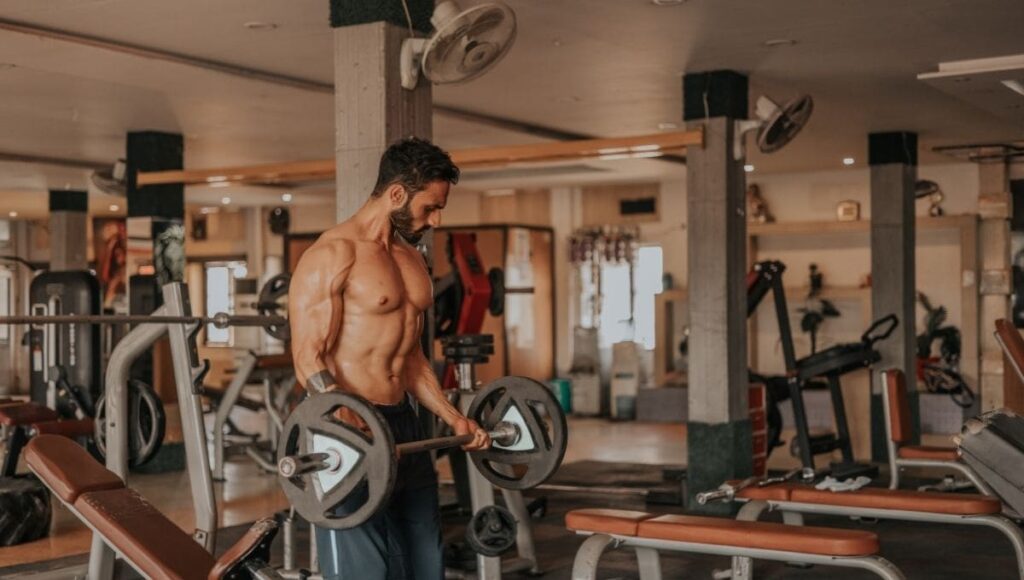
Stand tall with a dumbbell in each hand and your arms hanging by your sides. Begin with your palms facing your legs. Keep your upper arms close to your torso, then bend your elbows to lift the dumbbells. As you lift, gradually turn your palms toward your shoulders. Pause briefly near the top, then lower the weights under control until your arms are nearly straight.
Choose a weight that lets you keep your torso still and complete each repetition without swinging. If you have to lean back or throw your shoulders forward to move the dumbbells, reduce the load. The goal is to move through a comfortable range while keeping the effort in your arms.
A study that measured muscle activity during curls found greater biceps activity with a palms up grip than with a neutral or palms down grip. Muscle activity during a single exercise session does not prove that one curl will produce more long term growth, but it supports using a supinated curl as one part of a biceps routine.
If turning both palms at once feels awkward, curl one arm at a time. This lets you focus on the movement and use a comfortable wrist position. A cable curl or a light barbell curl can also work if you prefer a fixed grip.
2. Incline Dumbbell Curl
The incline dumbbell curl places your upper arms slightly behind your torso. This changes the position of the shoulder and stretches the biceps more at the bottom of the movement than a standing curl does. Research comparing incline and preacher curls has found differences in regional muscle growth, although the results do not mean the incline curl is automatically best for every person.
How to do it
Set an adjustable bench to a modest incline and sit with your back supported. Let the dumbbells hang by your sides with your palms facing forward or turned slightly inward. Keep your shoulders relaxed and your upper arms in place as you bend your elbows to curl the weights. Lower slowly until your elbows are nearly straight and you feel a gentle stretch in the front of your upper arms.
Do not force the bottom position or let your shoulders roll forward. Start lighter than you would for a standing curl because the stretched starting position can feel challenging. If you feel sharp discomfort in your shoulder or elbow, stop and adjust the bench angle, shorten the range, or choose another curl.
In an eight week training study, young women who performed incline curls and those who performed preacher curls both improved, but the groups showed different changes at some measured areas of the elbow flexors. The study suggests that arm position can influence where growth is measured, but it does not show that one curl creates a universally wider biceps. For a beginner, the incline curl is a useful variation when it feels comfortable and you can control the weight.
If you do not have an adjustable bench, you can leave this exercise out and do another set of standing curls or use a cable curl with your arm slightly behind your body. Keep the movement smooth and avoid trying to force a deep stretch.
3. Hammer Curl
The hammer curl uses a neutral grip, with your palms facing each other. This position trains the elbow flexors while placing more emphasis on muscles such as the brachioradialis compared with a palms up curl. The brachialis also bends the elbow and works regardless of whether your forearm is turned palm up or palm down. Developing these muscles can contribute to the overall size of the upper arm and forearm.
How to do it
Stand with a dumbbell in each hand and your palms facing your body. Keep your elbows near your sides and curl the weights toward your shoulders without rotating your wrists. Lower the dumbbells slowly to the starting position. You can do both arms together or alternate sides.
Use a load that allows you to keep your shoulders relaxed and avoid swinging. The neutral grip often feels comfortable for people who find turning their palms upward uncomfortable, though what feels best will vary. If you prefer cables, use a rope attachment and keep your hands facing each other throughout the curl.
The research on grip position shows that changing the hand position changes the activity of muscles involved in the curl. However, those measurements were taken during exercise, not after a long training program. It is more accurate to say that hammer curls provide a different grip and muscle emphasis than to promise that they will create a specific arm shape.
How to Put the Exercises Together
Start with two or three of these exercises in a session, rather than adding every possible curl variation at once. For example, you could do standing dumbbell curls and hammer curls on one day, then use incline curls and standing curls in another session later in the week. If you train your arms as part of a full body or upper body workout, count the curling work alongside the other exercises you already do.
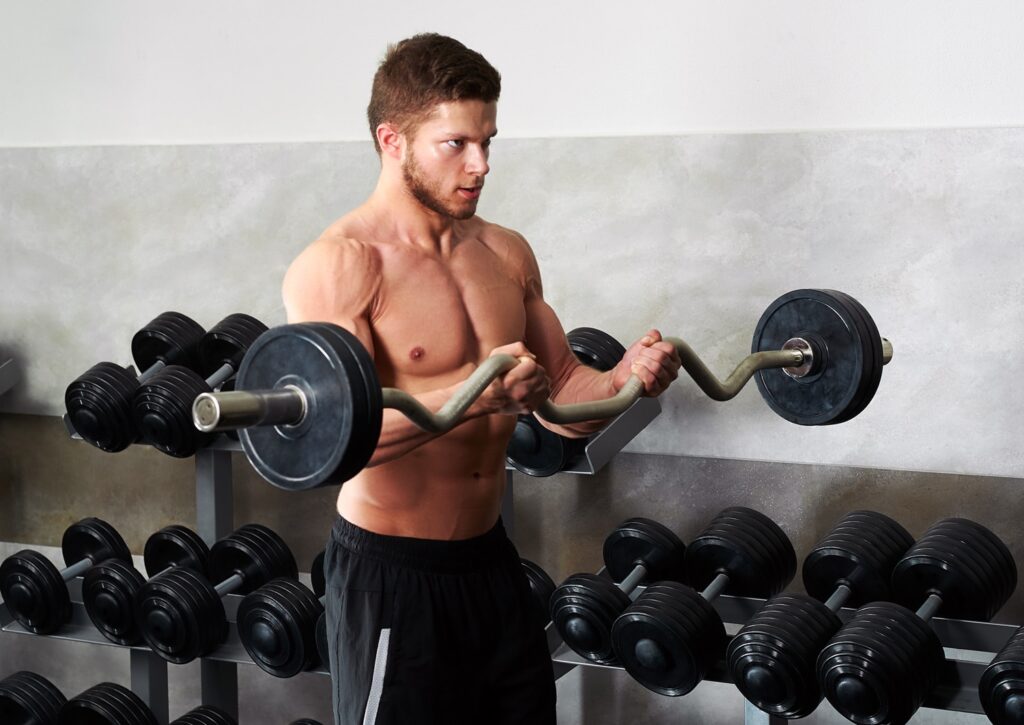
A practical starting point is two sets of each exercise for 8 to 12 repetitions. Pick a weight that makes the last few repetitions challenging while allowing you to keep good control. Current research suggests that muscle growth can occur across a range of loads when the sets provide enough effort, so you do not need to use very heavy dumbbells. Beginners can build skill with a moderate weight and a repeatable technique.
You also do not need to take every set until you cannot lift another repetition. A review of training studies found no clear advantage to reaching momentary failure for muscle growth. In practice, stop when you think you could complete one or two more clean repetitions. If your technique starts to change, the set is over.
Triceps Dips vs Push-Ups: Which Builds Bigger Arms for Beginners?
Keep a simple record of the weight and repetitions you complete. When you can perform the top end of your repetition range for every set with steady form, increase the dumbbell weight by a small amount. If the next weight jump is too large, stay at the same weight and build up your repetitions first. This gradual approach follows established resistance training guidance for novice lifters.
Give yourself time to learn the movements. Early strength improvements often come from becoming more comfortable and coordinated with the exercises, while increases in muscle size take consistent training over time. Focus on repeating the same controlled technique and adding a little work when you are ready.
Key Takeaways
| Focus | What to remember |
|---|---|
| Standing dumbbell curl | Turn your palms upward as you curl, and keep your torso still. |
| Incline dumbbell curl | Use a comfortable stretch and begin with a lighter weight. |
| Hammer curl | Keep your palms facing each other to train with a neutral grip. |
| Beginner starting point | Try two sets of 8 to 12 repetitions per exercise. |
| Progress | Add repetitions or a small amount of weight when your technique stays controlled. |
References
- American College of Sports Medicine (2009) ‘Progression models in resistance training for healthy adults’, Medicine & Science in Sports & Exercise, 41(3), pp. 687-708.
- Carvalho, L., Moriggi Junior, R., Barreira, J., Schoenfeld, B.J., Orazem, J. and Barroso, R. (2022) ‘Muscle hypertrophy and strength gains after resistance training with different volume-matched loads: a systematic review and meta-analysis’, Applied Physiology, Nutrition, and Metabolism, 47(4), pp. 357-368.
- Coratella, G., Tornatore, G., Longo, S., Toninelli, N., Padovan, R., Esposito, F. and Cè, E. (2023) ‘Biceps brachii and brachioradialis excitation in biceps curl exercise: different handgrips, different synergy’, Sports, 11(3), article 64.
- Kassiano, W. et al. (2025) ‘Distinct muscle growth and strength adaptations after preacher and incline biceps curls’, International Journal of Sports Medicine, 46(5), pp. 334-343.
- Naito, A. (2004) ‘Electrophysiological studies of muscles in the human upper limb: the biceps brachii’, Anatomical Science International, 79(1), pp. 11-20.
- Refalo, M.C., Helms, E.R., Trexler, E.T., Hamilton, D.L. and Fyfe, J.J. (2023) ‘Influence of resistance training proximity-to-failure on skeletal muscle hypertrophy: a systematic review with meta-analysis’, Sports Medicine, 53(3), pp. 649-665.