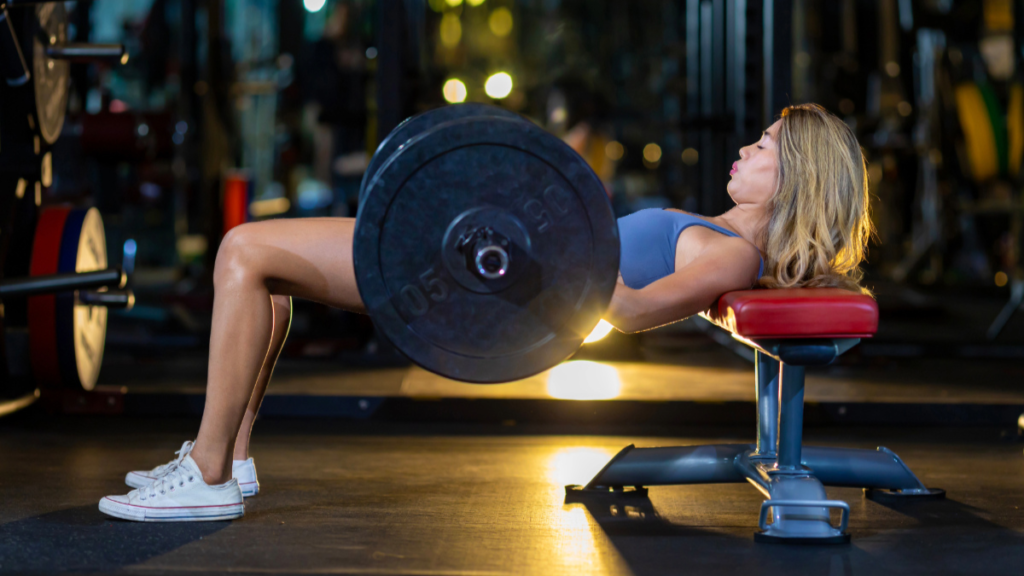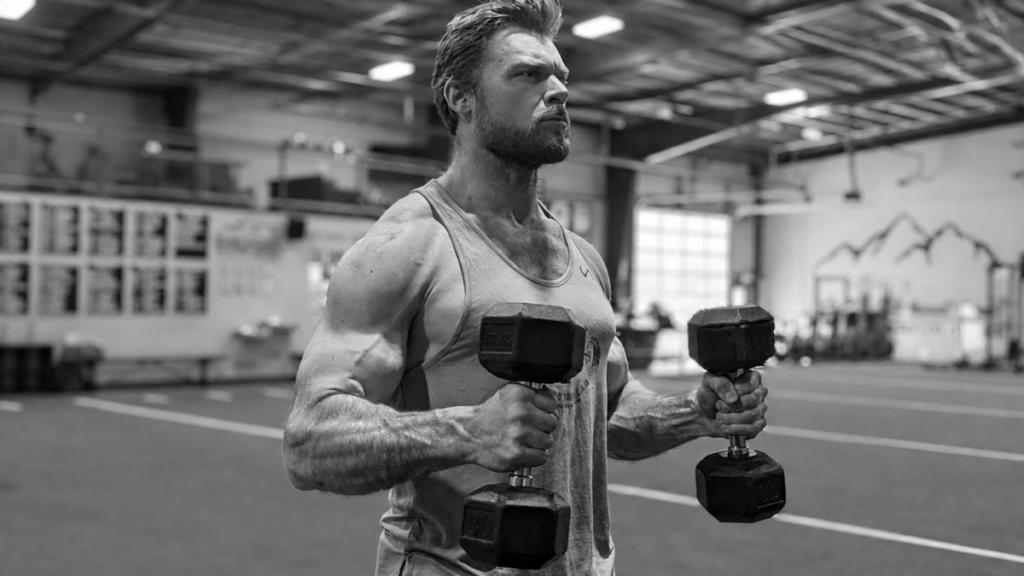


Building a bigger upper body does not require complicated workouts or years of experience in the gym. For beginners, the fastest progress usually comes from mastering a handful of proven compound exercises that train multiple muscle groups at the same time. These movements allow you to lift more weight, stimulate more muscle fibers, and develop the strength needed for more advanced training later.
Research consistently shows that resistance training is one of the most effective ways to increase muscle mass, improve strength, and enhance body composition across a wide range of ages and fitness levels. Beginners are in an especially good position because their bodies respond rapidly to a well structured training program. Even moderate amounts of resistance training can produce noticeable improvements during the first several months when paired with adequate nutrition and recovery.



The three exercises in this article stand out because they train the largest muscles of the upper body, teach essential movement patterns, and provide excellent long term progression. They also offer flexibility through variations that suit almost every fitness level.
Why Beginners Should Prioritize Compound Exercises
Many newcomers are tempted to spend most of their workout doing curls, lateral raises, or other isolation movements. While these exercises certainly have value, compound exercises should make up the foundation of any beginner program.
Compound lifts involve multiple joints and muscle groups working together. This allows heavier loads, creates greater mechanical tension, and produces a stronger stimulus for muscle growth. Research has shown that mechanical tension is one of the primary drivers of skeletal muscle hypertrophy when combined with progressive overload and sufficient training volume.
Compound movements also improve coordination and movement efficiency while helping beginners develop strength across the entire kinetic chain. Instead of trying to grow individual muscles in isolation, these exercises teach the body to work as one integrated system.
The following three exercises offer perhaps the best return on investment for anyone beginning their muscle building journey.
1. Bench Press
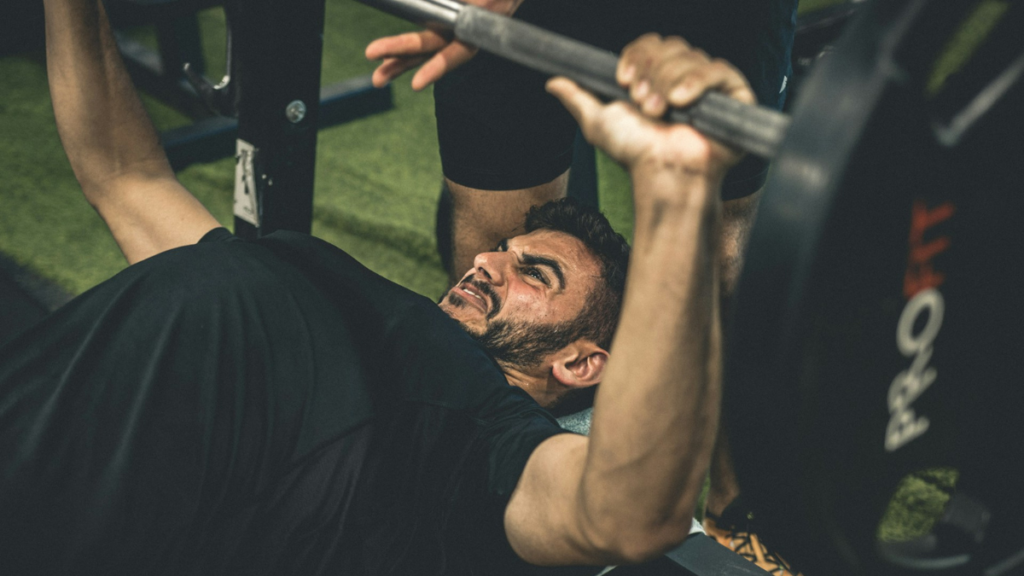
The bench press has earned its reputation as one of the most effective upper body exercises ever developed. Whether performed with a barbell or dumbbells, it builds size and strength across the chest, shoulders, and triceps while also teaching pressing mechanics that transfer to many athletic and daily activities.
Why It Works
The primary muscles involved include the pectoralis major, anterior deltoids, and triceps brachii. Electromyography studies consistently demonstrate high activation of the chest muscles during horizontal pressing movements, especially when appropriate loads are used.
Unlike chest flyes or machine presses, the bench press requires multiple muscles to stabilize the shoulders and upper back throughout the movement. This added demand contributes to overall upper body development while improving joint stability.
For beginners, the bench press also provides an easy way to measure progress because adding small amounts of weight over time is straightforward and highly motivating.
How to Perform It
Lie flat on a bench with your feet firmly planted on the floor. Position your eyes directly beneath the bar if using a barbell. Grip the bar slightly wider than shoulder width and pull your shoulder blades together before lifting the weight.
Lower the bar under control until it lightly touches the middle of your chest. Press the weight upward in a straight path until your elbows are nearly locked while maintaining shoulder stability throughout the lift.
If using dumbbells, follow the same movement pattern while allowing your hands to move naturally during the press.
Common Beginner Mistakes
One of the biggest mistakes is allowing the elbows to flare excessively. Keeping the elbows at roughly a forty five to sixty degree angle relative to the torso places the shoulders in a stronger and safer position.
Another common mistake is bouncing the bar off the chest instead of lowering it with control. Beginners should focus on smooth repetitions with a complete range of motion rather than lifting the heaviest weight possible.
2. Pull Up or Assisted Pull Up
Every balanced upper body program needs an effective pulling exercise. The pull up stands above nearly every other option because it develops the back, arms, shoulders, and grip strength simultaneously.
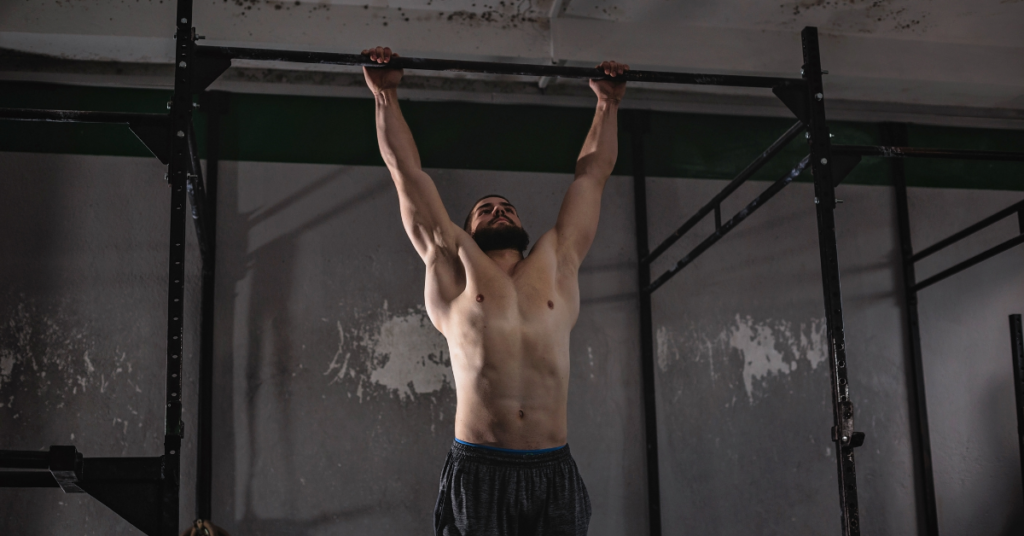
Many beginners cannot perform a full bodyweight pull up right away, and that is completely normal. Assisted pull ups using resistance bands or an assisted pull up machine provide nearly identical movement patterns while allowing gradual progression.
Why It Works
The pull up primarily targets the latissimus dorsi, which creates much of the width associated with a muscular upper body. It also heavily recruits the biceps, lower trapezius, rhomboids, and numerous stabilizing muscles around the shoulder blades.
Research comparing different pulling variations has demonstrated substantial activation of the lats and upper back during pull ups, making them one of the most efficient exercises for building back musculature.
Strong back muscles also contribute to better posture by helping counteract the rounded shoulders that often develop from prolonged sitting.
How to Perform It
Grip the bar slightly wider than shoulder width with your palms facing away from you. Begin from a dead hang while keeping your shoulders engaged rather than completely relaxed.
Pull your chest toward the bar by driving your elbows down toward your ribs. Lower yourself under control until your arms are fully extended before beginning the next repetition.
If you cannot yet complete a bodyweight repetition, use an assistance method that allows you to perform six to twelve controlled repetitions with proper technique.
Common Beginner Mistakes
Swinging the body to create momentum reduces muscular tension and makes the exercise less effective. Focus on controlled movement throughout each repetition.
Another mistake is performing only partial repetitions. A full range of motion challenges the muscles more effectively and helps develop strength across the entire movement.
3. Overhead Press
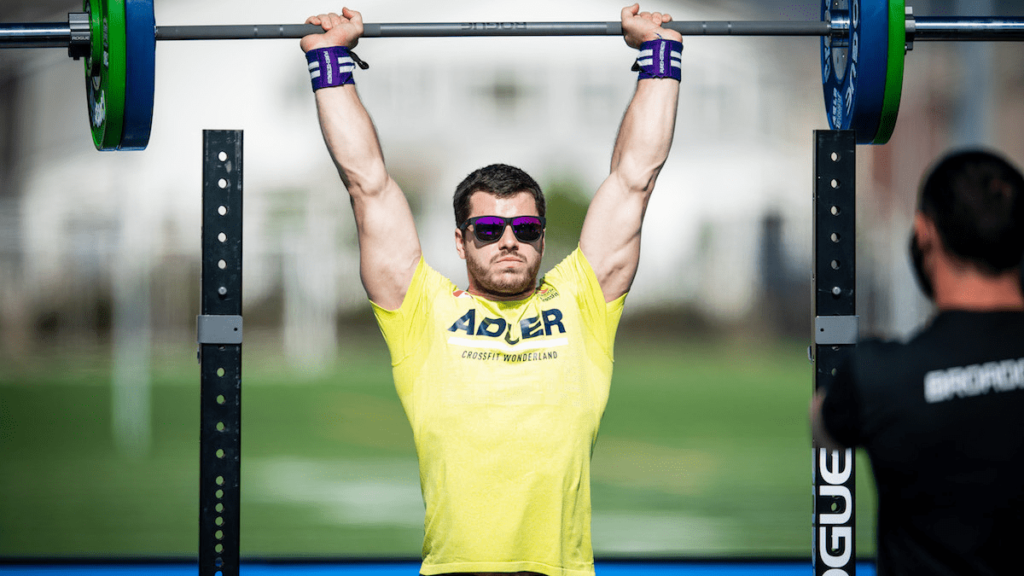
The overhead press is one of the best exercises for building strong shoulders while also strengthening the upper chest, triceps, and core.
Unlike seated machine shoulder presses, the standing overhead press requires full body stabilization. This makes it an outstanding exercise for developing functional strength alongside muscle growth.
Why It Works
The anterior and lateral portions of the deltoid muscles receive substantial stimulation during overhead pressing. The triceps contribute significantly during the lockout phase, while the upper chest assists during the initial portion of the movement.
Standing overhead presses also require continuous activation of the abdominal muscles, spinal stabilizers, and glutes to maintain proper posture under load.
Research examining shoulder muscle activation consistently demonstrates that free weight overhead pressing produces high levels of deltoid recruitment while simultaneously improving strength throughout the upper kinetic chain.
How to Perform It
- Stand with your feet about shoulder width apart while holding a barbell or two dumbbells at shoulder height.
- Brace your core and squeeze your glutes before pressing the weight directly overhead.
- Finish with the weight positioned above the shoulders while keeping your head and neck in a neutral position.
- Lower the weight slowly back to shoulder level before beginning the next repetition.
Common Beginner Mistakes
Many beginners arch their lower back excessively as the weight becomes challenging. This places unnecessary stress on the lumbar spine. Maintaining a braced core throughout the movement helps prevent this problem.
Another common issue is pressing the weight too far in front of the body instead of keeping it aligned over the shoulders.
Why Progressive Overload Matters
Choosing the right exercises is only part of the equation. Muscle growth depends on gradually increasing the demands placed on the muscles over time.
Progressive overload can involve lifting slightly heavier weights, performing additional repetitions, improving exercise technique, or increasing total training volume. Research consistently identifies progressive overload as a fundamental requirement for long term improvements in muscle size and strength.
For beginners, progress often occurs quickly. Adding five pounds to a lift every week is common during the early months provided technique remains solid and recovery is adequate. When progress slows, increasing repetitions before adding weight is often an effective strategy.
Training Volume for Muscle Growth
Scientific evidence suggests that beginners do not need marathon workouts to maximize results. Most research indicates that performing roughly ten to twenty challenging sets per muscle group each week supports significant hypertrophy. Beginners generally achieve excellent progress toward the lower end of this range because their muscles are highly responsive to training.
For these three exercises, performing three to four sets of six to twelve repetitions two or three times per week provides an effective starting point.
Training close to muscular failure without sacrificing technique appears to produce the greatest gains. This does not mean every set must end in complete exhaustion, but each set should feel challenging.
Recovery Is Where Growth Happens
Muscles grow after training rather than during it. Resistance exercise creates microscopic damage within muscle fibers. During recovery, the body repairs these fibers and adapts by making them larger and stronger.
5 Perfect Exercises for Every Beginner that Wants Stronger Shoulders
Sleep is one of the most important factors influencing this process. Research has demonstrated that inadequate sleep reduces muscle protein synthesis, slows recovery, and impairs strength performance. Most adults should aim for seven to nine hours of quality sleep each night.
Rest days also matter. Training the same muscles intensely every day often limits recovery instead of accelerating progress. Most beginners respond well to training each muscle group two or three times weekly with recovery days between sessions.
Final Thoughts
Building a bigger upper body does not require dozens of exercises or endless hours in the gym. Beginners make the greatest progress by mastering a small number of highly effective compound movements and performing them consistently.
The bench press develops the chest, shoulders, and triceps while providing an excellent foundation for pressing strength. Pull ups build the wide back that creates an athletic appearance while strengthening the arms and shoulders. The overhead press completes the trio by developing powerful shoulders and reinforcing total body stability.
Combined with progressive overload, proper nutrition, and sufficient recovery, these three exercises provide nearly everything a beginner needs to build impressive upper body muscle and strength.
Key Takeaways
| Exercise | Primary Muscles | Main Benefit | Beginner Tip |
|---|---|---|---|
| Bench Press | Chest, shoulders, triceps | Builds pressing strength and upper body size | Use full range of motion and controlled repetitions |
| Pull Up or Assisted Pull Up | Lats, biceps, upper back | Develops back width and pulling strength | Use assistance if needed to maintain proper form |
| Overhead Press | Shoulders, triceps, upper chest | Builds shoulder size and functional strength | Brace your core and avoid excessive back arching |
| Progressive Overload | Entire body | Drives continuous muscle growth | Increase weight or repetitions gradually |
| Recovery and Nutrition | Entire body | Supports muscle repair and long term progress | Prioritize protein intake and quality sleep |
References
- American College of Sports Medicine. (2009). Progression models in resistance training for healthy adults. Medicine & Science in Sports & Exercise, 41(3), 687 to 708.
- Grgic, J., Schoenfeld, B.J., Orazem, J. and Sabol, F. (2020). Effects of resistance training performed to repetition failure or non failure on muscular strength and hypertrophy. Journal of Sport and Health Science, 10(3), 263 to 273.
- Krieger, J.W. (2010). Single versus multiple sets of resistance exercise for muscle hypertrophy. Journal of Strength and Conditioning Research, 24(4), 1150 to 1159.
- Morton, R.W., Murphy, K.T., McKellar, S.R., Schoenfeld, B.J., Henselmans, M., Helms, E., Aragon, A.A., Devries, M.C., Banfield, L., Krieger, J.W. and Phillips, S.M. (2018). A systematic review, meta analysis and meta regression of protein supplementation on resistance training induced gains in muscle mass and strength. British Journal of Sports Medicine, 52(6), 376 to 384.
- Schoenfeld, B.J. (2010). The mechanisms of muscle hypertrophy and their application to resistance training. Journal of Strength and Conditioning Research, 24(10), 2857 to 2872.
- Schoenfeld, B.J., Ogborn, D. and Krieger, J.W. (2017). Dose response relationship between weekly resistance training volume and increases in muscle mass. Journal of Sports Sciences, 35(11), 1073 to 1082.
- Signorile, J.F., Zink, A.J. and Szwed, S.P. (2002). A comparative electromyographical investigation of muscle utilization patterns using various hand positions during the lat pull down. Journal of Strength and Conditioning Research, 16(4), 539 to 546.
- Snyder, B.J. and Leech, J.R. (2009). Voluntary activation of the pectoralis major during various bench press techniques. Journal of Strength and Conditioning Research, 23(3), 882 to 887.
- Stasinaki, A.N., Zaras, N., Methenitis, S., Bogdanis, G.C., Terzis, G., and Fatouros, I.G. (2015). Muscle strength, power, and morphologic adaptations after different resistance training protocols in young adults. Journal of Strength and Conditioning Research, 29(5), 1353 to 1364.
- Watson, A.M. (2017). Sleep and athletic performance. Current Sports Medicine Reports, 16(6), 413 to 418.