

Strong shoulders do much more than improve your appearance. They help you lift heavier weights, improve posture, stabilize the upper body, and reduce the risk of injury during both training and everyday activities. Well developed shoulders also create the broad upper body look that many people associate with an athletic physique.
For beginners, the challenge is knowing where to start. The shoulder is one of the most complex joints in the human body. It has a huge range of motion, but that also makes it vulnerable to injury when exercises are chosen poorly or performed with bad technique.


Fortunately, you do not need dozens of different movements to build bigger, stronger shoulders. Research consistently shows that a small number of well chosen compound and isolation exercises can effectively train all three heads of the deltoid muscle while also strengthening the surrounding muscles that support shoulder health. Here are the five best shoulder exercises for beginners and why each deserves a place in your training program.
Understanding the Shoulder Muscles
Before looking at the exercises, it helps to understand what you are trying to train. The deltoid is divided into three distinct sections. The anterior deltoid sits at the front of the shoulder and plays a major role in pressing movements. The lateral deltoid is located on the outside of the shoulder and is responsible for creating shoulder width. The posterior deltoid sits at the back of the shoulder and contributes to pulling movements and shoulder stability.
How Does Your Plank Time Compare to the Average Adult?
Several other muscles also contribute to healthy shoulder function. The rotator cuff stabilizes the shoulder joint, while the trapezius and serratus anterior help control shoulder blade movement. Training these muscles through balanced exercise selection improves strength while lowering injury risk.
Research has repeatedly shown that balanced shoulder development is important for joint health, posture, and long term performance.
Why Beginners Should Focus on Compound Movements First
Many new lifters spend too much time performing isolation exercises while neglecting the movements that produce the greatest overall strength gains.
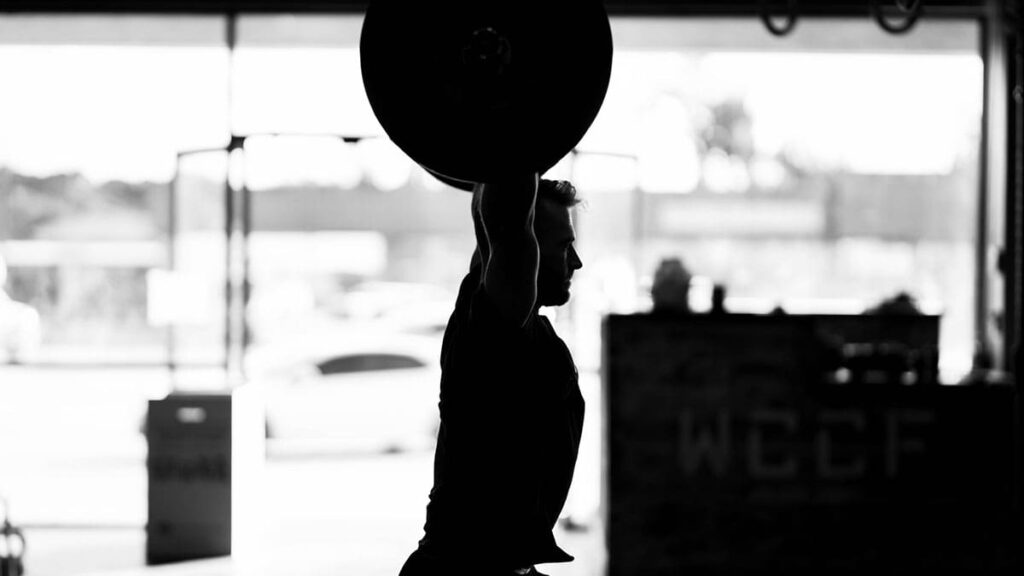
Compound exercises recruit multiple muscle groups at once, allowing beginners to lift heavier loads while improving coordination and movement quality. Studies have demonstrated that multi joint resistance training produces significant improvements in muscle mass and strength, especially in people with limited training experience.
Isolation exercises still have an important role, particularly for targeting the lateral and rear deltoids, but they work best when combined with compound lifts.
1. Standing Dumbbell Overhead Press
The standing dumbbell overhead press is arguably the best overall shoulder exercise for beginners.
Unlike a barbell, dumbbells allow each arm to move independently, making it easier to develop balanced strength while placing the shoulders in a more natural position. Standing rather than sitting also requires greater core activation and improves overall body stability.
The movement primarily targets the anterior deltoids while heavily recruiting the lateral deltoids, triceps, upper chest, and upper trapezius.
Begin by standing with your feet about shoulder width apart. Hold a dumbbell in each hand at shoulder height with your palms facing forward or slightly inward. Press both weights overhead until your elbows are fully extended without aggressively locking them. Lower the weights slowly back to the starting position under control.
Avoid arching your lower back or using momentum to lift the weights. Your ribs should remain down and your core should stay braced throughout every repetition.
Electromyography research consistently shows high activation of the anterior deltoid during overhead pressing movements, making them one of the most effective exercises for developing pressing strength and shoulder muscle.
2. Dumbbell Lateral Raise
If your goal is wider looking shoulders, few exercises are more effective than the dumbbell lateral raise.
The lateral deltoid is often underdeveloped because most pressing exercises emphasize the front of the shoulder. Adding direct lateral raises helps create balanced development while improving shoulder symmetry.
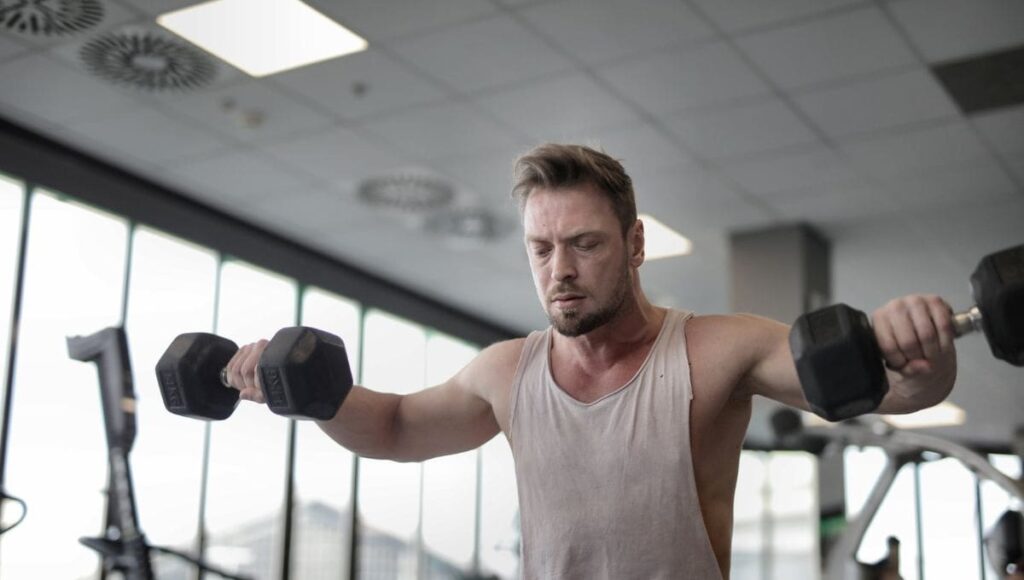
Stand with a dumbbell in each hand at your sides. Raise both arms out to the sides until they reach approximately shoulder height while maintaining a slight bend in the elbows. Pause briefly before lowering the weights in a slow and controlled manner.
One of the biggest mistakes beginners make is using weights that are too heavy. Swinging the body removes tension from the target muscles and reduces effectiveness.
Research using muscle activation analysis has demonstrated that lateral raises produce among the highest levels of activity in the middle deltoid compared to many other shoulder exercises. Using controlled repetitions and moderate loads generally produces better muscle stimulation than lifting excessively heavy weights.
3. Face Pull
The face pull is often overlooked by beginners, yet it is one of the best exercises for improving shoulder health while building the rear deltoids. Modern lifestyles often involve prolonged sitting and computer work, which encourages rounded shoulders and poor posture. Training the muscles responsible for pulling the shoulders backward can help restore muscular balance.
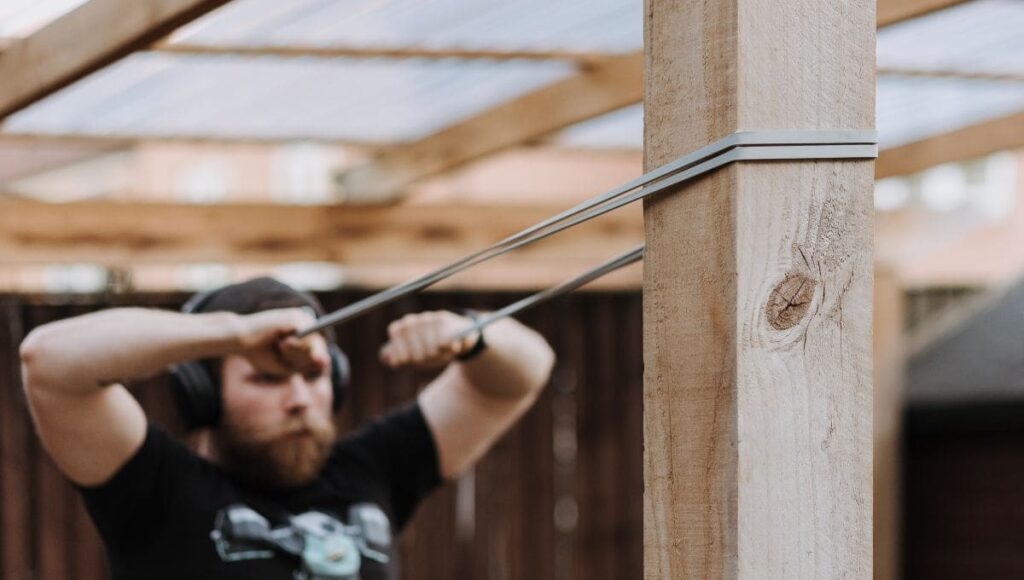
Attach a rope handle to a cable machine at about face height. Pull the rope toward your face while keeping your elbows high. At the end of the movement, externally rotate your shoulders so your hands separate on either side of your head. Return slowly to the starting position.
The face pull targets the posterior deltoids, external rotators, middle trapezius, and rhomboids.
Research on shoulder rehabilitation consistently emphasizes strengthening the posterior shoulder muscles and external rotators to improve shoulder stability and reduce injury risk. While healthy beginners are not performing rehabilitation exercises, these same muscles play a critical role in maintaining long term shoulder function.
4. Incline Rear Delt Fly
The rear deltoids are frequently neglected because they cannot be seen in the mirror during training. Unfortunately, weak posterior deltoids contribute to muscular imbalances that may increase the likelihood of shoulder discomfort over time. The incline rear delt fly isolates these muscles while minimizing the use of momentum.
Set an adjustable bench to an incline of approximately 30 to 45 degrees. Lie face down with a dumbbell in each hand hanging beneath your shoulders. Raise your arms outward until they are roughly in line with your body while keeping a slight bend in the elbows. Lower the weights under complete control. Focus on squeezing your shoulder blades together without shrugging your shoulders toward your ears.
Electromyography studies show high activation of the posterior deltoid during reverse fly variations, making them an excellent complement to pressing exercises that predominantly target the front of the shoulders.
Balanced shoulder development also improves posture and contributes to healthier shoulder mechanics during both sports and resistance training.
5. Arnold Press
The Arnold press adds a rotational component that increases the range of motion compared with a traditional overhead press. Named after Arnold Schwarzenegger, this movement begins with the palms facing the body before rotating outward as the weights are pressed overhead.
Sit or stand while holding dumbbells in front of your shoulders with your palms facing you. As you press upward, rotate your hands until your palms face forward at the top of the movement. Reverse the motion during the lowering phase.
The Arnold press challenges all three heads of the deltoid through a larger movement arc than many conventional pressing variations.
Although no exercise is uniquely magical, increasing the range of motion often enhances muscle activation and may improve hypertrophy when combined with progressive overload and proper technique. Beginners should use relatively light weights until the movement pattern becomes comfortable and controlled.
How Much Weight Should Beginners Use?
One of the most common mistakes is choosing weights that are too heavy. Research on resistance training for hypertrophy shows that muscle growth can occur across a wide range of loads provided the sets are performed close to muscular fatigue while maintaining proper technique.
For beginners, selecting a weight that allows approximately 8 to 15 controlled repetitions works well for most shoulder exercises. When you can comfortably perform the upper end of the repetition range with excellent technique, increase the weight slightly during your next workout.
Gradual progression remains one of the most important principles for building muscle and strength safely.
How Often Should You Train Shoulders?
Current evidence suggests that training each muscle group at least twice per week generally produces greater muscle growth than training it only once weekly when total training volume is matched. For most beginners, two weekly shoulder sessions fit well into a full body or upper lower training split.
Because the anterior deltoids are heavily involved in chest pressing exercises, beginners should avoid excessive shoulder volume. Around 10 to 15 challenging sets per week for the shoulders is usually sufficient for steady progress.
Recovery is equally important. Muscle growth occurs after training, not during it. Sleeping enough, consuming adequate protein, and allowing at least 48 hours between hard shoulder sessions supports recovery and long term progress.
Final Thoughts
Building stronger and more muscular shoulders does not require an endless list of complicated exercises. Beginners achieve excellent results by mastering a handful of proven movements and performing them consistently.
The standing dumbbell overhead press develops overall shoulder strength while teaching proper pressing mechanics. Dumbbell lateral raises build shoulder width by targeting the lateral deltoids directly. Face pulls strengthen the muscles that support healthy posture and shoulder stability. Incline rear delt flies balance shoulder development by emphasizing the often neglected posterior deltoids. Arnold presses provide additional stimulus through an extended range of motion while challenging all three heads of the deltoid.
Combine these exercises with progressive overload, proper recovery, sufficient dietary protein, and consistent training, and you will develop stronger, healthier, and more muscular shoulders over time.
References
- American College of Sports Medicine. (2009). Progression models in resistance training for healthy adults. Medicine & Science in Sports & Exercise, 41(3), 687 to 708.
- Andersen, V., Fimland, M.S., Mo, D.A., Iversen, V.M., Vederhus, T., Rockland Hellebø, L., Nordaune, K.I. and Saeterbakken, A.H. (2014). Electromyographic comparison of shoulder exercises using elastic resistance and free weights. Journal of Strength and Conditioning Research, 28(12), 3474 to 3483.
- Boettcher, C.E., Ginn, K.A. and Cathers, I. (2009). The relative contribution of shoulder muscles during common shoulder rehabilitation exercises. Journal of Orthopaedic & Sports Physical Therapy, 39(2), 64 to 74.
- Krieger, J.W. (2010). Single versus multiple sets of resistance exercise for muscle hypertrophy. Journal of Strength and Conditioning Research, 24(4), 1150 to 1159.
- Morton, R.W., Colenso Semple, D., Phillips, S.M. and colleagues. (2016). Neither load nor systemic hormones determine resistance training mediated hypertrophy or strength gains in resistance trained young men. Journal of Applied Physiology, 121(1), 129 to 138.
- Schoenfeld, B.J. (2010). The mechanisms of muscle hypertrophy and their application to resistance training. Journal of Strength and Conditioning Research, 24(10), 2857 to 2872.
- Schoenfeld, B.J., Ogborn, D. and Krieger, J.W. (2016). Effects of resistance training frequency on measures of muscle hypertrophy. Sports Medicine, 46(11), 1689 to 1697.
- Wernbom, M., Augustsson, J. and Thomeé, R. (2007). The influence of frequency, intensity, volume and mode of strength training on whole muscle cross sectional area in humans. Sports Medicine, 37(3), 225 to 264.