

As a broadcaster, for me, this is the ultimate test. Picture a woman at the end of the bar, a Saturday regular, phone face down while she waits on a round for her table. The television above the bar is on mute. She glances up mid conversation for five seconds. Does she know what she’s watching?
Pro 1
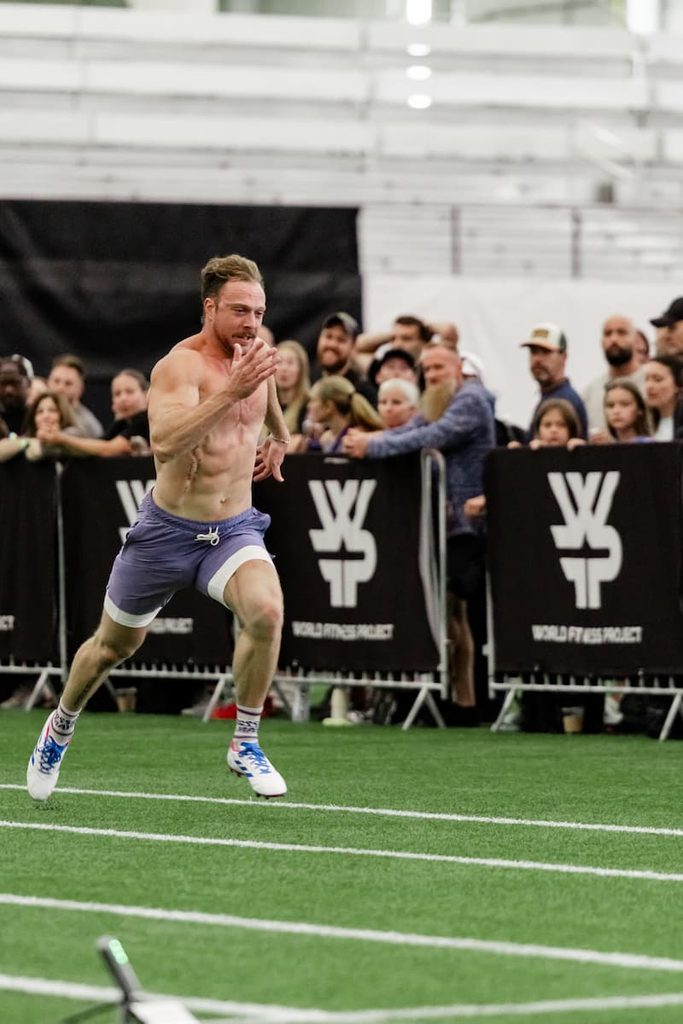
Pro 1 at Grand Park Pro passed that test better than almost anything I have called in seven years. A flying 40, a 5-10-5, a max broad jump. Nobody needs the rules explained. Everybody has run, everybody has watched someone run and everybody knows fast when they see it.


The flying 40 does something specific and deserves a quick explanation. Rather than starting from a dead stop the way the NFL times its 40 yard dash, athletes get a run up before the laser clocks them, so the time measurement doesn’t include a burst off the line. Quinn Robinson used it to run 4.4 seconds and win the men’s combine outright, a time that would hold its own on an NFL Combine leaderboard even allowing for the different start.
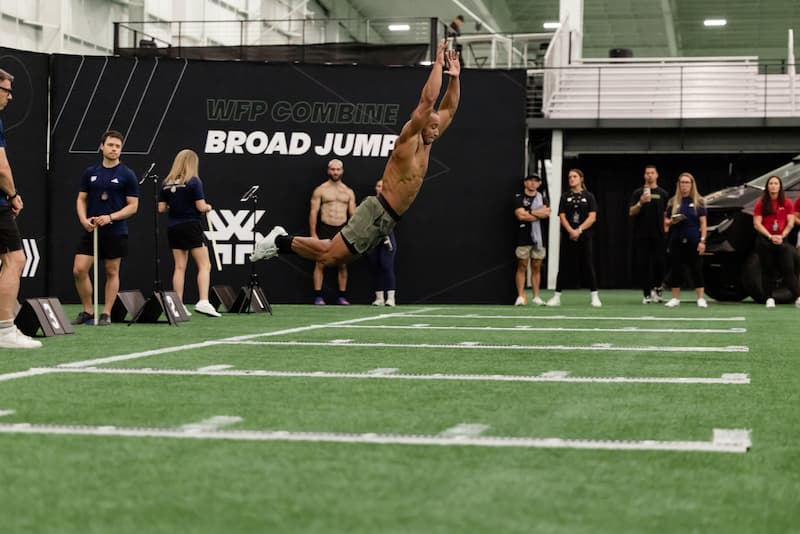
Guilherme Malheiros jumped 123 inches (over ten feet) closing in on the 10’11 that topped this year’s NFL field. Carolyne Prevost won the women’s combine the same way, a 102 inch broad jump doing most of the talking.
None of it needed a graphic or a commentator explaining what a snatch is or why a no rep happened.
Pro 4
Pro 4 belongs in that same conversation and it is the one I think gets underused across this sport, a one rep max bench press. Colten Mertens topping the men’s field at 405lb. Bench is barely tested at this level any more, yet it is probably the single most recognisable barbell movement there is, the one most people learn socially as a teenager with their mates, long before they ever hear the word snatch or clean.
Picture the man next to her at the bar, the one who played a bit of rugby at school, working in haulage, and has not seen the inside of a gym in years, he has never done a snatch in his life but he has done a bench press. Testing it here, in front of an audience that already knows exactly what it is looking at is not a novelty so much as one of the clearest tools this sport has for being understood on sight and I would like to see more of it rather than less.
This is not a marginal audience to go chasing either. HYROX has a season projected to draw 1.3 million participants. That is a generation already proving with their own money and their own weekends that training is worth more than sitting at a bar. The job in front of WFP is convincing that same generation that watching the best in the world compete in fitness is worth their time too.
You could feel that same convergence just standing in the venue. Grand Park is the Indianapolis Colts’ pre season training home and this sport spent the weekend inside an NFL franchise’s own building, right down to a jersey day on the schedule. The Indiana Fever, women’s basketball game that same Saturday was played across town in Indianapolis and Arielle Loewen was invited onto the court beforehand to shoot some hoops. This is crossover actually working, a shared audience, one sport’s athlete standing on another sport’s court because both sides can already see the value.
Our sport is still fighting for the casual eye and I do not think I am the only one who believes it can win that fight. Red Bull has increased their investment, launching the ‘leading lane’ and alongside Adidas sits as principal sponsor. Those are not small bets from brands with better data than mine on where an audience is heading.
They believe, the way I believe, that this sport has characters worth rooting for and genuine peril in how those characters can fall and that a combine, a swim, a run, filmed and explained in the plainest terms possible, is how you put both of those things in front of someone who has never set foot in a gym like this.
A New Direction for Programming
It is also, I think, a smart pulling back from where programming had drifted. This sport’s biggest annual event has leaned harder and harder into volume. There is a version of that approach which starts to lose the thread for anyone watching who is not already fluent in competitive fitness.
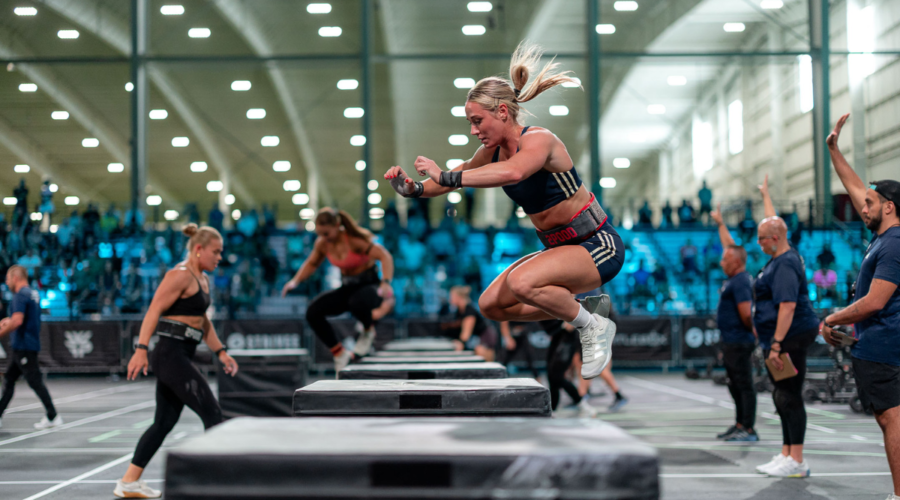
Grand Park Pro ran seven events across three days and it was not purely a run of single skill benchmarks. Alongside the combine, the bench, the run and the swim sat three more traditional mixed modal pieces, rounds of gymnastics, barbell and sled work and box jumps stacked together the way this sport has always tested capacity rather than a single quality. Both approaches earned their place and together they work like a funnel.
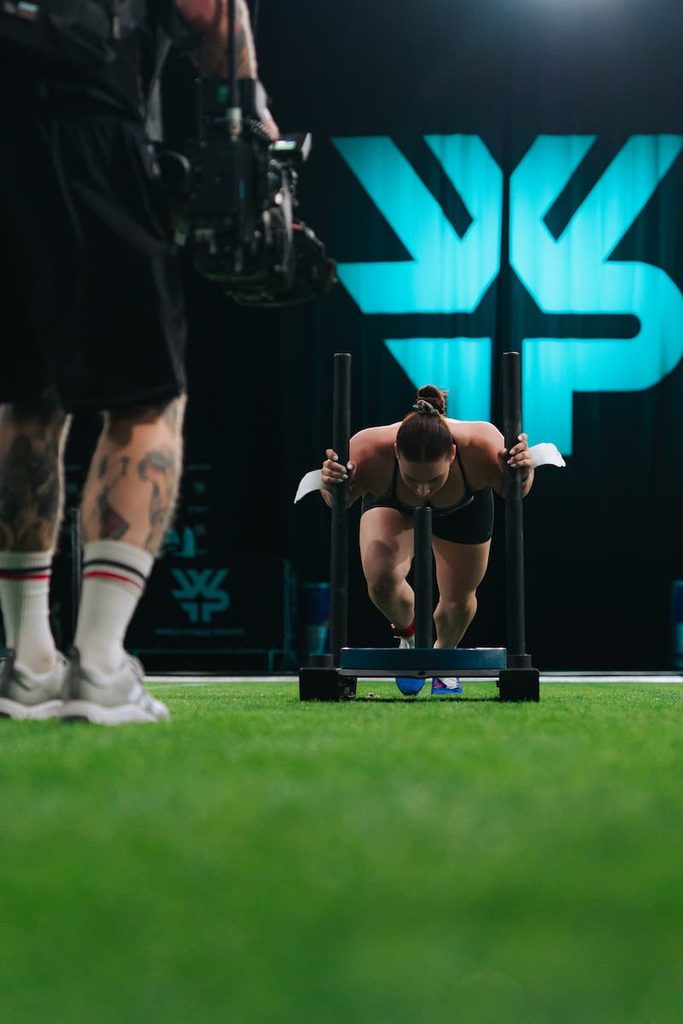
The combine, the bench, the run and the swim are the hook, something our friend at the bar can read in five seconds with no context at all, and once you have her, the mixed modal pieces are where she meets the sport and the reputation it was built on. You open with something she already understands and let the rest reveal itself once she is leaning forward. Running the two side by side across three days, gave a casual viewer something to follow from start to finish and closing the weekend with a heavy snatch separates who is capable of competing in the finale in Denmark.
Swimming
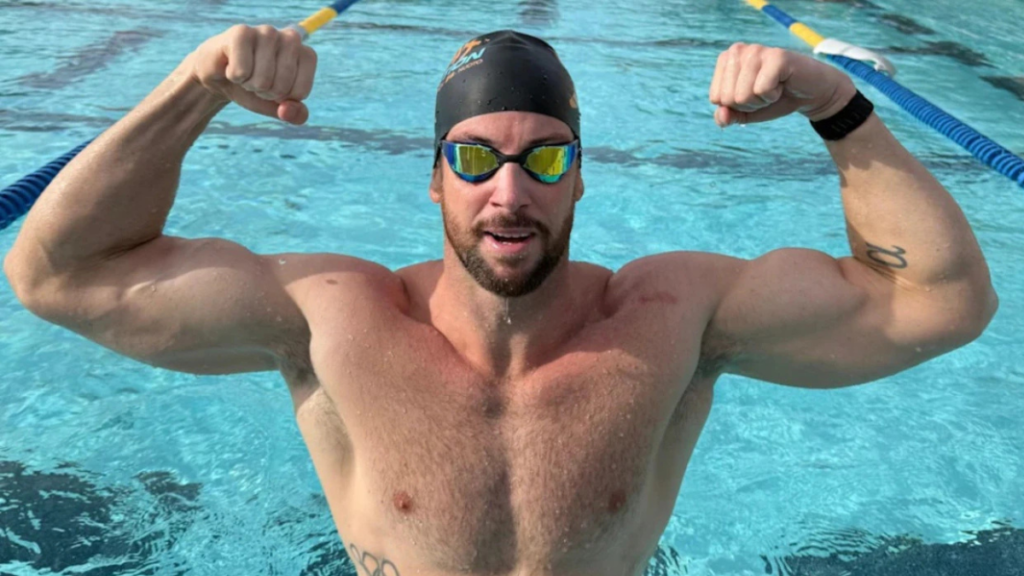
Swimming is the same bet as the Combine and the 10k run, universally recognisable, no explanation required, and Pro 6 turned it into one of the best storylines of the weekend. It paired a Rogue Echo Bike with two 150 yard swims and the athletes with a real background in the water have the advantage. Ty Jenkins won it outright in 6:57.21 Jonne Koski finished second, his splits through the water close enough to Jenkins’ that the gap came down to the bike. Jennifer Muir took second on the women’s side behind Emma Tall.
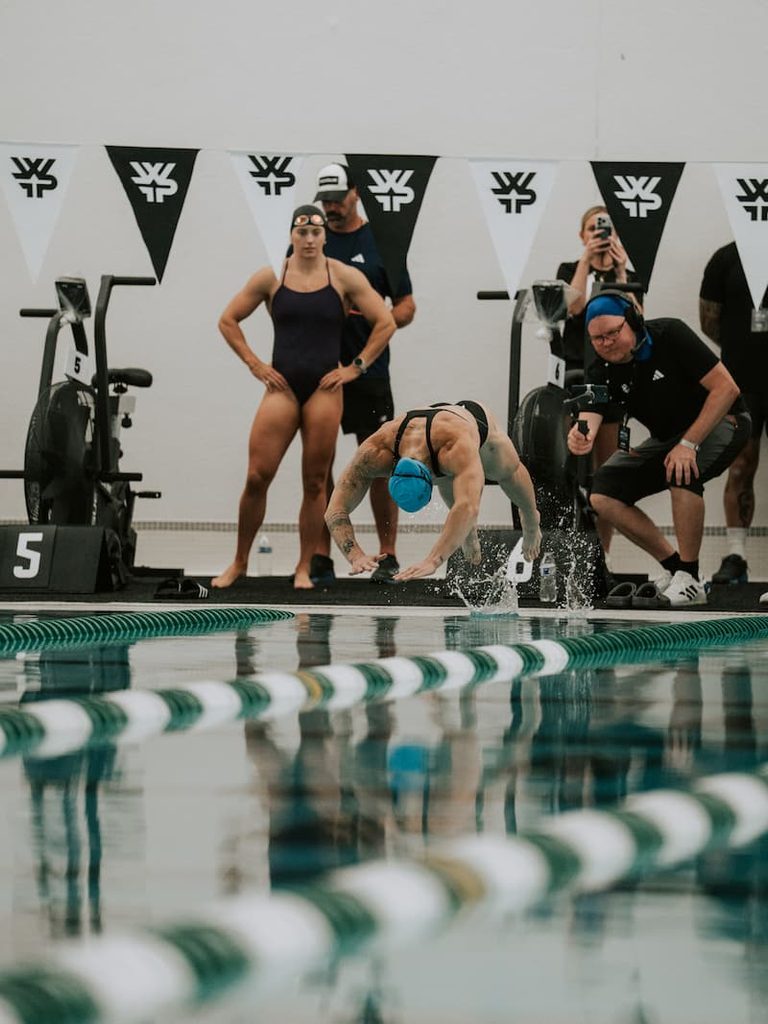
Whoever has banked real pool hours before finding this sport tends to win whenever the water shows up and a viewer at the bar does not need to know any of their names to feel that story land the moment the gap opens up.
However it was Laura Horvath’s race that stayed with me. Fourth place with a 7:41.32, four seconds behind Amanda Jobs in third, without a stroke of the background the three swimmers ahead of her had yet she still finished close enough to make it interesting. That is the kind of stakes the ‘bar test’ wants, a favourite walking into the one event built to expose her and holding her nerve. By Sunday night she had finished the weekend second overall, 29 points behind Tall.
Running
Amanda Jobs gave the 10km the same shape of story from further back in the field. She had been 50th overall after day one. She won the run in 39:14.96, roughly nine minutes off the open world record, a gap that would be unthinkable for a dedicated 10km runner. But that is not what she is. She was three events deep into a weekend that had already asked her body for a Combine and a four round conditioning piece, running by feel rather than chasing the splits built for someone with fresh legs. Nobody watching needed to know her 10km personal best to understand what they were seeing, a woman who had been buried on Friday running away from the entire field on Saturday.
That, to me, is the case for where this sport should be pointing itself. Building the most complete test of fitness is not always the goal, (although in this occasion, I would say Tour Stop 2 was about as complete as you can get over 7 workouts), sometimes the goal is a good test that is also an entertaining one. Then trusting the athletes to supply the characters and the stakes once you give them a format the audience can actually read.
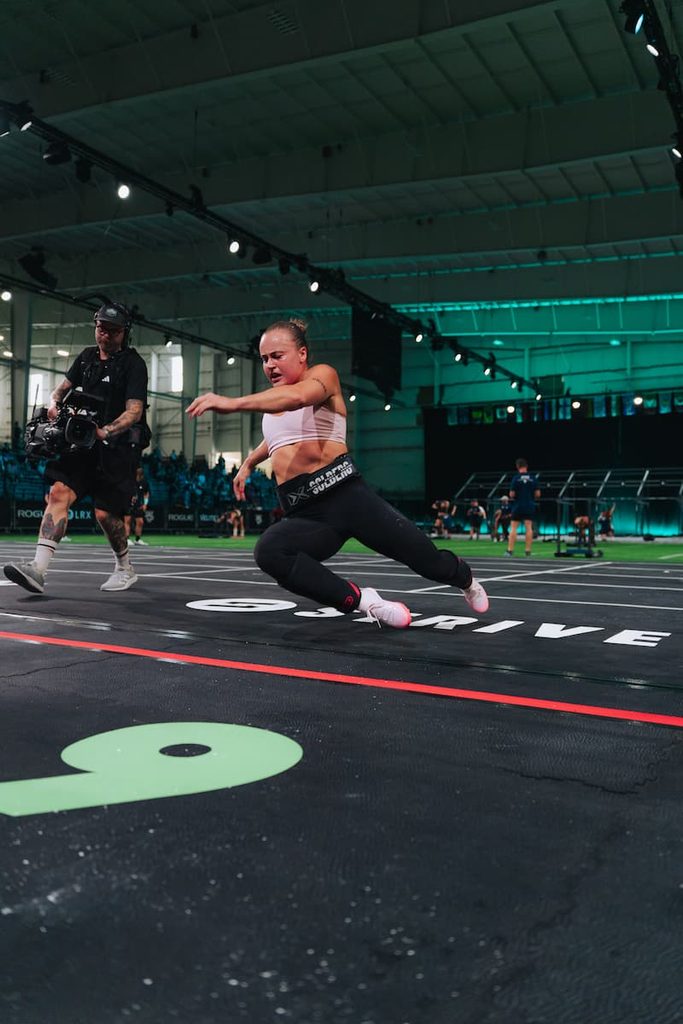
Specificity wins the individual event, but generality wins the weekend and a combine, a swim, a bench and a run, is how you get her, our friend at the bar, to look up from her phone long enough to find that out.
All images ©World Fitness Project