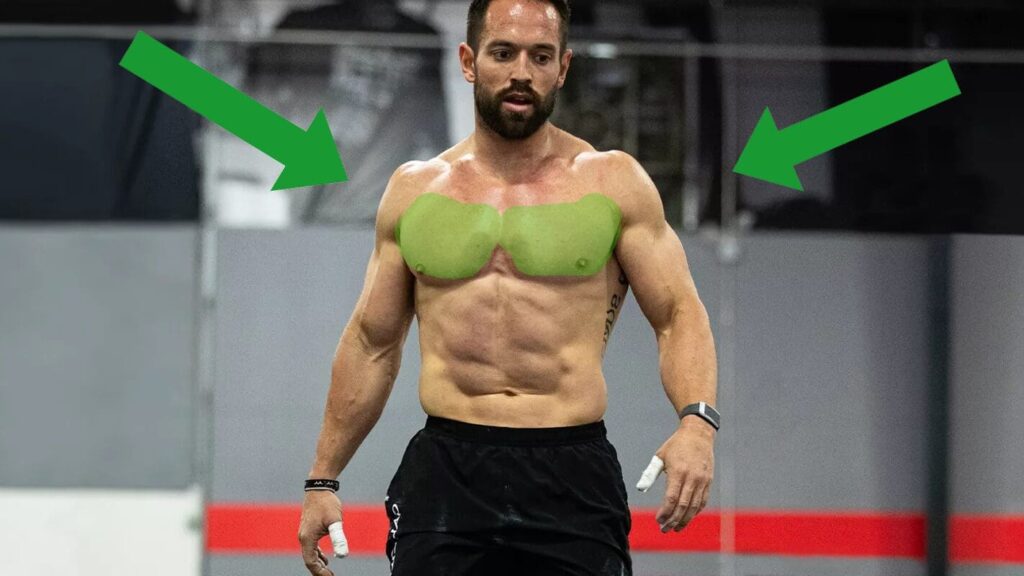


A broader upper body can make the torso look more V-shaped, but no single exercise can change your overall proportions. Building the shoulder muscles can add size around the upper body, while developing the back can add width below the shoulders. Your bone structure and where you naturally store body fat also affect your shape, so progress will look different from person to person.
For beginners, the most useful approach is a simple one: train the different parts of the shoulder with controlled movements, use weights you can handle well, and add difficulty gradually. The three exercises below cover the front, middle, and rear portions of the deltoid. The middle portion is especially relevant to building a wider-looking shoulder line, while the front and rear portions help develop the shoulder as a whole.



Research comparing shoulder exercises has found differences in which deltoid portions work hardest. However, short-term muscle activity measurements do not prove that one exercise will produce more long-term growth than another. Think of them as a useful guide to choosing movements, while consistent resistance training and gradual progression provide the foundation for building muscle.
What Builds a V-Shaped Torso?
The deltoid is the rounded muscle covering the shoulder. It has front, middle, and rear portions that contribute to different arm movements. A balanced shoulder program should train all three rather than relying only on pressing exercises. Presses involve the front deltoid, while lateral raises directly train the middle portion. Rear delt fly variations train the back of the shoulder.
Shoulder training is only one part of the picture. The latissimus dorsi, or lats, are large muscles on the sides of the back, and developing them can add width below the shoulders. A full upper body program should therefore include pulling exercises for the back as well as the shoulder movements in this article. The exercises here are a focused starting point for shoulder development, not a complete program for every muscle involved in a V-shaped look.
1. Dumbbell Lateral Raise
Why beginners should try it
The lateral raise is a direct way to train the middle deltoid, which contributes to the rounded appearance at the side of the shoulder. In studies comparing common upper body exercises, lateral raises produced substantial activity in the middle deltoid. A 2025 training study also found that both dumbbell and cable lateral raises could increase lateral deltoid muscle thickness in resistance-trained participants. That study does not mean every beginner needs to use the same equipment or set count. It does support the lateral raise as a practical exercise for training this part of the shoulder.
How to do it
Stand with a light dumbbell in each hand and your arms relaxed at your sides. Keep a slight bend in your elbows. Raise your arms out to the sides until your hands are around shoulder height, then lower the weights slowly to the starting position. Keep your torso steady and avoid swinging the dumbbells to get them moving.
Choose a load that lets you control both the lifting and lowering phases. If your shoulders shrug toward your ears or your torso leans to create momentum, the weights are probably too heavy for clean repetitions. It is also fine to raise your arms slightly forward of your body instead of directly out to the sides if that feels more comfortable.
Start with two or three sets of 10 to 15 repetitions. The last few repetitions should feel challenging, but you should still be able to maintain your technique. When you can complete the top of your target range for every set with control, increase the dumbbell weight by the smallest available amount.
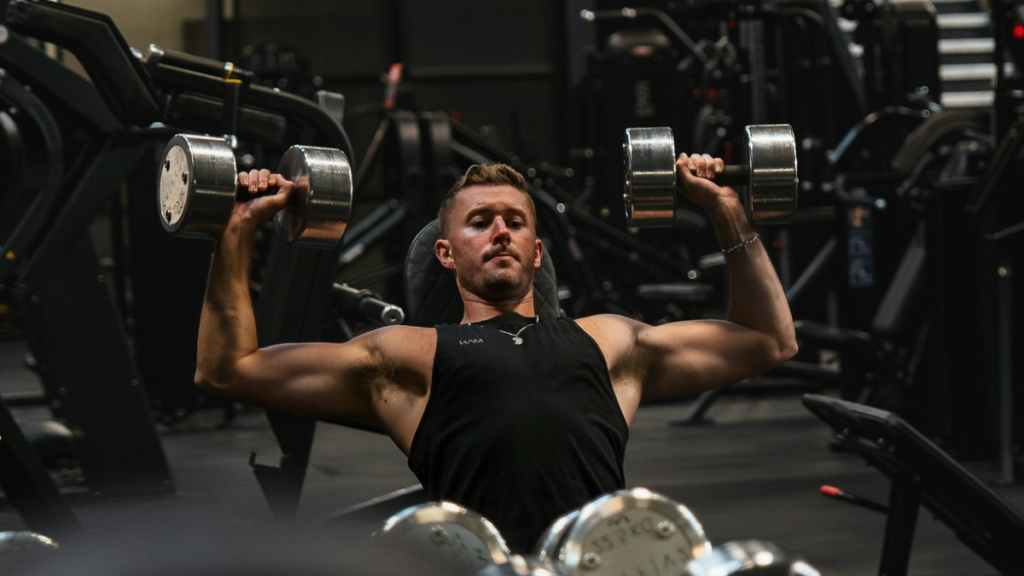
2. Seated Dumbbell Shoulder Press
Why beginners should try it
A shoulder press is a straightforward compound exercise that trains the deltoids along with the triceps and other muscles that help move and stabilize the arms. It is a useful way to build pressing strength while learning to handle external resistance. Research comparing shoulder exercises has found that the shoulder press activates the front deltoid, while the lateral raise provides a different stimulus for the middle deltoid. That is one reason to include both movements instead of expecting a press to cover every part of the shoulder equally.
How to do it
Sit on a bench with back support and hold a dumbbell in each hand at about shoulder height. Set your feet flat on the floor and keep your back against the bench. Press the weights overhead without locking your elbows forcefully, then lower them slowly until your hands return to shoulder level.
Begin with a light weight and a comfortable range of motion. Do not force the dumbbells lower than your shoulders if that causes discomfort. Keep your ribs from flaring upward and avoid arching your lower back to finish a repetition. If controlling two dumbbells feels difficult, use a shoulder press machine first. The machine can help you practice the movement path while you build confidence and strength.
Try two or three sets of 8 to 12 repetitions. Rest long enough between sets that you can repeat the movement with steady technique. If you feel sharp pain, stop the set and reassess your position or exercise choice. Ordinary effort and muscle fatigue are different from joint pain.
3. Reverse Fly
Why beginners should try it
The reverse fly trains the rear deltoids, which are often less directly challenged by pressing movements. Developing the rear shoulders helps create a more balanced shoulder profile. Studies measuring muscle activity have found that reverse fly variations can recruit the rear deltoid, although these measurements are not a direct measure of long-term muscle growth.
Beginners can use a reverse fly machine, light dumbbells, or a cable setup. A machine is often easiest to learn because it provides support and helps keep the movement consistent. When using a machine with adjustable handles, a neutral grip may increase rear deltoid activity compared with a pronated grip, based on one study in trained men. A comfortable grip and controlled movement are still the priorities.
How to do it
For a machine reverse fly, sit facing the pad with your chest supported. Hold the handles and begin with your arms in front of you. Move your arms out and back in a wide arc, stopping when they are roughly in line with your torso. Return to the starting position under control. Keep your shoulders down and avoid turning the movement into a shrug.
For a dumbbell version, sit on a bench and hinge forward from your hips until your chest is close to your thighs. With a light weight in each hand, raise your arms out to the sides, then lower them slowly. Keep a soft bend in your elbows and use a weight that does not make you jerk your torso.
The Best 3 Twisting Core Exercises for Beginners
Perform two or three sets of 10 to 15 repetitions. Focus on moving from the shoulder rather than pulling the weights back with a large body swing. If you feel the exercise mostly in your neck, reduce the weight and check that your shoulders are not creeping upward.
How to Train for Progress
You do not need an advanced routine to start building muscle. A beginner can train these exercises once or twice per week as part of a broader resistance training plan. If you do them in one session, perform the shoulder press first, followed by lateral raises and reverse flies. The press uses more muscles and usually allows heavier loads, so doing it earlier can help you perform it while fresh.
Use a weight that makes the final repetitions challenging without forcing you to sacrifice control. Evidence reviews find that a range of loads can build muscle when sets are sufficiently challenging, so beginners do not need to test their maximum strength or lift very heavy weights. Multiple-set programs are generally a practical choice for muscle growth. Start with two sets per exercise if you are new to training, then add a set later if you are recovering well and progressing.
Keep a simple record of your weights and repetitions. When you can perform the highest number of repetitions in your target range for all your sets with sound technique, increase the load slightly. This gradual approach is called progressive overload. It gives your muscles a reason to adapt over time without requiring you to make large jumps in weight.
A full, controlled range of motion is a useful default when it feels comfortable. Research on range of motion has found benefits for strength and some muscle growth outcomes, although the evidence is not specific to every shoulder exercise. Do not chase an exaggerated stretch or force a painful position. Consistent repetitions that you can control are more useful than movements that look bigger but are uncomfortable.
Build the Whole Upper Body
Wider shoulders can contribute to a V-shaped appearance, but shoulder exercises alone cannot create the whole effect. Add back exercises such as pulldowns, pullups, and rows to train the lats and other upper back muscles. A balanced plan should also include movements for the chest and arms, plus exercises for the lower body and trunk.
The most important factors are regular training, good technique, and gradual progress. You can choose dumbbells, cables, or machines based on what is available and comfortable. You do not need to use every variation at once. Start with the three movements you can perform consistently, then adjust your routine as you gain experience.
Key Takeaways
| Focus | Practical takeaway |
|---|---|
| Middle deltoid | Use lateral raises to directly train the side of the shoulder. |
| Front deltoid and pressing strength | Use a controlled shoulder press with a manageable weight. |
| Rear deltoid | Add reverse flies to train the back of the shoulder. |
| Beginner progression | Start with two or three sets and increase the load gradually when your technique stays consistent. |
| V-shaped torso | Train the back as well as the shoulders, since shoulder exercises alone do not develop the lats. |
References
- Campos, Y.A.C., Vianna, J.M., Guimarães, M.P., Oliveira, J.L.D., Hernández-Mosqueira, C., da Silva, S.F. and Marchetti, P.H. (2020). Different shoulder exercises affect the activation of deltoid portions in resistance-trained individuals. Journal of Human Kinetics, 75, pp. 5–14.
- Currier, B.S., McLeod, J.C., Banfield, L., Beyene, J., Welton, N.J., D’Souza, A.C., Keogh, J.A.J., Lin, L., Coletta, G., Yang, A., Colenso-Semple, L., Lau, K.J., Verboom, A. and Phillips, S.M. (2023). Resistance training prescription for muscle strength and hypertrophy in healthy adults: a systematic review and Bayesian network meta-analysis. British Journal of Sports Medicine, 57(18), pp. 1211–1220.
- Franke, R.D.A., Botton, C.E., Rodrigues, R., Pinto, R.S. and Lima, C.S. (2015). Analysis of anterior, middle and posterior deltoid activation during single and multijoint exercises. Journal of Sports Medicine and Physical Fitness, 55(7–8), pp. 714–721.
- Larsen, S., Wolf, M., Schoenfeld, B.J., Sandberg, N.Ø., Fredriksen, A.B., Kristiansen, B.S., van den Tillaar, R., Swinton, P.A. and Falch, H.N. (2025). Dumbbell versus cable lateral raises for lateral deltoid hypertrophy: an experimental study. Frontiers in Physiology, 16, article 1611468.