

If your goal is to build bigger muscles, you have probably heard two confident but conflicting pieces of gym advice. One says you need heavy weights and low reps to add real size. The other says lighter weights and high reps create the muscle building pump that heavy training cannot match.
The research gives a more useful answer. Both light and heavy resistance training can build muscle effectively, provided that the set is hard enough and your overall training is progressive. However, the best approach for getting jacked faster is usually not to choose one extreme and ignore the other. It is to understand what each rep range does well, then use it where it makes the most sense.


Heavy training is generally better for improving maximal strength. Lighter training can be highly effective for muscle growth, but it often requires more repetitions and a closer approach to muscular failure. Moderate rep ranges are usually the most practical middle ground because they allow you to train hard, accumulate useful volume, and maintain solid technique without making every set brutally uncomfortable.
What Actually Makes Muscles Grow?
Muscle growth, also called hypertrophy, is a long term adaptation to resistance training. Your muscles respond when they are repeatedly exposed to sufficient mechanical tension, challenging effort, and enough quality work over time. The body then repairs and remodels muscle tissue, helping it become larger and better able to handle future training demands.
The load on the bar matters, but it is not the only factor. A muscle does not count your repetitions in the same way a training spreadsheet does. It responds to the force it has to produce and the degree of fatigue it experiences during a set. This is why a hard set of 20 leg extensions can stimulate the quadriceps, even though the weight is much lighter than you would use for five reps.
Research comparing different loading zones has repeatedly found that low, moderate, and high loads can produce similar hypertrophy when sets are taken close enough to muscular failure. In practical terms, that means a set must be demanding enough that only a small number of good repetitions remain.
The Only 3 Compound Exercises Every Guy Needs for a Jacked and Strong Body
This does not mean every set must end with the weight stopping halfway through a rep. Training to complete failure can increase fatigue and may make it harder to perform quality work later in the workout. However, consistently stopping a very light set while it still feels easy is unlikely to provide the same stimulus as taking it close to the point where another clean repetition would be difficult.
What Counts as Light and Heavy Reps?
There is no universal line between light and heavy because strength levels vary between individuals and exercises. A useful way to think about the categories is through the number of repetitions you can perform with good technique before failure.
Heavy Reps
Heavy training usually involves loads you can lift for roughly one to eight repetitions. These loads are commonly used for compound exercises such as squats, deadlifts, bench presses, overhead presses, and weighted pull ups.
Heavy sets create high mechanical tension from the first repetition. They also give you valuable practice handling challenging weights, which is one reason they are especially effective for improving one repetition maximum strength.
Moderate Reps
Moderate training usually involves loads you can lift for around eight to 15 repetitions. This is the classic bodybuilding range and remains highly useful for building muscle.
Moderate sets allow you to use substantial loads without the technical demands and joint stress that can accompany repeated very heavy work. They are also less time consuming and less uncomfortable than very high repetition sets. For most lifters, this range offers an efficient balance between loading, volume, control, and recovery.
Light Reps
Light training generally involves loads that allow more than 15 repetitions, often reaching 20, 25, or even 30 reps. Bodyweight movements, cables, machines, resistance bands, and dumbbells can all be used effectively in this range.
The crucial difference is that light sets need to be pushed harder. The early repetitions may not challenge the muscle enough on their own, but as fatigue accumulates, more motor units must contribute to keep the set moving. By the final repetitions, the target muscle can be working extremely hard.
Can Light Weights Really Build Big Muscles?
Yes. Studies comparing lighter and heavier resistance training have found similar gains in muscle size when people train with high effort and complete enough total work. This challenges the outdated idea that muscle growth only happens in a narrow rep range.
The important phrase is high effort. A set of 25 reps with a light dumbbell is not automatically productive just because it creates a burn. If you could have done another 15 repetitions, it was probably too easy to maximize growth. In contrast, a set of 20 to 30 reps that ends with only one or two clean reps left in reserve can be a powerful hypertrophy stimulus.
Light training is particularly useful when heavy loading is impractical or uncomfortable. Cable lateral raises, leg extensions, hamstring curls, triceps pressdowns, biceps curls, chest flyes, and calf raises often work extremely well with lighter loads and higher reps. These exercises do not require you to prove maximal strength. They require you to challenge the target muscle safely and consistently.
Lighter loading can also be valuable when training around an irritated joint, returning from time away from the gym, or working with limited home equipment. It gives lifters more ways to create a meaningful muscle building stimulus without relying entirely on maximal or near maximal weights.
Why Heavy Training Still Matters
Heavy training remains valuable for anyone who wants to be muscular, strong, and capable. Although hypertrophy can occur across a wide range of loads, heavier resistance training produces superior improvements in maximal strength compared with very light loading.
This makes sense because strength is specific. If you want to become better at lifting heavy weights, you need regular practice producing force with heavy weights. You improve skill, coordination, confidence, and force production in the movements you train.

Heavy compound lifts also make progressive overload straightforward. Adding a small amount of weight to a barbell squat, bench press, or Romanian deadlift is easy to track. Over months and years, getting stronger in stable, well performed movements provides a practical sign that your muscles and skill are progressing.
However, heavy is not automatically better for every exercise. Very low rep sets on lateral raises, cable flyes, triceps extensions, or leg curls can make technique worse and place more stress on joints without offering a clear advantage for hypertrophy. These movements are often better suited to moderate or higher repetitions.
The Drawbacks of Each Approach
Light training has one major drawback: it is uncomfortable. A hard set of 25 squats, leg presses, or push ups can create severe local fatigue, breathlessness, and a burning sensation. It can also take longer to complete. Some people stop high repetition sets because the discomfort becomes intense before the target muscle is truly close to failure.
Heavy training has different limitations. Lifting near your maximum requires excellent technique, concentration, warm up time, and recovery. Heavy sets create greater overall fatigue and may not be suitable for all exercises or all lifters. Repeatedly grinding through maximal efforts can also make training harder to sustain.
Neither method is inherently safer in every situation. Exercise selection, technique, individual injury history, fatigue management, and sensible progression matter more than whether a set contains six reps or 20.
How Close Should You Train to Failure?
For hypertrophy, effort matters more as the load gets lighter. Research suggests that being closer to failure tends to support greater muscle growth, although complete failure is not required on every set.
A practical target is to finish most working sets with approximately one to three repetitions in reserve. This means you believe you could complete only one to three more good repetitions if you had to. The final repetitions should slow down or feel demanding, but technique should remain controlled.
With heavier compound lifts, staying two or three repetitions from failure is often sensible. This gives you hard, productive work while reducing the chance that form breaks down. With safer isolation exercises and lighter loads, you can occasionally train closer to failure because the consequences of a missed repetition are usually lower.
The key is honesty. If every set feels comfortable and your performance never progresses, you are probably not providing enough stimulus. If every set destroys your technique and leaves you exhausted for days, you are probably doing more than you can recover from.
The Best Rep Ranges for Different Exercises
Most lifters will benefit from using a variety of rep ranges rather than turning their entire program into either powerlifting or high repetition circuits.
For big compound movements, use a mixture of heavy and moderate work. Squats, presses, rows, deadlifts, pull ups, and similar exercises often respond well to sets in the five to 12 rep range. This lets you build strength while accumulating enough controlled repetitions for hypertrophy.
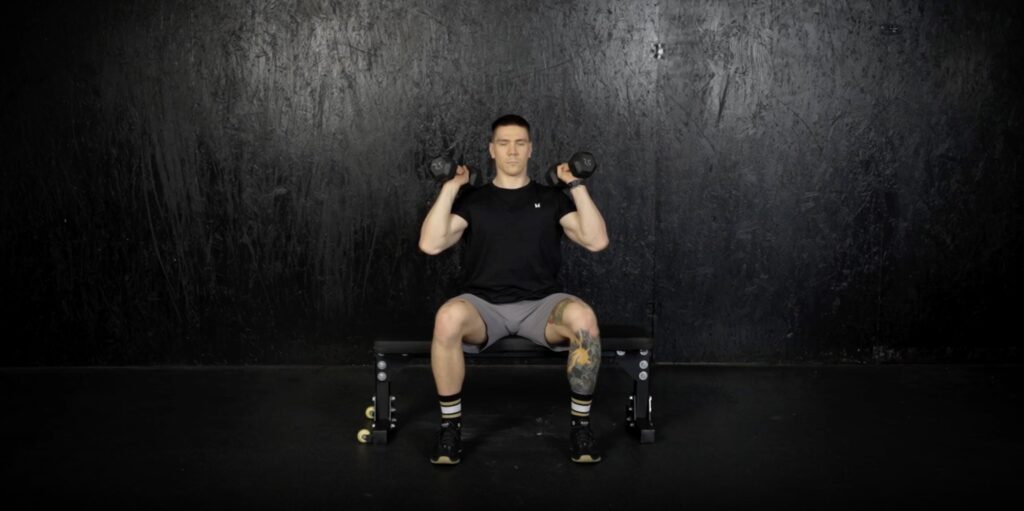
For isolation movements, moderate and light loads are often ideal. Exercises such as lateral raises, curls, triceps extensions, chest flyes, leg extensions, hamstring curls, and calf raises can be trained effectively in the 10 to 25 rep range. The goal is to feel the intended muscle doing the work, use a full comfortable range of motion, and challenge the set without cheating.
You can also vary rep ranges across the week. For example, a lifter could bench press for six to eight reps on one day, then use dumbbell pressing for 10 to 15 reps later in the week. This provides exposure to heavier loading while creating more hypertrophy focused volume with a lower technical demand.
So Which One Gets You Jacked Faster?
Neither light nor heavy reps win automatically. The fastest route to more muscle is the rep range that lets you train hard, progress consistently, recover well, and repeat the process for months.
For most people, moderate reps are the foundation. They are efficient, versatile, and easy to apply across many exercises. Heavy work should remain part of your program if you want to build strength and keep progressing on big lifts. Light work deserves a place because it can build muscle effectively and is especially useful for isolation movements, bodyweight training, and periods when heavy loading is less appropriate.
Do not chase soreness, the pump, or a specific number of reps as if it were magic. Choose exercises you can perform well, use loads that challenge you, take most sets close to failure, and gradually improve your repetitions, load, technique, or total training volume. That is how you build a physique that looks strong because it is strong.
Key Takeaways
| Focus | What to do |
|---|---|
| Muscle growth | Light, moderate, and heavy loads can all build muscle when sets are challenging and performed close to failure. |
| Strength | Include heavier training regularly because it produces greater improvements in maximal strength. |
| Best general range | Use moderate sets of roughly eight to 15 reps as the main foundation for most hypertrophy training. |
| Light weights | Use higher repetitions effectively for isolation exercises, bodyweight work, limited equipment, and lower joint stress options. |
| Heavy weights | Prioritize lower repetition work for major compound lifts when your technique and recovery can support it. |
| Training effort | Finish most working sets with around one to three repetitions in reserve. |
| Long term progress | Track performance and gradually improve load, repetitions, execution, or productive training volume. |
References
- Grgic, J., Schoenfeld, B.J., Orazem, J., Sabol, F., Smajić, M., Bishop, D.J. and Pedisic, Z. (2022) ‘Effects of resistance training performed to repetition failure or non failure on muscular strength and hypertrophy: A systematic review and meta analysis’, Journal of Sport and Health Science, 11(2), pp. 202–211.
- Lasevicius, T., Ugrinowitsch, C., Schoenfeld, B.J., Roschel, H., Tavares, L.D., De Souza, E.O. and Tricoli, V. (2018) ‘Effects of different intensities of resistance training with equated volume load on muscle strength and hypertrophy’, European Journal of Sport Science, 18(6), pp. 772–780.
- Lopez, P., Radaelli, R., Taaffe, D.R., Newton, R.U., Galvão, D.A., Trajano, G.S., Teodoro, J.L., Kraemer, W.J., Häkkinen, K. and Pinto, R.S. (2021) ‘Resistance training load effects on muscle hypertrophy and strength gain: Systematic review and network meta analysis’, Medicine and Science in Sports and Exercise, 53(6), pp. 1206–1216.
- Morton, R.W., Oikawa, S.Y., Wavell, C.G., Mazara, N., McGlory, C., Quadrilatero, J., Phillips, S.M. and McKellar, S.R. (2016) ‘Neither load nor systemic hormones determine resistance training mediated hypertrophy or strength gains in resistance trained young men’, Journal of Applied Physiology, 121(1), pp. 129–138.
- Schoenfeld, B.J., Grgic, J., Ogborn, D. and Krieger, J.W. (2017) ‘Strength and hypertrophy adaptations between low versus high load resistance training: A systematic review and meta analysis’, Journal of Strength and Conditioning Research, 31(12), pp. 3508–3523.