

The squat and deadlift deserve their reputation as two of the most demanding exercises in strength training. Both ask your legs, hips, trunk, and nervous system to produce force under a heavy barbell. Both can build impressive strength when they are trained consistently with sound technique and enough recovery. Yet they do not build exactly the same kind of strength.
The squat is usually the better lift for building strength through the knees, quads, and upright torso. The deadlift places greater emphasis on the hips, hamstrings, back, grip, and ability to produce force from the floor. Neither exercise is automatically superior in every situation. The better choice depends on what you mean by brutal strength, your training goal, your body structure, and which lift you can perform safely and progressively.


If you want the most complete answer, train both. If you have to choose one, the squat is often the more practical foundation for repeated lower body strength work, while the deadlift is the more specific choice for maximal pulling strength and total body tension.
What Strength Really Means
Strength is specific. Getting stronger in one movement improves your ability to produce force, coordinate muscles, and stabilize your body in that movement. Some of that improvement transfers to similar tasks, but the largest gains usually occur in the lift you practice.
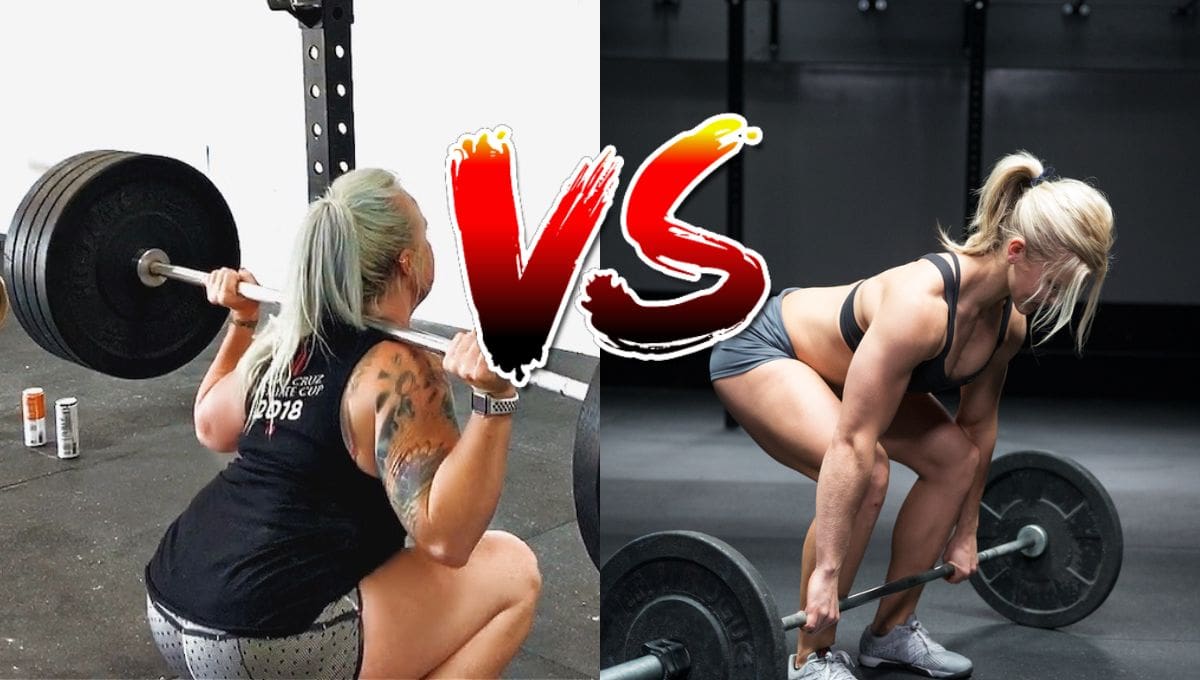
This matters because the squat and deadlift look similar from a distance but demand different joint actions. In a squat, the lifter lowers and raises the body while the bar remains supported across the upper back. The knees travel forward to a meaningful degree, the quads work hard to extend the knees, and the torso must resist flexion while remaining relatively upright.
Pull-Ups vs Rows: Which Builds a Better Back?
In a conventional deadlift, the bar begins on the floor. The lifter must create tension before the bar moves, push through the floor, and extend the hips while keeping the spine controlled. The movement uses the quads during the initial push, but the hamstrings, glutes, spinal erectors, upper back, forearms, and grip take on a major role as the bar travels upward.
A stronger squat will not guarantee a stronger deadlift, and a stronger deadlift will not guarantee a stronger squat. Training research repeatedly shows that strength gains are greatest when the test closely resembles the exercise used in training. That means the best lift for a bigger squat is the squat, and the best lift for a bigger deadlift is the deadlift.
The Case for the Squat
The Squat Builds Powerful Legs
The squat is exceptionally effective for building lower body strength because it allows substantial loading through a large range of motion. The quads are heavily involved in extending the knees on the way up, while the glutes and adductors contribute strongly as the hips extend.
Research comparing squat and deadlift mechanics shows that the squat generally produces greater knee extensor demand, while the deadlift shifts more of the work toward hip extension. This makes the squat particularly valuable for athletes and lifters who want stronger quads, improved leg drive, and the ability to generate force from a deep knee bend.
A full range squat also develops strength in positions that are useful for many athletic tasks. Sprinting, jumping, changing direction, standing from low positions, and accelerating all require coordinated force from the hips and knees. The squat does not perfectly replicate these activities, but its large lower body stimulus makes it a reliable tool for developing the physical qualities behind them.
The Squat Is Easier to Accumulate Quality Training Volume With
For most lifters, squats are easier to train for multiple challenging sets than heavy deadlifts. This does not mean squats are easy. Hard squatting creates major fatigue and demands concentration. However, the bar starts in a stable rack position, each repetition begins with the lifter already holding the bar, and the movement does not require resetting a loaded bar from the floor after every rep.
That practical difference matters. Strength improves through repeated exposure to high quality training. Lifters can often perform several productive squat sets in a session, then repeat the movement again later in the week. This gives the body more opportunities to practice the skill and gradually add load, repetitions, or better execution.
A study comparing hard squat and deadlift sessions found that both produced substantial fatigue, without evidence that the deadlift caused more central fatigue. The squat did create greater peripheral fatigue in the quads, which makes sense given its knee dominant demands. The useful takeaway is that both lifts need recovery, but neither should be labeled inherently destructive when programmed intelligently.
The Squat Improves Your Ability to Accept Load
Brutal strength is not only about moving a barbell. It is also about holding position when a heavy load tries to fold you. A hard squat teaches bracing, upper back tightness, trunk stiffness, balance, and confidence under load.
The barbell squat demands that you create pressure through the torso and maintain a stable trunk while the hips and knees move through a large range. This quality is valuable for general strength training and carries over well to exercises such as split squats, lunges, leg presses, front squats, and many loaded carries.
For lifters who feel weak when they have to stand up with a heavy weight, the squat is difficult to beat.
The Case for the Deadlift
The Deadlift Builds Strength From the Floor
The deadlift has a unique quality that the squat cannot fully match. Every repetition starts from a dead stop. There is no lowering phase before the first pull to create momentum or benefit from a stretch reflex. You must create force against a motionless barbell and maintain position while the entire load is suspended in your hands.
That makes the deadlift highly specific to pulling strength from the floor. It is especially useful for powerlifters, strongman athletes, CrossFit athletes, and anyone who wants a larger conventional or sumo deadlift. It also has clear practical appeal. Picking a heavy object up from the ground is one of the most recognizable displays of whole body strength.
The deadlift requires strong coordination between the feet, legs, hips, trunk, lats, upper back, arms, and hands. If any part loses position, the lift becomes less efficient. This is why improving the deadlift often feels like building a stronger chain from the floor to the fingers.
The Deadlift Emphasizes the Posterior Chain
The posterior chain is a useful term for the muscles on the back of the body that help extend the hips and stabilize the spine. In the deadlift, the glutes and hamstrings work with the spinal erectors to lift and control the bar. The upper back and latissimus dorsi help keep the bar close to the body, while the forearms and hands must maintain grip.
Biomechanical studies show that squat and deadlift patterns distribute joint demands differently. The squat tends to create more demand at the knee, while the deadlift creates greater demand at the hip. This helps explain why lifters with strong quads but weaker hip extension may squat well yet struggle to pull big weights from the floor.
For someone who wants stronger hamstrings, glutes, back, and grip in one exercise, the deadlift is hard to replace. It is not the only route to a powerful posterior chain, since Romanian deadlifts, good mornings, hip thrusts, rows, and back extensions also work well. Still, no other lift combines a heavy floor pull with such a large total body demand.
The Deadlift Rewards Tension and Precision
A heavy deadlift punishes loose setup more quickly than almost any other barbell lift. The bar must be positioned over the middle of the foot, the trunk must be braced, the lats must keep the bar close, and the lifter must create tension before pulling.
This need for precision is a strength benefit in its own right. Deadlifting teaches you to produce force without wasting energy through poor positions. It can improve awareness of bracing and help lifters understand what it means to create full body tension.
However, this feature also explains why deadlifting very heavy too often can become counterproductive. As loads rise, technical errors become more costly and fatigue can make setup quality less consistent. A lifter does not need to pull an all out single every week to get stronger. Well planned submaximal sets, deadlift variations, and gradual progression are usually more productive.
Which Lift Produces More Total Body Strength?
The deadlift has the stronger claim as the single lift that involves the most obvious full body tension. You stand with a bar in your hands, pull from the floor, extend the hips, stabilize the spine, control the shoulders, and grip the weight until lockout. A heavy deadlift feels like a total body event because it is one.
The squat, however, may be more useful for building broad lower body strength across a larger amount of training volume. It strongly develops the quads, glutes, trunk, and ability to drive upward with a loaded bar. It is also easier to modify through front squats, pause squats, high bar squats, low bar squats, and tempo squats.

The answer therefore depends on the target. If total body pulling strength, grip, posterior chain force, and deadlift performance are the priority, choose the deadlift. If powerful legs, squat performance, repeated lower body training, and strength through a deep knee bend are the priority, choose the squat.
For the majority of lifters, calling one lift the universal winner misses the point. The squat and deadlift are complementary. One exposes weaknesses that the other can hide.
What About Muscle Growth?
Although this is a strength comparison, muscle size matters because a larger muscle has greater potential to produce force. The squat is likely to provide a stronger direct growth stimulus for the quadriceps, especially when performed through a controlled and suitably deep range of motion. The deadlift has a stronger posterior chain emphasis, but conventional deadlifts are often limited by grip, back fatigue, and the challenge of repeating demanding floor pulls.
This does not make deadlifts poor for muscle growth. They can build the glutes, hamstrings, back, and forearms, particularly in newer lifters. Yet many experienced lifters benefit from using the deadlift primarily as a strength lift, then adding Romanian deadlifts, leg curls, rows, back extensions, and other exercises to build extra muscle with less technical limitation.
The squat also benefits from assistance work. Leg extensions, split squats, lunges, and hamstring curls can add targeted volume without requiring every set to be a maximal barbell effort. The best strength programs rarely rely on one lift alone.
How to Program Both for Strength
A simple approach is to make one lift the priority and train the other with lower volume. If your goal is a bigger squat, squat twice per week and deadlift once. If your goal is a bigger deadlift, deadlift once per week with a second lighter hinge session, while squatting once or twice with manageable volume.

For the squat, productive work often includes several sets of three to six repetitions using a load that allows solid depth and stable technique. For the deadlift, three to five repetitions often provide enough practice and loading without making every session excessively draining. Some lifters respond well to lower repetition deadlift work, such as sets of one to three, followed by Romanian deadlifts or rows for additional posterior chain volume.
Progress should be steady rather than dramatic. Add small amounts of weight when your repetitions are clean and your positions remain consistent. If form deteriorates, reduce the load, improve the execution, and build back gradually. The strongest lifters are usually not the people who chase a personal record every session. They are the people who can train hard for months without turning every workout into a recovery problem.
The Verdict
The squat is better for brutal lower body strength, quad development, and accumulating productive training volume. The deadlift is better for brutal pulling strength, posterior chain development, grip, and learning to produce full body tension from the floor.
If you can only choose one lift, pick the squat when you want the most repeatable all around lower body strength exercise. Pick the deadlift when your goal is to become exceptionally strong at lifting heavy weight from the floor and building a powerful posterior chain.
The best answer for most serious lifters is not squat or deadlift. It is squat and deadlift, trained with a clear purpose, enough recovery, and a program that lets each lift do what it does best.
Key Takeaways
| Question | Best Choice | Why |
|---|---|---|
| Stronger quads and leg drive | Squat | It places greater training demand on knee extension and allows repeated hard lower body work. |
| Stronger glutes, hamstrings, back, and grip | Deadlift | It emphasizes hip extension, trunk stability, upper back control, and holding a heavy bar. |
| Improving squat performance | Squat | Strength adaptations are greatest in the movement you practice. |
| Improving deadlift performance | Deadlift | It develops the skill and force production required to pull a bar from the floor. |
| Accumulating more lower body training volume | Squat | Most lifters can perform more quality working sets and repeat the lift more often. |
| Building full body pulling strength | Deadlift | It requires coordinated force from the legs, hips, trunk, upper back, and hands. |
| Best long term choice | Both | The lifts train complementary strength qualities and expose different weaknesses. |
References
- Barnes, M.J., Miller, A., Reeve, D. and Stewart, R.J. (2019) ‘Acute neuromuscular and endocrine responses to two different compound exercises: Squat vs. deadlift’, Journal of Strength and Conditioning Research, 33(9), pp. 2381–2387.
- Behm, D.G. and Sale, D.G. (1993) ‘Velocity specificity of resistance training’, Sports Medicine, 15(6), pp. 374–388.
- Contreras, B., Vigotsky, A.D., Schoenfeld, B.J., Beardsley, C. and Cronin, J. (2016) ‘A comparison of gluteus maximus, biceps femoris, and vastus lateralis electromyographic activity in the back squat and barbell hip thrust exercises’, Journal of Applied Biomechanics, 32(3), pp. 254–260.
- Escamilla, R.F. (2001) ‘Knee biomechanics of the dynamic squat exercise’, Medicine and Science in Sports and Exercise, 33(1), pp. 127–141.
- Hales, M., Johnson, B.F. and Johnson, J.T. (2009) ‘Kinematic analysis of the powerlifting style squat and the conventional deadlift during competition: Is there a cross over effect between lifts?’, Journal of Strength and Conditioning Research, 23(9), pp. 2574–2580.
- Swinton, P.A., Stewart, A., Agouris, I., Keogh, J.W.L. and Lloyd, R. (2012) ‘A biomechanical analysis of straight and hexagonal barbell deadlifts using submaximal loads’, Journal of Strength and Conditioning Research, 26(7), pp. 2000–2009.
- Van den Tillaar, R. (2020) ‘Comparison of kinematics and muscle activation between the back squat and deadlift in resistance trained men’, Sports, 8(7), 102.
- Wirth, K., Hartmann, H., Mickel, C., Szilvas, E., Keiner, M. and Sander, A. (2016) ‘The impact of back squat and leg press exercises on maximal strength and speed strength’, Journal of Strength and Conditioning Research, 30(5), pp. 1205–1212.