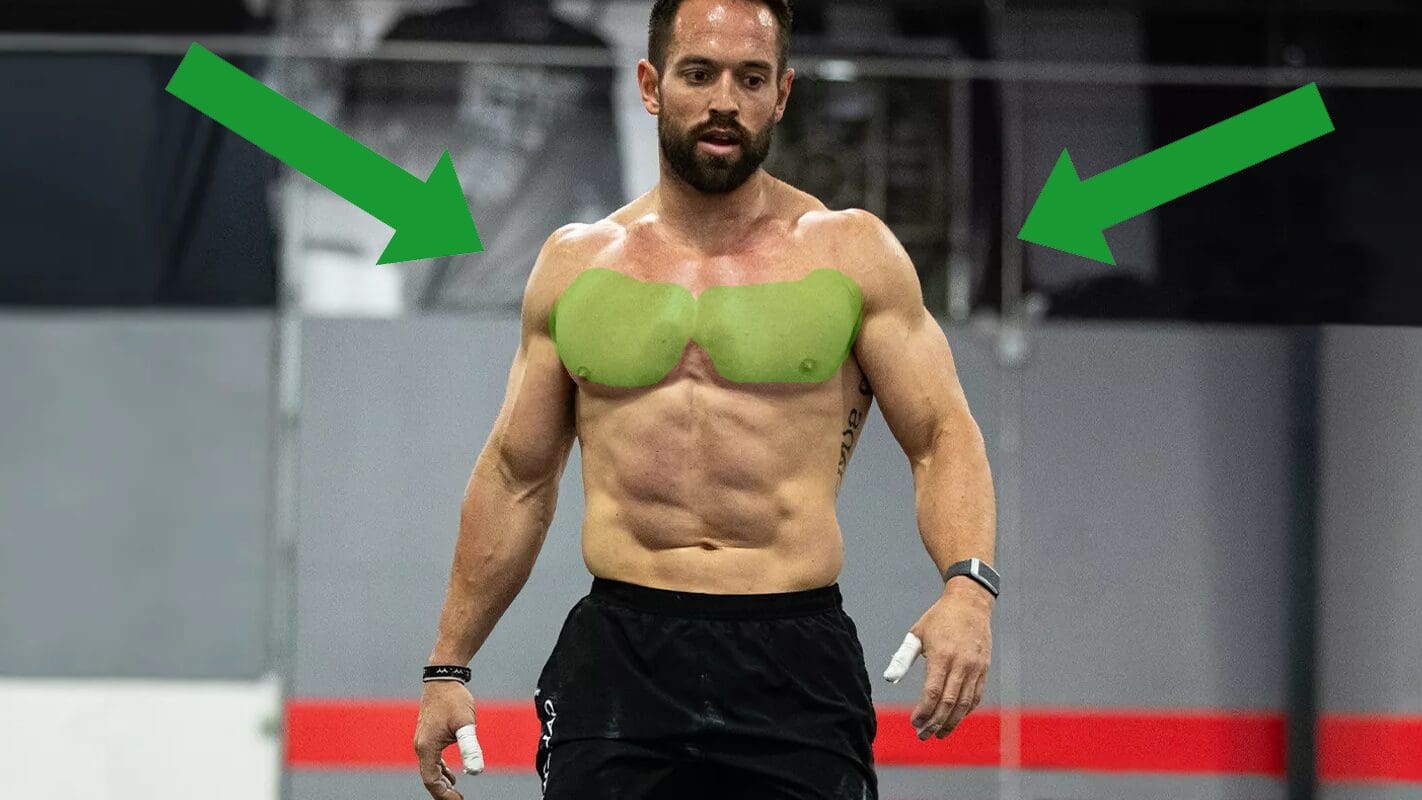


So your strong, you bench, your upper body can shift some serious weight, but why isn’t your chest growing?
This is a common phenomenon, and this article is here to help you out and bulk up your chest in line with the rest of your body.
1. Choose presses that train the chest, not just the lift
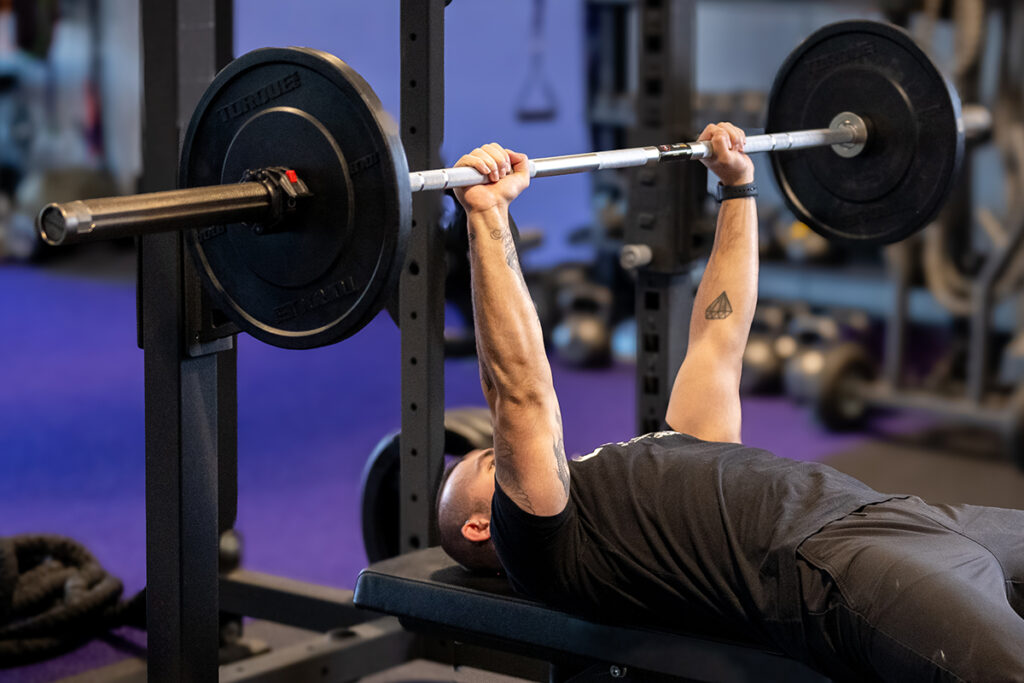
The barbell bench press is a useful exercise, but it is not the only way to build your chest. If your shoulders or triceps do most of the work, adding weight to the bar may improve your bench press without giving your pecs the stimulus you want.
Start by choosing exercises that let you control the movement and feel stable. These might include a barbell or dumbbell bench press, a chest press machine, and a cable or pec deck fly. There is no single exercise that works best for everyone. Your body proportions, mobility, equipment, and comfort all affect which movements you can perform well.
A modest incline can also be useful if you want to emphasize the upper portion of the chest. In a small study of trained adults, bench angle affected which regions of the pectoralis major showed the greatest electrical activity. An incline of about 30 degrees produced greater activity in the upper portion, while a flat bench press favored the middle and lower portions. Electrical activity during one workout does not prove that a movement will produce more long term muscle growth, but it helps explain why a mix of angles can be useful.
Keep the setup consistent. Plant your feet, keep your upper back steady against the bench, and lower the weight under control. Bring the bar or handles down as far as you comfortably can without pain or your shoulders shifting forward. Then press smoothly, without bouncing the weight or turning every repetition into a full body effort. If a barbell press feels uncomfortable, try dumbbells or a machine that lets you find a pain free path.
2. Use enough weekly sets, then earn the right to add more
If your chest only gets a few challenging sets each week, it may not be receiving enough work to grow. Research reviews have found that, on average, higher weekly resistance training volume is associated with greater muscle growth. That does not mean that more is always better. Adding sets that you cannot recover from can make your later workouts worse.
If your current chest routine is very small, gradually build toward roughly 8 to 12 challenging sets per week. Treat that as a practical starting range, not a guaranteed target. Some people make progress with fewer sets, while others may benefit from more. Count the sets in which your chest is a main target, such as presses and fly variations. Sets of shoulder presses or triceps work should not automatically count as full chest sets.
You can complete your weekly work in one or two sessions. If a long chest workout leaves you tired and your later sets become sloppy, split the work across two days. For example, you might do a flat press and a fly on one day, then an incline press and a machine press later in the week. This can make it easier to keep each set controlled and productive.
Increase volume slowly. Add a set to one exercise, then give yourself several weeks to see how you respond. If your repetitions, loads, and chest measurements are not changing, and you feel recovered between sessions, a small increase may be worth trying. If your performance is falling and soreness is lingering, adding more sets is unlikely to fix the problem.
3. Make the working sets challenging, but do not turn every set into a test
A set should be difficult enough that your chest has a reason to adapt. If you finish every set feeling as though you could have done many more repetitions, you may be stopping too early. At the same time, you do not need to reach complete failure on every exercise.
A useful way to judge effort is to estimate how many good repetitions you had left. If you could have completed two more repetitions with the same form, you had about two repetitions in reserve. For most of your chest sets, try to finish with around one to three repetitions in reserve. On a stable machine or a cable fly, you may occasionally go closer to failure. On a heavy barbell press, stopping before your form breaks down is usually a sensible choice.
Research comparing training to failure with training that stops short of failure has not shown that every set must reach the point where another repetition is impossible. Going to failure can also make it harder to maintain performance across a workout. Use the last set of a safe, stable exercise to push closer to your limit if you like, but keep your earlier sets controlled.
Learn the difference between a hard repetition and a poor repetition. If your shoulders roll forward, your range of motion shrinks, or you need a spotter to help with several repetitions, the set has likely gone beyond what you can perform well. A strong chest stimulus comes from repeated, challenging work, not from surviving a single ugly lift.
4. Track progress and give each repetition a useful range of motion
If you change exercises, weights, set counts, and repetitions every week, it is difficult to know whether your chest training is improving. Pick a few movements and keep them in your program long enough to track them. Write down the exercise, load, repetitions, and how difficult the set felt.
Progress can mean adding a repetition while keeping the same weight, using a slightly heavier load for the same repetitions, or improving control and range of motion. You do not have to add weight every workout. The important thing is to build a clear record of gradual improvement while keeping your technique consistent.
Use a comfortable range of motion that lets you stretch the chest under control and press without pain. A shorter movement can make it easier to lift more weight, but the extra load may not help if you avoid the part of the repetition where your chest is working hard. Research generally supports training through a full range of motion for muscle development, although the evidence is not equally strong for every muscle and exercise. For chest training, prioritize a controlled, substantial range rather than forcing an extreme stretch.
Rest long enough to perform the next set well. If you rush into another set while breathing hard and losing repetitions, take more time. A recent review of rest interval studies found that longer rests may offer a small advantage for muscle growth, potentially because they help preserve the amount of work you can perform. About two to three minutes between demanding press sets is a reasonable place to start. Isolation exercises may need less, provided you can maintain your effort and technique.
5. Support your training with food and recovery
Your chest cannot grow from training alone. Your body needs enough energy, protein, and time between demanding workouts to repair and build muscle. If your body weight is dropping quickly, your meals are inconsistent, or you regularly skip protein rich foods, muscle gain can be harder.

Aim to include a protein source in several meals across the day. Meat, fish, eggs, dairy, soy, beans, and lentils can all contribute. A large meta analysis found that protein supplementation can support strength and lean mass gains during resistance training, with average benefits leveling off around a daily intake of 1.6 grams of protein per kilogram of body weight. That is a useful reference point, not a requirement to buy supplements. Many people can reach an appropriate intake through food.
You also need enough total food to support training. If building muscle is your priority and your weight has been stable for months, a small increase in daily food may help. Watch your training performance, body weight trend, and waist measurement over time rather than trying to force rapid weight gain. A large calorie surplus can add body fat without making your chest grow faster.
What Is a Normal Blood Oxygen Level (SpO2) for Your Age?
Recovery is more than avoiding chest exercises for a day. Sleep, stress, and your total training workload all affect how ready you feel for your next session. If you are doing hard pressing on multiple days, count the work your shoulders and triceps are also doing. Persistent joint pain, worsening performance, or soreness that does not settle are signs to adjust your plan. If an exercise causes pain, switch to a comfortable variation rather than pushing through it.
Give the plan time to work
Chest growth is difficult to judge from one workout or one week in the mirror. Use the same exercises for a training block, record your performance, and make one change at a time. That will help you tell whether your chest is responding to a better setup, more useful volume, or improved effort.
The goal is not to make every chest day exhausting. It is to train the pecs with movements you can perform well, accumulate enough challenging work, and gradually improve while recovering between sessions. If your routine has been built around random exercise changes or a single heavy bench press, those adjustments can give you a clearer path forward.
References
- Cabral, H.V. et al. (2022) ‘Non-uniform excitation of the pectoralis major muscle during flat and inclined bench press exercises’, Scandinavian Journal of Medicine & Science in Sports, 32(2), pp. 381–390.
- Morton, R.W. et al. (2018) ‘A systematic review, meta-analysis and meta-regression of the effect of protein supplementation on resistance training-induced gains in muscle mass and strength in healthy adults’, British Journal of Sports Medicine, 52(6), pp. 376–384.
- Refalo, M.C. et al. (2023) ‘Influence of resistance training proximity-to-failure on skeletal muscle hypertrophy: a systematic review with meta-analysis’, Sports Medicine, 53(3), pp. 649–665.
- Schoenfeld, B.J., Ogborn, D. and Krieger, J.W. (2017) ‘Dose-response relationship between weekly resistance training volume and increases in muscle mass: a systematic review and meta-analysis’, Journal of Sports Sciences, 35(11), pp. 1073–1082.
- Schoenfeld, B.J. and Grgic, J. (2020) ‘Effects of range of motion on muscle development during resistance training interventions: a systematic review’, SAGE Open Medicine, 8.
- Singer, A. et al. (2024) ‘Give it a rest: a systematic review with Bayesian meta-analysis on the effect of inter-set rest interval duration on muscle hypertrophy’, Frontiers in Sports and Active Living, 6, article 1429789.
- Rodríguez-Ridao, D. et al. (2020) ‘Effect of five bench inclinations on the electromyographic activity of the pectoralis major, anterior deltoid, and triceps brachii during the bench press exercise’, International Journal of Environmental Research and Public Health, 17(19), article 7339.
Key Takeaways
| Focus | Practical action |
|---|---|
| Exercise choice | Use presses and fly variations you can perform comfortably and consistently. |
| Weekly workload | Start with a manageable number of challenging chest sets and add work gradually if you recover well. |
| Effort | Finish most sets with about one to three good repetitions left. |
| Progress | Track loads, repetitions, and technique across several weeks. |
| Recovery | Eat enough protein and overall food, rest between hard sets, and recover between sessions. |