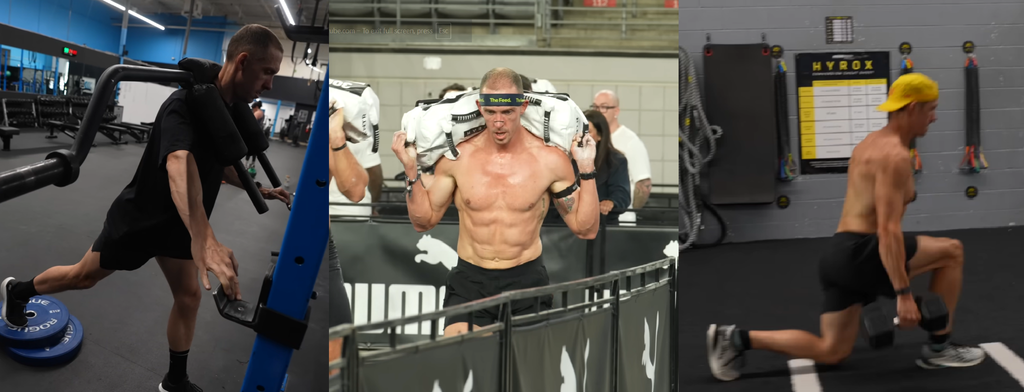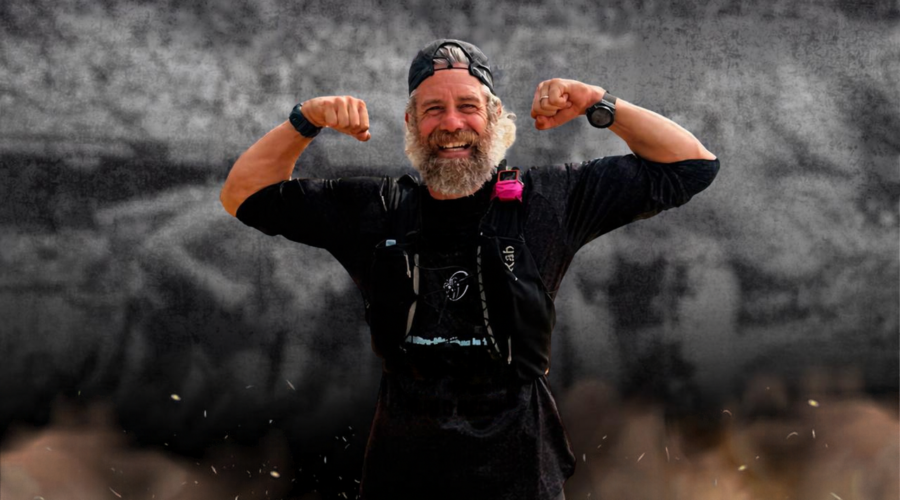


What does it really take to run 100 ultramarathons in 100 days? For David Jackson, the answer is far more complicated than fitness, willpower, or the act of tolerating extreme discomfort.
In the latest episode of The Frog and Dog Podcast on the BOXROX Podcast network, former professional rugby player, breathing coach, and author David Jackson joins hosts Ollie Russell and Travis Owles to discuss his extraordinary challenge, the injury that nearly stopped it after two weeks, and the lessons he took from the brutal experience.


Jackson completed at least 50 kilometers every day for 100 consecutive days, traveling around the UK with his wife Catherine in a camper van. The challenge raised more than £45,000 for Headway UK and Head for Change, two charities that support people affected by brain injury. It also brought more than 850 runners into the journey, and added even more community and support to his challenge.
Chatting with Ollie and Travis, David opens up about about recovery, breath control, decision making, community, and what really matters, both physically and mentally, when pushing for a goal.
From Career Ending Brain Injury to Breathing Coach
Jackson’s path into endurance sport and breathing coaching began with a traumatic brain injury in 2013. During a rugby match, he had a seizure and suffered a bleeding on his brain. This ended his professional rugby career.
He explained to Ollie and Travis that the first six months after the injury were very dark. Once he was safe to leave hospital, the formal support largely ended, and his real recovery was only beginning. “No one could really tell you how much of a recovery you were going to make, how long it would take,” he says.
While rebuilding his life, Jackson became interested in breathing as a way to help regulate his nervous system and recover from disrupted breathing patterns. He later retrained as a strength and conditioning coach, working with Paralympic athletes, and began to see the connection between breathing, performance, mobility, recovery, and mental control.
“I had all these little light bulb moments with my coaching,” he says. “The center of the light bulb moment always came back to the center of that was there was something breathing was having a role on here.”
Why Breathing Matters for Running and HYROX
The episode will be especially useful for runners, HYROX athletes, and anyone who has felt overwhelmed by their breathing during hard training sessions and competitions.
Jackson makes a convincing case that breathing should not be seen as another task to add to an already busy training plan. Instead, it can be integrated into what an athlete is already doing. “You can get super fit without doing anything with your breathing,” he explains. “But if you get super fit and super efficient, strong, good with your breathing, the chances are you’re going to open up a little bit more ability that you’ve got.”
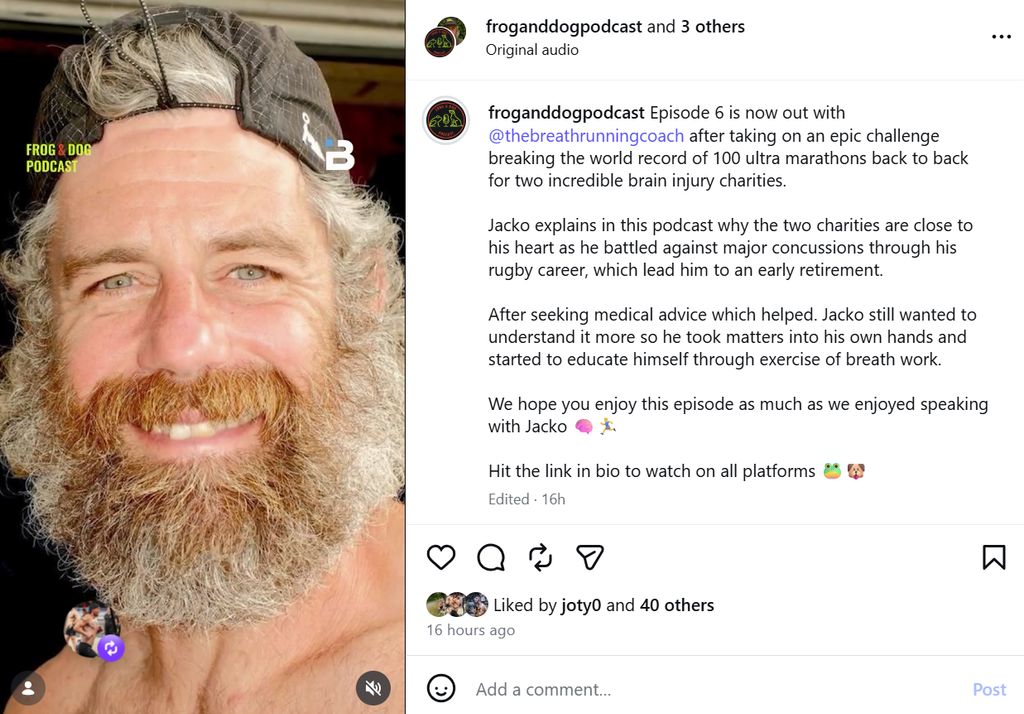
He discusses the relationship between breathing rhythm, perceived effort, and the ability to stay calm under pressure. Watch the video to learn more about his techniques, all of which stem from his simple explanation of why breath control can matter in difficult sessions and races: “If you can’t stay calm with your breathing, it’s exceptionally hard to stay calm in your head, in your mind.”
For HYROX athletes, there are many practical insights on assessing breathing mechanics, learning to control breathlessness, and finding a better rhythm on the SkiErg. Jackson describes how the machine’s pattern can work naturally with the breath: “You’re going up, it’s extension. Extension is inhale. You’re coming down, it’s flexion. Flexion is exhale.”
Breath work is something we all underestimate, or rarely spend time working on. Take a few of David’s tips on board and level up your training and results.
The Injury That Nearly Ended the Challenge
The scale of Jackson’s accomplishment becomes even clearer when he describes what happened on day 14. He began the challenge with the ambitious plan to run two marathons per day, but his body broke down early.
In the Lake District, he was in so much pain that passing drivers stopped to ask whether he needed help. He remembers being unable to walk properly and feeling completely overwhelmed. “I just wanted it to all disappear because I got to the point I couldn’t walk anymore,” he says.
Yet the challenge continued. Watch the video to find out how.
It is a powerful reminder that big challenges rarely unfold as planned. Jackson’s achievement was not built on flawless preparation or effortless discipline. It was built on problem solving, accepting difficult moments, and doing enough to keep moving forward.
Community Carried the Challenge Forward
One of my favorite parts of the podcast is David talking about the role of other people in the project. More than 850 runners joined Jackson across the 100 days, with some taking on their first 10K, half marathon, marathon, or ultramarathon.
“They dragged us through it,” Jackson says. People brought food, washed clothes, fixed equipment, and offered help when he and his wife needed it most. What started as an individual record attempt became a much larger shared community project.
For Jackson, the Guinness World Record was never the main point. “The why was much bigger than me or my ego wanting to have a Guinness World Record,” he says. The goal was to raise money and awareness for people navigating the same uncertainty he experienced after his brain injury.
Lessons On The Road
The episode closes with Jackson’s most meaningful takeaway. After 100 days of running, check out the podcast to learn what he took away from the entire experience.
That idea will resonate with anyone training for a race, rebuilding after injury, pursuing a difficult personal goal, or simply trying to make better decisions day to day.