

Bigger arms are a common beginner goal, and chin ups and biceps curls are two of the most useful exercises for getting there. Both train the elbow flexors, including the biceps brachii, brachialis, and brachioradialis. However, they do it in very different ways.
A chin up is a compound pulling exercise. Your biceps work with your back, forearms, shoulders, and trunk to move your body toward the bar. A biceps curl is an isolation exercise. Its primary job is to train elbow flexion, so the biceps and nearby muscles do more of the work.


This creates an important question for beginners: should you focus on chin ups, curls, or both?
The short answer is that curls are usually the more direct option for maximizing biceps growth, while chin ups are the better all around upper body exercise. Beginners who can only choose one should make their decision based on their current strength, equipment, and broader goals. Most beginners will get the best arm growth by using chin ups for heavy pulling practice and curls for additional targeted biceps volume.
What Muscles Make Your Arms Look Bigger?
The biceps are important, but they are not the only muscles that determine how big your upper arms look. The biceps brachii sits on the front of the upper arm and is responsible for elbow flexion and forearm supination. Supination means turning your palm upward, which is why a standard underhand curl strongly involves the biceps.
Underneath the biceps sits the brachialis. This muscle also flexes the elbow and can make the upper arm look thicker when it grows. The brachioradialis runs from the upper arm into the forearm and contributes to elbow flexion, particularly when the hand is in a neutral position.
Chin ups and curls both train these elbow flexors. Curls allow you to focus on them with fewer competing demands. Chin ups spread the challenge across more muscles, especially the latissimus dorsi, upper back, forearms, and grip.
It is also worth remembering that the triceps make up a large proportion of upper arm muscle mass. Growing your biceps will improve the front of your arms, but a complete arm building plan should include pressing or direct triceps work as well.
Chin Ups: The Compound Option
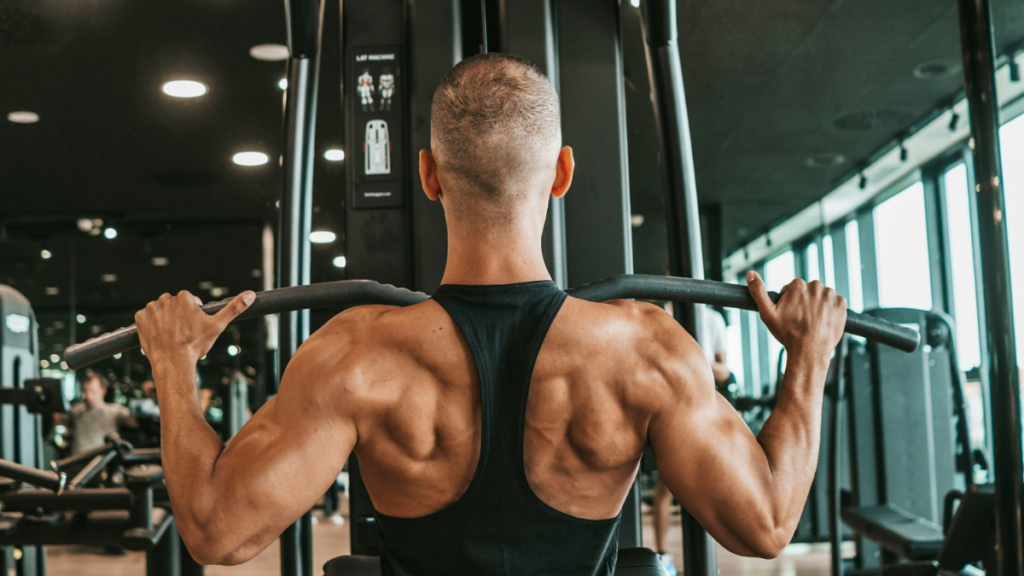
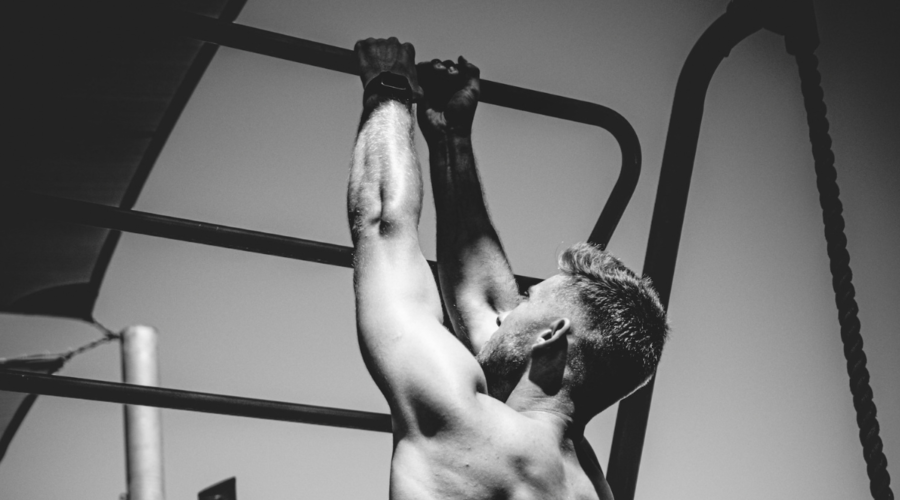
A chin up is performed with an underhand grip. You hang from a bar, pull your chest upward, then lower yourself under control. The underhand hand position places the forearm in supination, which gives the biceps a favorable role during the pulling action.
Why Chin Ups Can Build Your Biceps
Chin ups demand substantial work from the biceps, brachialis, and brachioradialis. Research using muscle activity measurements shows that elbow flexor activity is high during pull up variations, particularly during the upward phase. This makes sense mechanically. Your elbows must bend against your body weight as you pull yourself toward the bar.
For a beginner who is relatively strong or light enough to perform controlled repetitions, chin ups can provide a powerful growth stimulus. Your body weight is often more load than a beginner would initially use for curls. As a result, each repetition can challenge the biceps, back, and grip at the same time.
Chin ups also give you a clear performance target. Going from one good repetition to five, then to eight, is easy to track. Improved chin up strength can build confidence and make many other pulling exercises feel easier.
The Limits of Chin Ups for Bigger Arms
Chin ups are not perfect for direct biceps development. The lats and upper back contribute heavily to the movement, and they may fatigue before your biceps receive as much work as you want. Your grip can also become the limiting factor, especially when you are new to hanging exercises.
Progression can be difficult too. A bar does not allow small increases in resistance. You may move from assisted repetitions to bodyweight repetitions, then eventually add load, but each jump can be relatively large. This can make it harder to accumulate consistent, high quality biceps training volume.
Many beginners cannot yet perform a full chin up. That does not make the movement useless, but it does mean it may not be the most efficient primary biceps exercise at the beginning. Assisted chin ups, slow lowering repetitions, and band assistance can help build the necessary strength.
Biceps Curls: The Direct Option
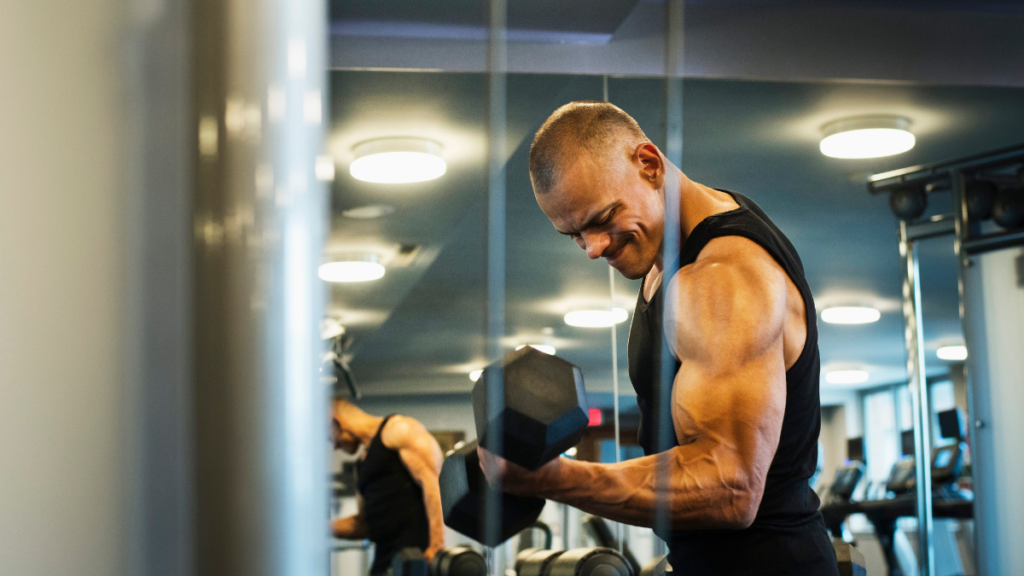
A biceps curl trains elbow flexion with far fewer demands on the rest of the body. You can perform curls with dumbbells, a barbell, cables, resistance bands, or a machine. The exact variation matters less than your ability to use a stable technique, move through a comfortable range of motion, and gradually make the exercise more challenging.
Why Curls Are Usually Better for Direct Biceps Growth
Curls make it easier to place the biceps close to the point of fatigue without exhausting your back or grip first. This is their major advantage. When your goal is specifically to make your biceps bigger, direct work lets you assign more training volume to the target muscles.
They are also easy to progress. You can increase the load in small increments, add repetitions, add a set, or improve control at the same weight. This makes progressive overload practical for beginners. You do not need to jump from lifting your entire body weight to lifting more than your body weight.
3 Top Exercises for a More Muscular Upper Body Without Barbells
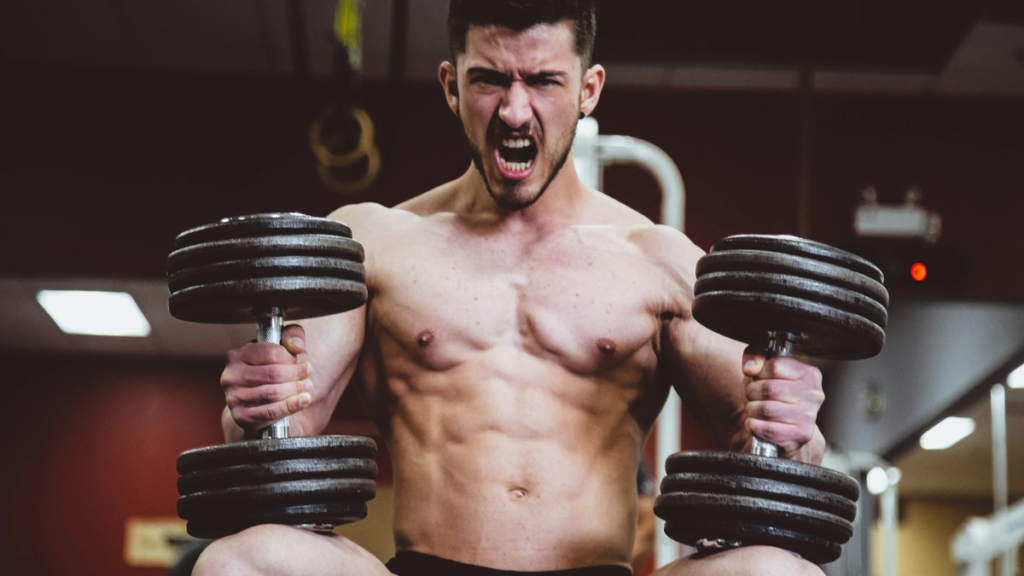
Curls can also be adjusted to suit your body and equipment. Alternating dumbbell curls allow each arm to work independently. Cable curls can provide resistance throughout the movement. Hammer curls shift more emphasis toward the brachialis and brachioradialis. An underhand dumbbell curl allows you to actively supinate the hand as you lift, which is a natural function of the biceps.
The Limits of Curls
Curls will not build your back, improve your hanging strength, or teach the same full body pulling control as chin ups. They are a focused tool, not a complete upper body solution.

Technique can also become sloppy when beginners chase heavier weights too quickly. Swinging the torso, allowing the elbows to drift far forward, or cutting the lowering phase short can reduce the work done by the elbow flexors. A small amount of body movement is not automatically a problem, but beginners should first learn to control the weight through a consistent range of motion.
Which Exercise Builds Bigger Arms?
There is no high quality direct study comparing a chin up only program against a curl only program for biceps size in beginners. That means nobody can honestly claim that one exercise has been proven to beat the other in every situation.
However, the available evidence and the mechanics of the exercises support a sensible conclusion. Biceps curls are likely the better exercise for maximizing direct biceps growth because they allow more targeted volume and finer progression. Chin ups can absolutely build the biceps, especially for beginners, but they distribute effort among several major muscle groups.
If your only goal is bigger biceps, curls have the advantage. If you want bigger arms while also building a stronger back, grip, and pulling pattern, chin ups are an excellent choice. If you want the best overall result, use both.
The Best Beginner Strategy: Combine Chin Ups and Curls
For most beginners, the question should not be chin ups or curls. It should be how to use each exercise well.
Start with chin ups or an appropriate chin up regression early in a workout, when you are fresh. This lets you practice the more demanding movement with good control. Then use curls afterward to give the elbow flexors the focused work that chin ups may not fully provide.
This order works well because chin ups require more coordination and place greater demands on the shoulders, trunk, and grip. Curls are less technically demanding, so they remain productive later in the session.
A beginner could train pulling movements twice per week. On each day, perform two to four challenging sets of chin ups, assisted chin ups, or controlled lowering repetitions. Then add two to three sets of curls. Choose a load that allows smooth repetitions while still making the final few repetitions genuinely difficult.

You do not need to train every set to complete muscular failure. Consistently finishing sets with only a small number of repetitions left in reserve is usually enough to create a strong stimulus while allowing you to maintain technique and recover for the next session.
How to Progress Each Exercise
Progressing Chin Ups
If you cannot do a full chin up yet, begin with assistance that allows controlled repetitions. An assisted chin up machine, a resistance band, or a low bar bodyweight row can all be useful starting points. You can also perform slow lowering repetitions by stepping or jumping to the top position and taking several seconds to lower.
Once you can complete multiple full repetitions, aim to increase your total weekly repetitions. For example, if you can perform three sets of three repetitions, work toward three sets of four. Avoid rushing the movement. Use a full hang that feels comfortable for your shoulders, pull smoothly, and lower under control.
When bodyweight chin ups become easier, you can add repetitions, pause briefly at the top, slow the lowering phase, or eventually use a small amount of external weight.
Progressing Biceps Curls
Start with a weight you can control for roughly eight to fifteen repetitions. Keep your upper arm reasonably still, curl through a comfortable range, and lower the weight under control. The lowering phase matters because resistance training that includes both lifting and lowering actions is effective for improving strength and muscle size.
Add repetitions until you reach the top of your chosen range for every set. Then increase the load slightly and build the repetitions back up. This method is simple, measurable, and especially useful for beginners.
You can use a straight bar, dumbbells, cables, or bands. Dumbbells are often a good choice because they allow each arm to move naturally and make it easier to notice strength differences between sides.
Common Mistakes That Limit Arm Growth
The first mistake is treating chin ups as a pure biceps exercise. They are a valuable biceps movement, but your back and grip are meant to contribute. Do not become frustrated if your lats feel heavily involved. That is normal and useful.
The second mistake is using curls with a weight that is too heavy to control. If every repetition turns into a full body swing, you may be practicing momentum more than elbow flexion. Choose a load that lets you feel your biceps working through the entire repetition.
The third mistake is doing too little total work. One set of curls at the end of a random workout is unlikely to maximize growth. Muscle size changes slowly, so use a routine you can repeat consistently for months.
The final mistake is ignoring food, sleep, and recovery. Resistance training provides the signal to grow, but adequate protein, enough total food for your goal, and regular sleep help support the adaptation.
The Verdict
For beginners who want the biggest possible biceps, curls are the more targeted and practical exercise. They make it easier to train the elbow flexors hard, add gradual resistance, and accumulate enough weekly volume for growth.

Chin ups are still one of the best upper body exercises you can do. They train the biceps strongly while building your back, grip, and bodyweight pulling strength. If you can perform them, they deserve a place in a beginner program.
The most effective answer is to use chin ups to build broad pulling strength and curls to make sure your biceps receive enough direct work. That combination gives beginners a stronger, more muscular upper body and removes the need to choose only one.
References
- American College of Sports Medicine (2026) ‘Resistance training prescription for muscle function and hypertrophy: An overview of reviews’, Medicine & Science in Sports & Exercise, 58(5), pp. 1061–1076.
- Baz Valle, E., Santos, L., Leite, R.D., Ribeiro, A.S., Schoenfeld, B.J. and Nunes, J.P. (2022) ‘Resistance training variables for optimization of muscle hypertrophy: An umbrella review’, Frontiers in Sports and Active Living, 4, 949021.
- Fink, J., Kikuchi, N. and Nakazato, K. (2018) ‘Effects of rest intervals and training loads on metabolic stress and muscle hypertrophy’, Clinical Physiology and Functional Imaging, 38(2), pp. 261–268.
- Kubo, K., Ikebukuro, T. and Yata, H. (2023) ‘Comparison between concentric only, eccentric only, and concentric eccentric coupled resistance training of the elbow flexors for muscle strength and hypertrophy’, European Journal of Applied Physiology, 123(1), pp. 65–76.
- Lusk, S.J., Hale, B.D. and Russell, D.M. (2017) ‘Electromyographic analysis of muscle activation during pull up variations’, Journal of Strength and Conditioning Research, 31(5), pp. 1238–1244.
- Nunes, J.P., Schoenfeld, B.J., Grgic, J., Cunha, P.M., Ribeiro, A.S. and Cyrino, E.S. (2021) ‘Influence of resistance training load on measures of skeletal muscle hypertrophy: A systematic review and meta analysis’, Sports Medicine, 51(6), pp. 1203–1213.
- Schoenfeld, B.J., Ogborn, D. and Krieger, J.W. (2017) ‘Dose response relationship between weekly resistance training volume and increases in muscle mass: A systematic review and meta analysis’, Journal of Sports Sciences, 35(11), pp. 1073–1082.
- Shinohara, M., Yoshitake, Y. and Kouzaki, M. (1995) ‘Electromyographic study of the elbow flexors during forearm supination and pronation’, Tohoku Journal of Experimental Medicine, 175(4), pp. 285–292.
- Souza, M., Simao, R., Miranda, F., da Silva Novaes, J., Lemos, A. and Willardson, J.M. (2020) ‘Seated row and biceps curl exercises present similar acute responses of elbow flexor muscles’, European Journal of Physical and Rehabilitation Medicine, 56(5), pp. 620–626.
Key Takeaways
| Question | Practical answer |
|---|---|
| Which is better for direct biceps growth? | Biceps curls are usually the more direct and adjustable exercise for building the biceps. |
| Can chin ups build bigger arms? | Yes. Chin ups train the biceps hard while also developing the back, grip, and pulling strength. |
| What should beginners do? | Use chin ups or an assisted variation first, then add curls for targeted biceps volume. |
| How often should you train them? | Two pulling sessions per week is a practical starting point for many beginners. |
| What matters most? | Consistent training, controlled technique, gradual progression, recovery, and enough total weekly work. |