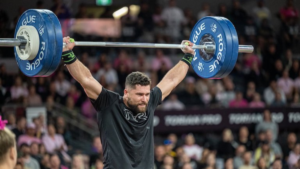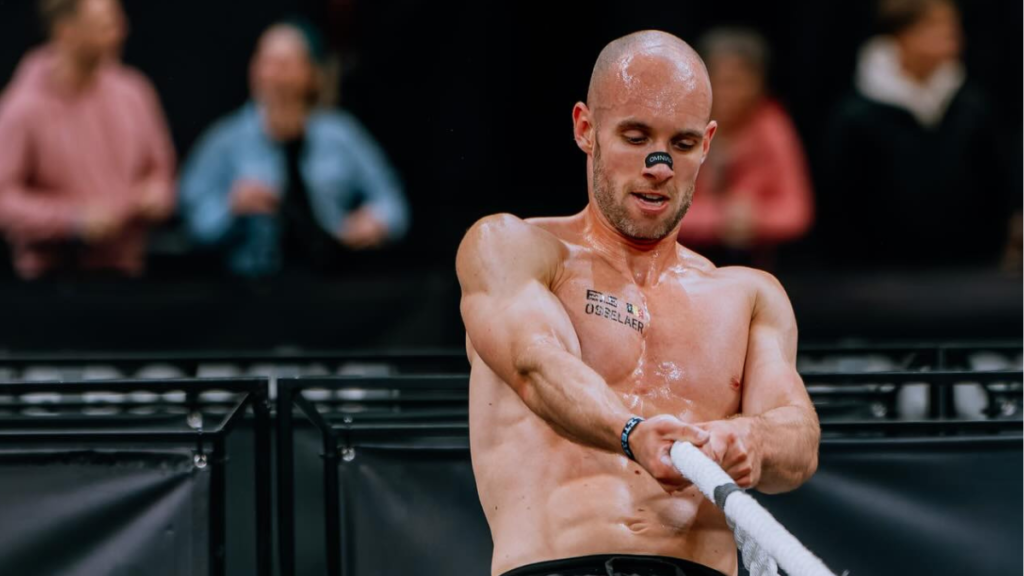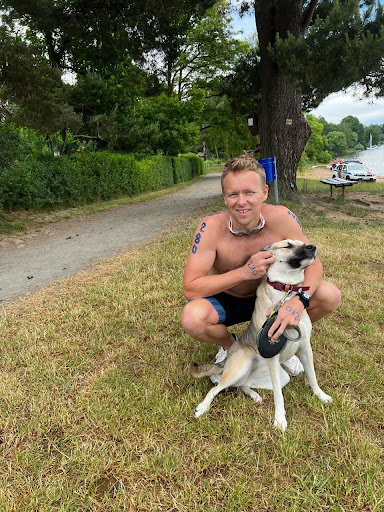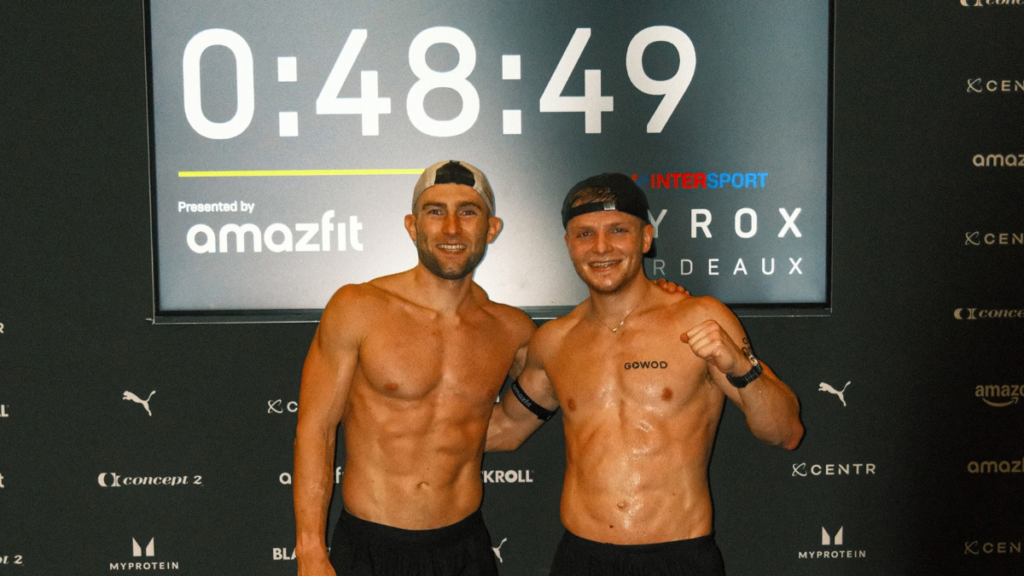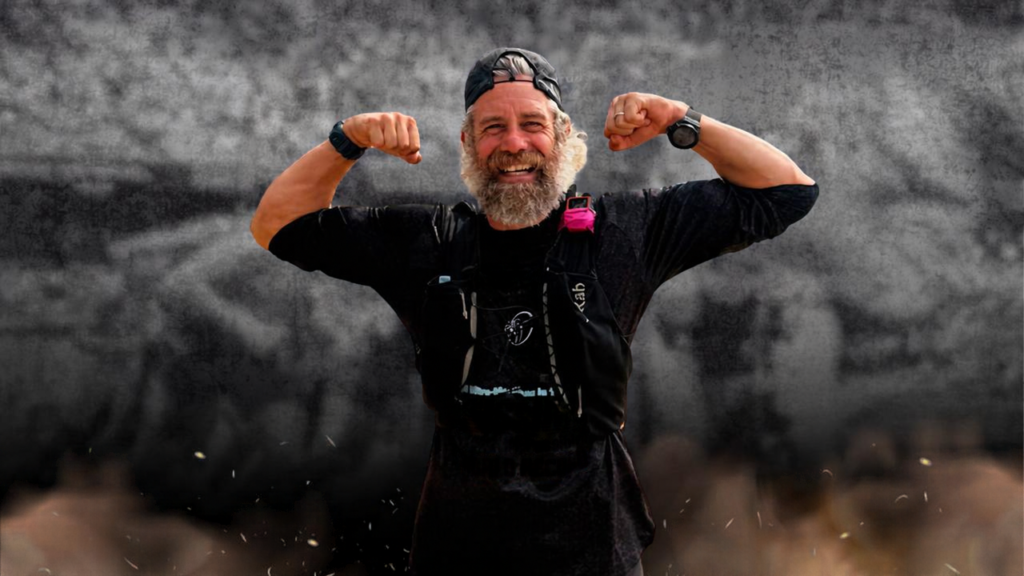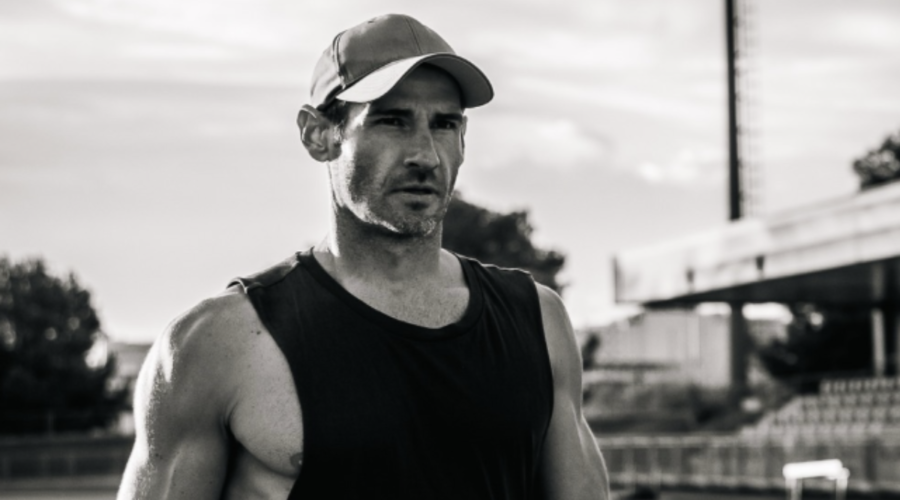


In the latest episode of the Hybrid Fitness Report, Jon Wynn describes his life in chapters. There was the time before the military, his years in the military, addiction, and then HYROX.
Now he is preparing to enter another one.


A fixture in the elite 15 since his debut in 2022, Jon finished in the top 10 at three consecutive HYROX World Championships from 2023 to 2025. He has also won world titles in Pro Doubles and the Mixed Relay Invitational.
But in November he will undergo major knee surgery and, approaching 40, he knows the chances of him getting his running back to an elite level are slim.
Jon’s Beginnings as an Athlete
Born in Newcastle in New South Wales, Wynn competed in athletics and rugby league from a young age. Perhaps surprisingly for a HYROX standout, javelin became his strongest event.
At 16, he made an Australian under-18 team and was preparing to compete at the World Youth Championships but a couple weeks before the competition, he tore a ligament from his elbow.
Wynn was offered surgery but decided against it.
“I feel like it was a bit of a mistake now,” he said. “I should have got the surgery and just seen what I could have done.”
He returned to rugby league and played first grade as an 18-year-old, but did not believe he was going to reach the highest level. After periods working in a timber mill and as an apprentice roof tiler, he began looking for a different direction and found a military recruitment magazine in his brother’s room.
Australian Special Forces
The magazine advertised direct entry into the Australian Special Forces. Wynn applied and was accepted into a process that took him through basic training, infantry training, advanced infantry training and selection in little more than a year.
He spent his 21st birthday in basic training, his 22nd birthday on selection and his 23rd birthday on his first deployment to Afghanistan.
Wynn was deployed to Afghanistan in 2009, 2010, 2011 and 2012. He had entered the military specifically wanting to deploy, but the reality of repeated exposure to combat left a lasting impact.
During one of his earliest firefights, a bullet struck the plate in his body armour. That night, he woke believing that he could hear and feel the impact happening again. He also lost friends across successive deployments.
“When you go to war, you get strong, fit and healthy, but you’re in high-stress environments,” he said. “Then when I came home, I put alcohol and drugs into my system. It started to become a coping mechanism.”
Addiction and Sobriety
Wynn does not attribute his addiction solely to his military experiences. With therapy, he came to recognise patterns from his childhood, like using food for comfort during difficult periods at home.
Sport then became another way to change how he felt. Strong performances brought recognition and encouraged him to pour himself into training.
That same capacity for fixation could also be destructive. After leaving the military, Wynn went through repeated periods of substance abuse, treatment and relapse before committing to sobriety in November 2020.
He describes the first 12 months as the hardest period of his life. For three years, he attended three or four meetings or therapy sessions each week.
“If I identify as not being an addict, that’s one step closer to picking up because I’m not acknowledging the problem anymore,” he said. “I’m always an addict. That stops me from picking up.”
That explains why he includes “Fitness and Sobriety” in his social media handles.
Finding HYROX
A knee operation in 2016 had left Wynn with no cartilage in the lateral compartment of one knee. He was told that he should not run again without first undergoing a much larger corrective operation.
During his first year of sobriety, he focused on rebuilding his strength and began training in jiu-jitsu. Then he noticed a HYROX workout written on the wall of his gym.
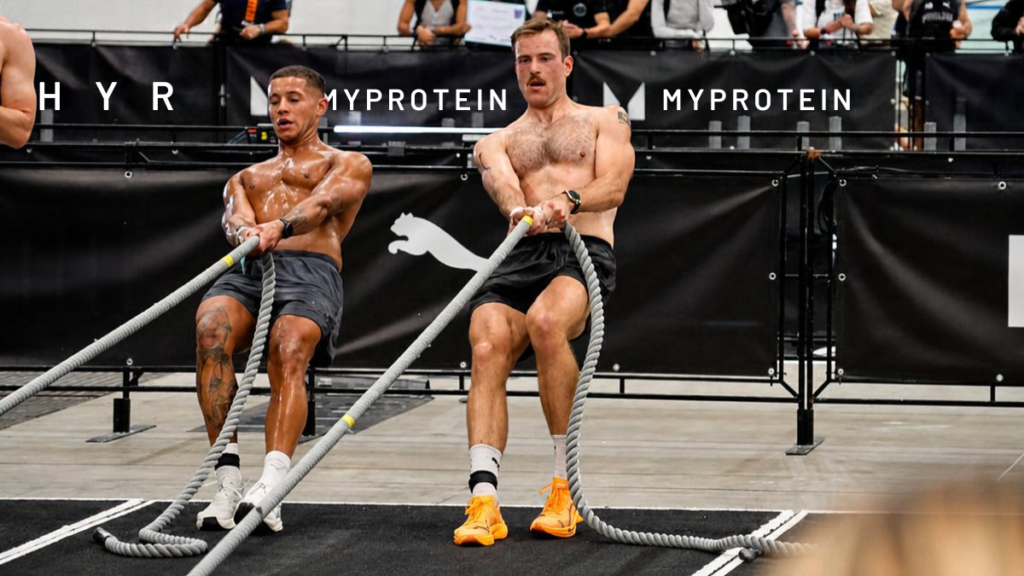
The format immediately appealed to him. Running separated by the SkiErg, sled push, sled pull and other stations reminded him of military training.
Wynn began with a 20-minute run and gradually increased the load. His knee appeared to be ok.
His wife was initially concerned the training required to compete in HYROX could become another unhealthy fixation and potentially threaten his recovery, but Wynn discussed the goal with his therapist and committed.
With three months to prepare, he entered HYROX Vienna in 2022. He trained without access to all the official equipment, creating sessions from running, kettlebell swings, lunges and thrusters with a weighted bag.
He finished his first Pro race in 1:07:51. Later that year, he recorded 1:00:26 in Valencia, 1:00:08 in Madrid and then 58:48 in Frankfurt.
Four races in and Jon was already amongst the very best in the world.
Elite 15
He would go on to finish 6th at the 2023 World Championships, ninth in 2024 and fifth in 2025.
The Chicago World Championships in 2025 became a highpoint. After finishing fifth in the Elite 15 Singles in 55:49, Wynn partnered with Graham Halliday to win the Pro Men’s Doubles title in 50:23.
In Stockholm the following year, he helped Australia defend its Mixed Relay Invitational world title. Wynn, James Kelly, Jess Pettrow and Calypso Sheridan defeated Germany by 11 seconds.
Across six seasons, Wynn has completed 40 HYROX races and his longevity has made him one of the sport’s established names during a period in which Elite 15 racing has become progressively faster and much higher profile.
That increasing standard ultimately connects to his decision to step away. Jon knew that his knee was preventing him from completing the running volume necessary to remain competitive.
Perth 2026
At HYROX Perth in August, Wynn was injured but still completed the Pro Men race in 56:33. An exceptional time that concealed what was happening inside the race.
After the burpee broad jumps, the pain increased. The repeated corners and farmer’s carry left the knee feeling unstable.
“I finished that race and knew my season was over,” he said. “I thought my knee was just going to go.”
The problem now affects far more than racing. Wynn says he cannot run outdoors for longer than around 20 minutes without the knee beginning to ache and swell. Even driving can cause pain.
Alongside the loss of cartilage, he now has a horizontal tear in the medial meniscus and swelling within the bones around the joint. One leg is also almost three centimetres shorter than the other, an imbalance that has affected his mechanics since childhood.
Continuing to train through the damage could remove the option of corrective surgery and bring forward the need for a knee replacement.
What’s Next?
The planned osteotomy is intended to realign Wynn’s leg and distribute the load more evenly through his knee. The operation will involve cutting and repositioning either the tibia or femur, with the surgeon currently expecting to work on the tibia.
It is not the first time the procedure has been considered. When doctors discussed it with Wynn in 2016, he was only a month into an earlier attempt at sobriety. His medical team feared that a long period of inactivity and the need for pain medication could trigger another relapse.
So he underwent a smaller procedure with a shorter recovery. Almost a decade later, that solution has reached its limit.
“I’m nervous about having to be sedentary and go through this,” he said. “Putting my hand up and saying I’m not invincible helps other people.”
The physical timeline remains uncertain. Some patients begin easy running after four months, while others are unable to run after eight. Wynn has been told that there is no guarantee his body will adapt well enough for him to return to the level he previously reached.
“This could be the end of my sporting career,” he said. “There’s a chance I’ll never come back.”
Choosing Longevity Over the Elite 15
Jon is making the decision with more than racing in mind. Now a father, he wants to remain active with his wife and two young daughters and protect the possibility of a pain-free future.
He still has sporting ambitions. He would like to complete an ultramarathon, improve his 10K and half-marathon times, and continue racing HYROX as he gets older. If the surgery goes well, returning as an age-group athlete would represent an enormous success.
But he is deliberately avoiding rigid goals for the early stages of recovery. Setting a target that his body cannot meet would create another source of frustration during an already difficult period.
“There’s a silver lining in everything if you’re willing to accept it,” he said. “I’ll put my energy elsewhere.”
That may include expanding his work as a coach through Jon Wynn Performance. With his weekly training volume already reduced, Wynn has begun taking on more athletes and redirecting some of the energy previously absorbed by his own preparation.
Whatever form it takes, movement is likely to remain part of his life.
“I need exercise,” he said. “It calms my nervous system. It gives me purpose. I like seeing improvements in whatever area it is.”
Wynn entered HYROX after being told that he should not run. Within four races, he had reached the Elite field. Over the following seasons, he became a three-time World Championship top-10 finisher, a Pro Doubles world champion and a Mixed Relay Invitational winner.
His next goal is to get through surgery, protect his sobriety and rebuild without knowing exactly what his body will allow. Returning to HYROX remains the ideal outcome, but Wynn is prepared to find a different direction if that return never comes.
“If I don’t get back to running like I am now, it’s okay,” he said. “I’ll find something.”
Watch the full episode of the Hybrid Fitness Report with Jude and Paul Reynolds here:
Follow The Hybrid Fitness Report and stay up to date with all the latest news from the HYROX scene.