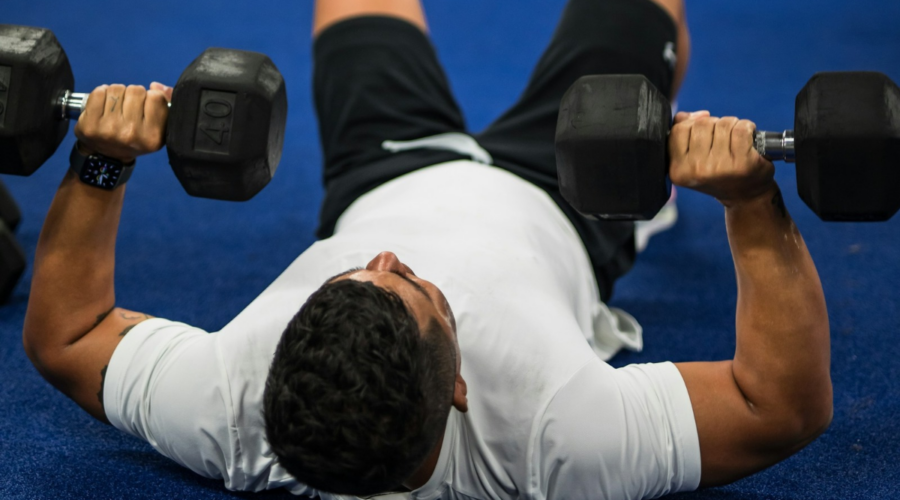


There is no doubt that the barbell bench press is the most popular chest exercise on the planet. But if you’re sick of it, can’t work with it due to injury or range of motion issues, or don’t have access to the equipment, here are effective alternatives to help you reach your goals.
Why the Barbell Bench Is Not Mandatory for Chest Growth
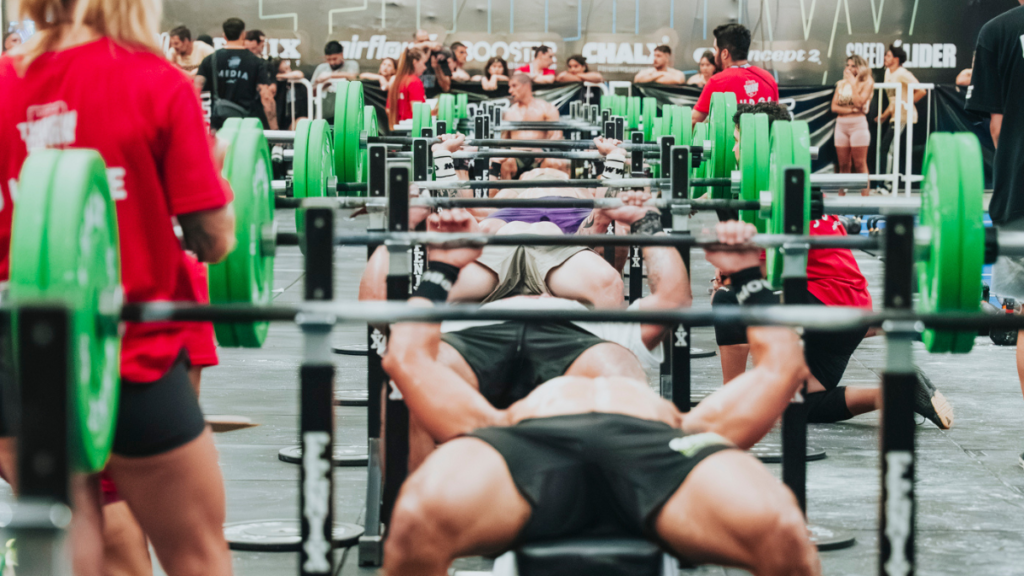
For decades, flat barbell bench pressing has served as the default measuring stick for upper-body pressing strength and chest size.
While the barbell bench press is an effective compound movement, research comparing free-weight barbells, dumbbells, and chest press machines shows that chest muscle activation and hypertrophy do not depend exclusively on using a straight barbell.
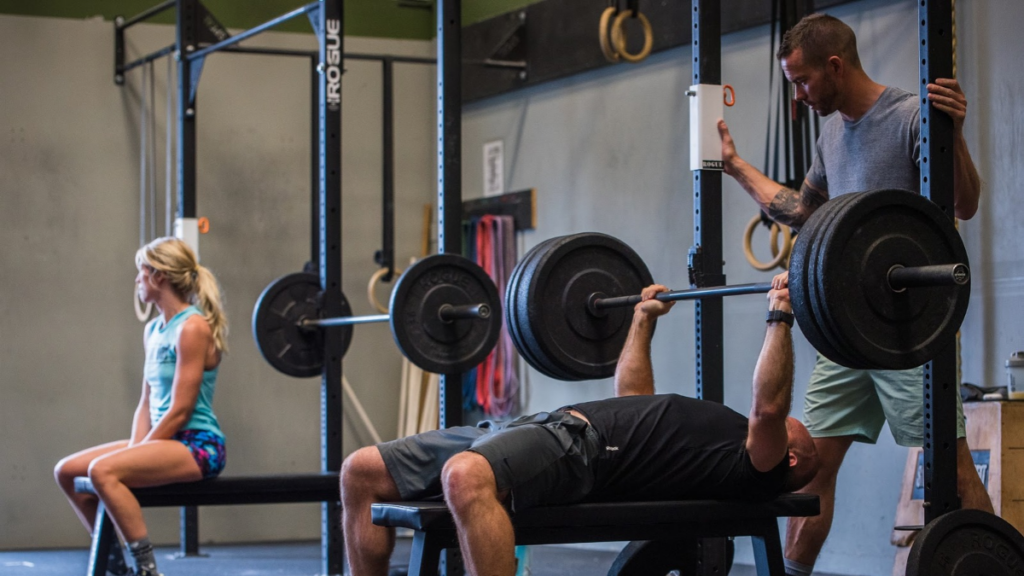
Electromyography studies comparing barbell and dumbbell bench presses have found comparable pectoralis major activation under well-matched conditions, while dumbbells allow a deeper stretch at the bottom and independent movement for each arm.
Machine-based chest presses and cable flyes also offer practical advantages that a straight barbell cannot match. Because a barbell locks both hands onto a rigid shaft at a fixed grip width, your wrists and shoulders have to adapt to the bar rather than moving along their most natural path.
Research on resistance training loading demonstrates that muscle growth responds to sufficient mechanical tension across effective loading ranges rather than a single magic exercise, meaning you can build substantial chest size using dumbbells, machines, cables, and bodyweight movements when you train hard and progress consistently.
Key Angles and Movements That Build a Fuller Chest
A well-developed chest relies on training the pectoralis major across its different regions and ranges of motion, especially the clavicular head under the collarbone and the broader sternocostal portion that makes up most of the chest. Changing bench incline, using independent implements, and combining pressing with adduction or stretch-focused movements lets you challenge the chest thoroughly without ever touching a barbell.
Incline Dumbbell Pressing for Upper Chest Emphasis
Raising the bench to a moderate incline of roughly thirty to forty-five degrees shifts emphasis toward the upper fibers of the pectoralis major and the front deltoids. Electromyography research evaluating incline angles shows that incline pressing increases upper pectoralis involvement compared with flat pressing, helping bring up an area that often lags behind.
Using dumbbells on an incline bench lets you lower the weights deeply alongside your chest without a bar stopping at your sternum, creating a strong stretch across the fibers before you press back up.
Flat Dumbbell Press and Chest Flyes for Stretch and Tension
Pairing a flat dumbbell press with a controlled dumbbell or cable chest fly gives your chest both heavy compound pressing and focused horizontal adduction. Research comparing flyes and presses indicates that fly variations can elicit high pectoralis major activity while placing greater emphasis on horizontal adduction and stretch, whereas presses allow heavier overall loads and stronger triceps and front-delt contribution.
Lowering the dumbbells with control, keeping your shoulder blades tucked slightly back against the bench, and avoiding sloppy bouncing at the bottom keeps tension right on the chest rather than letting momentum take over.
Cable Crossovers and Chest Press Machines for Constant Resistance
Cable crossovers and selectorized or plate-loaded chest press machines solve one of the biggest limitations of free weights: gravity pulls straight down, which reduces horizontal resistance at the top of a dumbbell press or fly. Cables keep tension flowing across the entire arc of adduction, including across the midline of your body where the chest contracts hard.
Machines also reduce stabilization demands late in a workout, allowing you to push sets close to muscular failure safely even when your arms and shoulders are already fatigued.
Chest Building Options Without a Barbell
| Exercise | Primary Chest Focus | Key Advantage Without a Barbell | Typical Working Range |
| Incline Dumbbell Press | Clavicular head and overall chest | Deep stretch and independent arm paths without bar path limits | 8 to 12 controlled reps |
| Flat Dumbbell Press | Sternal pectoralis major and front delts | Natural wrist rotation and full bottom range of motion | 8 to 12 controlled reps |
| Cable Fly or Crossover | Sternal and medial chest adduction | Steady tension through peak contraction and midline squeeze | 12 to 15 controlled reps |
| Chest Press Machine | Overall pectoralis major | High stability for pushing close to failure safely | 8 to 15 controlled reps |
How to Structure Your Training Without a Barbell
Getting a jacked chest without a barbell requires consistent weekly volume, smart exercise order, and genuine effort near muscular failure rather than random pumping. Meta-analyses and reviews on resistance training volume and effort show that training a muscle group twice per week with roughly ten to twenty total weekly sets supports strong hypertrophy for most lifters, provided recovery keeps pace. Starting your session with your primary compound press, whether incline dumbbell presses or a sturdy chest press machine, lets you apply high mechanical tension while your energy and focus are highest.
Following your main press with a secondary press at a different angle and a controlled cable fly or machine variation covers different lengths and joint angles in a single session. Aim to leave roughly one to two clean repetitions in reserve on most working sets, taking occasional sets closer to failure on cables or machines where form breakdown is low risk. Track your weights and repetitions from week to week so your chest steadily earns a reason to grow bigger and stronger.
Key Takeaways
| Topic | Main Takeaway |
| Barbell Necessity | A barbell bench press is optional because dumbbells, cables, and machines deliver strong chest activation and hypertrophy. |
| Angle Variety | Combining incline pressing, flat pressing, and adduction movements trains different chest regions and lengths. |
| Cable and Machine Value | Cables and chest press machines maintain steady tension and allow safe sets near failure without a spotter. |
| Weekly Execution | Spreading ten to twenty weekly sets across two sessions with progressive overload drives consistent chest growth. |
References
- Farias, D.A., Willardson, J.M., Paz, G.A., Bezerra, E.S. and Miranda, H., 2017. Maximal strength performance and muscle activation for the bench press and triceps extension exercises performed on a stable versus unstable surface or with dumbbells versus barbell. Journal of Strength and Conditioning Research, 31(7), pp.1879-1887.
- Lauver, J.D., Cayot, T.E. and Scheuermann, B.W., 2016. Influence of bench angle on upper extremity muscular activation during bench press exercise. European Journal of Sport Science, 16(3), pp.309-316.
- Schoenfeld, B.J., Grgic, J., Van Every, D.W. and Plotkin, D.L., 2021. Loading recommendations for muscle strength, hypertrophy, and local endurance: A re-examination of the repetition continuum. Sports, 9(2), p.32.
- Trebs, A.A., Brandenburg, J.P. and Pitney, W.A., 2010. An electromyography analysis of 3 muscles surrounding the shoulder joint during the performance of a chest press exercise at several angles. Journal of Strength and Conditioning Research, 24(7), pp.1925-1930.