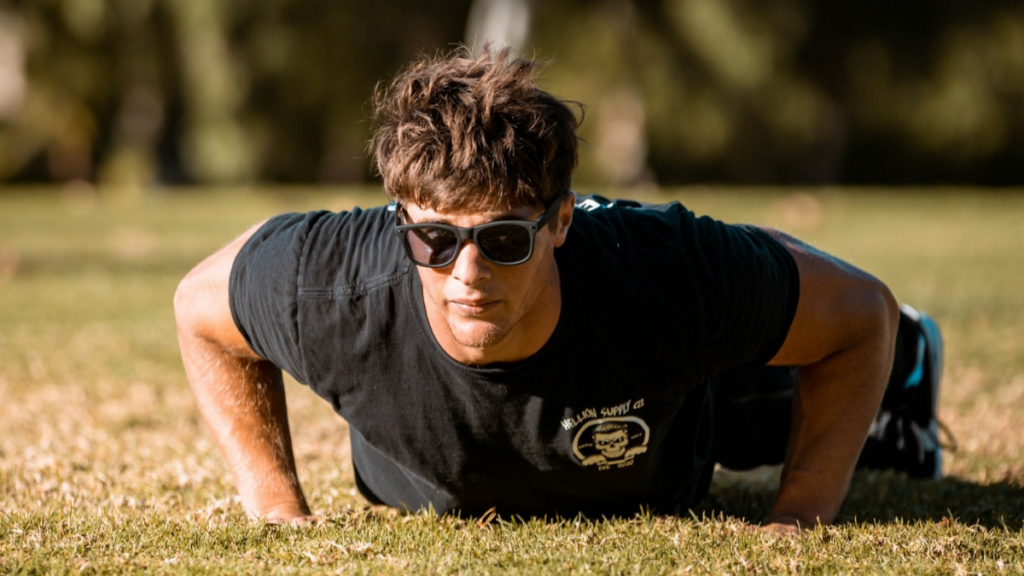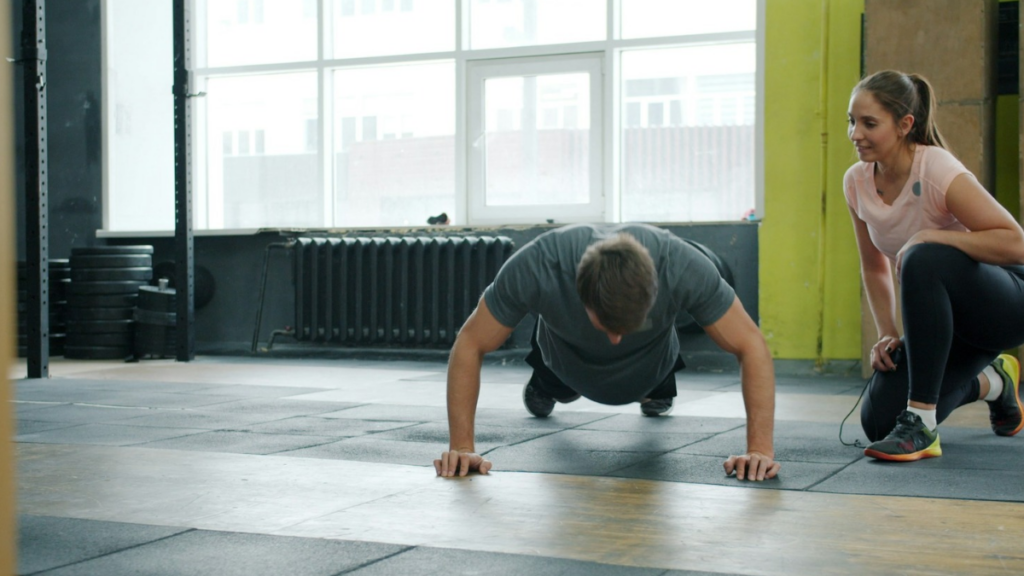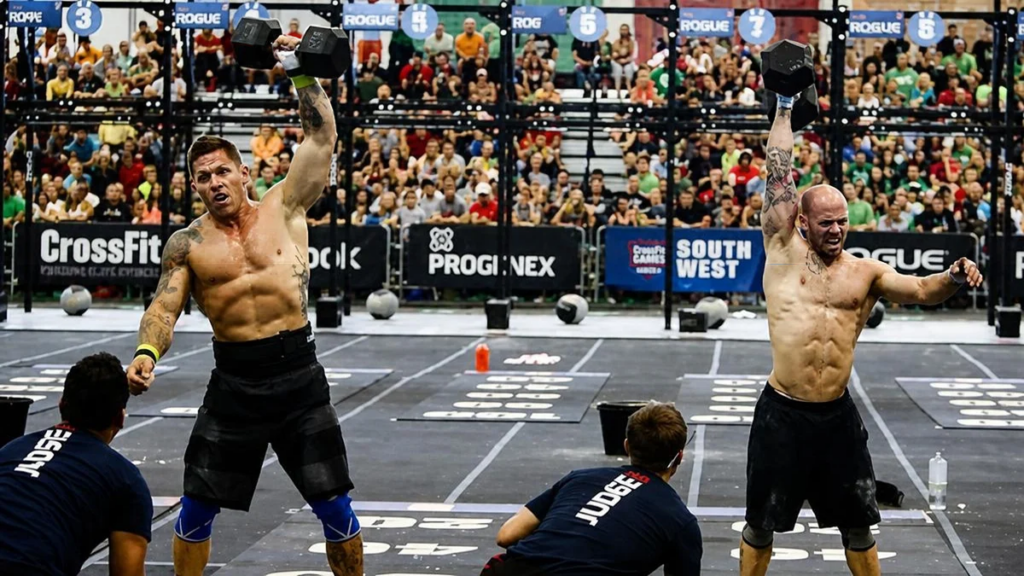


Training changes once you age past 30, but there is no reason to let the results start slipping. This workout will help you maintain and develop strong, big arms for sport and life.
Why Arm Training Needs A Smarter Approach After Thirty
Building noticeable arm size after thirty is completely realistic, as resistance training research consistently demonstrates that adult men retain strong capacity for muscle hypertrophy and strength gains when mechanical tension and progressive overload are applied appropriately. What changes after thirty is not your ability to grow muscle, but rather the recovery speed of your tendons and ligaments compared to your muscle bellies, alongside real-world demands like career stress, family responsibilities, and desk posture.

Tendons have lower blood supply than skeletal muscle and adapt more slowly to sudden spikes in heavy loading, which explains why heavy straight-bar curls and abrupt skull crushers frequently trigger elbow tendonitis in lifters over thirty.
Another common pitfall is overlooking the true anatomical makeup of the upper arm. Anatomical data shows that the triceps brachii accounts for roughly sixty to seventy percent of upper arm muscle mass, while the biceps brachii and brachialis make up the remaining portion. Spending seventy percent of your arm workout on curls while treating triceps work as a rushed afterthought leaves the biggest driver of arm circumference undertrained. Using cables, dumbbells, and natural wrist angles lets you challenge both the biceps and triceps deeply without forcing your wrists and elbows into rigid, uncomfortable positions.
The Best Arm Workout Routine for Men Over 30
The ideal arm workout for men over thirty pairs two targeted triceps movements with two complementary biceps and forearm exercises, emphasizing stretched muscle positions, smooth lowering tempos, and natural wrist alignment. Perform this session once per week on a dedicated arm or upper-body day, or split the exercises across two upper-body workouts if you prefer training each muscle group twice per week.
Exercise One: Cable Overhead Rope Triceps Extension
Attach a rope handle to a low or mid-height cable pulley, step forward into a staggered stance with your torso slightly angled, and bring your upper arms up beside your head so your elbows point upward and forward.
Lower the rope behind your head under a smooth two-to-three-second count until you feel a deep, comfortable stretch through the back of your arms, then extend your elbows cleanly without flaring them aggressively outward. Complete three working sets of ten to fifteen controlled repetitions with ninety seconds to two minutes of rest between sets.
Exercise Two: Incline Dumbbell Biceps Curl
Set an adjustable bench to a forty-five to sixty degree incline, sit back with your head and upper back supported, and let your arms hang naturally down behind your torso with palms facing forward. Curl the dumbbells upward smoothly without letting your elbows swing forward past your ribs, squeeze briefly at the top, and lower the weights over two to three seconds back into the stretched bottom position.
Perform three working sets of eight to twelve controlled repetitions, resting about ninety seconds to two minutes between sets.
Exercise Three: Cable Triceps Pressdown With Rope or Dual Handles
Set a cable pulley high and use either a long rope or two separate single handles so your wrists and elbows can track naturally alongside your torso. Keep your upper arms steady by your sides, press the handles downward until your elbows reach full extension, and control the return upward until your forearms rise slightly above parallel to the floor.
Complete three working sets of ten to fifteen controlled repetitions with ninety seconds of rest between sets.
Exercise Four: Dumbbell Hammer Curl
Stand tall with a dumbbell in each hand using a neutral grip where your palms face inward toward your thighs throughout the entire lift. Keeping your elbows pinned softly beside your ribs without swinging your lower back, curl the dumbbells upward smoothly, pause briefly at the top, and lower them under control over two to three seconds. Finish with three working sets of eight to twelve controlled repetitions, resting ninety seconds between sets.
Complete Arm Workout Structure for Men Over 30
| Exercise Order | Exercise Choice | Sets and Reps | Primary Target and Benefit |
| First Lift | Cable Overhead Rope Extension | Three sets of ten to fifteen reps | Stretches and loads the large long head of the triceps safely |
| Second Lift | Incline Dumbbell Biceps Curl | Three sets of eight to twelve reps | Loads the biceps long head in a stretched shoulder position |
| Third Lift | Cable Triceps Pressdown | Three sets of ten to fifteen reps | Builds lateral and medial triceps heads with smooth cable tension |
| Fourth Lift | Dumbbell Hammer Curl | Three sets of eight to twelve reps | Targets biceps, brachialis, and brachioradialis with wrist-friendly grip |
How To Progress Safely Without Irritating Your Elbows
To keep growing past thirty without running into nagging elbow aches, prioritize slow, deliberate eccentric control and leave one to two clean repetitions in reserve on every working set. Rather than jumping up in dumbbell weight as soon as you hit the minimum rep target, work your way to the top of the repetition range across all three sets with crisp form before increasing the load by the smallest available increment.
Is the Zottman Curl the Perfect Missing Exercise for Bigger Biceps and Forearms?
Pairing smart exercise angles, moderate repetition ranges, and consistent recovery allows your arms to grow thicker and stronger steadily over time.
Key Takeaways for Men Over 30 Training Arms
| Key Takeaway | Practical Application |
| Prioritize Triceps For Arm Size | Triceps make up most of upper arm mass, so train them with overhead and pressdown angles. |
| Favor Cables And Dumbbells Over Bars | Natural wrist rotation reduces torque on the elbows and wrists compared to straight barbells. |
| Train Muscles In Stretched Positions | Overhead triceps extensions and incline curls trigger strong growth with moderate weights. |
| Use Moderate Repetitions And Control | Aim for eight to fifteen controlled reps with a smooth two-to-three-second lowering phase. |
| Respect Tendon Recovery After Thirty | Leave one to two reps in reserve and add weight gradually to prevent elbow tendonitis. |
References
- Bolgla, L.A., Malone, T.R., Umphlett, B.R. and Vance, M.C., 2008. Electromyographic analysis of the biceps brachii and brachioradialis during various elbow flexion exercises. Journal of Strength and Conditioning Research, 22(5), pp.1489-1495.
- Maeo, S., Wu, Y., Huang, M., Sakurai, H., Kusagawa, Y., Sugiyama, T., Kanehisa, H. and Isaka, T., 2023. Triceps brachii hypertrophy is substantially greater after elbow extension training performed in the overhead versus neutral arm position. European Journal of Sport Science, 23(7), pp.1240-1250.
- Oliveira, L.F., Matta, T.T., Alves, D.S., Garcia, M.A. and Vieira, T.M., 2009. Effect of the shoulder position on the biceps brachii emg in different dumbbell curls. Journal of Sports Science and Medicine, 8(1), pp.24-29.
- Peterson, M.D., Rhea, M.R., Sen, A. and Gordon, P.M., 2010. Resistance exercise for muscular strength in older adults: a meta-analysis. Ageing Research Reviews, 9(3), pp.226-237.
- Schoenfeld, B.J., Ogborn, D.I. and Krieger, J.W., 2017. Dose-response relationship between weekly resistance training volume and increases in muscle mass: a systematic review and meta-analysis. Journal of Sports Sciences, 35(11), pp.1073-1082.
- Wolf, M., Androulakis-Korakakis, P., Wang, Y., Fisher, J.P. and Steele, J., 2023. Partial vs full range of motion resistance training: a systematic review and meta-analysis. International Journal of Strength and Conditioning, 3(1), pp.1-44.