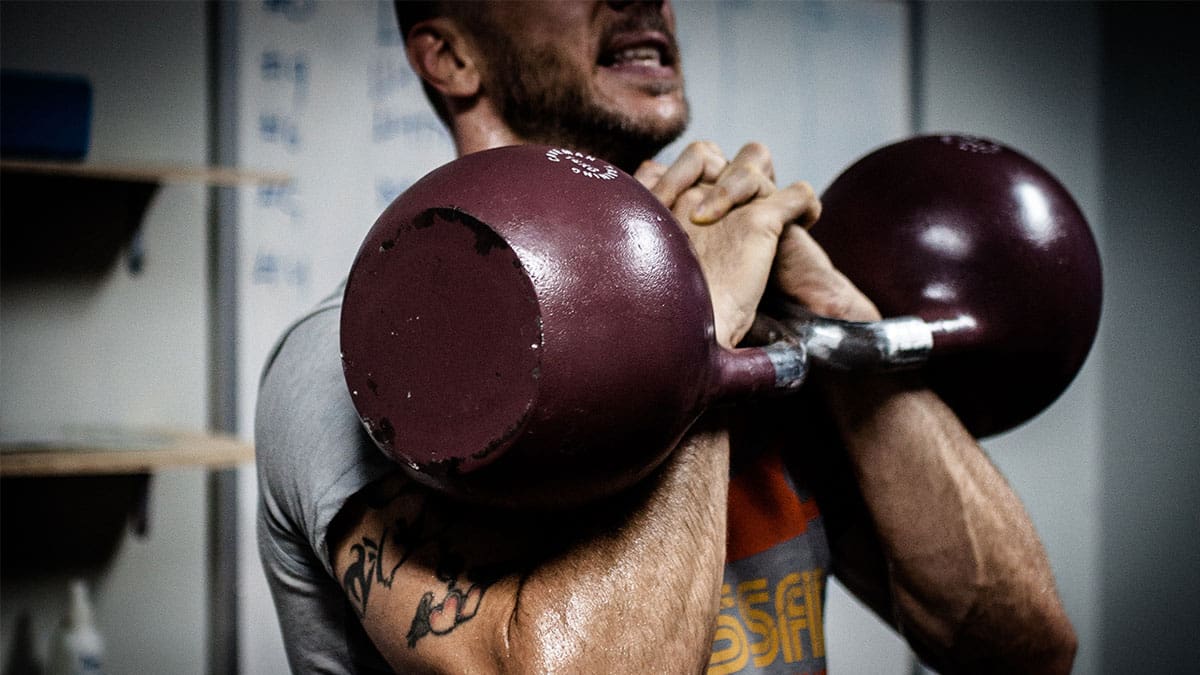


A Kettlebell flow is a sequence of movements that transition smoothly into one another, back to back, for single reps per movement pattern. It’s a great bonus to add your training, as they allow you to get a lot of work done in a shorter amount of time.
Kettlebell flow can be used as:


- A warmup piece to prepare your joints and muscles for a future workout.
- A way of increasing training volume and building robustness throughout the body during your accessory work.
- As higher intensity finishing piece to help induce metabolic stress and burn even more calories at the end of a training session.
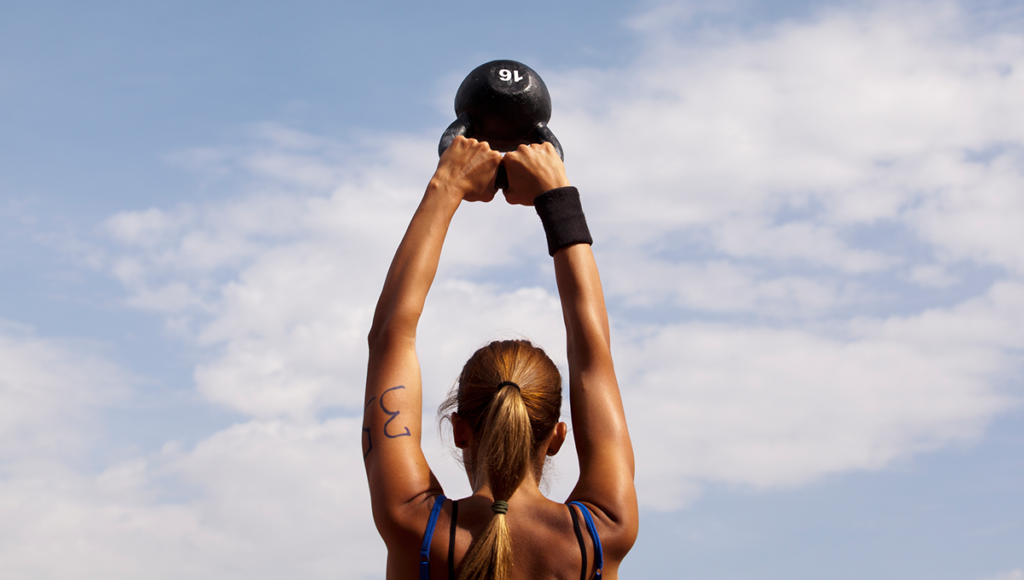
I find that flows are avoided due to their complexity. However, there is a lot to be said for sticking to basic patterns and using movements that you are comfortable with and able to transition from. In the end, it will allow you to push your muscles a bit further than normal.
Below you will find examples of kettlebell flow exercises, starting from beginner to more complex movements.
I would advise a time-rest approach to all of these flows so you can maintain a good form of the movements. I personally like 40 seconds work, 20 seconds rest. It allows for recovery but keeps the lungs working at all times.
Otherwise, you could easily adapt these next kettlebell flow workouts counting the reps, or as an EMOM.
1. Basic Builder
This Kettlebell Flow can be done by anyone. Perform a two-handed kettlebell deadlift before jumping your feet back and performing a hike swing.
Focus on sitting your weight back and keeping a neutral spine as you initiate the swing
2. Row Row Row Your Bell
This Flow ticks the box of being simple and achievable for all athletes. From an underhand row, switch to a high pull. Simple as that.
This is a great warm-up for cleans, snatches, or pulling workouts.
3. Swinging Like It’s the 60’s – Kettlebell Flow
This kettlebell flow combines two swing variations and a squat: Russian swing, American swing, and Tater.
This is a good exercise to improve coordination, which is needed once you start doing more advanced flows.
Make sure each pattern returns the bell to the hips to generate the power for the next
4. Total Body Banger
We up the difficulty a little bit in this flow as we throw in a kettlebell transition from the explosive deadlift to the clean before finishing with the thruster.
This is a much more taxing flow as it crosses multiple joints, a great finishing piece if the goal is to melt some calories.
5. Pullin’ and Pushin’
We move on to single-arm Kettlebell flows. The focus is to use the swing to transition between movements. You will do rows, high pulls, swing cleans and press in one movement.
This works as a great total body primer. If you don’t have much time for a proper warm-up, do this.
6. Punch it
A great flow for building that explosive punch to lockout in a snatch.
For this exercise, you will be performing a Viking snatch, which is a horizontal snatch punch, followed by a classic swing snatch to lockout over your head.
Make this explosive and recover as you control the bell down to change hands
7. 3D – Kettlebell Flow
This lower body flow is a slight change of pace. The kettlebell movement standard is less complex, but the difficulty lies in the transition between lunge positions.
Perform a kettlebell tater, transition to a forward lunge, a Cossack squat on each leg and another lunge on the opposite leg before repeating the flow.
If you want to get the legs fired up for a workout or toast them at the end of a session this one certainly has you covered.
8. Savage Style
We now take complexity to the extreme and see what the body is capable of. This kettlebell flow not only contains more complex movements but also forces you to focus on coordination, balance and power transfer.
This flow is great as part of an EMOM, go for 6-8 reps per minute for 6-8 Minutes and feel the fire.
Read More: Kettlebell Workouts to Build A Powerful Engine for CrossFit Athletes (RX, Scaled and Beginner)
9. Just Flowing
This can be performed as a 15-minute AMRAP.
Once you are comfortable with transitioning between movements you can start to play around with tactical cleans and snatches.
Switching the bell from one side of the body to the other midway through the movement not only adds more complexity and coordination to the task but also helps with increasing the core stability needed to maintain good posture as you produce power through these patterns.
10. Raising the bar
Adding in plyometric push-ups and transitions of the kettlebell from the floor gives this flow some extra spice. We also have the added difficulty of producing the power for the snatch instantly from a dead position.
Another very challenging flow that can be used in a multitude of ways, but I love this type of flow as part of interval pieces since you can really focus on that raw intensity required to get the most out of the pattern.
To recap, the kettlebell flow is a very fluid concept: there are no rules, as long as you’re moving safe and well just enjoy the flow and feel the benefits that come with it.
If you want any help with how to add these into your workout programming check out one of my ebook programs The Graft 2.0.
Enjoy your flow
About Luke Downing
“NASM Certified Personal Trainer Minimal Kit specialist, Daddy to Luca & Roma Ray. As a father and business owner, I’m well aware that not everybody has hours each day to spend in the gym. I believe that you can do a lot without a lot, which is why I’m a lover of the single Kettlebell workout. I like to keep things as functional as possible, which means I do not waste time with unnecessary movement’s. Everything I do with my athletes has a purpose and a carryover to sports, activities and everyday life.”