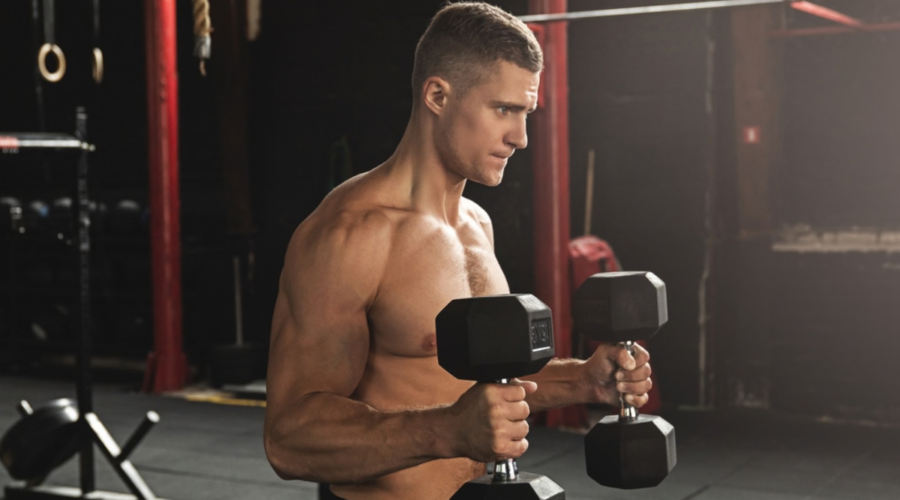


Building bigger arms is not only about making the biceps peak look taller. If you want your arms to appear wider and thicker from the front and side, you also need to develop the muscles that sit beneath and beside the biceps.
That is where the barbell curl and hammer curl become interesting. Both exercises train elbow flexion, meaning they train the muscles that bend your arm. However, their hand positions change how the elbow flexors share the work. A standard barbell curl uses a palms up grip, while a hammer curl uses a neutral grip with the palms facing each other.


For beginners, both can be valuable. But if your main goal is to build arms that look wider, hammer curls deserve a place in your program because they place more emphasis on the brachialis and brachioradialis. That does not mean barbell curls are ineffective. In fact, barbell curls remain one of the best ways to progressively load the biceps. The best answer is not to choose one exercise forever. It is to understand what each one offers and use them with a clear purpose.
What Makes Arms Look Wide?
The biceps brachii is the muscle most people think about when they picture muscular arms. It sits on the front of the upper arm and has two heads. Its main roles include bending the elbow and helping turn the palm upward.
However, the biceps are not the only muscles that affect how thick your upper arm looks. The brachialis lies underneath the biceps. When it grows, it can help push the biceps upward and outward, creating a fuller appearance from the front. The brachialis is a powerful elbow flexor regardless of whether your hand is facing up, down, or inward.
The brachioradialis runs from the upper arm down toward the forearm. It is especially visible around the outer portion of the upper forearm near the elbow. Well developed brachioradialis muscles can make the transition between your upper arm and forearm look thicker and more athletic.
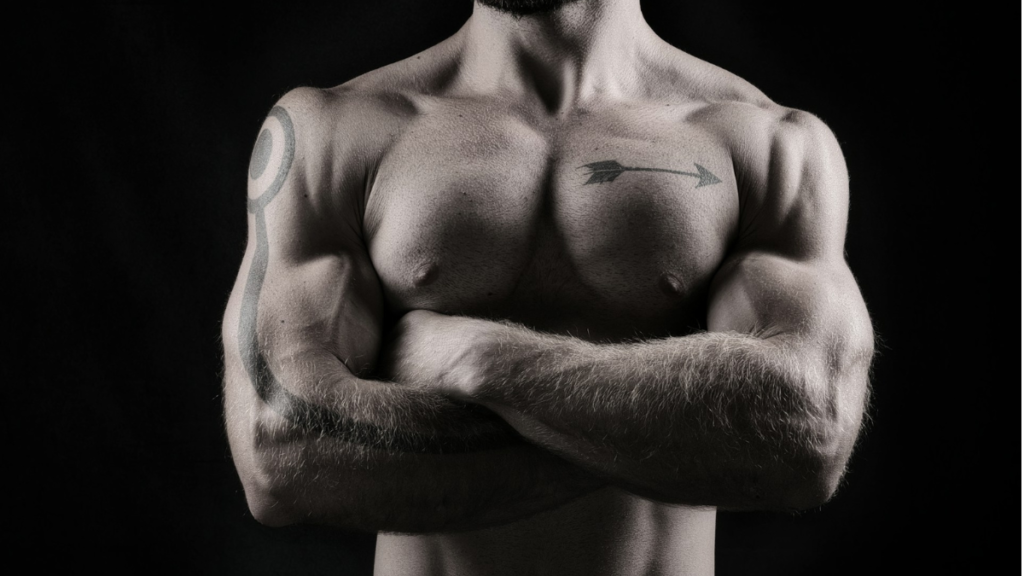
If your goal is wider looking arms, you need to think beyond the biceps peak. The combination of biceps, brachialis, brachioradialis, triceps, and overall forearm development creates arm size. Curls can help with the first three muscles, but the grip you use changes the emphasis.
How the Barbell Curl Works
A barbell curl is usually performed with an underhand grip. Your palms face forward at the bottom of the movement, then remain in that position as you curl the bar toward your shoulders.
This grip puts the biceps brachii in a mechanically favorable position. The biceps have two important functions. They bend the elbow and help rotate the forearm into a palms up position. Since the forearm is already supinated during a barbell curl, the biceps can contribute strongly to the movement.
Barbell curls are also easy to progressively overload. You can add small amounts of weight to a bar over time, use consistent hand placement, and track repetitions clearly. That makes them a useful exercise for beginners who need a straightforward way to build strength and muscle in the elbow flexors.
The main limitation is that a straight bar can feel awkward for some lifters. The fully supinated grip may irritate the wrists, elbows, or forearms if you force an uncomfortable hand position. An EZ bar can be a useful alternative because its angled handles allow a more natural grip while still training the biceps effectively.
Why Barbell Curls Are Good for Bigger Biceps
Barbell curls are particularly useful for building the biceps because they allow you to train the movement with a stable, bilateral load. Both arms work at the same time, which can make it easier to maintain effort and improve your performance from session to session.
Research comparing common curl variations shows that barbell curls create high biceps brachii activity. This makes sense given the palms up grip and the direct elbow flexion demand. High muscle activity during an exercise does not guarantee more muscle growth on its own, but it helps explain why barbell curls have remained a staple in arm training for decades.
For a beginner who wants visibly bigger biceps, the barbell curl is a strong choice. It provides a simple pattern, clear progression, and a reliable way to build confidence with loaded curls.
How the Hammer Curl Works
A hammer curl is performed with a neutral grip. Your palms face each other throughout the exercise, similar to the hand position you would use while holding a hammer.
This grip changes the contribution of the elbow flexor muscles. The biceps still work, but the brachialis and brachioradialis become particularly important. The brachioradialis is well suited to help flex the elbow when the forearm is held in a neutral position.
Hammer curls are usually done with dumbbells, which allow each arm to move independently. This can help beginners notice side to side differences in control and strength. Dumbbells also allow you to choose a hand position that feels comfortable for your wrists and elbows.
3 Best Tips to Transform Your Chest Using Dumbbells
The neutral grip can make hammer curls more joint friendly for some lifters. This does not mean the movement is automatically safe for everyone, but many people find it more comfortable than a fully palms up curl. Good technique, sensible loading, and gradual progression still matter.
Why Hammer Curls Can Make Arms Look Wider
Hammer curls are especially useful when your goal is to add thickness around the outer upper arm and upper forearm. The brachialis sits beneath the biceps, so increasing its size can contribute to a broader and denser arm appearance. The brachioradialis adds visible mass near the elbow and through the upper forearm.
This matters because a beginner who only performs palms up curls may build strong biceps while leaving some easy arm development on the table. Hammer curls give you a different stimulus without requiring a complicated exercise or a major change to your program.
There is an important point to remember. No single curl can perfectly isolate one muscle. Your biceps, brachialis, and brachioradialis all work together during elbow flexion. The goal is not to find a magical exercise that removes the biceps from the movement. The goal is to use a grip that gives the brachialis and brachioradialis a more meaningful role.
Barbell Curls vs Hammer Curls for Wider Arms
If you must choose only one exercise based purely on wider looking arms, hammer curls have a slight advantage. Their neutral grip makes them a more direct option for training the muscles that contribute to thickness beneath the biceps and along the outer forearm.
However, that does not make hammer curls the superior exercise for total arm growth. Barbell curls are usually better for emphasizing the biceps and building a classic flexed arm look. They are also easier to load heavily and consistently.

The smartest approach for beginners is to use both. Start with barbell curls when you are fresh and want to focus on biceps strength. Then use hammer curls after them to add targeted work for the brachialis and brachioradialis.
You do not need a huge amount of direct arm training to make progress. Beginners often gain arm size from rows, chin ups, pulldowns, presses, and other compound lifts. Direct curls then add focused volume that can help accelerate elbow flexor development.
How to Perform a Barbell Curl Properly
Stand tall with your feet about hip width apart. Hold the bar with an underhand grip and let it rest against the front of your thighs. Keep your chest up, shoulders relaxed, and elbows close to your sides.
Curl the bar upward by bending your elbows. Keep your upper arms mostly still and avoid throwing the hips forward to start each repetition. Squeeze your biceps near the top, then lower the bar under control until your elbows are straight or close to straight.
The lowering phase matters. Controlled eccentric training contributes to muscular tension and helps you maintain better technique. Do not turn each repetition into a swinging movement just to use more weight.
Use a load that allows you to keep your torso still for most of the set. A small amount of natural movement can happen during hard repetitions, but excessive swinging shifts work away from the elbow flexors and makes progress harder to measure.
How to Perform a Hammer Curl Properly
Stand with a dumbbell in each hand and your palms facing your thighs. Keep your wrists straight and your shoulders down. Your elbows should begin close to your sides.
Curl the dumbbells toward your shoulders while keeping your palms facing each other. Avoid rotating the dumbbells into a palms up position. Keep the movement smooth and controlled, then lower the weights slowly until your arms are extended again.
You can perform hammer curls with both arms at once or alternate sides. Doing both arms together is often faster and makes it easier to keep your training volume consistent. Alternating repetitions can help you focus on one arm at a time and may reduce the temptation to swing.
Do not allow your elbows to drift far in front of your body. A little movement is normal, but keeping the elbows reasonably close to your sides helps maintain tension through the elbow flexors.
The Best Beginner Plan for Wider Arms
For beginners, a simple and repeatable plan is more effective than constantly changing exercises. Train your arms two times per week, preferably after your bigger pulling or upper body exercises.
Start with two or three sets of barbell curls for eight to twelve repetitions. Choose a weight that feels challenging near the end of each set while still allowing clean form. Rest long enough to recover so that the next set is productive, usually around one to two minutes.

After barbell curls, perform two or three sets of hammer curls for ten to fifteen repetitions. The slightly higher repetition range can work well because hammer curls often feel more comfortable with moderate dumbbells and controlled movement.
Across the week, this gives you four to six direct sets of each curl variation. That is enough for many beginners to make progress, especially when combined with compound pulling exercises. As your technique improves and recovery remains good, you can gradually add another set or a small amount of weight.
Progressive overload does not always mean adding weight every session. You can also perform an extra repetition with the same weight, improve your range of motion, use cleaner technique, or complete the same work with greater control. Over time, these small improvements add up.
Common Mistakes That Limit Arm Growth
The most common mistake is using a weight that is too heavy. If you have to lean backward, swing your hips, or throw your elbows forward, the target muscles are no longer doing as much of the work. Lower the load and make the repetitions more deliberate.
Another mistake is stopping every set far away from a challenging effort. You do not need to train to complete failure on every curl, but the final repetitions should require real concentration. Sets that are consistently too easy provide less reason for the muscles to adapt.
Many beginners also change their routine too often. You do not need five curl variations in one workout. Choose one barbell curl and one hammer curl variation, practice them for several weeks, and keep a record of your performance.
Finally, remember that arms will not look their best if your entire upper body training is neglected. Train your back, chest, shoulders, and triceps consistently. A stronger and more developed frame makes arm size more noticeable.
The Verdict
Hammer curls are the better single choice for beginners who specifically want wider looking arms. Their neutral grip places greater emphasis on the brachialis and brachioradialis, two muscles that can add thickness beneath and beside the biceps.
Barbell curls remain essential if you want to build bigger biceps and develop stronger, more complete elbow flexors. They are easy to progressively overload and provide a highly effective foundation for direct arm training.
The best long term strategy is to use both. Perform barbell curls to build your biceps, then use hammer curls to develop the muscles that give your arms more width and density. Train consistently, progress gradually, and prioritize clean repetitions over ego lifting.
References
- American College of Sports Medicine (2009) ‘American College of Sports Medicine position stand: Progression models in resistance training for healthy adults’, Medicine & Science in Sports & Exercise, 41(3), pp. 687 to 708.
- Marchetti, P.H., Uchida, M.C., Filho, J.C.B., Cordeiro, M.A., Cilento, A.C., Pires, F.O. and Panissa, V.L.G. (2018) ‘Differences in electromyographic activity of biceps brachii and brachioradialis while performing three variants of curl’, PeerJ, 6, e5165.
- Rogers, J.M., Palumbo, D.J., Huebner, K.D., Mccaffrey, L.A., Zuniga, J.M. and Jo, E. (2015) ‘Muscular coordination of biceps brachii and brachioradialis in elbow flexion with respect to hand position’, Frontiers in Physiology, 6, 215.
- Schoenfeld, B.J., Grgic, J., Ogborn, D. and Krieger, J.W. (2017) ‘Strength and hypertrophy adaptations between low versus high load resistance training: A systematic review and meta analysis’, Journal of Strength and Conditioning Research, 31(12), pp. 3508 to 3523.
- Schoenfeld, B.J., Ogborn, D. and Krieger, J.W. (2017) ‘Dose response relationship between weekly resistance training volume and increases in muscle mass: A systematic review and meta analysis’, Journal of Sports Sciences, 35(11), pp. 1073 to 1082.
- Vieira, A.F., Umpierre, D., Teodoro, J.L., Lisboa, S.C., Baroni, B.M., Izquierdo, M. and Cadore, E.L. (2021) ‘Effects of resistance training performed to repetition failure or non failure on muscular strength and hypertrophy: A systematic review and meta analysis’, Journal of Sport and Health Science, 10(3), pp. 323 to 337.
Key Takeaways
| Question | Answer |
|---|---|
| Which curl is better for wider looking arms? | Hammer curls have the edge because they emphasize the brachialis and brachioradialis, which add thickness beneath and beside the biceps. |
| Are barbell curls still worthwhile? | Yes. Barbell curls are highly effective for progressively loading the biceps and building overall elbow flexor strength. |
| Should beginners use both exercises? | Yes. Barbell curls followed by hammer curls provide a simple and complete direct arm training combination. |
| How often should beginners train curls? | Two sessions per week with four to six direct sets of each exercise across the week is a practical starting point. |
| What matters most for arm growth? | Consistent training, controlled technique, challenging sets, gradual progression, enough recovery, and a well rounded upper body program. |