

The bench press is one of the most recognized strength exercises in the world. Walk into almost any gym and you will hear some version of the same question: “How much do you bench?”
For decades, the bench press has served as a benchmark of upper body strength. It is a staple in powerlifting, an important accessory exercise for athletes, and one of the most popular movements among recreational gym goers. Yet many people have no idea how their bench press compares to the average man.


Can you bench more than average? What does “average” even mean? Is it based on body weight, age, training experience, or population data? And perhaps more importantly, what does your bench press actually tell us about strength, health, and athletic performance?
This article breaks down the science behind bench pressing, examines how much the average man can bench, explores the factors that influence performance, and explains how you can increase your numbers safely and effectively.
Why the Bench Press Matters
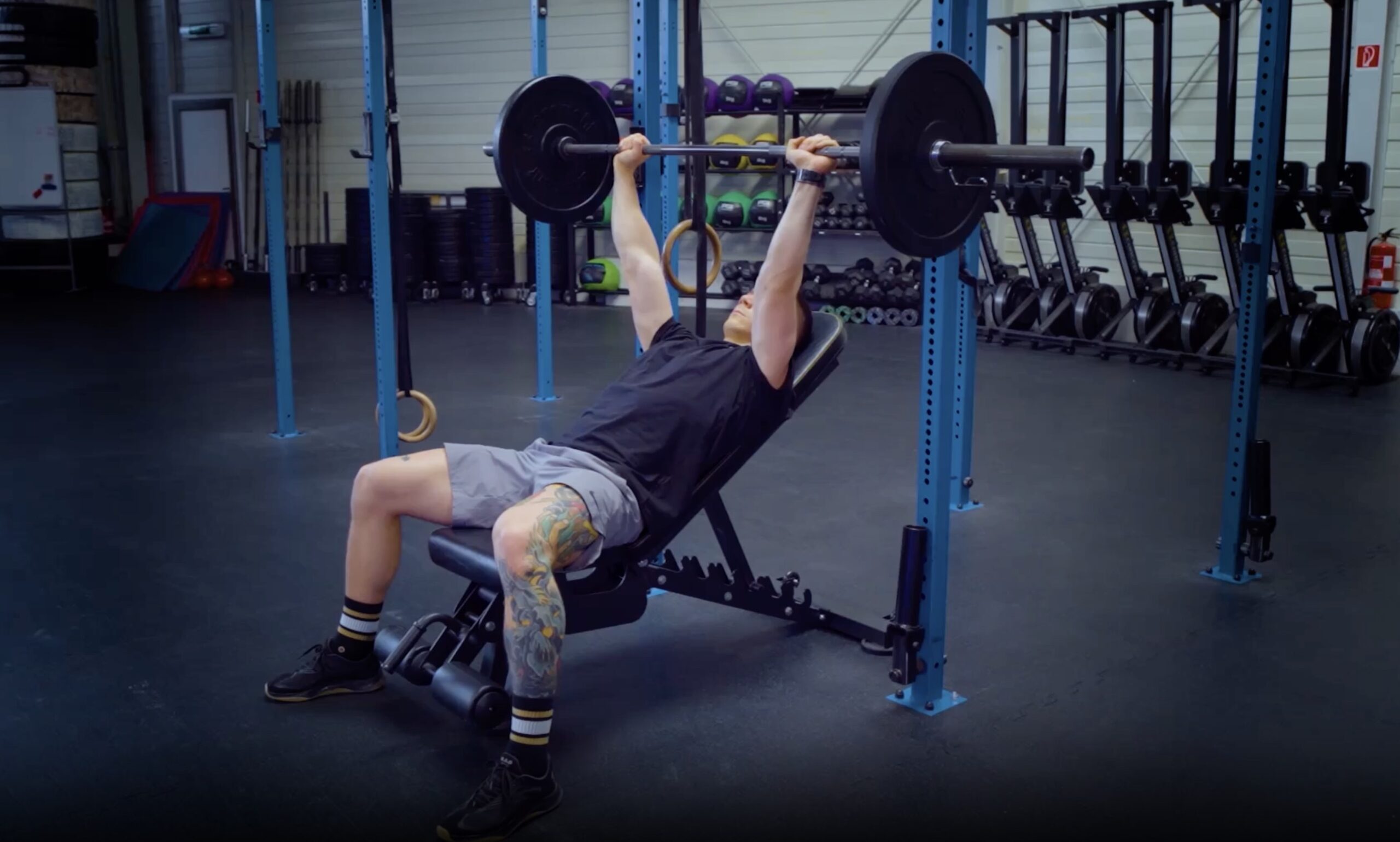
The barbell bench press is a compound exercise that primarily targets the pectoralis major, anterior deltoids, and triceps brachii. It also requires stabilization from the upper back, rotator cuff muscles, and core.
Researchers have consistently found the bench press to be an effective tool for developing upper body strength and muscle mass. Because it allows substantial external loading, it creates high levels of mechanical tension, one of the primary drivers of muscular hypertrophy.
Mike Thurston Shares 10 Brutal Fitness Truths Most People Need to Hear
Upper body strength is not just about appearance. Stronger muscles improve physical function, athletic performance, and quality of life. Studies have shown that muscular strength is associated with lower rates of all cause mortality, reduced injury risk, and improved long term health outcomes.

While the bench press is only one measure of strength, it remains one of the most standardized and widely tested movements in resistance training.
What Is the Average Bench Press?
The answer depends entirely on who you are comparing yourself against. If we take a random sample of adult men from the general population, the average bench press would be surprisingly low. Most adult men do not participate in regular resistance training. In many countries, a significant percentage of adults perform little or no strength training at all.
Research from public health surveys shows that only a minority of adults consistently meet recommended resistance training guidelines. As a result, many men would struggle to bench press their own body weight.
When gym communities discuss bench press standards, they usually refer to men who actively train with weights. In that context, the averages become much higher.
Bench Press Standards for Trained Men
Strength databases compiled from millions of lifting performances provide useful benchmarks. Although these are not scientific studies, they offer large scale observations of real world lifting performance.
For an adult male weighing around 198 pounds (90 kg), typical one repetition maximum standards are approximately:
- Beginner: 135 pounds (61 kg)
- Novice: 175 pounds (79 kg)
- Intermediate: 215 pounds (98 kg)
- Advanced: 290 pounds (132 kg)
- Elite: 375 pounds (170 kg)
These values vary by body weight, age, and training history, but they provide a useful reference point. A man who can bench press his own body weight for one repetition is generally stronger than the average untrained adult male.
A man who can bench press 1.5 times his body weight is usually considered highly trained. A double body weight bench press is rare and represents an advanced level of strength.
How Many Men Can Bench Their Body Weight?
One of the most common strength milestones is benching your own body weight. For a 180 pound man, this means performing a one repetition maximum bench press of 180 pounds.
Among recreational lifters, reaching body weight on the bench press is a realistic and achievable goal. Among the general population, however, it is relatively uncommon.
Most beginners require several months of structured training before reaching this benchmark. Factors such as age, body composition, limb length, muscle mass, and training quality all influence progress.

Research on resistance training adaptations consistently demonstrates that untrained individuals can make rapid strength gains during their first year of lifting. Neural adaptations account for much of this early improvement.
In simple terms, your nervous system becomes better at recruiting muscle fibers, coordinating movement patterns, and producing force. This explains why beginners often become dramatically stronger before experiencing major increases in muscle size.
Common Bench Press Milestones
Certain bench press achievements have become widely recognized markers of strength.
The 135 Pound Bench Press
For many beginners, pressing a standard 45 pound barbell loaded with one 45 pound plate on each side represents the first major milestone.
This level already exceeds the capabilities of many untrained men.
The 225 Pound Bench Press
Two plates per side has become one of the most famous benchmarks in gym culture.
Benching 225 pounds demonstrates significant upper body strength and typically requires dedicated training.
Among recreational lifters, achieving this milestone places you well above average.
The 315 Pound Bench Press
Three plates per side is an advanced accomplishment.
Relatively few gym goers ever reach this level. Achieving it generally requires years of consistent training, favorable genetics, effective programming, and substantial muscle development.
The 405 Pound Bench Press
Four plates per side is exceptionally rare.
At this point, an athlete enters elite territory. Most individuals who achieve a 405 pound bench have dedicated many years to strength training.
Final Thoughts
Can you bench more than the average man? If you can bench your own body weight, the answer is probably yes.
If you can bench 1.5 times your body weight, you are significantly stronger than most men. If you can bench twice your body weight, you are operating at an advanced level achieved by relatively few lifters.
The bench press remains one of the most useful measures of upper body strength because it is simple, standardized, and strongly associated with muscular development. Yet your bench press number is influenced by much more than muscle size. Technique, neural adaptations, body weight, limb lengths, training experience, recovery, and genetics all play important roles.
Rather than obsessing over arbitrary milestones, focus on steady progress. Consistent resistance training, proper nutrition, quality sleep, and intelligent programming will move your bench press upward over time.
The average man may not bench much at all. But with patience and evidence based training, most healthy adults can develop levels of strength that far exceed the population average.
Key Takeaways
| Factor | What It Means for Your Bench Press |
|---|---|
| Body weight bench press | Generally stronger than the average untrained man |
| 1.5 times body weight bench press | Indicates a highly trained level of strength |
| Muscle size | Larger muscles can produce more force |
| Neural adaptations | Improve strength even before major muscle growth occurs |
| Technique | Better mechanics can immediately improve performance |
| Age | Strength can remain high for decades with consistent training |
| Recovery | Sleep and nutrition strongly influence progress |
| Training frequency | Benching multiple times weekly often improves results |
| Relative strength | More useful than absolute weight when comparing lifters |
| Long term progress | Consistency matters more than short term milestones |
References
- Aagaard, P., Simonsen, E.B., Andersen, J.L., Magnusson, P. and Dyhre Poulsen, P. (2002) ‘Increased rate of force development and neural drive of human skeletal muscle following resistance training’, Journal of Applied Physiology, 93(4), pp. 1318-1326.
- American College of Sports Medicine (2009) ‘Progression models in resistance training for healthy adults’, Medicine & Science in Sports & Exercise, 41(3), pp. 687-708.
- Grgic, J., Schoenfeld, B.J., Orazem, J. and Sabol, F. (2020) ‘Effects of resistance training performed to repetition failure or non failure on muscular strength and hypertrophy’, Journal of Sport and Health Science, 10(3), pp. 275-283.
- Leong, D.P., Teo, K.K., Rangarajan, S., Lopez Jaramillo, P., Avezum, A., Orlandini, A., Seron, P., Ahmed, S.H., Rosengren, A. and Yusuf, S. (2015) ‘Prognostic value of grip strength: findings from the Prospective Urban Rural Epidemiology study’, The Lancet, 386(9990), pp. 266-273.
- Mangine, G.T., Hoffman, J.R., Gonzalez, A.M., Townsend, J.R., Wells, A.J., Jajtner, A.R., Beyer, K.S., Boone, C.H., Miramonti, A.A., Wang, R. and Stout, J.R. (2015) ‘The effect of training volume and intensity on improvements in muscular strength and size in resistance trained men’, Physiological Reports, 3(8), e12472.
- McGlory, C., Devries, M.C. and Phillips, S.M. (2017) ‘Skeletal muscle and resistance exercise training: the role of protein consumption’, Journal of Applied Physiology, 122(3), pp. 541-548.
- Morton, R.W., Murphy, K.T., McKellar, S.R., Schoenfeld, B.J., Henselmans, M., Helms, E., Aragon, A.A., Devries, M.C., Banfield, L., Krieger, J.W. and Phillips, S.M. (2018) ‘A systematic review, meta analysis and meta regression of the effect of protein supplementation on resistance training induced gains in muscle mass and strength in healthy adults’, British Journal of Sports Medicine, 52(6), pp. 376-384.