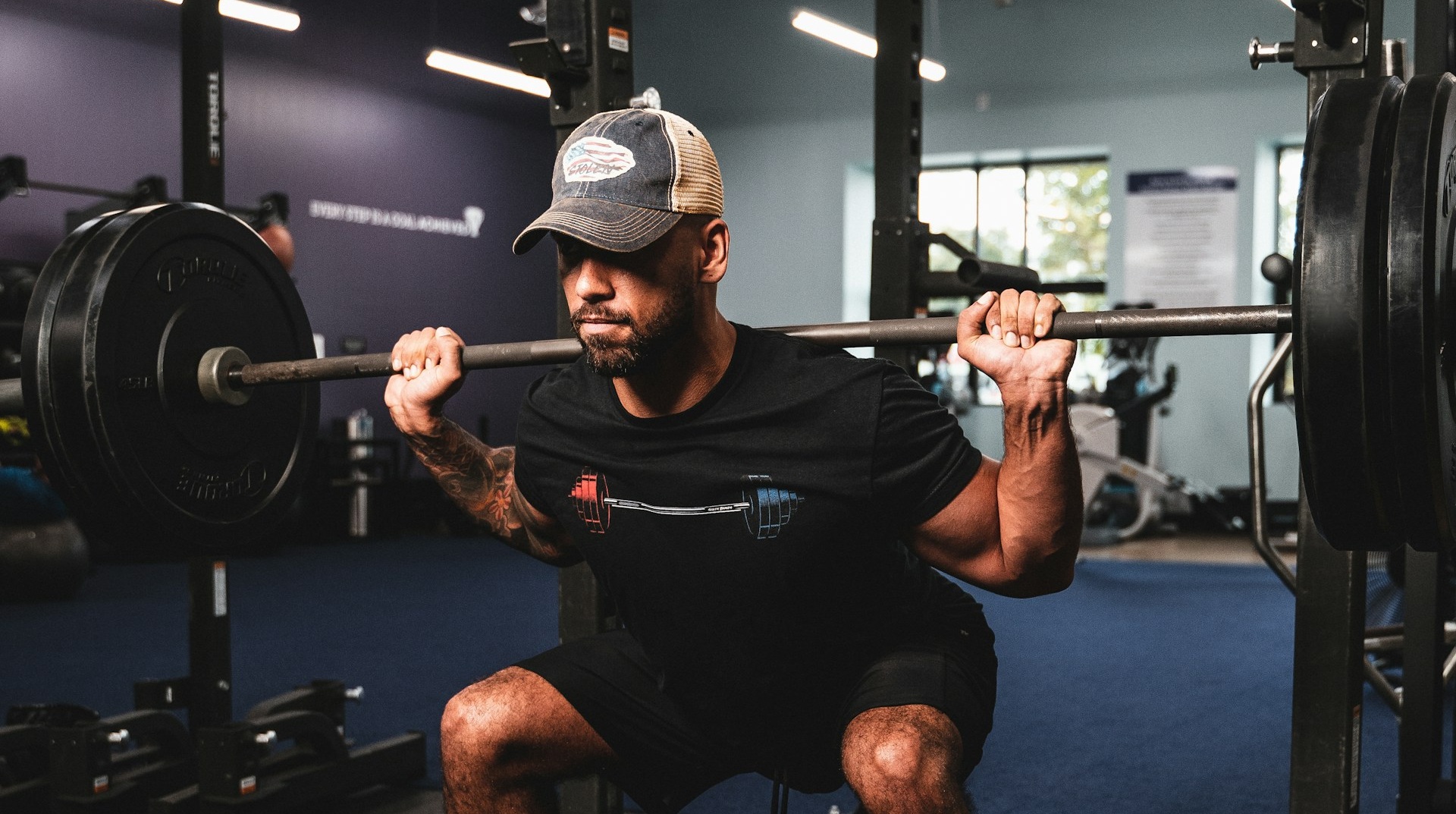


The squat has become the universal test of gym strength. Walk into almost any commercial gym and you will see someone loading a barbell, checking their stance, and trying to move serious weight. Few exercises have the same reputation. A big bench press gets attention, but a big squat earns respect. That raises an interesting question: can you squat more than the average gym bro?
The answer depends on what “average” actually means. Social media has distorted perceptions of strength. Endless videos of elite powerlifters and genetically gifted athletes can make a 315 pound squat look ordinary. In reality, very few people in commercial gyms squat anywhere near that amount.


Understanding where your squat stands requires more than comparing yourself to the strongest person in the weight room. You need context. How much do most recreational lifters squat? How do body weight, training experience, sex, age, and technique influence performance? And what does science say about the factors that separate average squatters from exceptional ones?
Why the Squat Matters
The squat is one of the most studied resistance training exercises in sports science. It recruits a large amount of muscle mass and challenges multiple joints simultaneously.
During a squat, the quadriceps, glutes, adductors, hamstrings, spinal erectors, and core musculature all contribute to varying degrees. Because so many muscles are involved, the squat is highly effective for developing lower body strength and muscle mass.
Research consistently shows that multi joint resistance exercises generate substantial mechanical tension, one of the primary drivers of muscular hypertrophy. Heavy squatting also improves maximal force production, athletic performance, jumping ability, sprinting performance, and overall functional strength.
The squat is not simply a leg exercise. It is a full body strength movement that serves as a useful benchmark for physical performance.
What Counts as a Good Squat?
Before discussing averages, it is important to define what “good” means. Many lifters focus exclusively on the number of plates on the bar. However, strength is relative. A 225 pound squat may be impressive for a lightweight beginner but unremarkable for a large experienced lifter. Sports scientists and strength coaches often evaluate squat strength relative to body weight.
Mike Thurston Shares 10 Brutal Fitness Truths Most People Need to Hear
A person who weighs 150 pounds and squats 300 pounds is demonstrating a higher relative strength level than someone who weighs 250 pounds and squats 350 pounds. Relative strength provides a fairer comparison between individuals of different sizes.
Generally speaking, the following standards provide a useful reference for recreational male lifters performing a full depth back squat:
Beginner
A beginner typically squats roughly 0.75 to 1.0 times body weight.
Intermediate
An intermediate lifter often squats around 1.25 to 1.75 times body weight.
Advanced
An advanced lifter usually squats 2 times body weight or more.
Elite
Elite strength athletes frequently exceed 2.5 times body weight.

These standards vary based on age, sex, and body composition, but they provide a useful starting point.
The Truth About the Average Gym Bro
Most gym members are not competitive powerlifters. Data from strength training populations suggests that many recreational lifters never consistently follow structured squat programs. Some train sporadically. Others avoid squatting entirely. Many perform partial repetitions with loads that exceed their technical capabilities.
As a result, the average commercial gym member is not nearly as strong as social media might suggest.
For men who resistance train recreationally, a squat around body weight is often enough to place them near average. A squat around 1.5 times body weight usually places them above average. Reaching double body weight places a lifter in a relatively strong category compared with the general gym population.
For women, relative strength standards differ because of physiological differences in muscle mass distribution and hormonal profiles. Nevertheless, women who squat their body weight demonstrate solid strength, while those reaching 1.5 times body weight often rank among stronger recreational lifters.
The key point is simple: if you can squat significantly more than your body weight with proper depth and technique, you are probably stronger than most people training in commercial gyms.
Why Social Media Distorts Strength Expectations
One reason many lifters underestimate their accomplishments is exposure bias.
Social media algorithms favor extraordinary performances. Videos featuring 600 pound squats attract more attention than videos showing someone progressing from 185 to 225 pounds.
This creates the illusion that extreme strength is normal.
In reality, elite lifters represent a tiny fraction of the training population. Many have trained for years or even decades. Some possess exceptional genetics for strength development. Others compete in sports where maximizing squat performance is a primary goal.
Comparing yourself to these outliers can create unrealistic expectations.
A recreational lifter who squats 315 pounds below parallel has achieved a level of strength that requires substantial dedication and training consistency.
The Role of Body Weight
Heavier individuals often squat more absolute weight. This relationship exists because larger bodies typically possess greater muscle mass and leverage advantages.
However, relative strength does not increase indefinitely with body weight. For example, a 165 pound athlete squatting 330 pounds is demonstrating exceptional relative strength. A 330 pound squat from a 300 pound athlete represents a different level of performance.
This distinction explains why strength coaches frequently use ratios based on body weight. Relative strength offers a more meaningful comparison across different populations.
What Is a Double Body Weight Squat Worth?
The double body weight squat occupies a special place in strength culture. For example, a 180 pound lifter squatting 360 pounds has achieved a significant milestone.

Reaching this level typically requires several years of structured training, adequate nutrition, progressive overload, and technical competence. Research on resistance training adaptations suggests that progressing to double body weight strength requires substantial muscular and neural development.
While not elite by competitive powerlifting standards, a double body weight squat places most recreational lifters well above average. If you can squat twice your body weight below parallel, you are stronger than the vast majority of gym members.
Can Genetics Limit Your Squat?
Genetics influence strength potential, but they rarely determine whether someone becomes strong. Several inherited traits can affect squat performance, including limb proportions, tendon insertion points, muscle architecture, hormone levels, and fiber type distribution.
These factors partly explain why some individuals progress more rapidly than others. However, research consistently demonstrates that training quality, consistency, nutrition, recovery, and effort remain major determinants of long term outcomes.
Most people never approach their genetic ceiling. As a result, focusing on controllable variables is far more productive than worrying about genetics.
How Age Affects Squat Strength
Maximal strength generally increases throughout adolescence and early adulthood. Many individuals reach peak strength levels between their twenties and thirties, although highly trained athletes may continue improving beyond that period.
Aging is associated with reductions in muscle mass, neural function, and recovery capacity. However, resistance training remains highly effective across the lifespan. Studies repeatedly show that older adults can significantly improve strength and muscle mass through structured resistance training.
This means age should not be viewed as a barrier to becoming stronger than average. A well trained fifty year old can easily outperform many younger gym members.
So, Can You Squat More Than the Average Gym Bro?
If you squat around your body weight, you are roughly in line with many recreational lifters. If you squat 1.5 times your body weight with good depth, you are likely stronger than a large proportion of commercial gym members.
If you squat double body weight, you have reached a level that most gym goers never achieve. The average gym bro is not the social media influencer posting a 600 pound squat. The average gym bro is someone training recreationally, balancing workouts with work, family, and everyday responsibilities.
Viewed through that lens, meaningful strength is more attainable than many people realize. The squat remains one of the clearest indicators of lower body strength, athletic capability, and training dedication. Whether you are chasing your first body weight squat or aiming for double body weight, the real competition is not the strongest person on Instagram. It is the version of yourself that walked into the gym six months ago.
Key Takeaways
| Squat Strength Topic | Main Insight |
|---|---|
| Average Recreational Lifter | Around body weight is a common benchmark for many gym goers |
| Above Average Strength | Roughly 1.5 times body weight often exceeds average commercial gym standards |
| Advanced Strength | A double body weight squat places most lifters well above average |
| Muscle Size | Greater muscle mass generally supports greater force production |
| Neural Adaptations | Early strength gains are driven heavily by nervous system improvements |
| Technique | Proper depth and movement quality matter when evaluating squat strength |
| Genetics | Genetics influence potential but do not determine success |
| Training Frequency | Squatting regularly improves movement skill and strength |
| Recovery | Sleep, nutrition, and recovery are essential for continued progress |
| Long Term Success | Years of consistent training produce the greatest strength gains |
References
- Aagaard, P., Simonsen, E.B., Andersen, J.L., Magnusson, P. and Dyhre Poulsen, P. (2002) ‘Increased rate of force development and neural drive of human skeletal muscle following resistance training’, Journal of Applied Physiology, 93(4), pp. 1318-1326.
- American College of Sports Medicine (2009) ‘Progression models in resistance training for healthy adults’, Medicine & Science in Sports & Exercise, 41(3), pp. 687-708.
- Bloomquist, K., Langberg, H., Karlsen, S., Madsgaard, S., Boesen, M. and Raastad, T. (2013) ‘Effect of range of motion in heavy load squatting on muscle and tendon adaptations’, European Journal of Applied Physiology, 113(8), pp. 2133-2142.
- Delmonico, M.J., Harris, T.B., Visser, M., Park, S.W., Conroy, M.B., Velasquez Mieyer, P., Boudreau, R., Manini, T.M., Nevitt, M., Newman, A.B. and Goodpaster, B.H. (2009) ‘Longitudinal study of muscle strength, quality, and adipose tissue infiltration’, American Journal of Clinical Nutrition, 90(6), pp. 1579-1585.
- Folland, J.P. and Williams, A.G. (2007) ‘The adaptations to strength training: morphological and neurological contributions to increased strength’, Sports Medicine, 37(2), pp. 145-168.
- Fry, A.C., Smith, J.C. and Schilling, B.K. (2003) ‘Effect of knee position on hip and knee torques during the barbell squat’, Journal of Strength and Conditioning Research, 17(4), pp. 629-633.
- Haff, G.G. and Triplett, N.T. (eds.) (2016) Essentials of Strength Training and Conditioning. 4th edn. Champaign, IL: Human Kinetics.