

Walking into a gym for the first time can feel overwhelming. Machines line every corner, each promising to build a different muscle, leaving beginners wondering where to start. According to British fitness creator and calisthenics athlete Alex Cowling, that complexity is unnecessary.
In a recent YouTube video, Cowling argues that most people don’t need dozens of exercises to build an impressive physique. Instead, he credits five compound movements for helping him develop his body, emphasizing progressive overload and consistency over constantly changing workouts.


Pull-Ups: Build a Strong Back by Mastering One Movement
“If you consistently get stronger at these five movements, you’ll build a fantastic physique.”
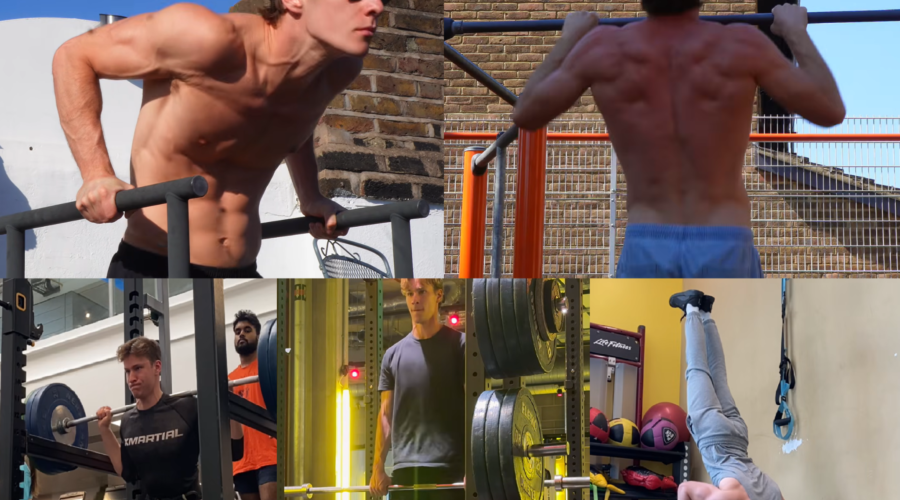
Cowling begins with pull-ups or chin-ups as the foundation of upper-body pulling strength. The movement targets the back and biceps while creating a simple progression system.
He recommends starting with bodyweight and working toward 10 clean repetitions before adding weight with a dip belt. Once 10 reps become comfortable again, add more weight and repeat the process.
Rather than rotating between multiple pulling exercises, Cowling believes tracking progress on one movement makes strength gains easier to measure.
Dips: The Upper Body’s Version of the Squat
“Think of it as the squat for the upper body.”
For pushing strength, Cowling chooses dips because they simultaneously train the chest, shoulders, triceps, and core.
Beginners should master 10 to 15 bodyweight repetitions before adding external resistance. As with pull-ups, the focus remains on progressive overload instead of constantly searching for new exercises.
Squats: The Foundation of Lower-Body Strength
“Focus entirely on technique.”
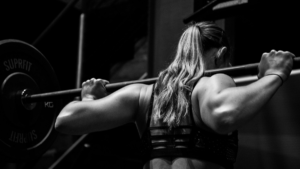
The barbell squat serves as the primary lower-body movement. Cowling encourages beginners to spend their first weeks using only an empty 20-kilogram barbell while refining their form.
He advises keeping the back straight, placing the bar across the traps rather than the neck, and elevating the heels slightly if ankle mobility limits squat depth. Only after mastering technique should lifters gradually increase the weight.
Romanian Deadlifts Complete Leg Development
“The squat mainly trains quads and glutes, but it doesn’t fully train the hamstrings.”
To complement squats, Cowling recommends Romanian deadlifts instead of conventional deadlifts. The exercise emphasizes the hamstrings, glutes, and posterior chain without requiring maximal loads.
As strength improves, he says lifters can develop stronger, more functional legs while reducing unnecessary complexity.
Shoulder Press Develops Complete Upper-Body Strength
“I just enjoy handstand push-ups because they make me feel like a martial arts sensei.”
The fifth movement is an overhead press. While Cowling personally prefers handstand push-ups, he says a barbell or dumbbell shoulder press follows the same movement pattern and produces similar benefits.
Like the previous exercises, the goal is straightforward: begin with manageable loads, perform clean repetitions, and steadily increase the weight over time.
Takeaway: Simplicity Creates Consistency
Cowling’s message centers on removing decision fatigue. Rather than trying every machine or chasing the latest training trend, he believes most people will make better progress by mastering a handful of proven compound movements.
For busy people balancing work, family, and other responsibilities, consistently getting stronger in pull-ups, dips, squats, Romanian deadlifts, and shoulder presses may provide a far simpler path toward building muscle, increasing strength, and developing an athletic physique.
About the Author
Jeremiah Oliva

Jeremiah Oliva is a writer passionate about fitness, sports, and active living. He has experience in songwriting and managing content and social media for online radio and magazine platforms.
He covers HYROX, CrossFit®, and competitive fitness, with a focus on performance, mindset, and athlete development.
Outside of writing, Jeremiah trains in boxing, cycles, explores the outdoors with his kids, and plays the guitar.