

What if you could lose body fat without counting calories, constantly feeling hungry, or surviving on tiny portions?
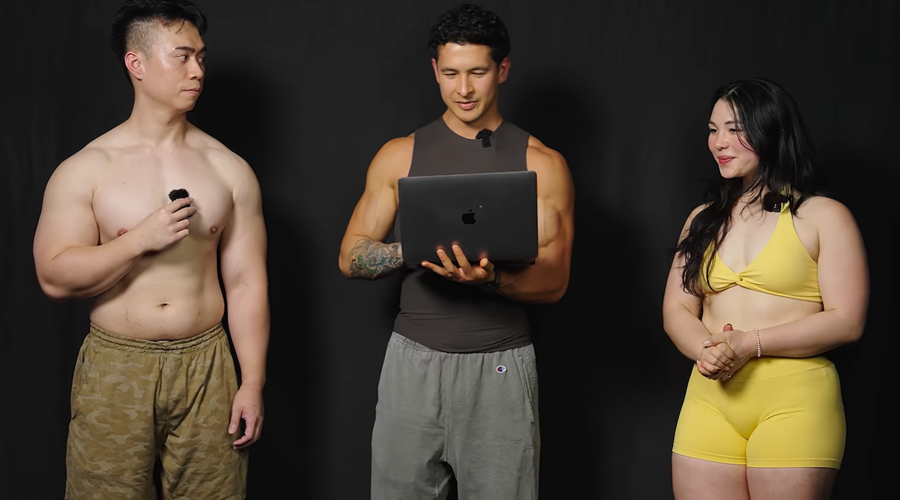
In a recent YouTube video, Jeremy Ethier puts a high-volume diet to the test with two experienced lifters, Manson and Melody, over 30 days. The goal was to maximize fullness with large portions of low-calorie foods while following simple rules around protein, volume foods and fat.


Manson started at 24.7% body fat, while Melody began at 32.5%. Neither was asked to track calories, but both ended the experiment with significant fat loss.
The Three Rules Behind the Diet
Each participant was given a large designated bowl that had to be filled to the top at every meal.
Every meal also needed three components: a lean protein source, a high-volume food, and one measured serving of fat. Snacks were eliminated, while calorie-free sauces, seasonings, and sweeteners were allowed.
The food choices were based on how much food they provided for relatively few calories. Jeremy demonstrated the difference by comparing calorie-dense foods with lean proteins and high-volume foods such as vegetables.
The theory was straightforward: filling the stomach with more low-calorie food could increase fullness through the stomach’s stretch receptors.
As Jeremy explained, “Every single ingredient in our diet was chosen for one specific reason.”
Week One Reveals Two Very Different Approaches
The experiment quickly showed that having a theoretically effective diet is one thing, but actually enjoying it is another.
Manson prioritized convenience and repeatedly ate strawberries, shrimp, and eggs, while avoiding vegetables.
“Every time I eat like green vegetable, I feel disgusting, to be honest,” Manson admitted. “But like fruit is okay. Especially strawberry.”
Melody took the opposite approach, experimenting with different recipes and combinations to keep her meals interesting.
After only one week, both participants were already down around three pounds.
Jeremy Adds More Fullness Strategies
With hunger proving to be less of an issue than expected, Jeremy introduced three additional strategies throughout the experiment.
The first was carbonation. Participants were required to drink a diet soda or another carbonated beverage with every meal. The idea was that carbonation could increase stomach expansion and make meals feel more filling.
By Day 15, Manson had lost six pounds while Melody was down five.
Jeremy then introduced broth, requiring one meal each day to include roughly one to two cups. The strategy was based on research presented in the video suggesting that starting a meal with low-calorie soup could reduce overall food intake.
The final strategy involved replacing normal forks and spoons with tiny utensils. The goal was to slow down eating and give participants more time to experience fullness.
It was frustrating, but it appeared to work. Manson eventually reduced his meals from three to two because he struggled to finish the huge portions.
The Biggest Challenge Was Not Hunger
Despite the diet’s emphasis on fullness, the experiment revealed that hunger is only one part of successful fat loss.
Manson began craving foods such as beef, rice, and fried chicken after repeatedly eating the same meals. Melody also struggled with social situations, particularly family barbecues where she had to bring her own food.
This highlighted one of the biggest limitations of an extremely restrictive diet: even if hunger is controlled, variety, convenience, cravings, and social situations can still make adherence difficult.
The 30-Day Results
The final DEXA scans delivered the most important results.
Melody lost just over eight pounds, with almost all of the weight loss coming from fat. Her body fat percentage dropped from 32.5% to 29.7%.
Manson lost 10.4 pounds, including 10.2 pounds of fat. His body fat percentage fell from 24.7% to 20.7%.
Most importantly, neither participant lost muscle according to the final results presented in the video.
Melody also noticed visible changes, saying, “I could actually see the top part of my abs come in, which is super exciting.”
The Lesson Behind the Results
Jeremy Ethier’s experiment demonstrates how increasing food volume can make a calorie deficit considerably easier to tolerate. Lean protein, vegetables, fruit, broth, carbonated drinks, and slower eating allowed both participants to consume large meals while still losing substantial amounts of body fat.
However, the experiment also showed that fullness alone does not solve every problem associated with dieting. Food variety, cravings, convenience, and social situations still matter.
For Manson and Melody, the combination produced impressive 30-day results without calorie tracking, but the bigger lesson may be that a successful fat-loss diet is not simply about eating less. It is about finding a way to eat less energy while still feeling satisfied enough to stick with the plan.
About the Author
Jeremiah Oliva

Jeremiah Oliva is a writer passionate about fitness, sports, and active living. He has experience in songwriting and managing content and social media for online radio and magazine platforms.
He covers HYROX, CrossFit®, and competitive fitness, with a focus on performance, mindset, and athlete development.
Outside of writing, Jeremiah trains in boxing, cycles, explores the outdoors with his kids, and plays the guitar.