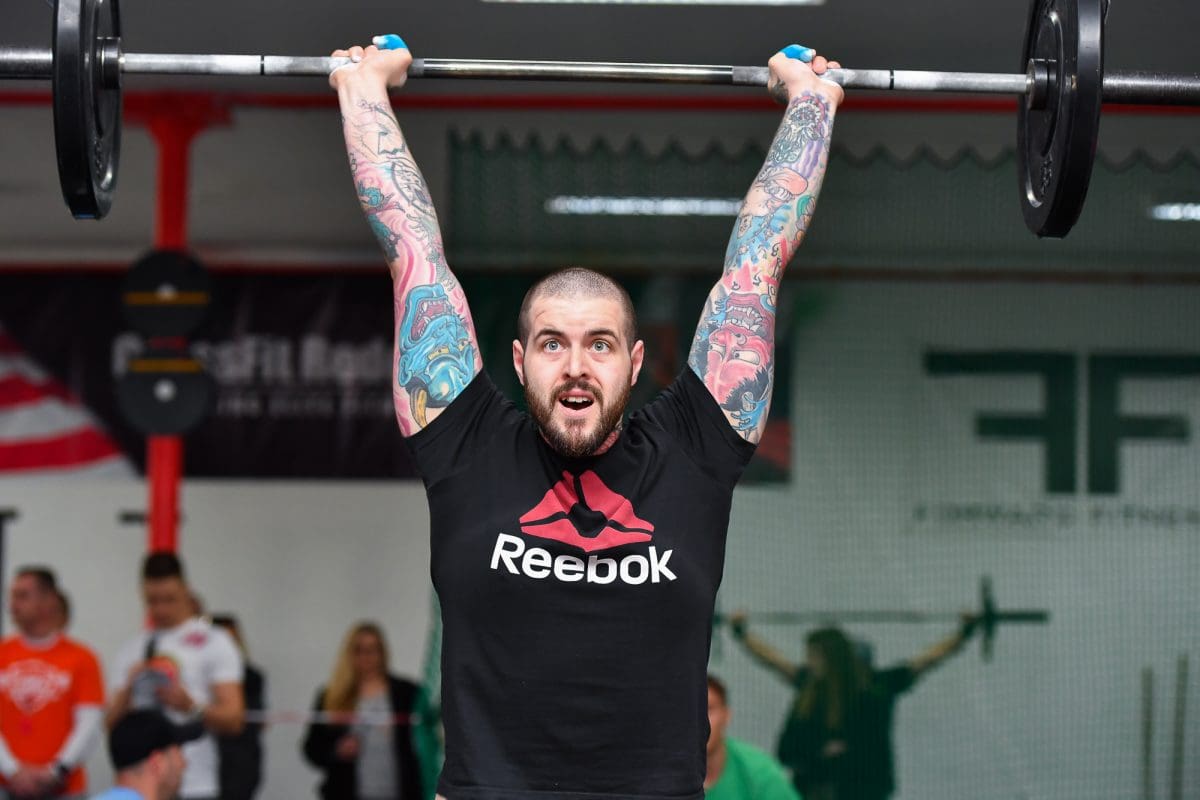


Shoulder strength and resilience are non negotiable for CrossFit athletes. From overhead squats and snatches to handstand push ups and kipping pull ups, the shoulder joint is under constant demand. Unlike many other sports, CrossFit requires the shoulder to be both highly mobile and incredibly stable under load and fatigue.
This combination makes the shoulder one of the most commonly injured areas in CrossFit. Research consistently shows that overhead athletes experience higher rates of shoulder pain and dysfunction due to repetitive loading, poor movement patterns, and insufficient strength in key stabilizing muscles.


That is why choosing the right shoulder exercises matters. Not all movements are created equal. Some build brute pressing strength, while others improve joint stability, scapular control, and injury resistance.
Why Shoulder Training Matters in CrossFit
The shoulder is the most mobile joint in the human body. It allows movement in multiple planes, but this mobility comes at the cost of stability. The joint relies heavily on surrounding muscles, particularly the rotator cuff and scapular stabilizers, to maintain proper alignment.
In CrossFit, the shoulder is exposed to:
- Repetitive overhead loading
- High velocity movements
- Fatigue driven technique breakdown
- Combined strength and endurance demands

Studies have shown that inadequate strength in the rotator cuff and scapular muscles can lead to altered movement patterns and increased injury risk. Poor scapular control, in particular, is strongly linked to shoulder impingement and instability.
At the same time, athletes need to generate high force outputs during lifts like the jerk and snatch. This requires strong deltoids, triceps, and upper back musculature working in coordination.
The best Shoulder Exercises for CrossFit Athletes must therefore develop:
- Overhead strength
- Scapular stability
- Rotator cuff endurance
- Coordination under load
The following three exercises meet all of these criteria.
1. Shoulder Exercises for CrossFit Athletes – Strict Overhead Press
Why It Works
The strict overhead press is one of the most effective ways to build raw shoulder strength. Unlike push presses or jerks, it removes assistance from the lower body, forcing the shoulders and upper body to do all the work.
Electromyography studies show high activation of the anterior and medial deltoid during overhead pressing movements. The triceps and upper trapezius also contribute significantly, especially as the bar passes forehead height.
For CrossFit athletes, the strict press builds the foundation needed for more dynamic lifts. Stronger shoulders improve bar path control and reduce compensations during fatigue.
Key Benefits
- Builds pure overhead strength
- Improves lockout stability
- Reinforces proper pressing mechanics
- Transfers directly to Olympic lifts and gymnastics
How to Perform It Correctly
Stand with feet shoulder width apart and grip the bar just outside shoulder width. Keep the core tight and glutes engaged. Start with the bar resting on the shoulders.
Press the bar overhead in a straight line while slightly moving the head back to allow the bar to pass. Once the bar clears the forehead, bring the head forward and lock out with the bar directly over the midfoot.
Lower the bar under control.
Common Mistakes
- Overarching the lower back
- Pressing the bar forward instead of vertically
- Flaring the elbows excessively
- Losing core tension
Programming Tips
For strength development:
- 3 to 5 sets of 3 to 6 reps
- Rest 2 to 3 minutes between sets
For hypertrophy and endurance:
- 3 to 4 sets of 8 to 12 reps
- Shorter rest periods
Scientific Insight
Research shows that vertical pressing movements significantly increase shoulder muscle activation and improve force production. Strength gains in the strict press are strongly correlated with improved performance in dynamic overhead lifts.
2. Shoulder Exercises for CrossFit Athletes – Single Arm Dumbbell Push Press
Why It Works
CrossFit is rarely perfectly symmetrical. Athletes often develop imbalances due to dominant side usage and uneven loading patterns. The single arm dumbbell push press addresses this directly.
By using one arm at a time, this exercise forces the body to stabilize against rotation. The core, shoulder stabilizers, and scapular muscles must work together to control the load.
The addition of leg drive allows athletes to handle heavier loads, improving power development while still challenging shoulder stability.
Key Benefits
- Corrects left to right imbalances
- Improves unilateral stability
- Enhances coordination between lower and upper body
- Builds power for jerks and push presses
How to Perform It Correctly
Hold a dumbbell at shoulder height with a neutral grip. Stand with feet hip width apart.
Dip slightly by bending the knees, keeping the torso upright. Drive through the legs and transfer force into the dumbbell, pressing it overhead.
Lock out the arm fully while maintaining control. Lower the dumbbell back to the shoulder and repeat.
Common Mistakes
- Leaning excessively to one side
- Using too much leg drive and losing control
- Not fully locking out overhead
- Allowing the elbow to drift too far forward
Programming Tips
For power development:
- 4 to 6 sets of 3 to 5 reps per arm
- Focus on explosive movement
For stability and control:
- 3 to 4 sets of 6 to 10 reps per arm
- Use moderate loads
Scientific Insight
Unilateral training has been shown to improve neuromuscular coordination and reduce strength asymmetries. Studies indicate that unilateral exercises can also increase core muscle activation due to the need to resist rotation.
This is particularly valuable for CrossFit athletes who must stabilize loads in unpredictable conditions.
3. Shoulder Exercises for CrossFit Athletes – Face Pulls
Why It Works
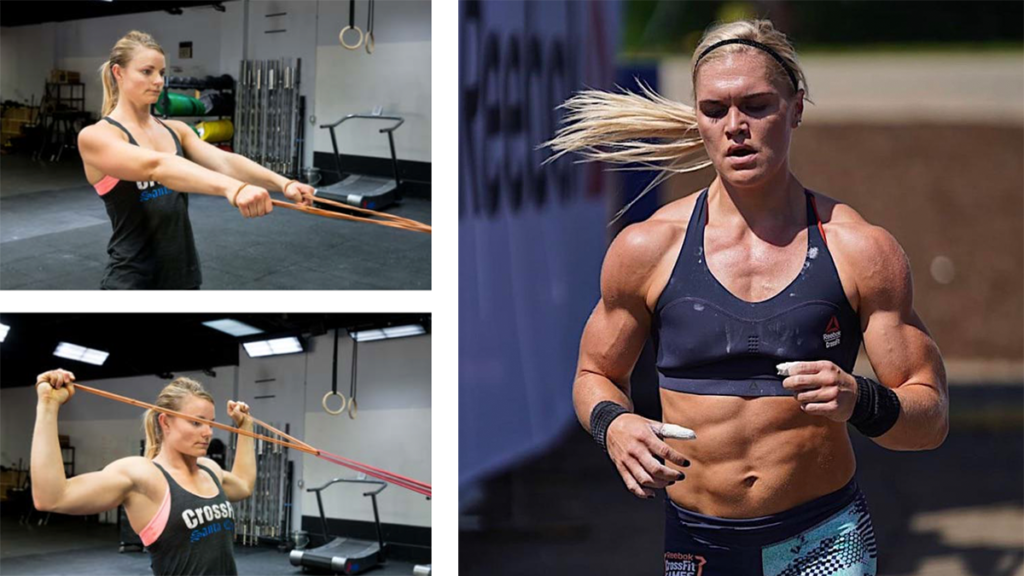
Face pulls are one of the most underrated Shoulder Exercises for CrossFit Athletes. While pressing movements build strength, pulling movements are essential for maintaining balance and joint health.
Face pulls target the posterior deltoid, rhomboids, and external rotators of the shoulder. These muscles are critical for scapular positioning and preventing internal rotation dominance.
Research shows that strengthening the posterior shoulder muscles reduces the risk of shoulder impingement and improves overall shoulder mechanics.
Key Benefits
- Improves posture and scapular alignment
- Strengthens the rotator cuff
- Reduces injury risk
- Balances pressing volume
How to Perform It Correctly
Attach a rope to a cable machine at upper chest height. Grab the rope with both hands using a neutral grip.
Pull the rope toward your face while flaring the elbows outward. Focus on squeezing the shoulder blades together and externally rotating the shoulders.
Pause briefly at the end position, then return to the start under control.
Common Mistakes
- Pulling too low toward the chest
- Using momentum instead of controlled movement
- Not externally rotating at the end
- Letting the shoulders roll forward
Programming Tips
For injury prevention and endurance:
- 3 to 4 sets of 12 to 20 reps
- Light to moderate weight
For activation:
- Use as a warm up with higher reps
Scientific Insight
Studies highlight the importance of strengthening the external rotators and scapular stabilizers to prevent shoulder injuries. Balanced training between pushing and pulling movements is essential for maintaining joint integrity.
Face pulls consistently show high activation of the posterior shoulder muscles, making them a key exercise for long term health.
Shoulder Exercises for CrossFit Athletes – How These Exercises Work Together
Each of these movements serves a different purpose, but together they create a complete shoulder training system.
- Strict overhead press builds maximal strength
- Single arm push press develops power and stability
- Face pulls enhance joint health and balance
This combination addresses the primary demands placed on the shoulder in CrossFit.
Weekly Integration Example
A simple structure might look like this:
Day 1
- Strict overhead press
- Accessory pulling work
Day 2
- Single arm dumbbell push press
- Core stability work
Day 3
- Face pulls
- Mobility and recovery work
Shoulder Exercises for CrossFit Athletes – Injury Prevention Considerations
Shoulder injuries in CrossFit are often the result of cumulative stress rather than a single event. Key risk factors include:
- Poor mobility
- Muscle imbalances
- Excessive training volume
- Fatigue related technique breakdown
Research shows that structured strength training and proper exercise selection can significantly reduce injury risk.
To protect your shoulders:
- Prioritize quality over quantity
- Maintain a balance between pushing and pulling
- Include rotator cuff specific work
- Monitor fatigue levels
Mobility and Warm Up Strategies
Even the best Shoulder Exercises for CrossFit Athletes will not be effective without proper preparation.
A good warm up should include:
- Dynamic shoulder mobility drills
- Scapular activation exercises
- Light pressing and pulling movements
Mobility work improves range of motion and reduces compensations during lifts. Studies show that adequate warm up routines enhance performance and decrease injury risk.
Final Thoughts
CrossFit demands a unique blend of strength, stability, and endurance from the shoulders. Choosing the right exercises can make the difference between consistent progress and chronic injury.
The strict overhead press, single arm dumbbell push press, and face pulls stand out because they address the full spectrum of shoulder function. They build strength, correct imbalances, and protect the joint.
If you are serious about improving performance and staying injury free, these three movements should be a regular part of your training.
References
- Behm, D.G. and Sale, D.G. (1993). Intended rather than actual movement velocity determines velocity specific training response. Journal of Applied Physiology, 74(1), pp.359 to 368.
- Cools, A.M., Witvrouw, E.E., Declercq, G.A., Danneels, L.A. and Cambier, D.C. (2004). Scapular muscle recruitment patterns. American Journal of Sports Medicine, 32(5), pp.1277 to 1284.
- Escamilla, R.F., Yamashiro, K., Paulos, L. and Andrews, J.R. (2009). Shoulder muscle activity and function in common shoulder rehabilitation exercises. Sports Medicine, 39(8), pp.663 to 685.
- Kibler, W.B. and Sciascia, A. (2010). Current concepts in scapular dyskinesis. British Journal of Sports Medicine, 44(5), pp.300 to 305.
- McClure, P., Tate, A.R., Kareha, S., Irwin, D. and Zlupko, E. (2004). A clinical method for identifying scapular dyskinesis. Journal of Orthopaedic and Sports Physical Therapy, 34(3), pp.160 to 164.