

Chest Exercises for CrossFit Athletes are often overlooked in favor of Olympic lifts, gymnastics skills, and conditioning work. However, a strong and well developed chest plays a critical role in performance, injury prevention, and overall upper body power. Whether you are locking out a heavy barbell, stabilizing during handstand push ups, or maintaining control in high rep burpees, your chest is working hard.
This article breaks down three of the best chest exercises for CrossFit athletes based on scientific evidence and practical application. You will learn why they matter, how they improve performance, and how to execute them properly. The goal is simple. Build strength that transfers directly to your sport.


Why Chest Training Matters in CrossFit
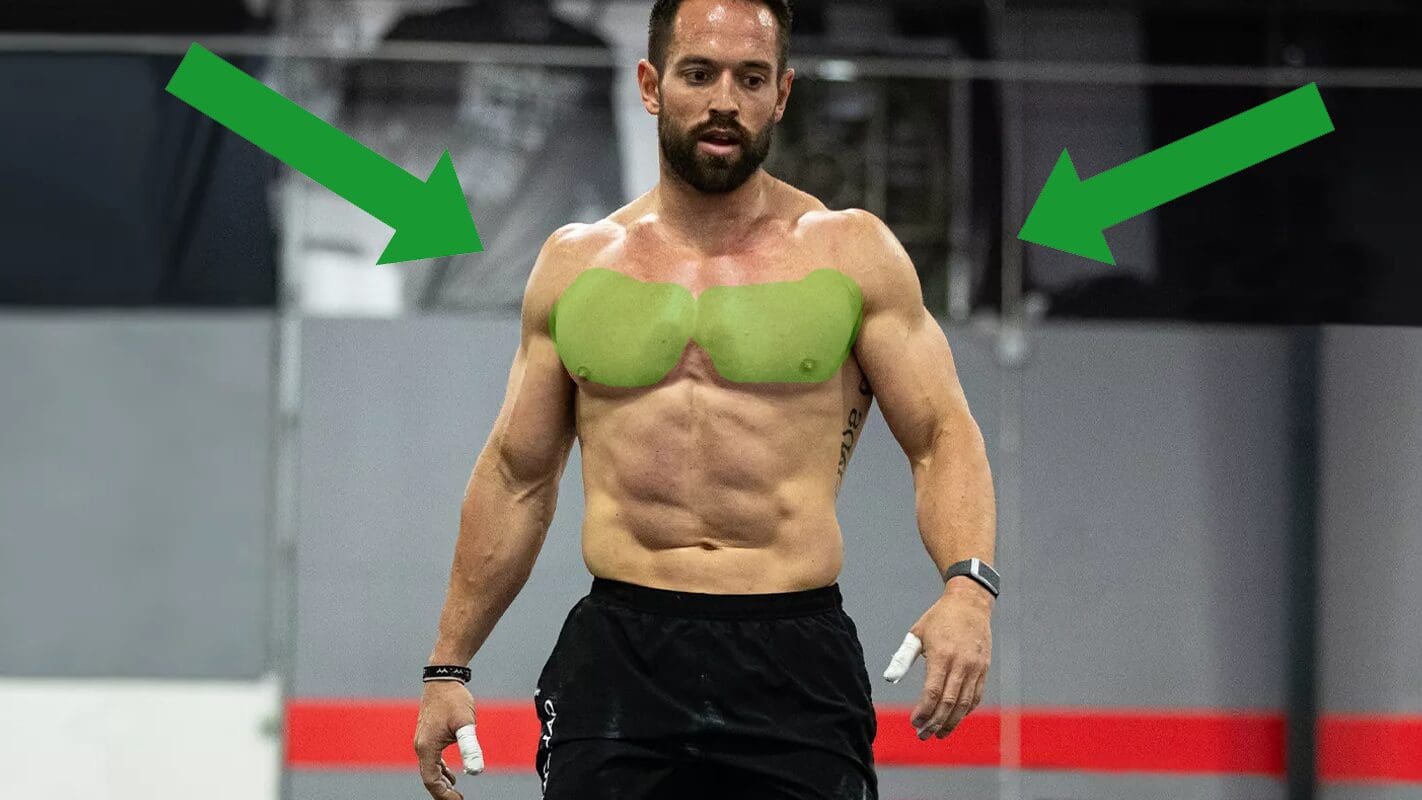
CrossFit demands a unique combination of strength, endurance, coordination, and resilience. The chest muscles, primarily the pectoralis major and minor, contribute to several key movement patterns.
Pressing Strength and Lockout Power
Movements like bench press, push press, strict press, and jerks all rely on chest involvement to some degree. Even though shoulders and triceps are dominant in overhead work, the chest contributes significantly during horizontal pressing and stabilization phases.
Research shows that multi joint pressing movements recruit the pectoralis major as a primary mover, especially during horizontal pushing tasks. Stronger chest muscles improve force production and efficiency during these lifts.
Gymnastics Transfer
Gymnastics movements such as ring dips, push ups, handstand push ups, and muscle ups all rely heavily on chest strength. The chest assists in shoulder flexion and horizontal adduction, which are essential for controlling bodyweight in dynamic environments.

Electromyography studies consistently show high activation of the pectoralis major during dips and push ups, particularly when performed with full range of motion and proper tempo.
Injury Prevention and Shoulder Health
Balanced upper body development reduces injury risk. Weak chest muscles can lead to compensations in the shoulders and triceps, increasing stress on the joints.
Strengthening the chest helps stabilize the shoulder joint by improving muscular balance. This is particularly important in CrossFit, where high volume and fatigue can compromise movement quality.
The 3 Best Chest Exercises for CrossFit Athletes
The following exercises were selected based on their effectiveness, transferability, and scientific support.
1. Barbell Bench Press
The barbell bench press is one of the most effective Chest Exercises for CrossFit Athletes for building maximal strength.
Why It Works
The bench press allows for progressive overload, which is essential for strength development. It targets the pectoralis major, anterior deltoids, and triceps.

Studies show that the bench press produces high levels of muscle activation in the chest, especially when performed with moderate to heavy loads. Heavier loads increase motor unit recruitment, which leads to greater strength gains over time.
Benefits for CrossFit Athletes
- Improves pressing strength for workouts involving push ups and dips
- Enhances lockout strength in Olympic lifts
- Builds upper body mass and resilience
- Supports shoulder stability when performed correctly
How to Perform the Barbell Bench Press
- Lie flat on a bench with feet planted firmly on the ground
- Grip the bar slightly wider than shoulder width
- Lower the bar under control to the mid chest
- Press the bar upward until arms are fully extended
- Maintain tightness in the upper back and core throughout
Programming Tips
- Perform 3 to 5 sets of 3 to 8 reps for strength
- Use controlled tempo to maximize muscle engagement
- Rest 2 to 3 minutes between sets
2. Ring Dips
Ring dips are one of the most functional Chest Exercises for CrossFit Athletes. They combine strength, stability, and coordination.
Why They Work
Ring dips require stabilization in multiple planes due to the instability of the rings. This increases muscle activation not only in the chest but also in the shoulders and core.
Research shows that unstable surface training can increase muscle activation compared to stable environments. This makes ring dips highly effective for developing functional strength.
Benefits for CrossFit Athletes
- Direct carryover to muscle ups and gymnastics movements
- Enhances shoulder stability and control
- Builds relative strength using bodyweight
- Improves coordination and balance
How to Perform Ring Dips
- Start in a supported position on the rings with arms locked out
- Keep rings close to the body
- Lower yourself until shoulders drop below elbows
- Press back up to full lockout
- Maintain control and avoid excessive swinging

Progressions
- Band assisted ring dips
- Negative ring dips
- Parallel bar dips
Programming Tips
- Perform 3 to 4 sets of 6 to 12 reps
- Focus on full range of motion
- Keep tempo controlled to avoid injury
3. Deficit Push Ups
Deficit push ups are a simple but powerful way to increase chest activation and range of motion.
Why They Work
By elevating the hands on plates or parallettes, deficit push ups increase the stretch on the chest muscles. Greater stretch under load has been shown to enhance muscle growth and strength.
Studies indicate that deeper ranges of motion lead to greater hypertrophy due to increased mechanical tension.
Benefits for CrossFit Athletes
- Improves muscular endurance for high rep workouts
- Enhances chest activation compared to standard push ups
- Requires minimal equipment
- Builds control and stability
How to Perform Deficit Push Ups
- Place hands on elevated surfaces such as plates or blocks
- Keep body in a straight line from head to heels
- Lower chest below hand level
- Push back up to full extension
- Maintain core engagement throughout
Programming Tips
- Perform 3 to 5 sets of 10 to 20 reps
- Use slower tempo to increase time under tension
- Add weight with a vest for progression
How to Integrate These Chest Exercises into CrossFit Training
To get the most out of these Chest Exercises for CrossFit Athletes, you need to integrate them intelligently into your weekly training.
Weekly Structure Example
- Day 1: Strength focus with bench press
- Day 3: Gymnastics focus with ring dips
- Day 5: Conditioning focus with deficit push ups
This structure allows for balanced development without interfering with recovery.
Volume and Intensity Balance
CrossFit already includes high volume training. Adding chest work should complement rather than overwhelm your program.
- Use lower reps and heavier loads for strength
- Use higher reps for endurance and conditioning
- Adjust based on fatigue and performance
Common Mistakes to Avoid
Poor Technique
Improper form reduces effectiveness and increases injury risk. Always prioritize technique over load or speed.
Neglecting Full Range of Motion
Partial reps limit muscle development. Full range of motion is essential for maximizing strength and hypertrophy.
Overtraining
Too much volume can lead to fatigue and decreased performance. Recovery is just as important as training.
The Science Behind Chest Training
Muscle Activation and Growth
Muscle hypertrophy occurs when mechanical tension, metabolic stress, and muscle damage are present. Chest exercises that maximize these factors lead to better results.
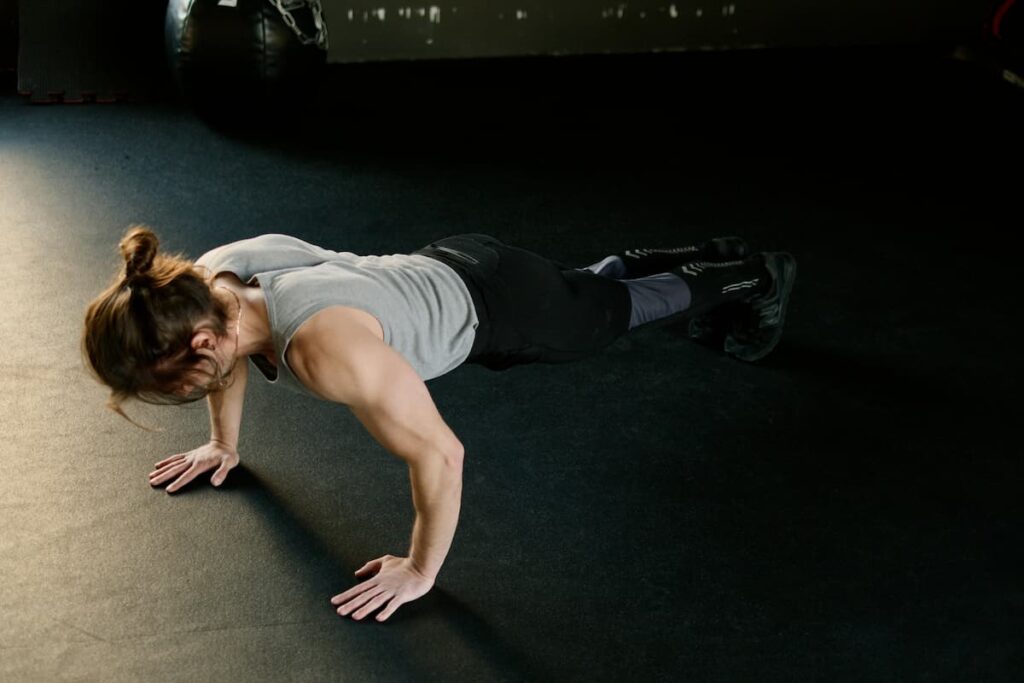
Studies show that compound movements like bench press produce greater hormonal responses compared to isolation exercises. This supports overall muscle growth.
Stability and Functional Strength
Unstable training environments, such as rings, increase neuromuscular activation. This improves coordination and joint stability, which are crucial in CrossFit.
Range of Motion and Adaptation
Training through a full range of motion leads to greater strength gains and muscle development. This is particularly important for movements like push ups and dips.
Final Thoughts
Chest Exercises for CrossFit Athletes should not be an afterthought. A strong chest improves performance across a wide range of movements, from barbell lifts to gymnastics skills.
The barbell bench press builds raw strength. Ring dips develop functional stability and control. Deficit push ups enhance endurance and range of motion.
Together, these three exercises provide a complete approach to chest training that is backed by science and proven in practice. Consistency, proper technique, and intelligent programming are key. Focus on quality over quantity and your performance will improve.
References
- Schoenfeld, B.J. (2010). The mechanisms of muscle hypertrophy and their application to resistance training. Journal of Strength and Conditioning Research, 24(10), pp.2857 to 2872.
- Saeterbakken, A.H. and Fimland, M.S. (2013). Muscle activity of the core during bilateral, unilateral, seated and standing resistance exercise. European Journal of Applied Physiology, 113(7), pp.1671 to 1678.
- Calatayud, J. et al. (2015). Bench press and push up at comparable levels of muscle activity results in similar strength gains. Journal of Strength and Conditioning Research, 29(1), pp.246 to 253.
- Andersen, V. et al. (2014). Electromyographic comparison of barbell bench press and push up exercises. Journal of Strength and Conditioning Research, 28(4), pp.1077 to 1082.
- Behm, D.G. and Colado, J.C. (2012). The effectiveness of resistance training using unstable surfaces and devices for rehabilitation. International Journal of Sports Physical Therapy, 7(2), pp.226 to 241.
- Bloomquist, K. et al. (2013). Effect of range of motion in heavy load squatting on muscle and tendon adaptations. European Journal of Applied Physiology, 113(8), pp.2133 to 2142.