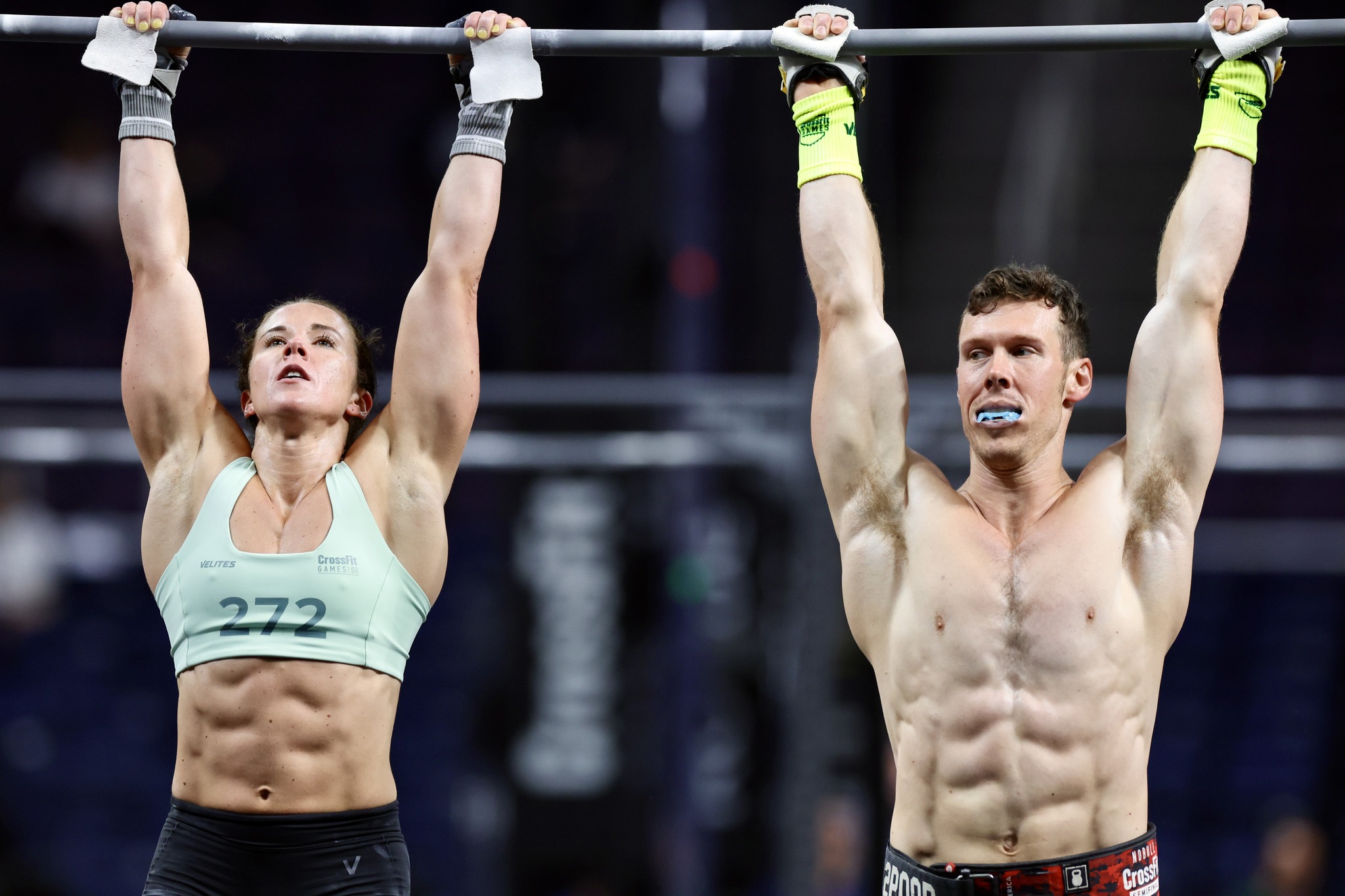


The dead hang is simple. You hold onto a bar and let your body hang with your feet off the floor. There are no machines, complicated setup steps, or advanced lifting skills required. Yet this basic exercise can train grip strength, shoulder control, upper back endurance, and confidence in an overhead position.
After 30, many people spend more time sitting, typing, driving, and using phones than they spend hanging, climbing, or reaching overhead. This does not mean that your shoulders are automatically damaged or weak. It does mean that regular exposure to supported overhead positions may be less common than it was during childhood, sports, or more active years.


3 Best Standing Core Exercises for Beginners that Want a Stronger Six Pack
The dead hang is useful because it can reintroduce this position gradually. It asks the hands to hold bodyweight, the shoulders to support the body, and the upper back to maintain a controlled position. It can also serve as a simple test of grip endurance and comfort overhead.
The dead hang is not a cure for shoulder pain, neck pain, or back pain. There is limited direct research showing that passive hanging alone prevents injuries or fixes joint problems. The evidence is stronger for the general benefits of resistance training, grip strength, and progressive physical activity. The dead hang can be one practical tool within that broader approach.
What the Dead Hang Actually Trains
A dead hang begins with both hands holding a secure overhead bar. Your feet leave the floor, your arms are extended, and your body hangs beneath your hands. The position challenges several areas at once.
Your forearms and hands must create enough grip force to stay attached to the bar. Your shoulder muscles and connective tissues must tolerate an overhead position. Your upper back muscles help control the shoulder blades, while your trunk muscles help prevent excessive swinging.
The amount of muscular effort changes based on how you perform the exercise. A relaxed dead hang uses less active shoulder tension and places more emphasis on grip and passive support. An active hang involves gently pulling the shoulder blades down and creating more muscular tension through the upper back and shoulders.
Both variations can have a place in training. A relaxed version may help a beginner become comfortable holding bodyweight from a bar. An active version can be more useful for developing shoulder control and preparing for pullups, chinups, and other overhead strength exercises.
Research on upper body pulling movements shows that the muscles around the shoulder blades and upper back play an important role in controlling the shoulder during hanging and pulling tasks. The dead hang does not replace rows, pullups, presses, or other strength exercises. It can complement them by training the ability to maintain a stable overhead hold.
Grip Strength Is a Useful Physical Quality
Grip strength matters far beyond the gym. You use it to carry bags, open containers, hold tools, lift objects, hang from a rail, and perform nearly every pulling exercise. Weak grip can limit your ability to train the back, arms, and shoulders because the hands often fatigue before the larger muscles do.
Large population studies have found that lower grip strength is associated with poorer health outcomes and higher risk of mortality. Grip strength is not the direct cause of those outcomes. Instead, it is often considered a useful marker of overall muscular strength and physical function.
The dead hang is an efficient way to train grip endurance because your hands must support a significant portion of your bodyweight. Unlike many isolated forearm exercises, it also requires the shoulders and trunk to coordinate while the grip works.
Grip training does not need to be complicated. A few short hangs performed consistently can gradually improve your ability to hold onto a bar. This can carry over to exercises such as pullups, rows, deadlifts, farmer carries, and kettlebell work.
How to Start With Grip Focused Hangs
Begin with two or three hangs of ten to twenty seconds. Choose a bar that allows you to hold on securely without discomfort in the hands, wrists, or shoulders. Rest for at least one minute between efforts so that grip fatigue does not cause you to lose control.
If full bodyweight hanging is too difficult, place your feet on a box or bench and use your legs to support part of your bodyweight. This lets you practice the same hand and shoulder position while reducing the load. Over time, use less help from the feet until you can hang freely.
The Dead Hang Can Build Overhead Confidence
Many adults feel stiff or uncertain when placing their arms overhead. This can happen for many reasons, including reduced activity, previous discomfort, lack of strength, or simple unfamiliarity with the position. A gradual dead hang can provide low complexity exposure to overhead loading.
The shoulder is a mobile joint, so it depends on coordinated work from the shoulder blade, upper arm, rotator cuff, and surrounding muscles. Overhead activity requires these structures to work together. The dead hang can help you practice maintaining an overhead position, but it should never be forced through pain.
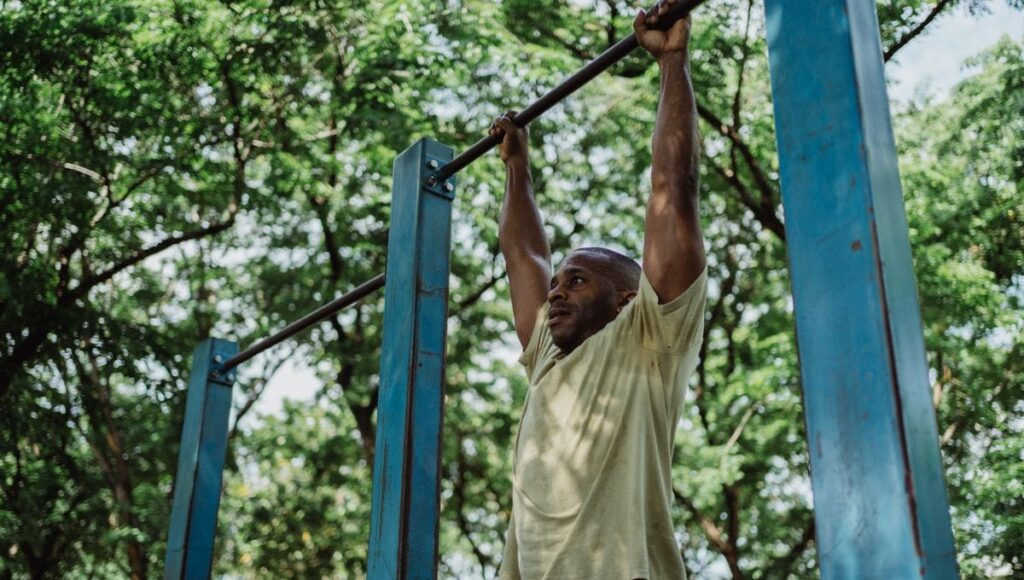
An active hang is often the best starting point for people who want to train shoulder control. While holding the bar, gently draw your shoulder blades down away from your ears without bending your elbows. This creates tension through the muscles that help stabilize the shoulder blades.
Do not try to create an extreme position. The goal is subtle control, not a large movement. You should feel the upper back and shoulders working while your neck remains relaxed.
Research on shoulder function supports the importance of scapular control and progressive strengthening for healthy overhead movement. The dead hang is not a complete shoulder program, but it can be a useful part of a program that also includes rows, pressing, and rotator cuff focused strength work.
When to Avoid Forcing a Hang
Do not push through sharp pain, tingling, numbness, a feeling that the shoulder may slip out of place, or symptoms that worsen during or after the exercise. These symptoms require individual assessment rather than generic training advice.
People with a history of shoulder instability, recent surgery, or significant shoulder injury should speak with a qualified health professional before adding unsupported hanging. The same applies if you have neck symptoms that travel into the arm or hand.
Hanging Builds Useful Upper Body Endurance
The dead hang is an isometric exercise. This means the muscles create tension without large visible movement. Isometric training can improve strength, especially when the holds are challenging and progressed over time.
During a dead hang, the forearms work continuously to maintain grip. The upper back and shoulder muscles contribute to position control, while the trunk limits unwanted swinging. This combination makes the exercise useful for building endurance in muscles that help you maintain posture and control under load.
The dead hang can also prepare you for more advanced pulling exercises. Pullups and chinups start from a hanging position, so becoming comfortable with the bottom position can make the full movement less intimidating. If you cannot yet perform a pullup, hangs can be one step in a sensible progression.
However, a dead hang alone will not build a large back. Muscle gain requires enough progressive resistance training volume for the target muscles. Rows, pullups, chinups, and pulldown variations are still important if your goal is upper back growth. Think of the dead hang as a foundation exercise that supports those bigger movements.
How to Progress the Dead Hang
The simplest progression is to add time. If you can perform three controlled hangs of twenty seconds, build toward three hangs of thirty seconds. Once that feels manageable, you can work toward longer holds or add another set.
You can also progress by using a thicker bar, a towel draped over the bar, or a more demanding grip position. These variations increase grip demand and should be introduced slowly. Another option is to use an active hang, where you gently engage the upper back instead of fully relaxing into the shoulders.
Avoid adding load too soon. Weighted hangs can be useful for experienced lifters, but they increase the demand on the hands, elbows, and shoulders. Build a reliable bodyweight hang first.
The Dead Hang Is Not a Magic Decompression Tool
You may hear that hanging automatically decompresses the spine or fixes poor posture. These claims are too strong. Hanging may feel relieving for some people because it changes body position and provides a gentle stretch sensation. That does not prove that it permanently changes spinal structure or resolves the cause of pain.
Back and neck discomfort are influenced by many physical and nonphysical factors. Exercise can be helpful, but no single movement works for everyone. If a hang feels good and does not cause symptoms, it can be a useful part of your activity routine. If it causes pain or discomfort, it is not the right exercise for you at that time.
A stronger approach is to use the dead hang alongside a complete training routine. Include lower body strength work, horizontal pulling, vertical pulling, pressing, trunk training, walking, and regular general activity. Research consistently supports physical activity and resistance training as important tools for improving strength, function, and overall health.
A Practical Dead Hang Routine
Start by hanging two or three times per week. Perform two or three sets of ten to twenty seconds, resting fully between sets. Focus on a secure grip, controlled breathing, and a still body.
If full bodyweight hangs feel too difficult, keep one or both feet lightly on a box. Reduce the amount of support gradually as your grip and shoulder confidence improve. Once you can hang comfortably for thirty seconds, experiment with active hangs or add a few extra seconds to each set.
Use the dead hang after your warmup, between pulling sets, or at the end of a training session. Avoid performing hard hangs immediately before a workout that depends heavily on grip, such as deadlifts or high repetition pullups, because fatigued hands can limit performance.
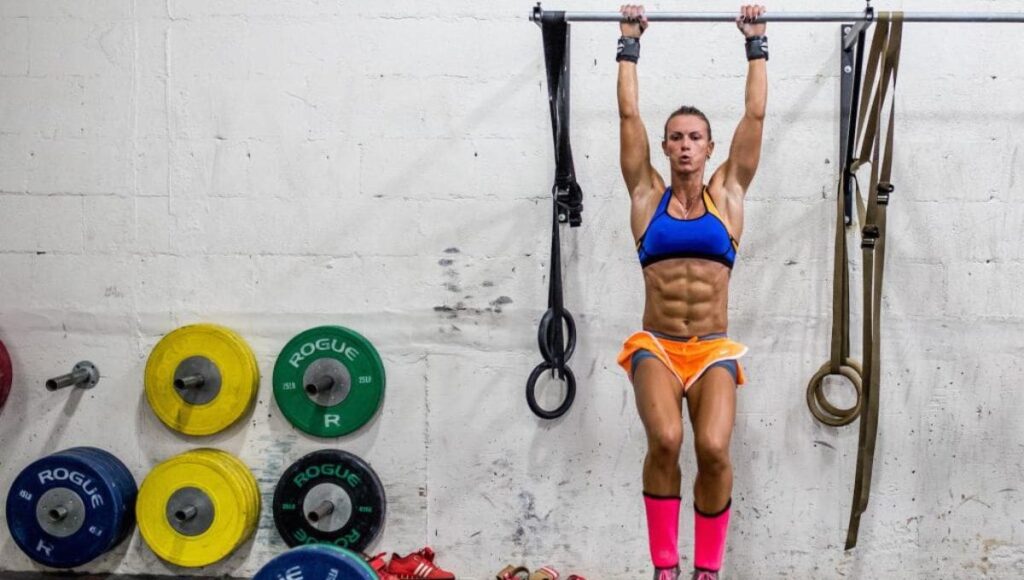
Consistency matters more than heroic efforts. Three clean hangs performed every week for several months are more valuable than one extreme attempt that leaves your elbows, hands, or shoulders irritated.
Final Thoughts
The dead hang may be one of the most useful exercises after 30 because it is simple, scalable, and relevant to several important physical qualities. It develops grip endurance, exposes the shoulders to an overhead position, challenges upper body stability, and provides a foundation for more advanced pulling work.
It is not a cure for pain and it cannot guarantee injury prevention. Its value comes from using it as part of a broader routine that includes progressive strength training and regular physical activity. Start with short, controlled hangs and build gradually.
Key Takeaways
| Dead hang goal | Starting approach | Progression option | Important consideration |
|---|---|---|---|
| Grip endurance | Two or three hangs of ten to twenty seconds | Add time gradually | Rest fully between sets to maintain a secure grip |
| Overhead control | Use an active hang with gentle shoulder blade control | Increase hold duration after technique is consistent | Do not force a painful shoulder position |
| Pullup preparation | Practice supported or full bodyweight hangs | Add assisted pullups or controlled lowering repetitions | Keep the body still and avoid swinging |
| General training | Perform hangs two or three times each week | Add a set or a small amount of time | Use dead hangs alongside a complete strength program |
References
- Bohannon, R.W. (2019) ‘Grip strength: An indispensable biomarker for older adults’, Clinical Interventions in Aging, 14, pp. 1681 to 1691.
- Cools, A.M., Struyf, F., De Mey, K., Maenhout, A., Castelein, B. and Cagnie, B. (2014) ‘Rehabilitation of scapular dyskinesis: From the office worker to the elite overhead athlete’, British Journal of Sports Medicine, 48(8), pp. 692 to 697.
- Leong, D.P., Teo, K.K., Rangarajan, S., Lopez Jaramillo, P., Avezum, A., Orlandini, A., Seron, P., Ahmed, S.H., Rosengren, A., Kelishadi, R. and others (2015) ‘Prognostic value of grip strength: Findings from the Prospective Urban Rural Epidemiology study’, The Lancet, 386(9990), pp. 266 to 273.
- Lum, D. and Barbosa, T.M. (2019) ‘Brief review: Effects of isometric strength training on strength and dynamic performance’, International Journal of Sports Medicine, 40(6), pp. 363 to 378.
- Ludewig, P.M. and Reynolds, J.F. (2009) ‘The association of scapular kinematics and glenohumeral joint pathologies’, Journal of Orthopaedic and Sports Physical Therapy, 39(2), pp. 90 to 104.
- Schoenfeld, B.J., Ogborn, D. and Krieger, J.W. (2017) ‘Dose response relationship between weekly resistance training volume and increases in muscle mass: A systematic review and meta analysis’, Journal of Sports Sciences, 35(11), pp. 1073 to 1082.
- Westcott, W.L. (2012) ‘Resistance training is medicine: Effects of strength training on health’, Current Sports Medicine Reports, 11(4), pp. 209 to 216.