

A great six pack comes from two things, building your abdominal muscles and reducing enough body fat for those muscles to become visible. There is no special exercise, food, or supplement that can replace those basics.
Beginners often waste time chasing extreme ab workouts or trying to burn stomach fat with endless crunches. A better approach is to train your whole body, work your abs with progressive resistance, eat consistently, and give the process enough time.


1. Know What You Are Training
The visible six pack is the rectus abdominis, a long muscle that runs from your ribs to your pelvis. The tendinous bands across this muscle create the separate blocks. Genetics influence the number, symmetry, and shape of those blocks.
The obliques sit at the sides of your waist and contribute to a more athletic looking midsection. Your deeper trunk muscles help stabilize the spine and pelvis. Training can make these muscles stronger and larger, but it cannot change your basic abdominal structure.
2. Create a Sustainable Energy Deficit
Visible abs usually require fat loss, and fat loss requires an energy deficit over time. This means using more energy than you consume while still eating enough to train, recover, and stay healthy.
Avoid aggressive plans that make you miserable. A moderate approach that you can repeat for months is more effective than an extreme diet that lasts for one week. Build meals around protein rich foods, fruit, vegetables, high fiber carbohydrates, and fats in sensible portions.

Track progress over several weeks. Daily bodyweight can change because of water retention, digestion, and food intake. The overall trend matters far more than one reading.
3. Stop Trying to Spot Reduce Belly Fat
Crunches strengthen the abdominal muscles, but they do not selectively remove fat from your stomach. Research does not support spot reduction through localized exercise.
That does not mean direct ab work is pointless. It builds the muscles beneath the fat. As overall body fat decreases, stronger and thicker abs can become more visible.
Use nutrition, regular activity, and full body training to support fat loss. Use ab training to build your abs. Those are separate jobs that work well together.
4. Train Your Abs Two or Three Times Each Week
Your abs respond to progressive resistance training like every other muscle group. You do not need to train them every day, and you do not need hundreds of repetitions.
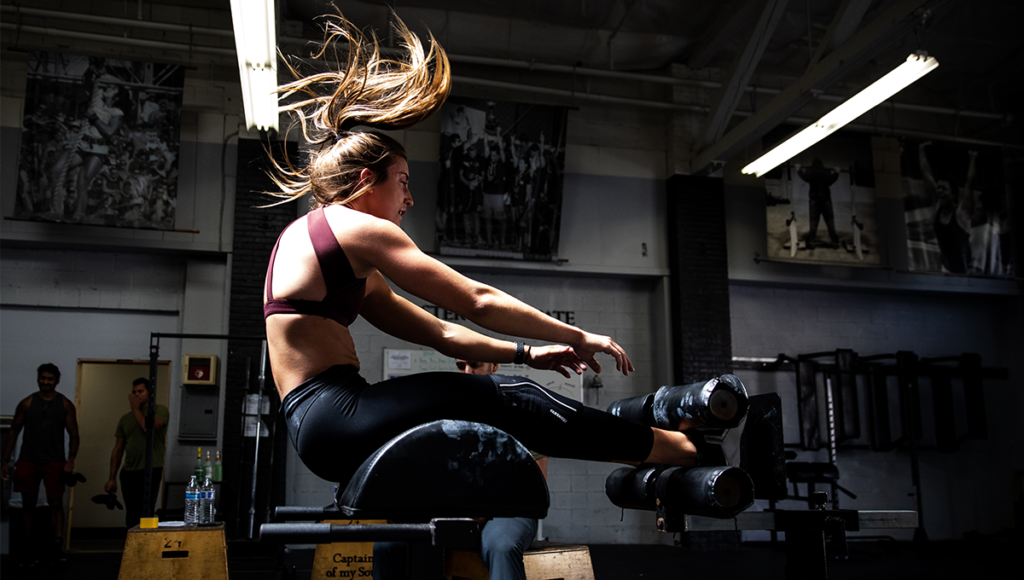
Choose exercises that challenge different functions of the trunk. Cable crunches and weighted crunches train controlled trunk flexion. Hanging knee raises challenge the rectus abdominis and pelvic control. Side planks and Pallof presses train the obliques to resist unwanted movement.
Best 3 Kettlebell Exercises for Beginners to Get a Jacked Upper Body
Start with two or three sets of eight to fifteen controlled repetitions for dynamic exercises. For planks, begin with two or three holds of fifteen to thirty seconds. Each set should feel challenging without forcing you to lose position or hold your breath.
5. Make Your Ab Exercises Harder Over Time
Your body adapts to repeated training. If every ab workout feels easy, it will eventually stop providing a strong reason for the muscles to grow.
Progressive overload means gradually increasing the challenge. You can add repetitions, use more resistance, slow the lowering phase, increase range of motion, or progress to a more difficult variation.
For example, begin with a bent knee raise. Progress by slowing each repetition, pausing at the top, then gradually extending your legs. A small improvement repeated consistently is more useful than jumping to a difficult variation before you can control it.
6. Strength Train Your Whole Body
Direct ab work matters, but it should be part of a full body program. Squats, lunges, deadlifts, rows, presses, pullups, and loaded carries all require your trunk to create and transfer force.

Full body resistance training helps build or preserve lean mass while you lose fat. That matters because the goal is not simply to become lighter. Most people want to look more muscular and athletic as body fat declines.
A simple beginner program can include a squat or lunge, a hip hinge, an upper body push, an upper body pull, and direct core work. Train these patterns consistently before worrying about complicated exercise splits.
7. Walk More and Add Cardio You Can Maintain
Your gym session is only one part of your weekly activity. Walking, cycling, stair climbing, sports, and other regular movement increase energy use and improve cardiorespiratory fitness.
Brisk walking is an excellent starting point because it is accessible and easy to recover from. You do not need to perform punishing cardio sessions every day. Regular activity that fits your schedule is more likely to last.
Use movement as a way to build fitness and support your energy deficit, not as punishment for eating. A short walk after meals, a daily walk during a phone call, or taking the stairs can add up over time.
8. Eat Enough Protein
Protein supports muscle protein synthesis and helps preserve lean mass during fat loss. This is important when you are training hard and trying to reveal your abs without losing the muscle you have built.
Include a protein source in regular meals. Lean meat, fish, eggs, dairy, soy foods, legumes, and protein powder can all work. The best option is one that suits your preferences and is easy to eat consistently.
Protein is not a shortcut to visible abs. It works alongside appropriate energy intake, resistance training, and recovery.
9. Take Sleep and Recovery Seriously
Sleep affects training performance, appetite, recovery, and decision making. One poor night will not ruin your progress, but consistently poor sleep can make exercise and nutrition much harder to manage.

Research suggests that sleep restriction can negatively affect muscle protein synthesis. It can also make people more likely to crave highly processed foods and less likely to train effectively.
Aim for a consistent sleep routine when possible. Keep your bedroom dark and comfortable, limit late caffeine if it affects your sleep, and avoid treating rest days as wasted days. Your body adapts between sessions, not only during them.
10. Be Patient and Track Useful Progress
A great six pack takes time because both fat loss and muscle growth are gradual. Strength gains often appear before major visual changes, especially for beginners.
Track your workout loads, repetitions, bodyweight trend, waist measurement, and occasional progress photos. Use the same lighting and conditions when taking photos so comparisons are more meaningful.
Avoid changing your entire plan every week. If your training is improving, your habits are consistent, and your progress trend is moving in the right direction, stay patient. Small adjustments are usually more effective than complete restarts.
Final Thoughts
Getting a great six pack is not about punishing ab workouts or restrictive dieting. It is about building your abdominal muscles, improving overall body composition, and maintaining habits long enough for the results to appear.
Train your abs directly, strength train your whole body, prioritize protein, move more, sleep well, and give yourself time. Those habits will do far more for your midsection than any shortcut.
Key Takeaways
| Tip | Main takeaway | Practical action |
|---|---|---|
| Train abs directly | Abs need progressive resistance | Train them two or three times per week |
| Lose fat gradually | Visible abs require lower overall body fat | Use a sustainable energy deficit |
| Avoid spot reduction | Crunches do not burn stomach fat alone | Combine ab work with full body habits |
| Strength train fully | Lean mass supports a muscular physique | Train major movement patterns regularly |
| Prioritize recovery | Sleep supports training and nutrition adherence | Follow a consistent sleep routine |
References
- American College of Sports Medicine (2009) ‘American College of Sports Medicine position stand: Progression models in resistance training for healthy adults’, Medicine and Science in Sports and Exercise, 41(3), pp. 687 to 708.
- Hall, K.D., Heymsfield, S.B., Kemnitz, J.W., Klein, S., Schoeller, D.A. and Speakman, J.R. (2012) ‘Energy balance and its components: Implications for body weight regulation’, American Journal of Clinical Nutrition, 95(4), pp. 989 to 994.
- Morton, R.W., Murphy, K.T., McKellar, S.R., Schoenfeld, B.J., Henselmans, M., Helms, E., Aragon, A.A., Devries, M.C., Banfield, L., Krieger, J.W. and Phillips, S.M. (2018) ‘A systematic review, meta analysis and meta regression of the effect of protein supplementation on resistance training induced gains in muscle mass and strength in healthy adults’, British Journal of Sports Medicine, 52(6), pp. 376 to 384.
- Saner, N.J., Lee, M.J.C., Pitchford, N.W., Kuang, J., Roach, G.D., Garnham, A., Stokes, T., Phillips, S.M. and Bartlett, J.D. (2020) ‘The effect of sleep restriction, with or without high intensity interval exercise, on myofibrillar protein synthesis in healthy young men’, Journal of Physiology, 598(8), pp. 1523 to 1536.
- Schoenfeld, B.J., Ogborn, D. and Krieger, J.W. (2017) ‘Dose response relationship between weekly resistance training volume and increases in muscle mass: A systematic review and meta analysis’, Journal of Sports Sciences, 35(11), pp. 1073 to 1082.
- Vispute, S.S., Smith, J.D., LeCheminant, J.D. and Hurley, K.S. (2011) ‘The effect of abdominal exercise on abdominal fat’, Journal of Strength and Conditioning Research, 25(9), pp. 2559 to 2564.