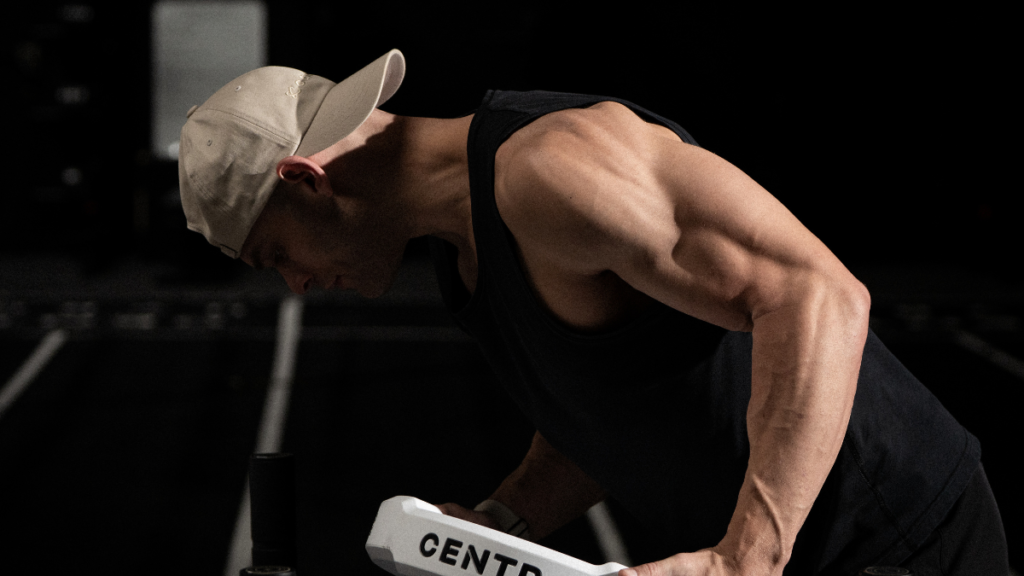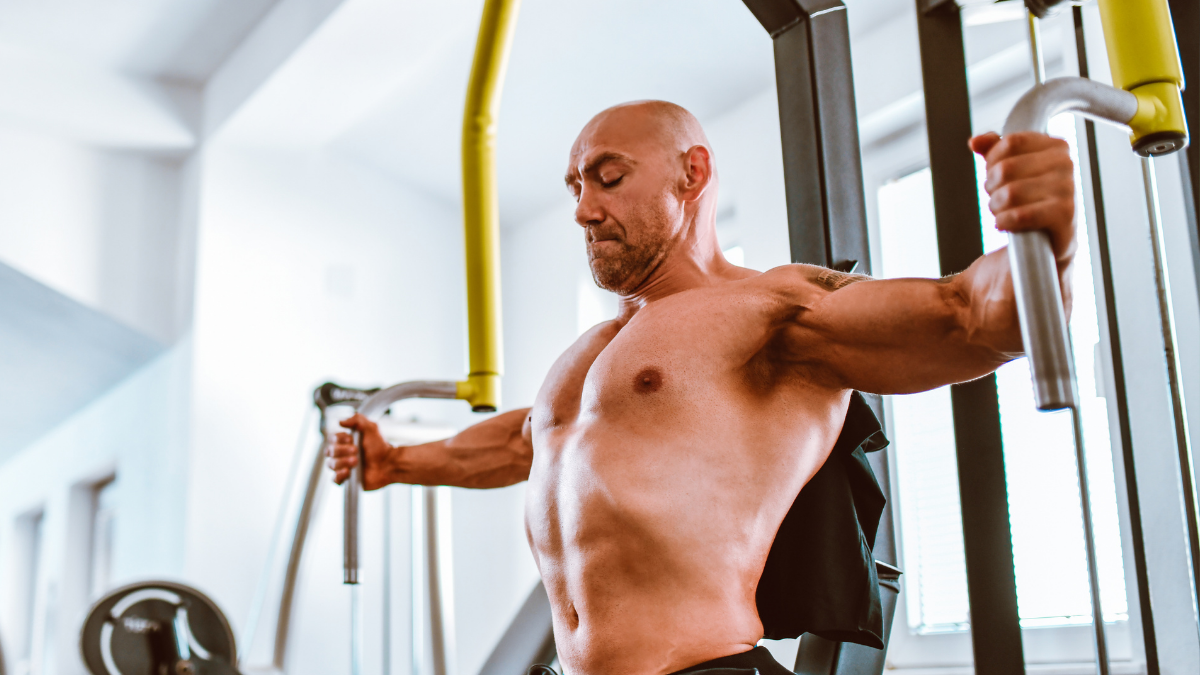


Building bigger arms is one of the most common goals for people who start lifting weights. Strong, muscular arms not only improve your appearance but also help with everyday tasks, sports performance, and many upper body exercises. While free weights often get most of the attention, machines are one of the best ways for beginners to build arm size safely and effectively.
Machines provide stability, guide your movement, and make it easier to focus on the muscles you want to train. This allows beginners to develop good technique while placing consistent tension on the biceps and triceps. Research consistently shows that muscle growth depends primarily on applying sufficient mechanical tension, training close enough to muscular failure, and progressing over time rather than whether you use barbells, dumbbells, or machines.


If your goal is simply to build bigger arms without worrying about complicated lifting techniques, three machine exercises stand out above the rest. Together, they train every major muscle that contributes to arm size and are suitable for almost every commercial gym.
Why Machines Are Excellent for Beginners
Many beginners believe they must immediately learn complex barbell lifts to build muscle. While compound free weight exercises are excellent, machines have several advantages during the first months of training.
The fixed movement path reduces the amount of coordination required, allowing you to concentrate on producing force through the target muscles. Machines also improve confidence because there is less concern about balancing weights or maintaining perfect technique under heavy loads. Several studies comparing machine and free weight training have found that both methods can produce similar increases in muscle size when training volume and effort are matched. The important factor is consistently challenging the muscles with progressive overload.
How Much Must You Be Able to Bench Press?
Machines also make it easier to train close to muscular failure safely. Since the equipment supports your body and guides the movement, beginners can push harder without needing a spotter for many exercises.
Understanding Arm Muscles
Before looking at the exercises, it helps to understand what creates bigger arms. Many people think the biceps are responsible for most arm size. In reality, the triceps account for roughly two thirds of your upper arm mass. If your goal is maximum arm growth, you must train both muscle groups. The biceps brachii flex the elbow and rotate the forearm into a palm up position. Underneath the biceps sits the brachialis, another important elbow flexor that can push the biceps upward as it grows, making the arms appear thicker.

The triceps brachii consist of three separate heads. Together they straighten the elbow and contribute the majority of upper arm size. Effective triceps training should challenge all three heads through a full range of motion.
The following three exercises target these muscles efficiently while remaining beginner friendly.
Exercise 1: Machine Biceps Curl
The machine biceps curl is one of the most effective exercises for directly training the front of the upper arm. Unlike standing dumbbell curls, the machine minimizes swinging and momentum. This keeps constant tension on the biceps throughout the movement and encourages proper technique.
Why It Works
Muscle growth depends on placing high tension on muscle fibers through a challenging range of motion. The machine curl makes this easy because the elbows remain fixed while the resistance follows a controlled path.
Research using electromyography has shown high levels of biceps activation during curling movements when proper technique is maintained. By eliminating unnecessary body movement, beginners can learn how to fully contract the biceps without cheating the lift.
The seated position also reduces lower back involvement and helps maintain consistent form from the first repetition to the last.
How to Perform It
- Adjust the seat so your upper arms rest comfortably against the pad.
- Grip the handles with your palms facing upward.
- Curl the handles toward your shoulders by bending only at the elbows.
- Pause briefly while squeezing your biceps.
- Lower the weight under control until your arms are nearly straight without allowing the weight stack to slam down.
- Perform each repetition slowly and deliberately rather than rushing through the movement.
Common Mistakes
Many beginners use excessive weight and shorten the range of motion. Others lift their elbows away from the pad or allow the weight to drop too quickly.
Using a lighter weight with full control produces far greater muscle stimulation than lifting heavier weights with poor technique.
Exercise 2: Cable Triceps Pushdown
The cable triceps pushdown is one of the most reliable exercises for building larger triceps.

Most gyms offer several handle options including a straight bar, rope attachment, or angled bar. Beginners can use whichever feels most comfortable.
Why It Works
The cable provides continuous tension throughout the movement because resistance remains constant from beginning to end.
Unlike many free weight exercises where tension changes depending on gravity, the cable keeps the triceps working through nearly the entire range of motion.
The exercise is simple to learn while still allowing substantial loading as strength improves. It also places minimal stress on the shoulders, making it suitable for people with limited training experience.
How to Perform It
- Stand facing the cable machine.
- Grip the attachment with your elbows close to your sides.
- Begin with your elbows bent about ninety degrees.
- Push the handle downward until your arms are fully straight.
- Squeeze the triceps briefly before returning under control to the starting position.
- Keep your upper arms stationary throughout the exercise.
Common Mistakes
The most common error is allowing the elbows to drift forward during each repetition. This shifts work away from the triceps. Another mistake is using body weight to force the handle downward by leaning over the cable. Focus on moving only at the elbow joint while maintaining an upright posture.
Exercise 3: Assisted Pull Up Machine
Many people do not think of the assisted pull up machine as an arm exercise. However, it is one of the best compound machine movements for building the biceps while simultaneously strengthening the back.
Because the machine reduces your body weight, beginners can perform high quality repetitions even if they cannot complete a regular pull up.
Why It Works
The biceps play an important role during pulling exercises. Studies consistently show substantial biceps activation during pull ups and chin ups.
Using the assisted machine allows beginners to perform enough repetitions to stimulate muscle growth while also improving upper body strength.
Unlike isolated curls, this movement trains the biceps alongside larger back muscles, allowing heavier overall loading and improving functional strength.
As strength increases, assistance can gradually be reduced until body weight pull ups become possible.
How to Perform It
- Select an assistance level that allows eight to twelve controlled repetitions.
- Grip the handles comfortably.
- Place your knees or feet on the support platform depending on the machine design.
- Pull yourself upward until your chin reaches the handles.
- Lower yourself slowly while maintaining control.
- Avoid dropping quickly into the bottom position.
Common Mistakes
Swinging the body and using momentum reduces muscle tension. Another mistake is performing only partial repetitions instead of moving through the fullest comfortable range of motion. Focus on pulling with both your back and your arms while controlling every repetition.
How Many Sets and Repetitions Should Beginners Perform?
Building muscle does not require marathon workouts. Current evidence suggests beginners respond well to moderate training volume performed consistently.
For each of these three exercises, perform three sets of eight to twelve repetitions. Choose a weight that leaves only one to three repetitions in reserve at the end of each set. This means you should feel like you could perform only a few additional repetitions before reaching failure.
As soon as you can complete all twelve repetitions with good technique, increase the weight slightly during your next session. This gradual progression is known as progressive overload and remains one of the most important principles of muscle growth.
How Often Should You Train Arms?
Research suggests each muscle group benefits from being trained at least twice per week for optimal muscle growth. A beginner could perform these three exercises after an upper body workout or include them within two full body sessions each week.
For example, training on Monday and Thursday provides enough recovery while maintaining frequent muscle stimulation. More training is not necessarily better. Muscles grow during recovery after training rather than during the workout itself.
The Importance of Progressive Overload
One of the biggest mistakes beginners make is repeating the same workout with the same weights for months. Your muscles adapt quickly. If the challenge never increases, growth eventually slows. Progressive overload simply means gradually increasing the training stimulus over time.
You can achieve this by adding weight, performing additional repetitions, improving technique, increasing training volume, or slowing the lowering phase of each repetition. Even small improvements each week add up over months. Consistency beats perfection.
Putting It All Together
You do not need dozens of different exercises to build bigger arms. The machine biceps curl directly targets the biceps while teaching proper elbow flexion mechanics. The cable triceps pushdown effectively trains the muscle group responsible for most upper arm size. The assisted pull up machine combines compound pulling strength with additional biceps development while building a stronger upper body overall.
Combined with progressive overload, adequate protein intake, and consistent training twice each week, these three exercises provide an excellent foundation for beginner arm growth. Remember that muscle takes time to build. Visible changes usually require several months of consistent effort rather than a few weeks.
Focus on improving your performance in each workout, recovering well between sessions, and maintaining good technique. Those habits will produce far better long term results than constantly changing exercises or chasing shortcuts.
Key Takeaways
| Topic | Key Information |
|---|---|
| Best beginner biceps exercise | Machine biceps curl provides stability and constant tension for effective muscle growth. |
| Best beginner triceps exercise | Cable triceps pushdown targets all three heads of the triceps with continuous resistance. |
| Best compound arm exercise | Assisted pull up machine develops both the biceps and upper back while building functional strength. |
| Sets and reps | Perform 3 sets of 8 to 12 repetitions for each exercise. |
| Training frequency | Train arms at least twice per week for consistent muscle growth. |
| Progressive overload | Increase weight or repetitions gradually as exercises become easier. |
| Protein intake | Aim for approximately 1.4 to 2.2 grams of protein per kilogram of body weight daily. |
| Recovery | Sleep, nutrition, and rest are essential for muscle growth. |
| Technique | Prioritize full range of motion and controlled repetitions over heavy weights. |
| Expected results | Consistent training over several months produces noticeable increases in arm size. |
References
- American College of Sports Medicine. (2009). Progression models in resistance training for healthy adults. Medicine & Science in Sports & Exercise, 41(3), 687 to 708.
- Grgic, J., Schoenfeld, B.J., Orazem, J. and Sabol, F. (2022). Effects of resistance training performed to repetition failure or non failure on muscular strength and hypertrophy. Scandinavian Journal of Medicine & Science in Sports, 32(11), 1541 to 1551.
- Morton, R.W., Murphy, K.T., McKellar, S.R., Schoenfeld, B.J., Henselmans, M., Helms, E., Aragon, A.A., Devries, M.C., Banfield, L., Krieger, J.W. and Phillips, S.M. (2018). A systematic review, meta analysis and meta regression of protein supplementation on resistance training induced gains in muscle mass and strength. British Journal of Sports Medicine, 52(6), 376 to 384.
- Schoenfeld, B.J. (2010). The mechanisms of muscle hypertrophy and their application to resistance training. Journal of Strength and Conditioning Research, 24(10), 2857 to 2872.
- Schoenfeld, B.J., Grgic, J., Ogborn, D. and Krieger, J.W. (2017). Strength and hypertrophy adaptations between low load and high load resistance training. Journal of Strength and Conditioning Research, 31(12), 3508 to 3523.
- Schoenfeld, B.J., Ogborn, D. and Krieger, J.W. (2016). Effects of resistance training frequency on measures of muscle hypertrophy. Sports Medicine, 46(11), 1689 to 1697.
- Signorile, J.F., Zink, A.J. and Szwed, S.P. (2002). A comparative electromyographical investigation of muscle utilization patterns using various hand positions during the lat pull down. Journal of Strength and Conditioning Research, 16(4), 539 to 546.
- Wackerhage, H., Schoenfeld, B.J., Hamilton, D.L., Lehti, M. and Hulmi, J.J. (2019). Stimuli and sensors that initiate skeletal muscle hypertrophy following resistance exercise. Journal of Applied Physiology, 126(1), 30 to 43.