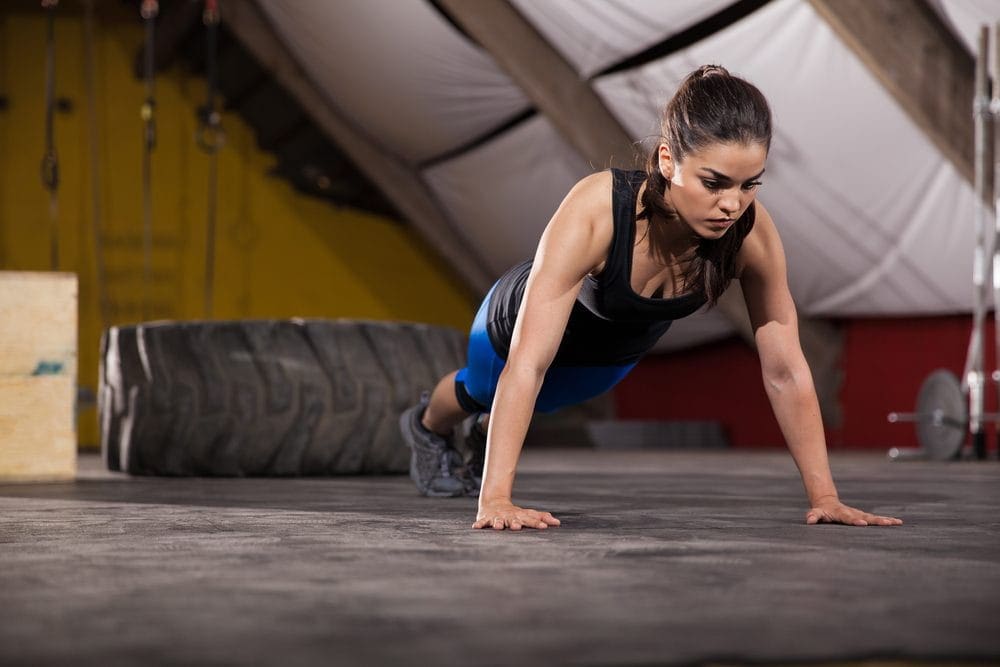


Push ups are one of the simplest and most effective bodyweight exercises ever created. They require no equipment, can be performed almost anywhere, and develop strength, muscular endurance, coordination, and core stability at the same time. Despite their simplicity, many beginners are unsure what a realistic target looks like. Should you be able to perform five? Ten? Twenty? Or more?
The truth is that there is no single number that defines success. Age, sex, body weight, training history, and overall fitness all influence push up performance. However, sports science provides useful benchmarks that help beginners understand where they stand and what they should aim for.


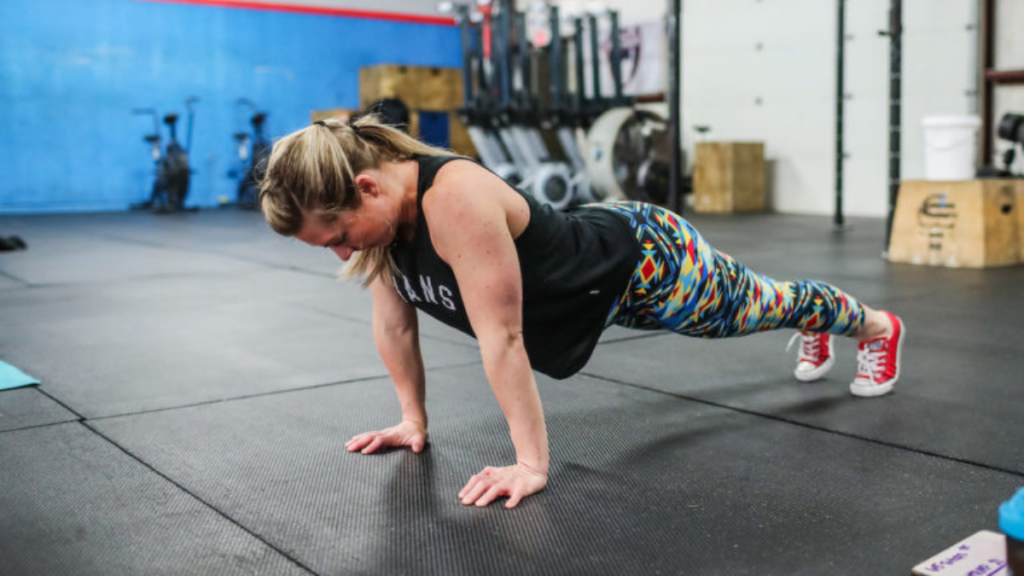
If you are just starting your fitness journey, your goal should not be to match experienced athletes. Instead, focus on building solid technique and gradually increasing the number of quality repetitions you can perform.
Why Push Ups Are Such a Good Test of Fitness
Push ups measure far more than upper body strength. Every repetition requires your chest, shoulders, triceps, abdominal muscles, lower back, and glutes to work together to keep your body rigid throughout the movement.
Research using electromyography has shown that properly performed push ups activate the pectoralis major, anterior deltoids, triceps brachii, serratus anterior, and multiple core muscles. Because so many muscles contribute simultaneously, push ups are an excellent measure of functional upper body fitness.
Sitting All Day? Squat University Explains Why the Reverse Plank Deserves a Place in Your Routine
Unlike isolated exercises such as biceps curls, push ups teach the body to produce force through coordinated movement patterns. This translates well to everyday activities, recreational sports, and resistance training.
Studies have also demonstrated that bodyweight exercises can produce meaningful improvements in muscular strength and endurance when performed consistently, especially in beginners.
What Counts as a Proper Push Up?
Before worrying about numbers, it is important to define what actually counts as a repetition. A proper push up begins with the body in a straight line from head to heels. The hands should be positioned slightly wider than shoulder width while the core and glutes remain engaged throughout the movement.
Lower yourself until your chest comes close to the floor while maintaining a neutral spine. Push back up until your elbows are fully extended without allowing your hips to sag or your lower back to arch excessively.
Many beginners unknowingly shorten the range of motion or lose body alignment as fatigue sets in. These repetitions should not count because they reduce muscle activation and make comparisons meaningless. Quality always matters more than quantity.
How Many Push Ups Should a Beginner Be Able to Do?
For someone with little or no resistance training experience, these benchmarks provide realistic goals.
Men
| Beginner Level | Continuous Push Ups |
|---|---|
| Very Beginner | 0 to 5 |
| Beginner | 6 to 10 |
| Developing | 11 to 20 |
| Good Early Fitness | 21 to 30 |
Women
| Beginner Level | Continuous Push Ups |
|---|---|
| Very Beginner | 0 to 3 |
| Beginner | 4 to 8 |
| Developing | 9 to 15 |
| Good Early Fitness | 16 to 25 |
These numbers assume strict push ups performed from the toes using full range of motion. They are based on normative fitness data from organizations including the American College of Sports Medicine and large population fitness testing.
If you cannot yet perform a full push up, that does not mean you are unfit. It simply means your current strength level has not yet caught up with the demands of moving your own body weight. Many healthy adults require several weeks of progressive practice before achieving their first full repetition.
Why Beginners Often Struggle
Push ups are surprisingly demanding because you are lifting a large proportion of your body weight. Biomechanical research estimates that a standard push up requires lifting approximately 64 percent to 75 percent of total body mass depending on body position and hand placement.
For someone weighing 90 kilograms, each repetition may involve pressing well over 60 kilograms. That explains why beginners often find push ups harder than expected.
Limited upper body strength is only one reason. Weak core muscles, poor shoulder stability, excess body weight, and unfamiliar movement patterns all contribute to difficulty. Fortunately, every one of these factors improves with consistent training.
Is One Push Up Enough?
If you can perform one strict push up, you have already developed enough strength to move most of your body weight through a controlled range of motion.
While one repetition is a great milestone, it should not become your long term target.

Research consistently shows that muscular endurance improves significantly through repeated exposure to resistance training. Beginners often see rapid improvements during their first eight to twelve weeks because the nervous system becomes more efficient at recruiting muscle fibers.
Many people who begin with only one or two push ups can reach ten or more within two or three months of structured training.
How to Progress if You Cannot Do a Full Push Up
Many beginners make the mistake of avoiding push ups entirely until they feel stronger. Instead, use easier variations that closely mimic the movement pattern.
Wall push ups are an excellent starting point because they dramatically reduce the amount of body weight being lifted. Once these become comfortable, progress to incline push ups using a bench, sturdy table, or Smith machine bar.
The next step is lowering the height of the incline over time until you can perform repetitions from the floor. Some people also benefit from eccentric repetitions. Lower yourself slowly under control before returning to the starting position by using your knees or standing back up.
Research has repeatedly shown that eccentric strength training produces substantial improvements in overall strength because muscles are capable of producing higher forces during controlled lowering movements.
How Fast Should Beginners Improve?
Strength gains happen quickly during the early stages of training. Studies examining novice resistance trainees consistently report measurable improvements within six to eight weeks when exercises are performed two or three times each week.
For push ups, beginners often experience improvements of two to five additional repetitions every few weeks, provided they train consistently and recover adequately. The exact rate varies depending on age, nutrition, sleep quality, and previous activity levels. The key is consistency rather than perfection.
How Often Should Beginners Practice?
Most beginners respond well to performing push ups two or three times each week. This provides enough training stimulus while allowing muscles adequate recovery time.
Each session should include multiple sets that stop just short of complete failure. For example, someone capable of eight repetitions could perform four sets of five or six repetitions. As strength improves, gradually increase the number of repetitions before progressing to more challenging variations.
Progressive overload remains the most important principle for continued improvement.
How Many Push Ups Is Considered Good?
For beginners, reaching ten consecutive strict push ups is an excellent first milestone.
- Fifteen to twenty repetitions demonstrates good muscular endurance for someone who has recently started training.
- Reaching twenty five or more strict repetitions places most recreational exercisers above average.
- Experienced athletes and military personnel often perform significantly higher numbers, but beginners should avoid comparing themselves with individuals who have years of training experience.
Focus instead on steady personal improvement.
Do Push Ups Improve Overall Health?
Push ups do more than build muscle. Upper body muscular endurance has been associated with better overall health and physical function. One well known study involving active adult men found that individuals capable of performing more than forty push ups had a substantially lower risk of future cardiovascular events compared with those able to perform fewer than ten.
Although this finding should not be interpreted as proof that push ups alone prevent heart disease, it highlights how muscular fitness often reflects broader health, physical activity levels, and cardiovascular fitness.
Resistance training itself has consistently been shown to improve blood sugar regulation, bone health, functional capacity, and quality of life across a wide range of age groups.
Final Thoughts
Every beginner starts somewhere. Some people achieve ten push ups on their first attempt, while others need several weeks before completing a single repetition. Neither situation predicts your long term success. The most important goal is to perform every repetition with excellent technique while gradually increasing your strength over time.
If you currently cannot perform a full push up, begin with wall or incline variations and practice consistently two or three times each week. Small improvements accumulate surprisingly quickly.
For most beginners, reaching ten strict push ups represents an excellent early milestone. From there, continued practice will build the strength and confidence needed to progress well beyond that first target.
Key Takeaways
| Topic | Recommendation |
|---|---|
| Beginner men | Aim for 6 to 10 strict push ups initially |
| Beginner women | Aim for 4 to 8 strict push ups initially |
| First milestone | Perform 10 consecutive strict push ups |
| Training frequency | Practice 2 to 3 times per week |
| Best progression | Wall push ups, incline push ups, then floor push ups |
| Most important factor | Perfect technique before increasing repetitions |
| Expected progress | Noticeable improvements within 6 to 8 weeks with consistent training |
| Long term goal | Build strength gradually rather than chasing high repetition numbers immediately |
References
- American College of Sports Medicine (2021). ACSM’s Guidelines for Exercise Testing and Prescription. 11th ed. Philadelphia: Wolters Kluwer.
- Calatayud, J., Borreani, S., Colado, J.C., Martin, F., Rogers, M.E. and Andersen, L.L. (2015). Bench press and push up at comparable levels of muscle activity results in similar strength gains. Journal of Strength and Conditioning Research, 29(1), pp.246 to 253.
- Contreras, B., Schoenfeld, B., Mike, J., Tiryaki Sonmez, G., Cronin, J. and Vivas, J. (2012). An electromyographic comparison of a modified push up and bench press. Journal of Applied Biomechanics, 28(1), pp.98 to 104.
- Ebben, W.P., Wurm, B., VanderZanden, T.L., Spadavecchia, M.L., Durocher, J.J., Bickham, C.T. and Petushek, E.J. (2011). Kinetic analysis of several variations of push ups. Journal of Strength and Conditioning Research, 25(10), pp.2891 to 2894.
- Feser, E.H., Costello, J.T., Nuzzo, J.L. and Steele, J. (2021). Resistance training volume and proximity to failure for muscle hypertrophy and strength. Sports Medicine, 51(12), pp.2475 to 2496.
- Kotarsky, C.J., Christensen, B.K., Miller, J.S. and Hackney, K.J. (2018). Effect of progressive calisthenic push up training on muscle strength and thickness. Journal of Strength and Conditioning Research, 32(3), pp.651 to 659.