

Well developed shoulders can completely change the way your upper body looks. Wider shoulders create the appearance of a stronger V taper, improve posture, and make the waist look narrower by comparison. For beginners, building impressive shoulders does not require complicated routines or advanced lifting techniques. A small number of carefully selected exercises can stimulate all three heads of the deltoid muscle while also improving strength, stability, and movement quality.

The key is choosing exercises that provide a high level of muscle activation while allowing beginners to learn proper movement patterns safely. Research consistently shows that beginners can achieve substantial muscle growth and strength gains by focusing on compound movements alongside targeted isolation exercises performed with good technique and progressive overload.


This guide covers the three best beginner shoulder exercises that are supported by scientific evidence. Together, they target every part of the shoulder and provide an efficient foundation for building broader, stronger, and more attractive shoulders.
Why Shoulder Training Matters
The shoulder is one of the most mobile joints in the human body. This mobility allows you to lift, push, throw, pull, and carry objects in countless directions. The downside is that the shoulder depends heavily on muscular control for stability.
- The main muscle responsible for shoulder shape is the deltoid, which has three distinct portions.
- The anterior deltoid sits at the front and contributes to pressing and lifting the arms forward.
- The lateral deltoid is located on the outside of the shoulder. This muscle creates most of the visual width that people associate with broad shoulders.
- The posterior deltoid sits on the back of the shoulder and contributes to pulling movements while helping maintain healthy posture and balanced shoulder mechanics.
Developing all three sections creates shoulders that are not only visually impressive but also more resistant to injury. Research has shown that balanced strength around the shoulder improves joint function and reduces the risk of common overuse problems.
For beginners, mastering a few highly effective exercises produces better long term results than performing a large variety of movements with inconsistent technique.
What Makes an Exercise Great for Beginners?
Not every shoulder exercise is suitable for someone new to resistance training. The best beginner exercises share several characteristics. They are relatively easy to learn, allow gradual increases in weight, activate the target muscles effectively, and minimize unnecessary stress on the shoulder joint.
Electromyography studies, commonly known as EMG studies, have compared muscle activation across many shoulder exercises. Although EMG does not directly measure muscle growth, higher activation generally indicates that a muscle is working harder during a movement.
Scientific reviews also show that muscle hypertrophy is driven primarily by sufficient training volume, mechanical tension, and progressive overload rather than constantly changing exercises. Choosing a handful of proven movements and improving performance over time remains one of the most effective strategies for beginners.
1. Dumbbell Shoulder Press
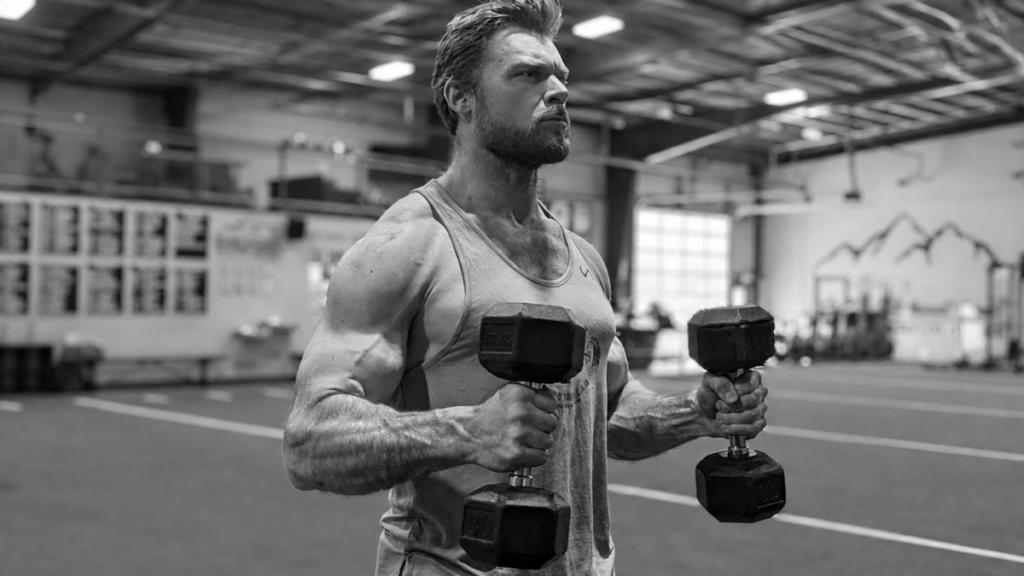
The dumbbell shoulder press is arguably the most important beginner shoulder exercise because it develops overall shoulder size while building functional upper body strength.
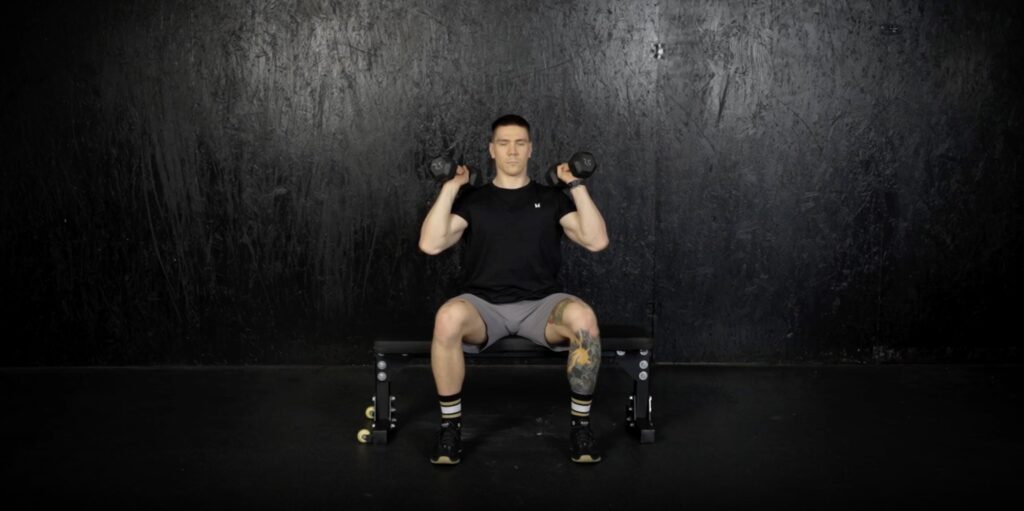
Unlike a barbell, dumbbells require each arm to stabilize independently. This increases muscular coordination while reducing the tendency for one side to dominate the movement.
The exercise primarily targets the anterior deltoid while heavily recruiting the lateral deltoid and triceps. The upper chest and upper trapezius also contribute throughout the lift.
Why It Works
Research comparing shoulder exercises consistently demonstrates high activation of the anterior deltoid during overhead pressing movements. Because multiple muscle groups work together, beginners can lift heavier loads than during isolation exercises. Greater loading creates high levels of mechanical tension, which is one of the primary drivers of muscle growth.
Using dumbbells also allows the shoulders to move through a more natural range of motion than many fixed machines, potentially improving comfort for individuals with different shoulder structures.
How to Perform It
- Sit on a bench with back support or stand with your feet shoulder width apart.
- Hold a dumbbell in each hand at shoulder height with your palms facing forward or slightly inward.
- Brace your core and press both dumbbells upward until your arms are almost fully extended.
- Lower the weights under control back to the starting position without bouncing.
- Maintain a neutral spine throughout the movement and avoid leaning backward excessively.
Common Beginner Mistakes
Many beginners arch their lower back to help move the weight. This shifts stress away from the shoulders and increases strain on the lumbar spine. Another common mistake is lowering the dumbbells too quickly. Controlled lowering increases muscular tension and helps reinforce proper movement patterns.
3 Best Beginner Exercises for Strong and Athletic Hamstrings
2. Dumbbell Lateral Raise
If your goal is wider shoulders, no beginner exercise is more important than the dumbbell lateral raise. The lateral deltoid contributes most of the visible width of the shoulders. Compound pressing exercises involve this muscle, but isolation work places much greater emphasis directly on it. Although the movement appears simple, performing it correctly requires attention to technique and controlled execution.
Why It Works
EMG studies consistently show that lateral raises produce very high activation of the middle deltoid. Unlike pressing movements, lateral raises minimize assistance from the triceps, allowing the lateral deltoid to perform most of the work.
Research on resistance training indicates that combining compound exercises with isolation movements often produces more complete muscular development because different exercises emphasize different regions of the muscle.
How to Perform It
- Stand upright while holding a light dumbbell in each hand.
- Allow your arms to hang naturally at your sides with a slight bend in the elbows.
- Raise both arms outward until they reach approximately shoulder height.
- Pause briefly before lowering the weights slowly.
- Think about lifting with your elbows instead of your hands. This simple cue often improves lateral deltoid activation.
Common Beginner Mistakes
The most common mistake is choosing weights that are too heavy.
When the dumbbells become excessively heavy, beginners usually swing their torso or shrug their shoulders to create momentum. This reduces tension on the lateral deltoid while increasing involvement of the upper trapezius.
Using lighter weights with strict technique almost always produces better shoulder development than using heavy weights with poor control.
3. Face Pull
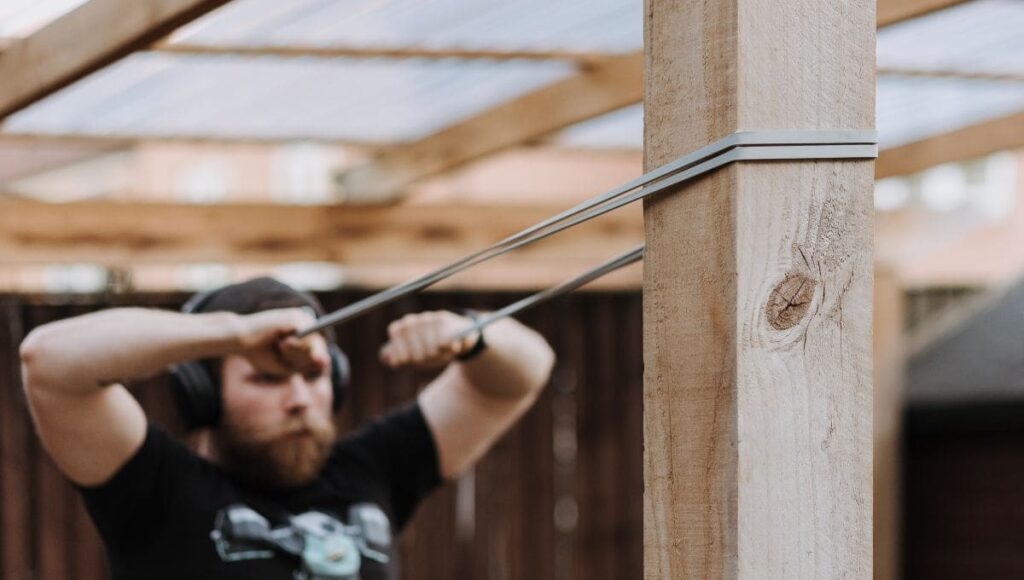
Many beginners focus almost entirely on the front of the shoulders through pressing exercises while neglecting the rear deltoids. This imbalance can eventually contribute to rounded shoulders, poor posture, and shoulder discomfort.
The face pull addresses these issues by strengthening the posterior deltoids, external rotators, and muscles of the upper back. Although it may not seem like a classic muscle building exercise, it plays an important role in creating shoulders that look balanced from every angle.
Why It Works
Research examining shoulder rehabilitation and athletic performance consistently highlights the importance of strengthening the posterior shoulder muscles and external rotators.
Face pulls produce high activation of the posterior deltoid while also recruiting the middle trapezius, lower trapezius, rhomboids, and rotator cuff muscles.
This combination supports shoulder stability and helps counteract the muscular imbalances created by prolonged sitting and excessive pressing.
How to Perform It
- Attach a rope handle to a cable machine at about upper chest height.
- Grip the rope with both hands using a neutral grip.
- Pull the rope toward your face while separating your hands as they approach your head.
- Finish with your elbows pointing outward and your shoulder blades squeezed together.
- Return slowly to the starting position under control.
How Many Sets and Repetitions Should Beginners Perform?
Current evidence suggests that beginners do not need extremely high training volumes to stimulate muscle growth. Performing approximately two to four sets per exercise for eight to fifteen repetitions provides an excellent starting point. The final few repetitions should feel challenging while still allowing proper technique.
As strength improves, gradually increase either the weight, the repetitions, or the total number of sets. This concept is known as progressive overload and remains one of the most important principles for long term muscle growth.
Meta analyses consistently show that progressive overload combined with adequate weekly training volume produces significant improvements in muscle size and strength.
How Often Should You Train Shoulders?
Beginners generally respond well to training each major muscle group two times per week. Research comparing different training frequencies suggests that dividing weekly training volume across two sessions often produces equal or slightly greater muscle growth than performing all volume in a single session.
For example, you might include these exercises as part of two upper body workouts each week. Allow at least forty eight hours between shoulder focused sessions to support recovery. Muscles grow during recovery rather than during the workout itself, making sleep, nutrition, and adequate protein intake essential components of any muscle building program.
Technique Always Comes Before Heavy Weights
One of the biggest mistakes beginners make is trying to lift heavier weights before mastering technique. Poor movement quality reduces muscle activation, increases injury risk, and limits long term progress.
Studies examining resistance training consistently show that beginners experience rapid improvements in strength due to better neuromuscular coordination during the first months of training. Learning proper technique allows these adaptations to occur while creating a strong foundation for future muscle growth. Start with manageable loads, move through a full range of motion, and focus on controlled repetitions. Once technique becomes consistent, increasing resistance becomes both safer and more productive.
Final Thoughts
Building wider and more attractive shoulders does not require dozens of complicated exercises or endless hours in the gym. Beginners can make outstanding progress by mastering just three evidence based movements.
The dumbbell shoulder press develops overall shoulder strength and size. The dumbbell lateral raise directly targets the muscle responsible for shoulder width. The face pull strengthens the often neglected rear deltoids while improving posture and shoulder health.
Combined with progressive overload, consistent training, proper nutrition, and adequate recovery, these three exercises provide a simple and scientifically supported blueprint for building shoulders that are stronger, healthier, and noticeably broader.
Key Takeaways
| Topic | Key Point |
|---|---|
| Best compound exercise | Dumbbell shoulder press builds overall shoulder mass and strength. |
| Best exercise for width | Dumbbell lateral raises directly target the lateral deltoid, which creates broader looking shoulders. |
| Best exercise for balance | Face pulls strengthen the rear deltoids and improve shoulder stability and posture. |
| Weekly training | Train shoulders about twice per week with at least forty eight hours of recovery between sessions. |
| Sets and repetitions | Perform two to four sets of eight to fifteen repetitions with good technique. |
| Growth principle | Progressively increase resistance or repetitions over time while maintaining proper form. |
| Nutrition | Consume sufficient protein and calories to support muscle growth and recovery. |
| Beginner priority | Master technique before increasing weight to maximize results and reduce injury risk. |
References
- American College of Sports Medicine. (2009). Progression models in resistance training for healthy adults. Medicine & Science in Sports & Exercise, 41(3), 687 to 708.
- Andersen, V., Fimland, M.S., Brennset, O., Haslestad, L.R., Lundteigen, M.S., Skalleberg, K., Saeterbakken, A.H. and Aune, A.K. (2014). Muscle activation and strength in shoulder exercises performed with resistance bands and dumbbells. Journal of Strength and Conditioning Research, 28(9), 2326 to 2334.
- Boeckh Behrens, W.U. and Buskies, W. (2000). Fitness Strength Training: The Best Exercises and Methods for Sport and Health. Reinbek: Rowohlt.
- Gentil, P., Soares, S. and Bottaro, M. (2015). Single versus multi joint resistance exercises for muscle strength and hypertrophy. Sports Medicine, 45(6), 841 to 851.
- Grgic, J., Schoenfeld, B.J., Orazem, J. and Sabol, F. (2018). Effects of resistance training performed to repetition failure or non failure on muscular strength and hypertrophy. Journal of Sport and Health Science, 10(3), 275 to 280.
- Kraemer, W.J. and Ratamess, N.A. (2004). Fundamentals of resistance training. Medicine & Science in Sports & Exercise, 36(4), 674 to 688.
- Morton, R.W., Murphy, K.T., McKellar, S.R., Schoenfeld, B.J., Henselmans, M., Helms, E., Aragon, A.A., Devries, M.C., Banfield, L., Krieger, J.W. and Phillips, S.M. (2018). A systematic review, meta analysis and meta regression of protein supplementation on resistance training induced gains in muscle mass and strength. British Journal of Sports Medicine, 52(6), 376 to 384.