

Turning 30 does not mean your body suddenly becomes fragile. It does mean that strength, muscle mass, recovery habits, and training consistency deserve more attention than they may have received in your twenties. A well designed barbell program can help you maintain muscle, improve bone health, build stronger connective tissues, and prepare your body to handle the demands of sport, work, and daily life.
No exercise routine can make you completely immune to injury. Injuries are influenced by many factors, including previous injuries, total workload, sleep, stress, recovery, health conditions, and accidents. Still, research shows that strength training can reduce sports injury risk and improve physical qualities that are important for resilient movement.



The goal is not to chase personal records every week. The goal is to build enough strength, coordination, and muscle to make everyday tasks and recreational activities feel easier. The five barbell exercises below train the major movement patterns that most adults need: squatting, hinging, pushing, pulling, and stabilizing the body overhead.
Use weights that you can control, learn each lift patiently, and add load gradually. That approach is more valuable than using a complicated training plan or constantly changing exercises.
Why Strength Training Matters After 30
Adults naturally lose muscle mass and strength over time, especially when they become less physically active. The rate and timing vary from person to person, but the long term trend is clear. Resistance training is one of the most effective ways to maintain or improve muscle strength and lean mass throughout adulthood.
Strength matters because the body needs force production for ordinary tasks. Standing up from a low chair, carrying bags, climbing stairs, lifting a child, moving furniture, and participating in sports all require strength. When you have more strength than a task requires, that task usually feels less physically demanding.
3 Best Standing Core Exercises for Beginners that Want a Stronger Six Pack
Resistance training may also support bone health. Bones respond to mechanical loading, and exercises that place force through the skeleton can help maintain bone mineral density. This is particularly relevant as adults age, because low bone density increases the risk of fractures.
Barbell training is useful because it allows precise progression. You can add a small amount of weight, perform an additional repetition, improve your range of motion, or add another set. Those small changes build up over months and years.
1. Barbell Back Squat
The barbell back squat is one of the most effective exercises for strengthening the legs, hips, trunk, and supporting muscles around the knees and ankles. It trains a movement pattern that appears constantly in life: bending the knees and hips to lower yourself, then standing up under control.

Set the barbell on your upper back, not on your neck. Stand with your feet about shoulder width apart, then take a breath and gently brace your trunk before descending. Sit your hips down and back while allowing your knees to travel in the same direction as your toes. Lower only as far as you can control comfortably, then push through the floor to stand up.
Squats build strength in the quadriceps, glutes, and adductors, while the trunk muscles work to keep the torso stable. Research indicates that progressive resistance training can improve lower body strength and functional performance in adults. Stronger legs can make activities such as stair climbing, walking uphill, and rising from the floor easier.
For beginners, a full depth squat is not mandatory. Your available mobility, injury history, and comfort level matter. Start with a range of motion that lets you maintain a stable foot position and controlled spinal posture. As your strength and confidence improve, you can gradually explore a deeper squat.
How to Use the Back Squat
Start with two or three sets of five to eight repetitions. The weight should feel challenging near the end of each set, but every repetition should look similar. If your knees collapse inward, your heels rise sharply, or your torso loses control, reduce the weight or shorten the range of motion until you can perform the movement consistently.
2. Barbell Romanian Deadlift
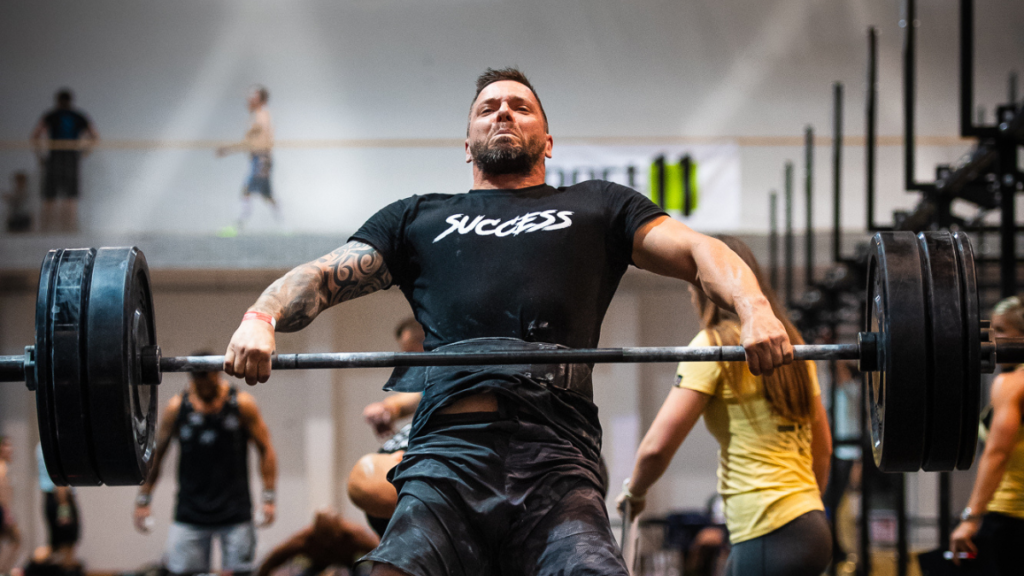
The Romanian deadlift strengthens the hamstrings, glutes, spinal erectors, upper back, and grip. It teaches the hip hinge, which is a key movement pattern for picking objects up while keeping the load close to your body.
Begin by standing tall with the barbell held against your thighs. Unlock your knees slightly, then push your hips backward while keeping the bar close to your legs. Lower the bar until you feel a strong stretch in the hamstrings while maintaining a stable spine. Drive your hips forward to return to the standing position.
The Romanian deadlift is different from a conventional deadlift because the movement begins from standing and emphasizes the controlled lowering phase. This makes it an excellent option for learning to load the hamstrings and hips without needing to pull every repetition from the floor.
Research supports resistance training for increasing muscle strength and size across a wide range of healthy adults. The hamstrings and glutes are important contributors to powerful hip extension, while the spinal erectors help maintain torso position during lifting. Training these muscles can improve your capacity to manage loaded bending and lifting tasks.
How to Use the Romanian Deadlift
Begin with two or three sets of six to ten repetitions. Keep the bar close throughout the exercise and move slowly enough to feel the hamstrings working. Avoid lowering the bar simply to reach the floor. Your range of motion ends when your hips can no longer move backward without losing a stable torso position.
3. Barbell Bench Press
The barbell bench press develops the chest, triceps, front shoulders, and upper back. It is a valuable pushing exercise because it allows you to train pressing strength with a stable base of support. The upper back and shoulder blades work to create a consistent position from which the chest and triceps can produce force.
Lie on the bench with your eyes roughly below the bar. Place your feet firmly on the floor, draw your shoulder blades gently together, and lower the bar toward the lower portion of your chest with control. Press the bar upward and slightly back toward the rack until your elbows are extended.
Upper body pushing strength has practical value for many activities, including pushing doors, moving objects, and getting up from the ground. More importantly, the bench press gives the chest and triceps a progressive loading option that can help maintain upper body muscle mass as you age.
Balance matters. The bench press should be paired with enough pulling work to train the upper back and rear shoulders. Research on resistance training supports using multiple exercises that cover major muscle groups rather than relying on a single movement pattern.
How to Use the Bench Press
Perform two or three sets of six to ten repetitions. Keep your wrists stacked over your forearms and lower the bar in a controlled path. Use safety arms, a competent spotter, or a load that you can confidently handle alone. There is no benefit to turning a regular training set into a risky attempt.
4. Barbell Bent Over Row
The barbell bent over row builds the lats, middle back, rear shoulders, biceps, forearms, and spinal erectors. It gives the upper body pulling work that balances pressing exercises and develops the thickness of the back.
Hold the bar with a grip just outside shoulder width. Push your hips backward and lean forward until your torso is angled toward the floor. Keep your knees slightly bent and your spine steady. Pull the bar toward the lower ribs or upper abdomen, then lower it slowly until your arms are extended.
The row requires the upper back to pull the bar while the legs and trunk hold the bent over position. This combination makes the exercise effective, but it also means that beginners should begin conservatively. A lighter barbell row performed with a stable torso will produce better results than a heavy row that turns into a jerking movement.
Research on resistance training shows that muscle growth is supported by sufficient weekly training volume. The row is an efficient way to add pulling volume because it trains several upper body muscles at once. It can also improve grip strength through repeated loaded holds.
How to Use the Bent Over Row
Start with two or three sets of eight to twelve repetitions. Keep the bar close to the body and pull with the elbows rather than trying to throw the chest upward. If your lower back gets tired before your upper back, use a lighter load, shorten the set, or perform a chest supported row variation until your trunk endurance improves.
5. Barbell Overhead Press
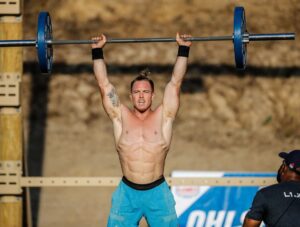
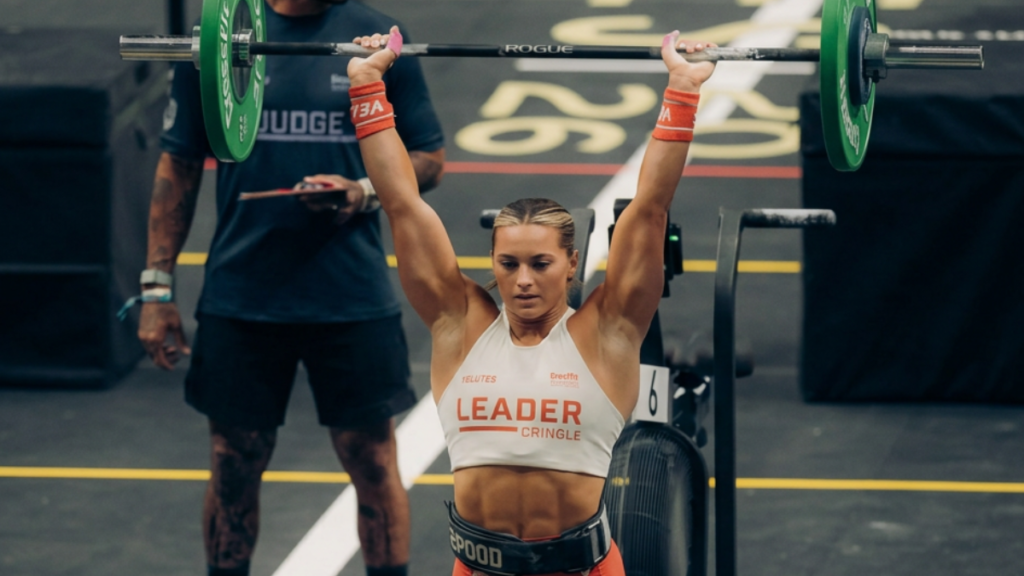
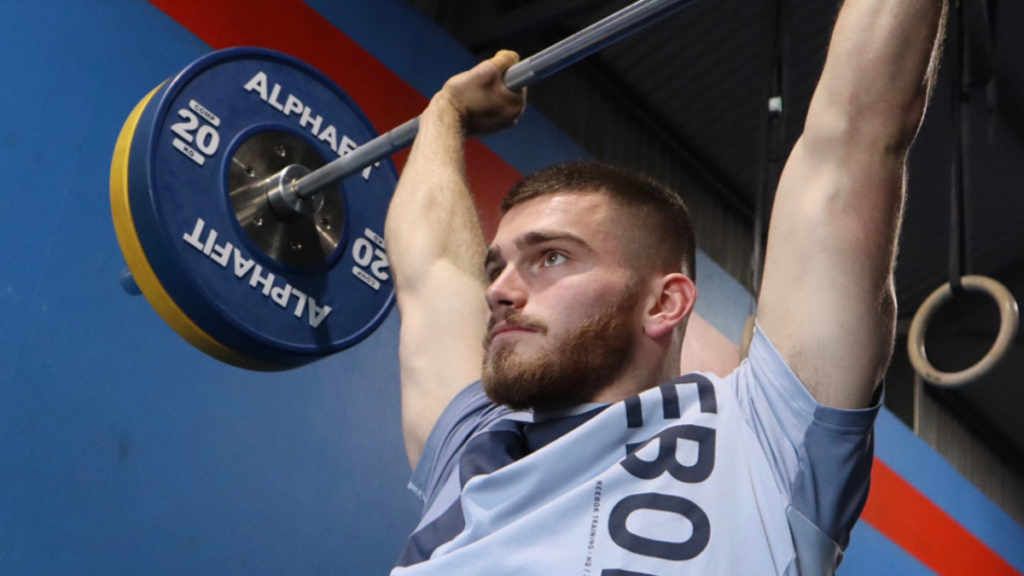
The barbell overhead press strengthens the shoulders, triceps, upper back, and trunk. It trains your ability to place a load overhead while keeping the rib cage, pelvis, and shoulders in a controlled position.
Begin with the bar in front of your shoulders. Stand with your feet planted firmly and brace your abdomen. Press the bar upward while moving your head slightly back to allow the bar to pass. Once the bar is above your head, bring your head through so that your ears are roughly in line with your upper arms.
The overhead press challenges more than the shoulders. Your trunk must resist excessive arching, and the muscles around the shoulder blade must help keep the arm stable. This makes it useful for developing full body control under load.
Shoulder discomfort is common in adults, but discomfort is not automatically a reason to avoid all overhead work. In many cases, a pain free range of motion, appropriate load, and gradual exposure can be useful. If pressing causes pain that is sharp, persistent, or worsening, seek guidance from a qualified health professional before continuing.
How to Use the Overhead Press
Begin with two or three sets of five to eight repetitions. Keep the bar path close to the body and avoid leaning far backward to complete the lift. If you cannot press overhead without excessive lower back arching, reduce the load and improve your technique before adding weight.
How to Train for Long Term Results
Train these exercises two or three times per week, depending on your schedule and recovery. You do not need to perform all five lifts in every workout. A practical approach is to squat, press, and row in one session, then perform Romanian deadlifts, bench presses, and lighter squat work in another session.
Progress gradually. Add one or two repetitions before adding weight whenever possible. Once you can complete all prescribed sets at the upper end of the repetition range with clean technique, add a small amount of load. Research suggests that both lighter and heavier resistance can support muscle growth when the work is sufficiently challenging.
Leave one to three good repetitions in reserve on most sets. This means you finish each set knowing you could probably have performed a few more repetitions with proper form. This strategy allows you to train hard enough to improve while reducing the chance that fatigue will turn sound technique into poor technique.
Final Thoughts
The back squat, Romanian deadlift, bench press, bent over row, and overhead press cover the major strength qualities that help adults stay strong and capable after 30. They build the legs, hips, chest, shoulders, back, arms, and trunk in a structured and measurable way.
These exercises do not guarantee protection from injury. What they can do is improve strength, muscle mass, and physical capacity when they are performed consistently with appropriate technique and progressive loading. That is the foundation for a body that is better prepared for training and everyday life.
Key Takeaways
| Exercise | Primary muscles trained | Starting recommendation | Main technique priority |
|---|---|---|---|
| Barbell back squat | Quadriceps, glutes, trunk | Two to three sets of five to eight repetitions | Maintain balanced feet and controlled depth |
| Romanian deadlift | Hamstrings, glutes, spinal erectors | Two to three sets of six to ten repetitions | Push the hips back and keep the bar close |
| Barbell bench press | Chest, triceps, front shoulders | Two or three sets of six to ten repetitions | Keep the shoulder blades stable and use controlled lowering |
| Barbell bent over row | Lats, upper back, rear shoulders, biceps | Two or three sets of eight to twelve repetitions | Keep the torso steady and pull toward the lower ribs |
| Barbell overhead press | Shoulders, triceps, upper back, trunk | Two or three sets of five to eight repetitions | Brace the trunk and avoid excessive back arching |
References
- American College of Sports Medicine (2009) ‘American College of Sports Medicine position stand: Progression models in resistance training for healthy adults’, Medicine and Science in Sports and Exercise, 41(3), pp. 687 to 708.
- Borde, R., Hortobagyi, T. and Granacher, U. (2015) ‘Dose response relationships of resistance training in healthy old adults: A systematic review and meta analysis’, Sports Medicine, 45(12), pp. 1693 to 1720.
- Lauersen, J.B., Bertelsen, D.M. and Andersen, L.B. (2014) ‘The effectiveness of exercise interventions to prevent sports injuries: A systematic review and meta analysis of randomised controlled trials’, British Journal of Sports Medicine, 48(11), pp. 871 to 877.
- Liu, C.J. and Latham, N.K. (2009) ‘Progressive resistance strength training for improving physical function in older adults’, Cochrane Database of Systematic Reviews, 3, CD002759.
- Schoenfeld, B.J., Grgic, J., Ogborn, D. and Krieger, J.W. (2017) ‘Strength and hypertrophy adaptations between low versus high load resistance training: A systematic review and meta analysis’, Journal of Strength and Conditioning Research, 31(12), pp. 3508 to 3523.
- Schoenfeld, B.J., Ogborn, D. and Krieger, J.W. (2017) ‘Dose response relationship between weekly resistance training volume and increases in muscle mass: A systematic review and meta analysis’, Journal of Sports Sciences, 35(11), pp. 1073 to 1082.
- Westcott, W.L. (2012) ‘Resistance training is medicine: Effects of strength training on health’, Current Sports Medicine Reports, 11(4), pp. 209 to 216.