

Wide, round shoulders are one of the biggest contributors to an athletic physique. They create the appearance of a broader upper body, improve the shoulder to waist ratio, and play an important role in pressing, pulling, throwing, and carrying movements.
Many people focus on standard shoulder exercises such as lateral raises, overhead presses, and upright rows. While these are valuable, there is another training method that can stimulate new muscle growth and improve strength at the same time. Dead stop training.



Dead stop exercises eliminate momentum by forcing every repetition to begin from a complete pause. Instead of relying on the stretch reflex or bouncing into the next rep, your muscles must generate force from a completely static position. This increases muscular recruitment, improves force production, and often exposes weak points that traditional repetitions can hide. For shoulder development, dead stop movements can create more tension where it matters most while encouraging better technique and stronger contractions.
Here are three of the best dead stop exercises for building wider shoulders and why science supports including them in your program.
Why Dead Stop Training Works
Every muscle contraction begins by producing force. During traditional repetitions, the elastic properties of muscles and tendons contribute to this force through the stretch shortening cycle. When you pause completely between repetitions, this stored elastic energy disappears.
Without assistance from momentum, your nervous system must recruit more motor units to overcome inertia. Research has consistently shown that high motor unit recruitment is one of the primary drivers of strength development and muscle growth.
3 Best Dead Stop Exercises for Muscular Legs
Dead stop training also improves movement quality. Since every repetition starts from exactly the same position, technique tends to become more consistent. This reduces cheating and ensures the target muscles perform the majority of the work. For shoulder training, this means the deltoids cannot rely on swinging weights or using excessive assistance from the hips and torso.
The Science Behind Wider Shoulders
The shoulder is made up of three primary portions of the deltoid muscle.
Anterior Deltoid
The front deltoid assists with pressing and shoulder flexion. It receives significant stimulation during bench pressing and overhead pressing.
Lateral Deltoid
The lateral or middle deltoid is the muscle primarily responsible for creating shoulder width. It abducts the arm away from the body and contributes heavily to the broad appearance many lifters want.
Posterior Deltoid
The rear deltoid assists with horizontal abduction and external rotation while helping maintain healthy shoulder mechanics and posture.
Studies measuring muscle activation consistently show that no single exercise maximally trains every portion of the deltoid. Combining pressing with isolation work produces more complete development. Dead stop exercises can enhance all three regions by improving force production and reducing momentum.
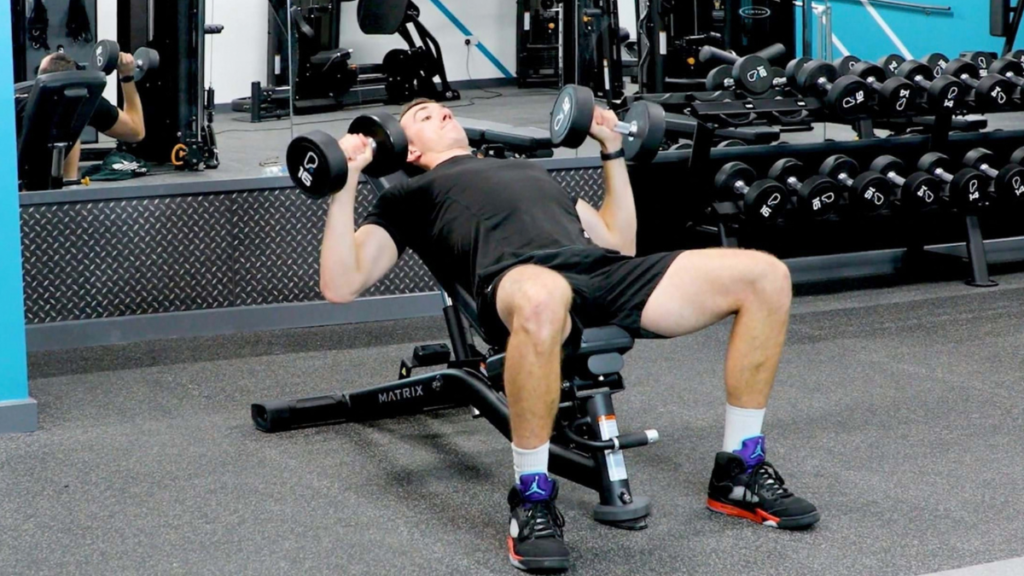
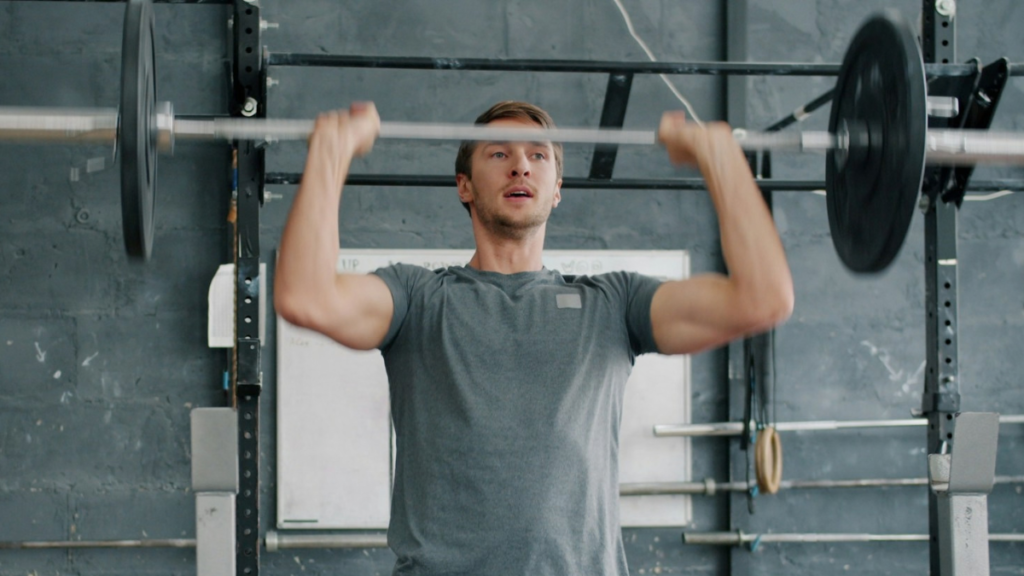
1. Dead Stop Seated Dumbbell Overhead Press
The seated dumbbell press is already one of the best compound shoulder exercises. Performing it from a dead stop makes it even more demanding.
Instead of lowering the dumbbells and immediately pressing again, bring the weights to shoulder level and briefly rest them against your shoulders or pause completely with zero movement before beginning the next repetition. Every press starts from a complete stop.

This removes the stretch shortening cycle and forces the deltoids, triceps, and upper chest to produce force without assistance. Using dumbbells instead of a barbell also increases shoulder stabilization demands because each arm works independently. Electromyography research consistently demonstrates high activation of both the anterior and middle deltoids during overhead pressing variations. Starting every repetition from a dead stop increases the challenge while encouraging strict technique.
Use moderate loads and focus on driving the dumbbells upward under complete control. Avoid leaning backward excessively, since this shifts more work toward the upper chest. Perform six to ten repetitions for three to four sets while maintaining a complete pause before every press.
2. Dead Stop Leaning Lateral Raise
The lateral raise remains the king of shoulder width. Its primary target is the middle deltoid, which creates the rounded appearance that makes shoulders look wider from both the front and back.
Unfortunately, many people perform lateral raises by swinging the weights upward with momentum. A dead stop variation removes that option. Begin by holding onto a sturdy support with one hand while leaning slightly away from it. Hold a dumbbell in the opposite hand. Lower the weight until it becomes completely motionless beside your leg before each repetition.
Pause briefly before raising the dumbbell. This complete stop eliminates momentum and forces the middle deltoid to initiate every lift. The leaning position also increases the range of motion and keeps tension on the lateral deltoid through a larger portion of the movement. Research examining shoulder muscle activation consistently identifies lateral raise variations among the highest activators of the middle deltoid.
Choose relatively light weights and focus on smooth, controlled repetitions. Raise the dumbbell until your upper arm reaches approximately shoulder height before lowering slowly back to the dead stop position. Complete ten to fifteen repetitions for three to five sets.
3. Dead Stop Chest Supported Rear Delt Row
Many lifters underestimate the importance of the posterior deltoids. Although they sit on the back of the shoulder, well developed rear delts significantly improve overall shoulder width and create a more balanced appearance.
Strong rear delts also contribute to healthier shoulder mechanics by balancing the large amount of pressing found in most training programs.
- For this exercise, lie face down on an incline bench while holding dumbbells.
- Allow the weights to hang completely motionless beneath your shoulders before every repetition.
- From the dead stop position, pull your elbows outward until your upper arms reach roughly shoulder level.
- Pause briefly before lowering the weights back to another complete stop.
The chest support removes momentum from the torso, while the dead stop eliminates assistance from bouncing the weights. Electromyography studies consistently show high activation of the posterior deltoids during chest supported rowing variations that emphasize wide elbow positions.
Keep the movement controlled and avoid shrugging your shoulders during the lift. Three to four sets of eight to twelve repetitions work well for most people.
Common Mistakes to Avoid
One common mistake is shortening the pause. The dead stop only works when the weight becomes completely motionless. A quick tap before immediately reversing direction does not eliminate momentum. Another mistake is using too much weight.
Heavy loads often encourage excessive body movement, reducing tension on the shoulders and increasing injury risk. Finally, avoid rushing through the lowering phase.
Research suggests controlled eccentric contractions contribute significantly to muscle growth by increasing mechanical tension and muscle fiber recruitment. Maintain control throughout every repetition.
Final Thoughts
Dead stop training offers a simple but highly effective way to make your shoulder workouts more productive. By removing momentum, every repetition begins with pure muscular effort. This improves force production, reinforces proper technique, and increases the workload placed directly on the deltoids.
The dead stop seated dumbbell overhead press builds overall shoulder size and strength. The dead stop leaning lateral raise directly targets the middle deltoid responsible for shoulder width. The dead stop chest supported rear delt row completes the picture by strengthening the often neglected posterior deltoids.
Combined with progressive overload, sufficient training volume, proper nutrition, and consistent recovery, these three exercises can help build stronger, wider, and healthier shoulders while improving overall upper body performance.
Key Takeaways
| Exercise | Primary Target | Main Benefit | Recommended Reps |
|---|---|---|---|
| Dead Stop Seated Dumbbell Overhead Press | Anterior and lateral deltoids | Builds overall shoulder strength and size while eliminating momentum | 3 to 4 sets of 6 to 10 reps |
| Dead Stop Leaning Lateral Raise | Lateral deltoid | Maximizes shoulder width through greater isolation and strict execution | 3 to 5 sets of 10 to 15 reps |
| Dead Stop Chest Supported Rear Delt Row | Posterior deltoid | Improves shoulder balance, posture, and rear delt development | 3 to 4 sets of 8 to 12 reps |
| Dead Stop Training | Entire shoulder complex | Improves force production, motor unit recruitment, and exercise quality | Include once or twice weekly |
References
- American College of Sports Medicine. (2009). American College of Sports Medicine position stand. Progression models in resistance training for healthy adults. Medicine & Science in Sports & Exercise, 41(3), pp.687 to 708.
- Gentil, P., Soares, S. and Bottaro, M. (2015). Single versus multi joint resistance exercises. Effects on muscle strength and hypertrophy. Asian Journal of Sports Medicine, 6(2), e24057.
- Grgic, J., Schoenfeld, B.J., Davies, T.B., Lazinica, B., Krieger, J.W. and Pedisic, Z. (2018). Effect of resistance training frequency on gains in muscular strength. Sports Medicine, 48(5), pp.1207 to 1220.
- Krieger, J.W. (2010). Single versus multiple sets of resistance exercise for muscle hypertrophy. A meta analysis. Journal of Strength and Conditioning Research, 24(4), pp.1150 to 1159.
- McAllister, M.J., Hammond, K.G., Schilling, B.K., Ferreria, L.C., Reed, J.P. and Weiss, L.W. (2013). Muscle activation during various shoulder exercises. Journal of Strength and Conditioning Research, 27(8), pp.2130 to 2138.
- Morton, R.W., Murphy, K.T., McKellar, S.R., Schoenfeld, B.J., Henselmans, M., Helms, E., Aragon, A.A., Devries, M.C., Banfield, L., Krieger, J.W. and Phillips, S.M. (2018). A systematic review, meta analysis and meta regression of protein supplementation on resistance training induced gains in muscle mass and strength. British Journal of Sports Medicine, 52(6), pp.376 to 384.
- Schoenfeld, B.J. (2010). The mechanisms of muscle hypertrophy and their application to resistance training. Journal of Strength and Conditioning Research, 24(10), pp.2857 to 2872.
- Schoenfeld, B.J., Ogborn, D. and Krieger, J.W. (2017). Dose response relationship between weekly resistance training volume and increases in muscle mass. Journal of Sports Sciences, 35(11), pp.1073 to 1082.
- Wakahara, T., Fukutani, A., Kawakami, Y. and Yanai, T. (2013). Nonuniform muscle hypertrophy. Its relation to muscle activation in training session. Medicine & Science in Sports & Exercise, 45(11), pp.2158 to 2165.