

A wide upper back, rounded shoulders, and a lean waist create one of the most recognizable athletic physiques. This shape is commonly called the V taper because the torso appears broad at the shoulders and narrows toward the waist. While genetics influence clavicle width, muscle insertions, and waist size, training and nutrition have a major impact on how pronounced your V taper can become.
Best 5 Tips for Beginners that Want to Build Wider Shoulders


The good news is that you do not need dozens of exercises or endless hours in the gym to build this look. Instead, you need to focus on movements that maximize muscle growth in the lats, shoulders, and upper back while maintaining a lean body composition. Research consistently shows that selecting effective compound and isolation exercises, applying progressive overload, and accumulating enough weekly training volume are the keys to building muscle efficiently.
Here are four exercises that should form the foundation of any program designed to build a bigger V taper as quickly as possible.
What Creates a V Taper?
Before choosing exercises, it helps to understand which muscles contribute most to the appearance of a wide upper body.
The latissimus dorsi is the largest muscle in the upper body and creates most of the width seen from the front and back. The lateral deltoids increase shoulder width, while the rear deltoids and upper back improve thickness and posture. Together, these muscles create the illusion of a much narrower waist.

Body fat also plays an important role. Even substantial muscle development can remain hidden if excess fat accumulates around the midsection. Combining resistance training with appropriate nutrition is therefore essential for maximizing the V taper.
Research shows that muscle hypertrophy depends primarily on sufficient training volume, proximity to muscular failure, progressive overload, and adequate recovery. Exercise selection matters because certain movements place greater tension on the muscles responsible for upper body width while allowing consistent progression over time.
Why These Four Exercises Work
Many gym exercises build muscle, but not all contribute equally to a V taper. The four exercises below were selected because they target the primary muscles responsible for upper body width while providing excellent opportunities for progressive overload.
Each movement has strong support from biomechanical research and electromyography studies examining muscle activation. While muscle activation alone does not guarantee hypertrophy, it provides valuable insight into whether an exercise effectively recruits the intended muscles. Combined with consistent progression and sufficient weekly training volume, these exercises can help maximize upper body development.
1. Pull Ups
Pull ups remain one of the best exercises for building wide lats and improving overall upper body strength. Unlike machine based alternatives, pull ups require stabilization from numerous muscles while placing the body through a large range of motion. This combination creates high levels of mechanical tension, one of the primary drivers of muscle growth.
A shoulder width or slightly wider grip typically emphasizes the lats while still involving the biceps, lower trapezius, rhomboids, and core. As strength improves, adding weight with a dipping belt allows continued progressive overload.
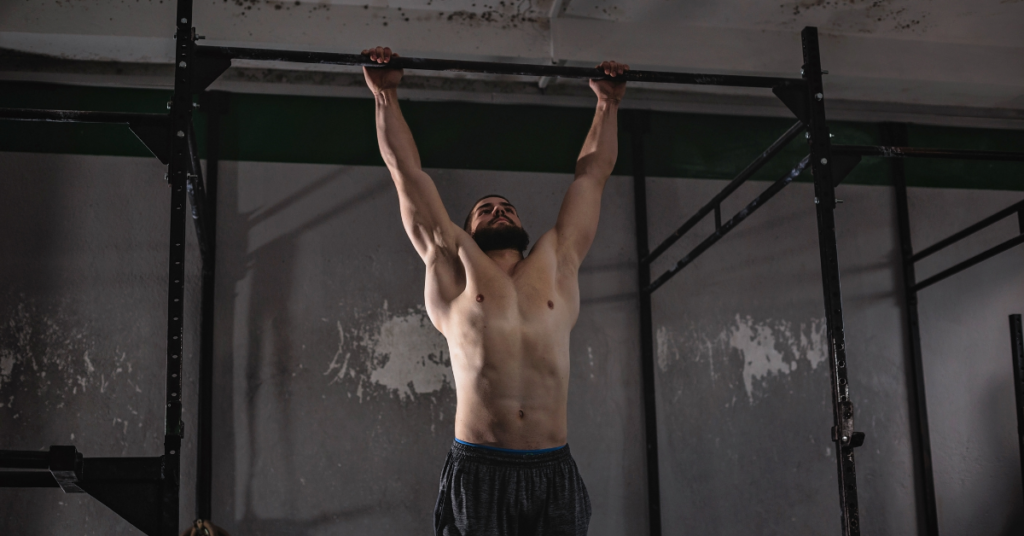
Research examining different pulling exercises consistently shows that pull ups produce high activation of the latissimus dorsi while also strengthening multiple muscles involved in shoulder stability.
To maximize muscle growth, perform each repetition with control. Begin from a dead hang, pull the elbows toward the hips, pause briefly at the top, and lower under control instead of dropping quickly. Aim for three to five working sets of six to twelve repetitions. If you cannot perform full pull ups yet, assisted pull up machines or resistance bands provide an effective starting point.
2. Lat Pulldown
Not everyone can perform multiple pull ups, and even experienced lifters benefit from lat pulldowns. The exercise provides a stable environment that allows greater focus on the lats while making it easier to manipulate training volume. Because resistance can be adjusted precisely, progressive overload becomes straightforward.

Several studies comparing pulling variations show that lat pulldowns effectively recruit the latissimus dorsi across a wide range of loads. A moderate grip generally allows both excellent muscle activation and comfortable shoulder positioning.
Many people make the mistake of pulling the bar behind the neck. Research suggests that the traditional front pulldown is safer for the shoulders while still providing excellent muscle activation. Focus on driving the elbows downward rather than simply pulling with the hands. This cue helps maintain tension on the lats throughout the movement. Perform three to four sets of eight to fifteen repetitions while maintaining strict technique.
3. Dumbbell Lateral Raise
No V taper is complete without well developed lateral deltoids. Unlike pressing exercises, lateral raises directly target the side delts, which are responsible for increasing shoulder width. Even modest increases in lateral delt size can dramatically improve overall proportions.
Electromyography research consistently demonstrates high activation of the middle deltoid during lateral raises compared with many pressing variations. Because the lateral delts receive relatively little direct stimulation during chest pressing, dedicated isolation work is important for maximizing shoulder development.
The biggest mistake is lifting weights that are too heavy. Excessive momentum shifts tension away from the target muscles and onto the traps and lower back.
Raise the dumbbells until the upper arms reach roughly shoulder height while maintaining a slight bend in the elbows. Lower the weights slowly to maximize time under tension.
Since the lateral delts recover relatively quickly, they often respond well to higher weekly training volume. Three to five sets of ten to twenty repetitions performed two or three times each week can produce excellent results.
4. Chest Supported Row
Rows build upper back thickness, improve posture, and contribute significantly to the appearance of a broad torso.
Among rowing variations, the chest supported row offers several advantages. Supporting the torso minimizes lower back fatigue, allowing greater focus on the muscles of the upper back and lats.

The movement effectively targets the rhomboids, rear deltoids, trapezius, and latissimus dorsi while reducing the temptation to use excessive body momentum.
A thicker upper back enhances the visual contrast between the shoulders and waist while improving shoulder health by balancing pressing volume. Focus on pulling the elbows back while squeezing the shoulder blades together. Avoid shrugging the shoulders toward the ears during each repetition.
Three to four sets of eight to twelve repetitions provide an excellent stimulus for muscle growth.
How Much Volume Do You Need?
Exercise selection is only part of the equation. Large reviews of resistance training research consistently show that muscle hypertrophy increases as weekly training volume rises, up to a point. Most people achieve excellent results by performing approximately ten to twenty challenging sets per muscle group each week.
The lats and upper back recover well in many individuals, making it possible to train them two or even three times weekly. Dividing weekly volume across multiple sessions often produces better performance and recovery than completing all sets in one workout.
Training close to muscular failure also appears important. Most sets should finish with approximately one to three repetitions left in reserve while maintaining good technique.
The Role of Nutrition
Even the best training program cannot overcome poor nutrition.

Muscle growth requires sufficient protein intake along with adequate calories. Research consistently supports consuming approximately 1.6 to 2.2 grams of protein per kilogram of body weight each day to maximize muscle protein synthesis during resistance training.
If your primary goal is a more dramatic V taper, reducing excess body fat may also be necessary. A moderate calorie deficit combined with resistance training and high protein intake helps preserve muscle while improving overall body composition.
Sleep should not be overlooked either. Recovery processes responsible for muscle repair and growth occur primarily outside the gym. Most adults should aim for seven to nine hours of quality sleep each night.
Common Mistakes That Slow Progress
Many lifters sabotage their progress without realizing it. One common mistake is focusing exclusively on heavy compound lifts while neglecting lateral delt isolation work. Pressing exercises build strength, but they rarely maximize shoulder width on their own.
Another mistake is using excessive momentum during pulling movements. Swinging the body reduces mechanical tension on the lats and upper back while increasing injury risk. Poor exercise progression also limits results. Adding repetitions, increasing resistance, or improving technique over time provides the progressive overload necessary for continued muscle growth.
Finally, many people underestimate the importance of consistency. Significant improvements in muscle size require months of regular training rather than weeks of sporadic effort.
Sample Upper Body Workout
These four exercises can easily form the foundation of an effective upper body session.
- Begin with pull ups for four sets of six to ten repetitions.
- Continue with lat pulldowns for three sets of ten to twelve repetitions.
- Perform chest supported rows for four sets of eight to twelve repetitions.
- Finish with dumbbell lateral raises for four sets of twelve to twenty repetitions.
This combination provides substantial volume for the muscles responsible for upper body width while remaining manageable for most lifters.
Final Thoughts
Building an impressive V taper is not about chasing complicated workout routines or constantly changing exercises. The biggest improvements come from consistently training the muscles that create upper body width while maintaining a lean physique.
Pull ups, lat pulldowns, dumbbell lateral raises, and chest supported rows cover nearly every major muscle responsible for the V taper. Combined with progressive overload, adequate protein intake, sufficient recovery, and consistent effort, these exercises provide a science supported foundation for building a broader, more athletic physique.
Remember that muscle growth takes time. Focus on gradually becoming stronger, accumulating quality training volume each week, and maintaining excellent technique. Those simple principles remain the most reliable path toward achieving the V taper you want.
Key Takeaways
| Topic | Key Point |
|---|---|
| Primary muscles | Lats, lateral deltoids, rear deltoids, trapezius, and upper back create the V taper. |
| Best exercise for width | Pull ups provide outstanding lat development and overall upper body strength. |
| Best machine exercise | Lat pulldowns allow controlled progression and high training volume. |
| Best shoulder exercise | Dumbbell lateral raises directly increase shoulder width. |
| Best rowing movement | Chest supported rows build upper back thickness while minimizing lower back fatigue. |
| Weekly volume | Aim for approximately ten to twenty challenging sets per muscle group each week. |
| Protein intake | Consume approximately 1.6 to 2.2 grams of protein per kilogram of body weight daily. |
| Recovery | Sleep seven to nine hours each night and progressively increase training demands over time. |
References
- American College of Sports Medicine, 2009. Progression models in resistance training for healthy adults. Medicine & Science in Sports & Exercise, 41(3), pp.687 to 708.
- Brad Schoenfeld, B.J., 2010. The mechanisms of muscle hypertrophy and their application to resistance training. Journal of Strength and Conditioning Research, 24(10), pp.2857 to 2872.
- Grgic, J., Schoenfeld, B.J., Orazem, J. and Sabol, F., 2022. Effects of resistance training performed to repetition failure or non failure on muscular strength and hypertrophy. Scandinavian Journal of Medicine & Science in Sports, 32(11), pp.1831 to 1848.
- Krieger, J.W., 2010. Single versus multiple sets of resistance exercise for muscle hypertrophy. Journal of Strength and Conditioning Research, 24(4), pp.1150 to 1159.
- Lusk, S.J., Hale, B.D. and Russell, D.M., 2010. Grip width and forearm orientation effects on muscle activity during the lat pulldown. Journal of Strength and Conditioning Research, 24(7), pp.1895 to 1900.
- Paoli, A., Marcolin, G. and Petrone, N., 2009. The influence of grip width and forearm pronation and supination on muscle activity during the lat pulldown. Journal of Strength and Conditioning Research, 23(3), pp.1095 to 1099.