

Rotational strength is one of the most overlooked qualities in fitness. Most people spend their training time moving up and down with squats, presses, deadlifts, and curls. Those movements are important, but life and sports happen in multiple planes of motion. You rotate when you throw, punch, swing, sprint, cut, carry groceries, or even get out of bed. Training rotation improves athletic performance, core strength, movement efficiency, and injury resilience.
The problem is that many people train rotation poorly. Endless twisting crunches and rushed torso spins often create more stress on the spine than benefit. The best rotational exercises teach the body to transfer force through the hips, core, and shoulders while maintaining stability and control.


Dumbbells are one of the best tools for rotational training because they are accessible, versatile, and effective. A single dumbbell can challenge your core, improve coordination, and strengthen the muscles responsible for producing and resisting rotational forces.
Why Rotational Training Matters
Rotation is fundamental to human movement. The body is designed to create, absorb, and resist rotational forces. This ability is especially important for athletes, but it also matters for general health and longevity.
Research shows that rotational power is strongly linked to athletic performance in sports like baseball, golf, tennis, hockey, and martial arts. The core muscles act as force transmitters between the lower and upper body. Efficient transfer of force allows athletes to generate more speed and power while reducing stress on the joints.
Rotational training also improves trunk stability. The core is not just about flexing the spine during sit ups. Its primary role is stabilizing the spine while allowing efficient movement through the hips and shoulders. Exercises that challenge rotational control improve neuromuscular coordination and spinal stiffness, both of which are essential for injury prevention.
A strong rotational core also benefits everyday life. Studies show that better trunk strength and coordination are associated with reduced risk of low back pain and improved functional movement.
The key is balance. Effective rotational training includes:
• Producing rotation
• Resisting rotation
• Decelerating rotation
• Controlling movement through multiple planes
The exercises below train all of these qualities.
The Muscles Involved in Rotation
Before getting into the exercises, it helps to understand which muscles are responsible for rotational movement.
Obliques
The internal and external obliques are the primary rotational muscles of the trunk. They help rotate and stabilize the torso while protecting the spine during movement.
Transverse Abdominis
This deep core muscle acts like a natural weight belt. It increases intra abdominal pressure and helps stabilize the spine during movement.
Rectus Abdominis
Although commonly associated with six pack aesthetics, the rectus abdominis also contributes to trunk stability during rotational movements.
Glutes
The gluteus maximus is heavily involved in generating rotational power from the hips. Weak glutes often lead to excessive stress on the lower back during rotational tasks.
Lats and Serratus Anterior
These muscles help transfer force between the upper body and core. They are especially important in loaded rotational patterns.
Multifidus and Spinal Stabilizers
These deep muscles stabilize the vertebrae during movement and are essential for spinal health.
What Makes a Good Rotational Exercise?
Not all twisting exercises are equally effective. The best rotational exercises meet several criteria:
• They train the hips and core together
• They emphasize control instead of speed
• They minimize excessive spinal stress
• They improve force transfer between the upper and lower body
• They challenge stability and coordination
The following three dumbbell exercises check all of these boxes.
1. Dumbbell Rotational Press
The dumbbell rotational press is one of the best exercises for integrating lower body power with upper body strength. It teaches the body to generate force from the ground and transfer it efficiently through the core.
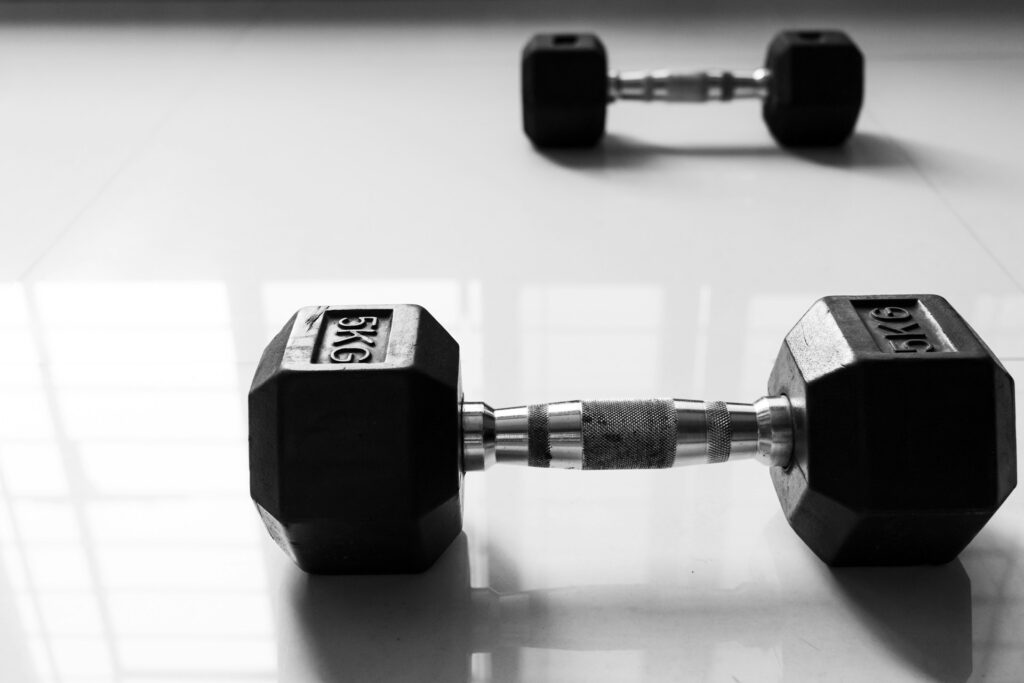
This movement combines hip rotation, core activation, and shoulder pressing into one athletic pattern.
Why It Works
The rotational press trains the kinetic chain as a unit. Force starts in the feet, moves through the hips and torso, and finishes through the pressing arm. This sequencing mimics athletic actions like throwing and punching.
Research on rotational sports consistently shows that efficient sequencing of hip and trunk rotation improves power production while reducing stress on the shoulder joint. The exercise also challenges anti rotational control because the body must stabilize while moving asymmetrically.
How to Perform the Dumbbell Rotational Press
- Stand with feet shoulder width apart.
- Hold a dumbbell at shoulder height in your right hand.
- Rotate your torso slightly to the right while loading your hips.
- Explosively rotate back toward center while pressing the dumbbell overhead.
- Pivot the back foot naturally during the rotation.
- Lower the dumbbell with control and repeat.
- Complete all reps before switching sides.
Coaching Tips
• Generate power from the hips, not the lower back
• Keep the ribs down during the press
• Move smoothly instead of jerking the weight
• Maintain balance throughout the movement
Common Mistakes
One of the biggest mistakes is over rotating the spine. Most rotational movement should come from the hips and thoracic spine, not the lumbar spine.
Another mistake is pressing too early before the hips rotate. The lower body should initiate the movement.
Best Rep Range
For strength and power:
• 3 to 5 sets
• 5 to 8 reps per side
• Moderate to heavy weight
• Full recovery between sets
2. Dumbbell Wood Chop
The dumbbell wood chop is one of the most effective rotational core exercises ever created. It trains diagonal movement patterns that closely resemble real world and athletic actions.
Unlike traditional crunches, the wood chop teaches the body to rotate while maintaining spinal stability.
Why It Works
The wood chop trains the body across multiple planes of motion. It heavily activates the obliques, transverse abdominis, shoulders, lats, and hips.
Electromyography studies show that diagonal chopping patterns produce high levels of activation in the obliques and deep core muscles. This makes the exercise highly effective for rotational strength and trunk stability.
The movement also teaches deceleration. During the lowering phase, the core must resist momentum and control the load. This eccentric control is critical for injury prevention in sports and daily life.
How to Perform the Dumbbell Wood Chop
- Stand with feet slightly wider than shoulder width.
- Hold one dumbbell with both hands.
- Start with the dumbbell near your right hip.
- Rotate your torso and lift the dumbbell diagonally across your body until it finishes above your left shoulder.
- Reverse the motion slowly and under control.
- Complete all reps before switching sides.
Coaching Tips
• Rotate through the hips and upper back
• Keep the movement smooth and controlled
• Brace the core throughout the exercise
• Avoid rounding the lower back
Common Mistakes
Many people rush the movement and turn it into a cardio exercise. The goal is controlled rotational strength, not speed.
Another common issue is bending the arms excessively. The arms should guide the weight while the torso drives the movement.
Best Rep Range
For hypertrophy and conditioning:
• 3 to 4 sets
• 8 to 15 reps per side
• Moderate weight
• Controlled tempo
3. Single Arm Dumbbell Russian Twist
The Russian twist has developed a mixed reputation in the fitness world. Performed poorly, it can place unnecessary stress on the spine. Performed correctly with proper control and loading, it can be an effective rotational stability exercise.
The single arm variation is especially valuable because it increases anti rotational demand.
Why It Works
This exercise challenges the body to stabilize the torso while moving a unilateral load. The obliques, rectus abdominis, hip flexors, and deep stabilizers all work together to maintain posture and control.
Research on asymmetrical loading demonstrates that unilateral resistance increases trunk muscle activation significantly more than symmetrical loading. The single arm setup also improves shoulder stability and coordination.
How to Perform the Single Arm Dumbbell Russian Twist
- Sit on the floor with knees bent and feet planted.
- Lean back slightly while maintaining a neutral spine.
- Hold a dumbbell in your right hand close to your chest.
- Rotate your torso slowly to the right and then to the left.
- Keep the movement controlled and deliberate.
- Switch hands after completing the set.
Coaching Tips
• Keep the chest tall
• Move through the torso, not just the arms
• Maintain abdominal tension throughout
• Start with light weight and progress gradually
Common Mistakes
The biggest mistake is excessive spinal flexion. Avoid collapsing through the lower back.
Another mistake is using momentum instead of muscular control. Fast twisting reduces effectiveness and increases stress on the spine.
Best Rep Range
For muscular endurance and stability:
• 2 to 4 sets
• 10 to 20 reps per side
• Light to moderate weight
• Slow tempo
How Rotation Training Improves Athletic Performance
Rotational power is critical in many sports. Baseball pitchers, golfers, fighters, tennis players, and hockey athletes all rely heavily on rotational mechanics.
Studies on elite athletes show that stronger and more explosive rotational capacity improves performance outcomes such as:
• Bat speed
• Throwing velocity
• Club head speed
• Punch force
• Sprint mechanics
• Change of direction ability
The body operates as a linked system. When rotational sequencing improves, energy transfer becomes more efficient. This means more power with less wasted motion.

Training rotation with dumbbells can also improve coordination between the upper and lower body. This is known as intermuscular coordination and is a major factor in athletic movement quality.
Rotation Training and Low Back Health
Many people avoid rotational exercises because they fear hurting their backs. The truth is more nuanced.
Poorly controlled rotational movements can increase spinal stress. However, avoiding rotation entirely may leave the body underprepared for real life demands. Research suggests that the spine benefits from controlled movement variability and appropriate loading. The key is proper progression and technique.
Effective rotational training can:
• Improve trunk stiffness
• Enhance spinal stability
• Strengthen the obliques and deep core muscles
• Improve movement coordination
• Reduce compensatory movement patterns
People with existing back pain should still consult a qualified healthcare professional before starting rotational exercises.
How to Add Rotational Exercises to Your Training
The best way to program rotational exercises depends on your goals.
For Strength and Power
Use lower reps with more explosive intent.
Example:
• Rotational press
• 4 sets of 6 reps per side
• Rest 90 seconds
For Muscle Growth
Use moderate reps and controlled tempo.
Example:
• Dumbbell wood chop
• 3 sets of 12 reps per side
• Rest 60 seconds
For Conditioning
Use rotational exercises in circuits.
Example:
• Rotational press
• Wood chop
• Russian twist
• 30 seconds each
• Repeat for 3 to 5 rounds
For Core Stability
Focus on slow tempo and control.
Example:
• Single arm Russian twist
• 3 sets of 15 reps per side
• Slow eccentric phase
The Importance of Thoracic Mobility
One reason people struggle with rotational exercises is poor thoracic spine mobility. The thoracic spine is designed for rotation. The lumbar spine is not. Limited mobility in the upper back often forces the lower back to compensate.
Improving thoracic mobility can enhance rotational performance while reducing injury risk. Helpful mobility drills include:
• Open books
• Thoracic rotations
• Cat camel stretches
• Quadruped rotations
Combining mobility work with strength training creates better overall movement quality.
How Heavy Should You Go?
Rotational exercises are not about lifting the heaviest possible weight. Technique and control matter far more. Start lighter than you think you need. Once movement quality is consistent, gradually increase load. General guidelines:
• Power work uses moderate weight with explosive movement
• Stability work uses lighter weight and slower tempo
• Hypertrophy work uses moderate weight with controlled reps
If your movement becomes sloppy, the weight is too heavy.
Why Dumbbells Are Excellent for Rotation Training
Dumbbells provide several unique benefits compared to machines and barbells.
Freedom of Movement
Dumbbells allow natural movement patterns that match how the body rotates in real life.
Unilateral Loading
Single sided loading increases core activation and stability demands.
Accessibility
Most gyms and home setups already include dumbbells.
Scalability
Exercises can be easily progressed or regressed by changing weight and tempo.
Joint Friendliness
Dumbbells often place less stress on the joints than fixed machines.
Sample Rotational Dumbbell Workout
Here is a simple but highly effective rotational training session.
Warm Up
• Thoracic rotations x 10 per side
• Glute bridges x 15
• Bird dogs x 10 per side
• Bodyweight lunges x 10 per side
Main Workout
Dumbbell Rotational Press
• 4 sets x 6 reps per side
Dumbbell Wood Chop
• 3 sets x 12 reps per side
Single Arm Russian Twist
• 3 sets x 15 reps per side
Finisher
• Farmer carry x 30 seconds
• Plank x 45 seconds
• Repeat 3 rounds
This workout develops rotational strength, stability, and conditioning in a balanced way.
Final Thoughts
Rotational training deserves far more attention than it usually gets. Human movement is multi directional, and your workouts should reflect that reality. The best rotational exercises are not about wildly twisting the spine. They are about coordinated movement, efficient force transfer, and controlled stability.
The dumbbell rotational press develops athletic power and full body coordination. The dumbbell wood chop strengthens the core through diagonal movement patterns. The single arm Russian twist improves anti rotational control and trunk endurance. Together, these exercises create a balanced approach to rotational strength training.
Train them consistently with proper technique, progressive overload, and controlled movement. Over time, you will build a stronger core, move more efficiently, and improve both athletic performance and everyday function.
Key Points Summary
• Rotational training improves athletic performance and movement quality
• The core transfers force between the lower and upper body
• Dumbbells are excellent tools for rotational strength training
• Proper rotational exercises emphasize control and stability
• The hips and thoracic spine should drive most rotational movement
• Excessive lumbar rotation increases injury risk
• Rotational exercises improve coordination and trunk stability
• Gradual progression and proper technique are essential
Key Takeaways Table
| Exercise | Primary Benefit | Main Muscles Worked | Best Rep Range | Key Coaching Cue |
|---|---|---|---|---|
| Dumbbell Rotational Press | Power and force transfer | Obliques, glutes, shoulders, core | 5 to 8 reps | Drive from the hips |
| Dumbbell Wood Chop | Rotational strength and control | Obliques, lats, core | 8 to 15 reps | Move diagonally with control |
| Single Arm Russian Twist | Anti rotational stability | Obliques, rectus abdominis, deep core | 10 to 20 reps | Keep the chest tall |
Bibliography
• Behm, D.G., Drinkwater, E.J., Willardson, J.M. and Cowley, P.M. (2010). Canadian Society for Exercise Physiology position stand. The use of instability to train the core in athletic and nonathletic conditioning. Applied Physiology, Nutrition, and Metabolism, 35(1), pp.109 to 112.
• Cholewicki, J. and McGill, S.M. (1996). Mechanical stability of the in vivo lumbar spine. Implications for injury and chronic low back pain. Clinical Biomechanics, 11(1), pp.1 to 15.
• Comfort, P., Pearson, S.J. and Mather, D. (2011). An electromyographical comparison of trunk muscle activity during isometric trunk and dynamic strengthening exercises. Journal of Strength and Conditioning Research, 25(1), pp.149 to 154.
• Escamilla, R.F., Lewis, C., Bell, D., Bramblet, G., Daffron, J., Lambert, S., Pecson, A., Imamura, R., Paulos, L. and Andrews, J.R. (2010). Core muscle activation during Swiss ball and traditional abdominal exercises. Journal of Orthopaedic and Sports Physical Therapy, 40(5), pp.265 to 276.
• Hibbs, A.E., Thompson, K.G., French, D., Wrigley, A. and Spears, I. (2008). Optimizing performance by improving core stability and core strength. Sports Medicine, 38(12), pp.995 to 1008.
• Kibler, W.B., Press, J. and Sciascia, A. (2006). The role of core stability in athletic function. Sports Medicine, 36(3), pp.189 to 198.