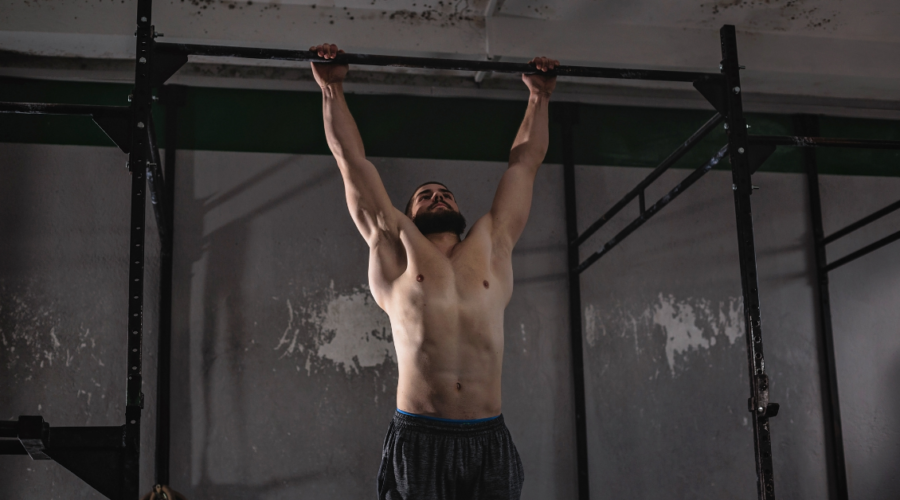


Pull ups have earned a reputation as one of the best upper body exercises ever created. They challenge your grip, strengthen your lats, build your arms, and develop impressive pulling strength using nothing more than your bodyweight. Despite all those benefits, they are not the only path to building a bigger and stronger back.
Many athletes eventually reach a point where pull ups become repetitive, uncomfortable on the shoulders or elbows, or simply stop producing the same training stimulus. Others struggle to perform enough quality repetitions for meaningful muscle growth. If that sounds familiar, it may be time to change your approach.


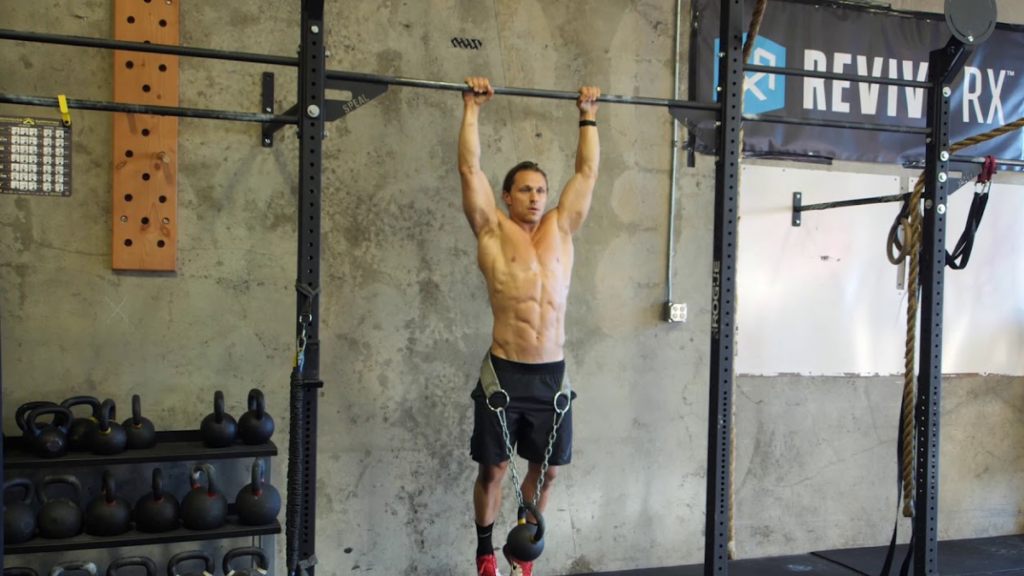
Exercise variety is not just about staying motivated. Scientific research consistently shows that strategically rotating exercises can improve muscle development by exposing muscles to slightly different loading patterns while reducing repetitive stress on joints and connective tissues.
The good news is that several exercises can challenge your back muscles just as effectively as pull ups. When performed correctly and programmed intelligently, these movements can help increase muscle size, improve strength, and even carry over to better pull up performance if you decide to return to them later.
Why Pull Ups Are Not Essential for Back Growth
The latissimus dorsi is the largest muscle of the upper body. It works alongside the teres major, rhomboids, middle and lower trapezius, posterior deltoids, and elbow flexors to create powerful pulling movements.
Muscle growth depends primarily on mechanical tension, sufficient training volume, progressive overload, and adequate recovery. The specific exercise matters less than consistently applying these principles through a full range of motion.
Is the Meadows Row the Perfect Exercise for a Jacked Wider Back?
Research comparing different resistance training exercises shows that multiple movement patterns can stimulate similar levels of muscle hypertrophy when training volume and effort are matched. This means you do not have to rely exclusively on pull ups to build an impressive back.
Different exercises also emphasize different regions of the back. Horizontal pulling movements often place greater emphasis on the middle trapezius and rhomboids, while vertical pulling tends to increase recruitment of the lats. Combining both patterns generally produces the most complete muscular development.
Alternative 1: Chest Supported Row
Among all rowing variations, the chest supported row stands out as one of the best replacements for pull ups because it allows heavy loading while minimizing momentum and lower back fatigue.
Supporting the chest against a bench removes much of the need for spinal stabilization. This lets you focus almost entirely on the muscles of the upper back and lats. Whether you use dumbbells, a T bar machine, or a plate loaded row machine, the movement provides excellent opportunities for progressive overload.
Why It Works
Electromyography studies have consistently demonstrated high activation of the latissimus dorsi, middle trapezius, rhomboids, and posterior deltoids during rowing exercises. The chest supported position also reduces cheating, ensuring that the target muscles perform most of the work.
Since stability demands are lower, many lifters can produce higher quality repetitions while maintaining consistent technique throughout each set.
How to Perform It
Adjust the bench to roughly a 30 to 45 degree incline. Lie with your chest firmly against the pad while holding the weights with your arms fully extended.

Initiate the movement by pulling your elbows toward your hips while squeezing your shoulder blades together. Lower the weights under control until your arms are fully extended again.
Avoid shrugging your shoulders or using excessive momentum.
Best Rep Range
For hypertrophy, perform 3 to 5 sets of 8 to 15 repetitions while stopping one to three repetitions before muscular failure.
Alternative 2: Single Arm Cable Lat Pulldown
Traditional lat pulldowns are already an excellent substitute for pull ups, but the single arm version offers unique advantages that many athletes overlook. Training one side at a time increases focus, allows a longer range of motion, and helps identify strength imbalances that may be hidden during bilateral exercises.
The cable also provides continuous tension throughout the movement, unlike free weights where resistance changes depending on gravity.
Why It Works
Research examining resistance profiles suggests that cables can maintain more consistent muscular tension across the entire range of motion compared with some free weight exercises.
Using one arm also encourages better shoulder positioning and greater scapular control, both of which contribute to healthier pulling mechanics. Many lifters report feeling significantly stronger contractions in the lower portion of the latissimus dorsi during unilateral cable work.
How to Perform It
- Attach a single handle to a high pulley.
- Sit or kneel so your arm begins fully extended overhead.
- Pull your elbow down toward your rib cage while keeping your torso relatively still.
- Pause briefly at the bottom before slowly returning to the starting position.
- Focus on driving with the elbow rather than pulling with the hand.
Best Rep Range
Complete 3 to 4 sets of 10 to 15 repetitions per arm using controlled movement and a full range of motion.
Alternative 3: Seal Row
The seal row removes virtually all momentum from the equation. Unlike conventional bent over rows, the bench fully supports your torso while your arms hang beneath you without touching the floor. This setup forces the upper back muscles to generate nearly all of the movement. Although it is less common than other rowing exercises, many strength coaches consider it one of the purest back builders available.
Why It Works
Because the body remains completely stable, there is little opportunity to compensate with hip drive or lower back extension. The result is greater muscular isolation and higher quality repetitions.
For athletes recovering from lower back fatigue caused by heavy deadlifts or squats, seal rows provide a valuable way to continue training the back without adding unnecessary spinal loading.
How to Perform It
- Lie face down on a high bench with your chest supported.
- Hold a barbell or dumbbells beneath you with your arms hanging straight.
- Pull your elbows upward until the weights reach the underside of the bench or your lower chest.
- Pause briefly before lowering under complete control.
- Maintain a neutral neck position throughout every repetition.
Best Rep Range
Perform 3 to 5 sets of 6 to 12 repetitions using loads that challenge your technique while maintaining strict form.
How These Exercises Compare With Pull Ups
Each of these alternatives offers slightly different advantages.
- Pull ups excel at developing relative strength because you move your own body through space. They also heavily challenge grip strength and core stability.
- Chest supported rows provide superior stability, making progressive overload easier for many people.
- Single arm cable pulldowns allow precise technique and continuous tension while improving muscular symmetry.
- Seal rows maximize upper back isolation with minimal stress on the lower back.
Instead of asking which exercise is objectively best, the better question is which exercise best matches your current goals, injury history, and training phase.
Should You Stop Doing Pull Ups Completely?
Not necessarily. Pull ups remain one of the most effective upper body exercises available. However, no single exercise is mandatory for building an impressive physique.

If pull ups aggravate your joints, have become mentally stale, or no longer fit your goals, replacing them with equally effective rowing and pulldown variations is a perfectly valid strategy. Many successful bodybuilders and strength athletes build exceptional backs using a combination of horizontal and vertical pulling exercises rather than relying exclusively on pull ups. The best program is ultimately the one you can perform consistently while continuing to challenge your muscles over months and years.
Final Thoughts
Pull ups deserve their legendary status, but they are far from the only way to build a thick and powerful back. Chest supported rows, single arm cable lat pulldowns, and seal rows all provide outstanding muscle building potential while offering unique benefits for strength, hypertrophy, joint comfort, and exercise variety.
Rather than forcing yourself through another workout filled with uninspiring pull ups, consider rotating one or more of these alternatives into your training plan. Your back muscles respond to quality tension, not loyalty to a single exercise.
Key Takeaways
| Topic | Key Point |
|---|---|
| Best overall alternative | Chest supported rows allow heavy loading with excellent technique and minimal lower back fatigue. |
| Best for lat isolation | Single arm cable lat pulldowns provide continuous tension and improve side to side balance. |
| Best for upper back | Seal rows maximize upper back recruitment while eliminating momentum. |
| Weekly training volume | Aim for approximately 10 to 20 challenging sets for the back each week. |
| Rep ranges | Most hypertrophy work is effective between 6 and 15 repetitions performed close to failure. |
| Most important principle | Progressive overload and consistent effort matter more than any single exercise choice. |
References
- American College of Sports Medicine. (2009) ‘Progression models in resistance training for healthy adults’, Medicine & Science in Sports & Exercise, 41(3), pp. 687 to 708.
- Gentil, P., Soares, S. and Bottaro, M. (2015) ‘Single versus multi joint resistance exercises: Effects on muscle strength and hypertrophy’, Asian Journal of Sports Medicine, 6(2), e24057.
- Grgic, J., Schoenfeld, B.J., Orazem, J. and Sabol, F. (2020) ‘Effects of resistance training performed to repetition failure or non failure on muscular strength and hypertrophy: A systematic review and meta analysis’, Journal of Sport and Health Science, 10(2), pp. 202 to 211.
- Krieger, J.W. (2010) ‘Single versus multiple sets of resistance exercise for muscle hypertrophy: A meta analysis’, Journal of Strength and Conditioning Research, 24(4), pp. 1150 to 1159.
- Schoenfeld, B.J. (2010) ‘The mechanisms of muscle hypertrophy and their application to resistance training’, Journal of Strength and Conditioning Research, 24(10), pp. 2857 to 2872.
- Schoenfeld, B.J., Ogborn, D. and Krieger, J.W. (2017) ‘Dose response relationship between weekly resistance training volume and increases in muscle mass: A systematic review and meta analysis’, Journal of Sports Sciences, 35(11), pp. 1073 to 1082.