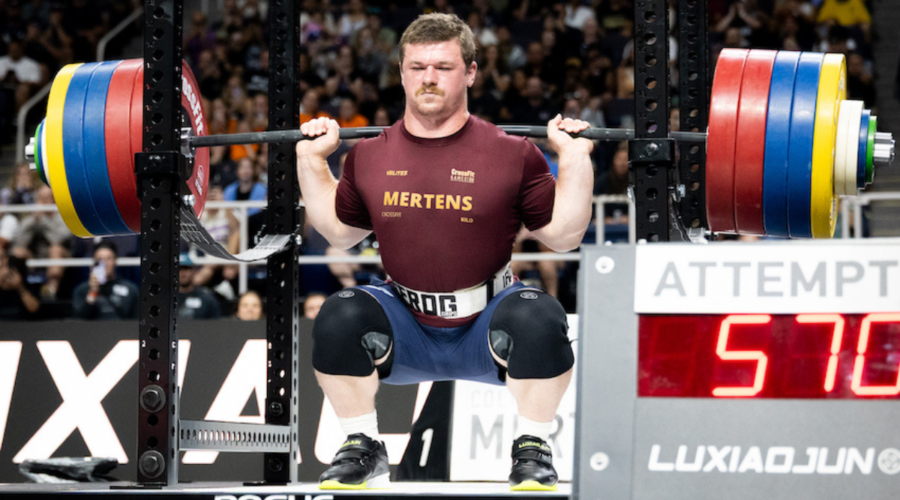


Building bigger quads is not about finding a magic squat variation or leaving the gym barely able to walk. Your quadriceps grow when you repeatedly expose them to enough hard, well executed work, then give them a reason to adapt over time. Barbells are exceptionally useful for this because they let you load stable lower body patterns progressively for months and years.
Your quads do not work in isolation during a squat. Your glutes, adductors, calves, trunk, and upper back all contribute to the lift. That is not a problem. The goal is not to make every other muscle disappear. The goal is to choose positions and exercises that create a large, tolerable challenge for the muscles at the front of the thigh, perform them through a productive range of motion, and progress them patiently.


The three tips below will help you do exactly that. They apply whether you are relatively new to barbell training or have spent years chasing a stronger squat. They also make your training more measurable, which is essential if you want your legs to actually change rather than simply feel tired after every session.
1. Use a Squat Pattern That Lets Your Knees Travel and Your Quads Work Hard
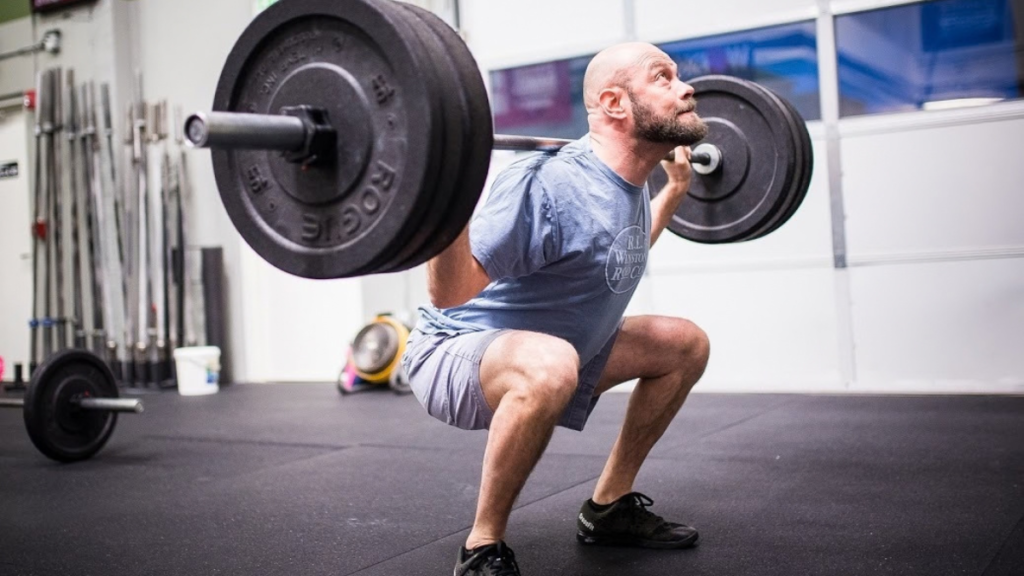
The most important barbell exercise for many people trying to add quad size is a squat that they can perform deeply, consistently, and with control. A full range back squat is an excellent starting point, but a front squat can also be a very effective choice. The best option is the one that allows you to bend the knees substantially, keep your whole foot planted, and repeat good positions under progressively heavier loads.
Why depth matters for quad growth
Your quadriceps extend the knee. As you descend in a squat, the knee bends and the quadriceps control that motion. A deeper squat generally asks the knee extensors to work through a larger range than a shallow squat. Research comparing squat ranges of motion has found that fuller ranges can produce superior lower body hypertrophy and strength adaptations compared with partial range training. In a heavy squat training study, longer range squatting also produced greater increases in thigh muscle volume than shorter range squatting.

That does not mean you must force yourself into a depth that your mobility, structure, or previous injuries do not tolerate. It means that you should earn as much comfortable, repeatable depth as you can. For many lifters, that means reaching at least a position where the top of the thigh is around parallel with the floor, then gradually working deeper if control remains good. Stop treating depth as a box to tick and start treating it as useful loaded work for the quads.
The bottom position should not be a relaxed collapse. Keep pressure spread across the foot, let the knees track in the same direction as the toes, and maintain enough trunk tension to keep the bar controlled. A smooth descent makes it easier to find the same depth every repetition. Then drive upward by pushing the floor away while allowing the knees and hips to extend together.
Do not fear forward knee travel
Some lifters were taught that the knees should never move past the toes. That cue is unnecessarily restrictive for a person whose main goal is bigger quads. Squatting is not a one size fits all movement, and the knees naturally travel forward as depth increases. Limiting that travel often shifts more of the work toward the hips and can make it harder to reach a useful depth with a balanced foot position.
3 Best Exercises for Rounder and More Defined Shoulders
Letting the knees move forward does not mean letting them cave inward without control or rising onto the toes. Keep your heel down and use a stance that lets you balance over the middle of the foot. A moderately narrow stance may increase quadriceps force demands compared with a wider stance, although it is not an isolation trick and it is not automatically better for every lifter. Experiment with a stance around hip to shoulder width, then choose the width that gives you stable depth and a strong quad sensation without knee pain.

If ankle mobility limits your depth, weightlifting shoes with an elevated heel can be a practical option. The raised heel may allow more forward knee travel and a more upright torso for some lifters. It is a tool, not a requirement. The same is true of front squats. Their more upright torso position can make them a useful quad focused option, but you do not need to abandon the back squat if it already fits you well.
A practical squat prescription
Use one primary squat pattern twice per week if recovery allows. On one day, perform three to five challenging sets of five to eight repetitions. On the other day, perform two to four sets of eight to twelve repetitions with a slightly lighter load. Finish most sets with roughly one to three repetitions still possible with good technique. This leaves enough effort to stimulate growth while keeping form and weekly training quality high.
Write down the load, repetitions, and depth standard you use. A squat that reaches a controlled, repeatable bottom position is more useful than a heavier squat that becomes progressively shallower. When you reach the top of your planned repetition range on every set without compromising depth, add a small amount of weight at the next session.
2. Make Barbell Split Squats Your Single Leg Quad Builder
Bilateral squats let you handle substantial loads, but they can hide side to side differences. A barbell split squat gives each leg a more direct share of the work and provides a demanding knee extension stimulus with less total load on the bar. It is a strong companion lift for a person who already back squats, and it can be a primary movement for someone who finds bilateral squats uncomfortable.
Set up the exercise for your quads
Place the bar on your upper back as you would for a high bar squat. Use a stance length that lets the front knee travel forward comfortably while the front heel remains planted. If the front foot is too far away, the movement becomes more hip dominant and it is harder to involve the quadriceps strongly. If it is too close, balance and knee comfort can become limiting. Start with a modest stride, descend under control, and adjust in small increments until you can load the front leg through a deep and stable range.
Keep the torso relatively upright and think about lowering the back knee toward the floor rather than pitching your chest forward. The back leg provides balance, but the front leg should do the bulk of the work. A small amount of forward knee travel is desirable here for the same reason it is useful in squatting. It gives the quadriceps a meaningful task as the knee bends and extends.
Research on unilateral barbell variations shows that exercise selection changes muscle activation and the forces each limb must manage. That is useful context, but the bigger practical advantage is simple: unilateral work gives you a clear opportunity to train each leg hard through a long, controlled range. It also helps you notice whether one side is consistently weaker, less stable, or unable to match the other at the same load and depth.
Use enough load without turning it into a balance test
Do not rush to make split squats an extreme balance challenge. Start with an empty bar or a light load until you can maintain a stable front foot and upright torso. Add load gradually. If you wobble so much that the set ends because you lose balance rather than because the front quad is working hard, reduce the load or use a rack for a light fingertip assist while you learn the movement.
Perform two to four sets of six to twelve repetitions per leg after your primary squat work. Rest long enough to make the next set productive, usually around two minutes or more when the load is demanding. Track each leg separately and let the weaker side set the number of repetitions. There is no need to add extra repetitions to the stronger side simply because it can do more.
3. Progress Your Hard Sets Instead of Chasing Random Soreness
The exercise matters, but quad growth ultimately depends on accumulating productive training over time. You need a sufficient number of challenging sets, a level of effort that recruits and fatigues the target muscles, and a progression plan that makes your current training gradually more demanding. Research synthesis shows a dose response relationship between weekly resistance training volume and muscle growth, although the best amount varies between individuals and more is not always better.
Build weekly volume gradually
For most lifters, start with around eight challenging direct quad sets each week and assess what happens for several weeks. A direct set includes your squat sets and front leg split squat sets when they are performed with a quad focused technique. If your performance is progressing, your knees feel good, and you are recovering between sessions, you may gradually build toward ten to sixteen hard sets each week.

The right number is the amount that you can recover from and improve on. If performance falls repeatedly, persistent soreness alters your technique, sleep deteriorates, or your knees become increasingly irritated, your current dose may be too high. Reduce a few sets, retain the exercises you can perform well, and build again when performance stabilizes. More work only helps when it remains productive work.
Distribute the sets across two or three weekly sessions rather than trying to do everything on one brutal leg day. This allows more high quality repetitions and gives the tissues time to recover. Training frequency itself is less important than total productive volume when volume is matched, so use the schedule that lets you perform your best work consistently.
Use a progression system you can repeat
Double progression is an uncomplicated, effective method. Pick a repetition range, such as six to ten repetitions for squats or eight to twelve repetitions for split squats. Use the same load until you can reach the top of the range for all planned sets with your depth and technique intact. Then add the smallest practical load increase and repeat the process.
You do not need to use only low repetitions because you are training with barbells. When training volume is matched and sets are sufficiently demanding, a wide range of loads can support hypertrophy. Heavier loads are still valuable for developing maximal strength, which can expand the loads available to you later. Moderate loads often make it easier to accumulate high quality repetitions for muscle growth. Combining both across the week is a sensible approach.
Keep a training log and look for small wins. One additional repetition at the same weight, a cleaner bottom position, or a small load increase is evidence that the plan is working. This approach is more reliable than changing exercises every week or judging sessions solely by how sore your legs feel the next morning. Soreness can happen after unfamiliar work, but it is not a dependable measure of muscle growth.
Support the training with recovery
Barbell quad work is demanding, so your recovery habits need to support it. Adequate sleep, sufficient calories for your goal, and protein intake spread across the day all help you train hard and recover well. Keep your warm up specific but brief. Do a few lighter sets that rehearse the movement, then save your energy for the work sets that drive adaptation.
If you are returning from pain or have a current knee issue, do not assume that pushing through is the answer. A qualified clinician can help you identify the appropriate range, loading strategy, and return to training plan. Healthy training discomfort and joint pain are not the same thing.
A Simple Two Day Barbell Quad Plan
Here is how the three tips can work together in a week. On the first lower body day, perform a full range back squat for four sets of five to eight repetitions, followed by a barbell split squat for three sets of eight to ten repetitions per leg. On the second lower body day, perform a front squat or a lighter back squat for three sets of eight to twelve repetitions, then complete two sets of split squats for ten to twelve repetitions per leg.
That plan provides twelve direct quad focused sets each week. It is only a starting point. Begin with fewer sets if you are new to this style of training, and add volume only when you can recover and progress. Make every repetition controlled, train the range you can own, and give the program enough time to work. Bigger quads are built through months of repeated quality, not one heroic leg session.
References
- Bloomquist, K., Langberg, H., Karlsen, S., Madsgaard, S., Boesen, M. and Raastad, T. (2013) ‘Effect of range of motion in heavy load squatting on muscle and tendon adaptations’, European Journal of Applied Physiology, 113(8), pp. 2133 to 2142.
- Grgic, J., Schoenfeld, B.J., Orazem, J., Sabol, F., Trajkovic, N., Bradic, A. and Pedisic, Z. (2021) ‘Effects of range of motion on resistance training adaptations: A systematic review and meta analysis’, Scandinavian Journal of Medicine and Science in Sports, 31(7), pp. 1260 to 1275.
- Barbalho, M., Coswig, V.S., Souza, D., Serrão, J.C., Campos, M.H. and Gentil, P. (2020) ‘Back squat versus hip thrust resistance training programs in well trained women’, International Journal of Sports Medicine, 41(5), pp. 306 to 310.
- Mausehund, L., Skard, A.E. and Krosshaug, T. (2019) ‘Muscle activation in unilateral barbell exercises: Implications for strength training and rehabilitation’, Journal of Strength and Conditioning Research, 33(7S), pp. S85 to S94.
- Schoenfeld, B.J., Ogborn, D. and Krieger, J.W. (2017) ‘Dose response relationship between weekly resistance training volume and increases in muscle mass: A systematic review and meta analysis’, Journal of Sports Sciences, 35(11), pp. 1073 to 1082.
- Schoenfeld, B.J., Grgic, J., Ogborn, D. and Krieger, J.W. (2017) ‘Strength and hypertrophy adaptations between low versus high load resistance training: A systematic review and meta analysis’, Journal of Strength and Conditioning Research, 31(12), pp. 3508 to 3523.
- Schoenfeld, B.J., Ogborn, D. and Krieger, J.W. (2016) ‘Effects of resistance training frequency on measures of muscle hypertrophy: A systematic review and meta analysis’, Sports Medicine, 46(11), pp. 1689 to 1697.
- Sinclair, J.K., Taylor, P.J., Jones, B., Butters, B., Bentley, I. and Edmundson, C.J. (2022) ‘A multi experiment investigation of the effects of stance width on the biomechanics of the barbell squat’, Sports, 10(9), article 136.
Key Takeaways
| Tip | What to do | Why it matters |
|---|---|---|
| Squat through a controlled range | Use the deepest comfortable, repeatable range you can control with a planted foot and stable knees. | A longer range gives the quadriceps more meaningful loaded work and has strong support for lower body hypertrophy. |
| Add barbell split squats | Use a moderate stride, upright torso, and controlled front knee travel for two to four sets per leg. | Each leg must contribute directly, helping you build quad volume and identify side to side differences. |
| Progress hard sets | Track load, repetitions, depth, and weekly sets, then increase only when technique remains solid. | Progressive overload and recoverable volume are more reliable drivers of quad growth than random soreness. |