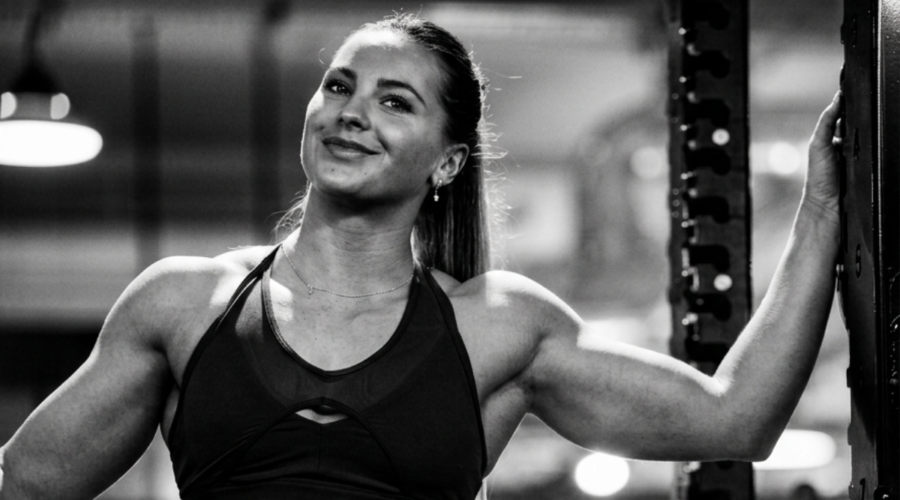


A bigger upper back changes how your whole physique looks. It adds width through the lats, thickness around the shoulder blades, and structure to the shoulders and arms. It also supports stronger pulling, pressing, carrying, and hanging performance.
You do not need dumbbells to build your upper back. A pullup bar, barbell, suspension trainer, rings, or sturdy low bar can provide enough resistance for serious muscle growth. The important part is not the equipment. It is giving the target muscles enough challenging work, using a controlled range of motion, and progressing over time.


Research on resistance training shows that muscles grow when they are exposed to enough tension and sufficient training volume. A wide range of loads can support hypertrophy when sets are performed with enough effort. That means bodyweight pulling and barbell work can build an impressive upper back when you choose the right variations and make them gradually harder.
The three exercises in this article are the pullup, barbell bent over row, and inverted row. Together, they train the upper back through vertical pulling, horizontal pulling, and bodyweight control. They are simple, effective, and easy to progress without using dumbbells.
What Muscles Make Up the Upper Back
The upper back includes more than the latissimus dorsi. The lats create much of the width associated with a V shaped physique, but other muscles add the thickness and detail that make the back look complete.
The trapezius helps control the shoulder blades and supports movements involving pulling and overhead work. The rhomboids help draw the shoulder blades toward the spine. The rear deltoids help move the upper arm backward and contribute to shoulder balance. The teres major assists the lats during pulling movements, while the biceps and forearms support almost every upper body pull.
3 Best Standing Core Exercises for Beginners that Want a Stronger Six Pack
A good upper back program should include both vertical and horizontal pulling. Vertical pulling movements, such as pullups, emphasize drawing the upper arm down toward the torso. Horizontal pulls, such as rows, emphasize moving the upper arm behind the body and controlling the shoulder blades.
This variety matters because no single exercise trains every region of the upper back equally. Using different pulling angles helps you train the lats, middle back, rear shoulders, and arms more completely.
1. Pullup
The pullup is one of the best upper back exercises because it trains the lats, teres major, lower trapezius, biceps, forearms, and muscles around the shoulder blades. It also requires you to move your full body through space, making it a demanding and efficient bodyweight exercise.
Hang from a pullup bar with your hands slightly wider than shoulder width. Start with your arms straight and your body still. Pull your elbows down toward your ribs as you lift your chest toward the bar. Lower yourself with control until your arms are straight again.
Think about driving your elbows down rather than trying to pull with your hands alone. This cue can help you feel the lats working more effectively. Keep your legs quiet and avoid kicking or swinging to create momentum.
Research comparing common pulling exercises shows that pullups produce high activation in the lats and several upper back muscles. They are a useful choice for building back width, especially when you can perform them through a controlled range of motion.
If you cannot perform a full pullup yet, begin with assisted pullups, band assisted pullups, or slow lowering repetitions. Assisted variations let you practice the same movement pattern with less bodyweight. Slow lowering repetitions allow you to build strength during the eccentric portion of the exercise, which is the controlled descent.
How to Progress the Pullup
Start with three sets that leave one or two good repetitions in reserve. If you can perform only a few full repetitions, perform several sets of one to three repetitions with longer rest. This lets you build strength without turning every set into a struggle.
Once you can perform three sets of eight to ten strict pullups, make the exercise harder by adding a small amount of external load. A weight belt, weighted vest, or backpack can work well. You can also increase the challenge by pausing briefly at the top or slowing the lowering phase.
Common Pullup Errors
The most common mistake is using momentum. Swinging the legs may help you complete more repetitions, but it reduces the tension placed on the upper back. Start each repetition from a still position and keep the movement controlled.
Another common mistake is stopping short of a full range of motion. Lower yourself until your arms are straight and pull until your chin clears the bar or your chest reaches close to the bar. A complete range of motion gives the muscles more high quality work.
2. Barbell Bent Over Row
The barbell bent over row is one of the best exercises for upper back thickness. It trains the lats, middle trapezius, rhomboids, rear deltoids, biceps, forearms, and spinal erectors. Because the barbell can be loaded in small increments, it is an excellent movement for long term progression.
Stand with your feet around hip width apart and grip the bar slightly wider than shoulder width. Push your hips backward and lean forward until your torso is angled toward the floor. Keep a slight bend in your knees and maintain a stable trunk position.
Pull the bar toward your lower ribs or upper abdomen by driving your elbows back. Pause briefly near the top of the repetition, then lower the bar slowly until your arms are straight. Keep the bar close to your body throughout the movement.
Research on rowing exercises shows that different row variations create meaningful activity in the back and trunk muscles. The bent over row has the added demand of requiring the hips and spinal erectors to maintain position while the upper back performs the pull.
The barbell row is particularly useful for muscle gain because it can be progressively overloaded for years. You can add a small amount of weight, increase repetitions, add another set, or improve control during the lowering phase. Those gradual improvements provide a clear path toward a stronger and thicker back.
How to Progress the Barbell Row
Start with two or three sets of eight to twelve repetitions. Use a weight that lets you keep your torso angle consistent throughout the set. If your torso rises with every repetition, the load is too heavy for your current strength.
When you can complete all sets with clean technique at the top of the repetition range, add a small amount of weight. Keep the progression gradual. A small increase performed with solid form is more valuable than a large increase that changes the exercise.
Common Barbell Row Errors
A common mistake is using the legs and lower back to throw the bar upward. The row should be driven by the upper back and arms while the lower body holds the hinge position. Keep your torso still and avoid jerking the bar.
Another mistake is shrugging the shoulders toward the ears. Keep your shoulders away from your ears and think about moving your elbows toward the back of the room. This encourages a more useful pulling path for the lats and middle back.
3. Inverted Row
The inverted row is an excellent bodyweight exercise for building the middle back, rear shoulders, lats, biceps, and trunk. You can perform it under a fixed bar, using gymnastic rings, or with a suspension trainer. It is easier to scale than the pullup because you can change the angle of your body.
Set a bar at about waist height. Lie underneath it and hold the bar with your arms straight. Keep your body in a straight line from your shoulders to your heels. Pull your chest toward the bar by driving your elbows back and squeezing the muscles between your shoulder blades.
Lower yourself slowly until your arms are straight, then repeat. Your hips should stay lifted and your body should move as one unit. Avoid letting the hips sag or pushing them upward to make the pull easier.
The inverted row is especially useful for beginners because it allows you to adjust resistance quickly. Standing more upright reduces the amount of bodyweight you lift. Walking your feet farther forward and lowering the bar increases the challenge.
Research on resistance training shows that muscle growth can occur across a broad range of loading conditions when effort and training volume are sufficient. The inverted row uses bodyweight instead of external plates, but it still creates a meaningful training stimulus when you choose a challenging angle and perform enough controlled repetitions.
How to Progress the Inverted Row
Start with two or three sets of eight to fifteen repetitions. Choose a bar height that allows you to complete the set with good control. When you can perform fifteen repetitions comfortably, lower the bar, move your feet farther forward, elevate your feet, or add a weighted vest.
A pause at the top of each repetition can also make the exercise more difficult. Hold your chest close to the bar for one or two seconds while keeping your shoulder blades controlled. This increases time under tension without requiring additional equipment.
Common Inverted Row Errors
The most common error is letting the hips drop toward the floor. This changes the body position and reduces the challenge for the trunk. Squeeze your glutes lightly and keep your ribs stacked over your pelvis throughout the set.
Another frequent mistake is pulling only with the arms. Focus on driving the elbows back and bringing your chest toward the bar. This helps the upper back muscles contribute more to the movement.
How Much Upper Back Training Do You Need?
Most people can make progress by training the upper back two or three times each week. You do not need to perform all three exercises in every session. A simple approach is to use pullups and rows in one session, then use inverted rows and a lighter pullup variation in another.
For muscle gain, aim to perform enough challenging sets each week for the upper back. Research suggests that higher weekly resistance training volume generally supports greater hypertrophy, although the ideal amount varies between individuals. Beginners can start with six to ten challenging sets per week for the upper back and adjust based on recovery and progress.
Rest for one to two minutes between most sets. Pullups and heavier barbell rows may benefit from slightly longer rest because they involve several large muscle groups. Adequate rest helps you maintain performance and complete more high quality repetitions.
Use a full range of motion whenever your joints tolerate it comfortably. Controlled repetitions create more consistent muscular tension than rushed repetitions. Do not chase fatigue at the expense of technique. A strong back is built through many months of quality work.
Final Thoughts
Pullups, barbell bent over rows, and inverted rows are three of the best upper back exercises for muscle gain without dumbbells. Pullups build back width and pulling strength. Barbell rows add thickness and allow steady loading progression. Inverted rows provide a scalable bodyweight option for high quality horizontal pulling.
Train these exercises consistently, keep your repetitions controlled, and make gradual progress over time. That combination is enough to build an upper back that is stronger, more muscular, and more capable.
Key Takeaways
| Exercise | Primary muscles trained | Starting recommendation | Main technique priority |
|---|---|---|---|
| Pullup | Lats, upper back, biceps, forearms | Three controlled sets with one or two repetitions in reserve | Pull the elbows down and avoid swinging |
| Barbell bent over row | Lats, middle back, rear shoulders, biceps | Two or three sets of eight to twelve repetitions | Keep the torso stable and pull toward the lower ribs |
| Inverted row | Middle back, rear shoulders, lats, biceps | Two or three sets of eight to fifteen repetitions | Keep the body straight and pull the chest toward the bar |
| Weekly training | Upper back muscle gain | Six to ten challenging sets each week to start | Add repetitions or load gradually |
References
- American College of Sports Medicine (2009) ‘American College of Sports Medicine position stand: Progression models in resistance training for healthy adults’, Medicine and Science in Sports and Exercise, 41(3), pp. 687 to 708.
- Fenwick, C.M.J., Brown, S.H.M. and McGill, S.M. (2009) ‘Comparison of different rowing exercises: Trunk muscle activation and lumbar spine motion, load, and stiffness’, Journal of Strength and Conditioning Research, 23(2), pp. 350 to 358.
- Schoenfeld, B.J., Ogborn, D. and Krieger, J.W. (2017) ‘Dose response relationship between weekly resistance training volume and increases in muscle mass: A systematic review and meta analysis’, Journal of Sports Sciences, 35(11), pp. 1073 to 1082.
- Schoenfeld, B.J., Grgic, J., Ogborn, D. and Krieger, J.W. (2017) ‘Strength and hypertrophy adaptations between low versus high load resistance training: A systematic review and meta analysis’, Journal of Strength and Conditioning Research, 31(12), pp. 3508 to 3523.
- Youdas, J.W., Amundson, C.L., Helmus, T.J., Stevans, J.A., Peterson, J.M. and Hollman, J.H. (2010) ‘Comparison of muscle activation during pull up and lat pull down exercises’, Journal of Strength and Conditioning Research, 24(12), pp. 3404 to 3414.