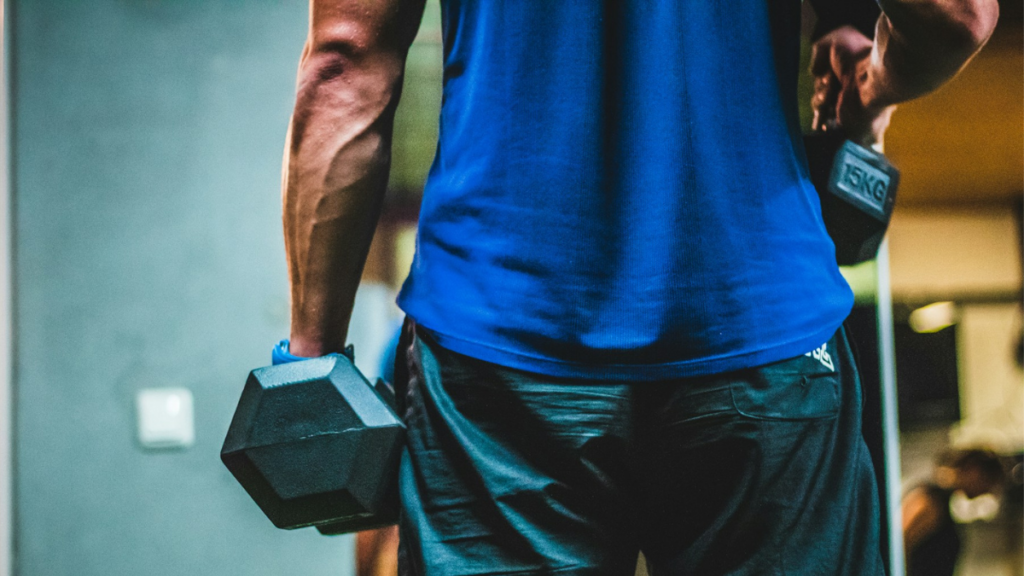
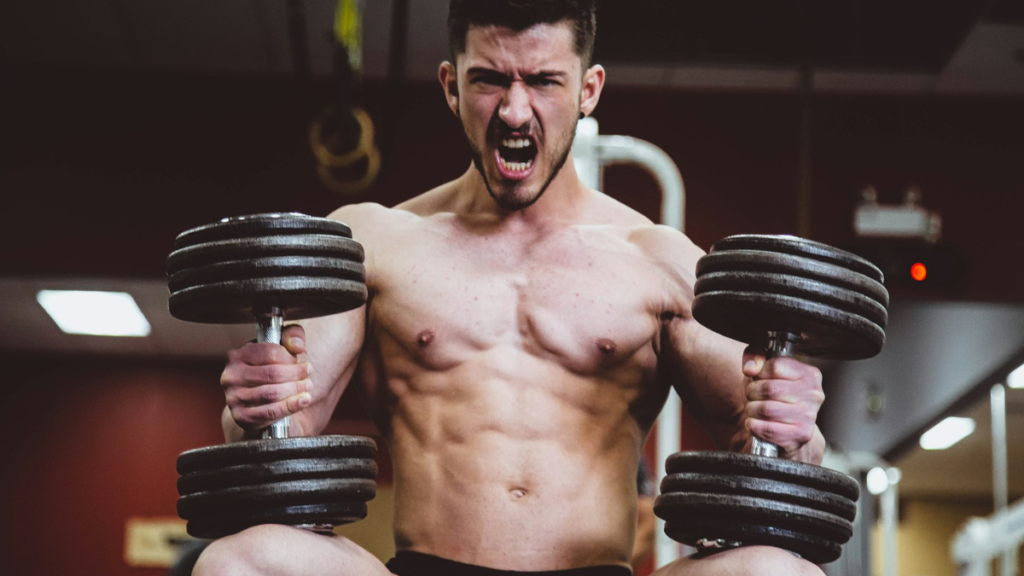
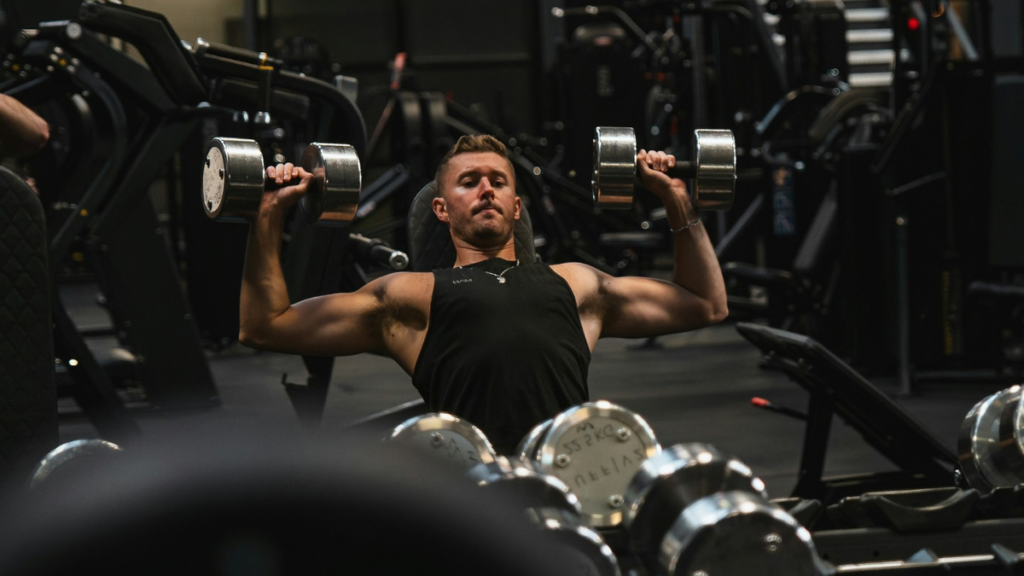
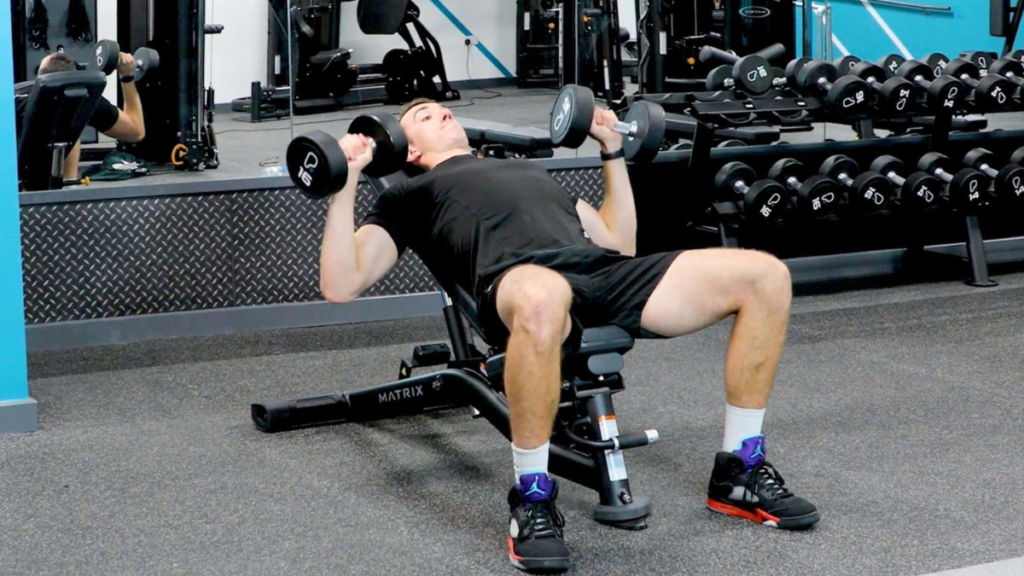
Dumbbells are a fantastic tool for building bigger biceps.
They are easy to scale upwards, they are easier to perform that many of the bigger barbell compound exercises, and they can be found in practically every gym in existence. If you are serious about adding muscle mass to your frame, then add these 3 movements into your training.
The Physiological Advantage of Dumbbell Training
When novice lifters want to build bigger arms, they frequently debate whether barbells, cables, or dumbbells reign supreme. While barbells allow for lifting heavier absolute loads, dumbbells offer an unmatched anatomical advantage through independent limb movement and rotational freedom. This freedom allows you to alter your wrist and forearm positioning during the lift, directly influencing how the bicep brachii activates.

Exercise physiology research confirms that muscle hypertrophy is driven by mechanical tension combined with metabolic stress. Mechanical tension occurs when a muscle contracts forcefully while undergoing stretch under load. Because dumbbells allow you to rotate your wrists as you lift, you can achieve complete supination, which is the anatomical term for turning your palms upward. Full supination is the primary functional job of the biceps brachii, meaning dumbbells unlock a level of muscle fiber activation that fixed bars simply cannot replicate.
Another critical factor for beginners is unilateral training symmetry. Using dumbbells ensures that your dominant arm cannot compensate for or take over the workload of your weaker arm. This balanced development prevents muscular imbalances and ensures that both arms grow at an identical rate during your beginner lifting phase.
Decoding the Three Bicep Builders
To achieve comprehensive, complete arm development without wasting hours doing endless random variations, beginners only need to master three fundamental dumbbell movements. The following three exercises represent the gold standard for triggering maximal biceps brachii hypertrophy during your first year of arm training.
The Seated Incline Dumbbell Curl
The seated incline dumbbell curl places the arm in a hyperextended position behind the torso. Sitting back on an incline bench set to roughly forty five degrees stretches the long head of the biceps before you even begin the lifting motion.
Executing this movement correctly requires you to sit firmly against the bench with your feet flat on the floor and your arms hanging straight down behind your torso. Keeping your upper arms completely stationary, you curl the dumbbells upward while rotating your palms completely toward the ceiling, pausing briefly at the top before lowering the weights with slow, deliberate control.
The extraordinary value of the incline curl stems from length dependent hypertrophy. Research shows that training muscles at longer muscle lengths leads to superior structural remodeling and greater cross sectional area expansion compared to exercises performed with the torso upright. By placing the shoulder in extension, the incline bench stretches the long head of the biceps over the shoulder joint, creating an intense mechanical stretch under heavy load.
| Bicep Region | Primary Role in the Incline Curl | Hypertrophic Impact |
| Long Head | Maximum stretch activation | Exceptional peak formation and outer mass |
| Short Head | Secondary stabilization support | Complete inner arm volume contribution |
| Brachialis | Deep elbow flexion assistance | Pushes the bicep upward for a larger arm look |
Standing Dumbbell Hammer Curl
While standard curls focus heavily on the main bicep muscle belly and forearm supination, neglecting the brachialis and the brachioradialis leaves your arms looking narrow from the front. The standing dumbbell hammer curl is the absolute best movement for building overall arm thickness by targeting these crucial underlying structures.
Performing a hammer curl is remarkably straightforward yet frequently butchered in commercial gyms. You stand tall with a dumbbell in each hand, palms facing inward toward your body throughout the entire duration of the movement. Keeping your elbows pinned tightly to your ribcage, you lift the weights toward your shoulders without allowing your palms to rotate upward, then lower them slowly back to the starting position.
The biomechanical brilliance of the hammer curl lies in the neutral grip positioning. This neutral alignment shifts a significant portion of the workload onto the brachialis muscle, which sits underneath the biceps brachii. As the brachialis grows larger, it acts like a hydraulic pump, pushing the main bicep muscle upward and creating the illusion of significantly larger overall arm thickness.
| Arm Muscle | Hammer Curl Function | Hypertrophic Benefit |
| Brachialis | Prime mover in neutral flexion | Deep muscle thickness and overall arm width |
| Brachioradialis | Major forearm and elbow flexor | Balanced lower arm and upper arm transition |
| Bicep Brachii | Synergistic stabilizer | Consistent tension across the lifting arc |
The Standing Alternating Dumbbell Curl
To round out your foundational arm building routine, the classic standing alternating dumbbell curl allows you to handle slightly heavier loads while maintaining strict form and absolute focus on each individual arm. This movement combines the benefits of free standing balance with focused unilateral execution.
To execute this exercise properly, stand upright with your feet shoulder width apart and a dumbbell in each hand with your palms facing your thighs. As you curl one weight upward, you systematically rotate your wrist outward so that your palm faces your shoulder at the peak contraction. You then lower that dumbbell back down while simultaneously beginning the curl with the opposite arm.
The primary advantage of the alternating variation is neurological focus. By concentrating on one arm at a time, your brain can direct greater motor unit recruitment to the working muscle tissue. Furthermore, standing upright engages your core stabilizers, turning an isolation exercise into a full body supportive movement.
| Upper Arm Region | Alternating Curl Function | Hypertrophic Benefit |
| Biceps Brachii | Full supination and flexion | Balanced bilateral mass development |
| Anterior Deltoid | Stabilization during the lift | Front shoulder integration and support |
| Core Stabilizers | Isometric anti extension defense | Improved overall structural balance |
Mastering Progressive Overload for Arm Growth
Selecting the right exercises is only half the battle; how you execute and progress them over time determines your actual muscle gains. Beginners possess a unique training advantage known as novice adaptation, meaning their bodies are primed to build muscle and strength rapidly when provided with a consistent stimulus.
To maximize this phase, beginners should focus on progressive overload. Progressive overload simply means doing slightly more work over time. For bicep training, this is best accomplished by gradually increasing the weight of the dumbbells or adding an extra repetition each week while maintaining strict form across moderate repetition ranges.
A classic, science backed approach for beginners is working within the 8 to 12 repetition range for 3 to 4 working sets per exercise. Training in this window balances mechanical tension with sufficient metabolic stress, providing an ideal stimulus for muscle hypertrophy without causing excessive tendon strain or joint fatigue.
| Weekly Phase | Load Strategy | Target Reps | Primary Goal |
| Weeks 1 to 2 | Moderate weight selection | 3 sets of 12 reps | Technique and motor control mastery |
| Weeks 3 to 6 | Gradual weight increases | 3 sets of 10 reps | Progressive mechanical tension buildup |
| Weeks 7 to 10 | Peak intensity loading | 4 sets of 8 reps | Maximize motor unit recruitment |
Key Takeaways
| Principle | Core Action for Beginners |
| Selection Focus | Master the Incline Dumbbell Curl, Hammer Curl, and Alternating Curl |
| Growth Mechanism | Prioritize full wrist supination to maximize bicep fiber activation |
| Progression Strategy | Apply linear progressive overload by increasing weight or reps |
| Volume Allocation | Perform 3 to 4 sets of 8 to 12 repetitions per exercise per session |
References
Kubo, K, Sakuma, K, Kawakami, Y and Fukunaga, T 2010, ‘Effects of a 12-week resistance training program on muscle hypertrophy and architecture’, European Journal of Applied Physiology, vol. 109, no. 6, pp. 1055-1065.
Schoenfeld, BJ 2010, ‘The mechanisms of muscle hypertrophy and their application to resistance training’, Journal of Strength and Conditioning Research, vol. 24, no. 10, pp. 2857-2872.
Schoenfeld, BJ, Ogborn, D and Krieger, JW 2017, ‘Dose-response relationship between weekly resistance training volume and increases in muscle mass: A systematic review and meta-analysis’, Journal of Sports Sciences, vol. 35, no. 11, pp. 1073-1082.
Schoenfeld, BJ, Grgic, J, Ogborn, D and Krieger, JW 2016, ‘Strength and hypertrophy adjustments in response to resistance training volume: A systematic review and meta-analysis’, Sports Medicine, vol. 46, no. 11, pp. 1689-1697.
Wilk, M, Zajac, A and Tufano, JJ 2021, ‘The influence of movement tempo during resistance training on muscular strength and hypertrophy responses: A review’, Sports Medicine, vol. 51, no. 8, pp. 1629-1650.