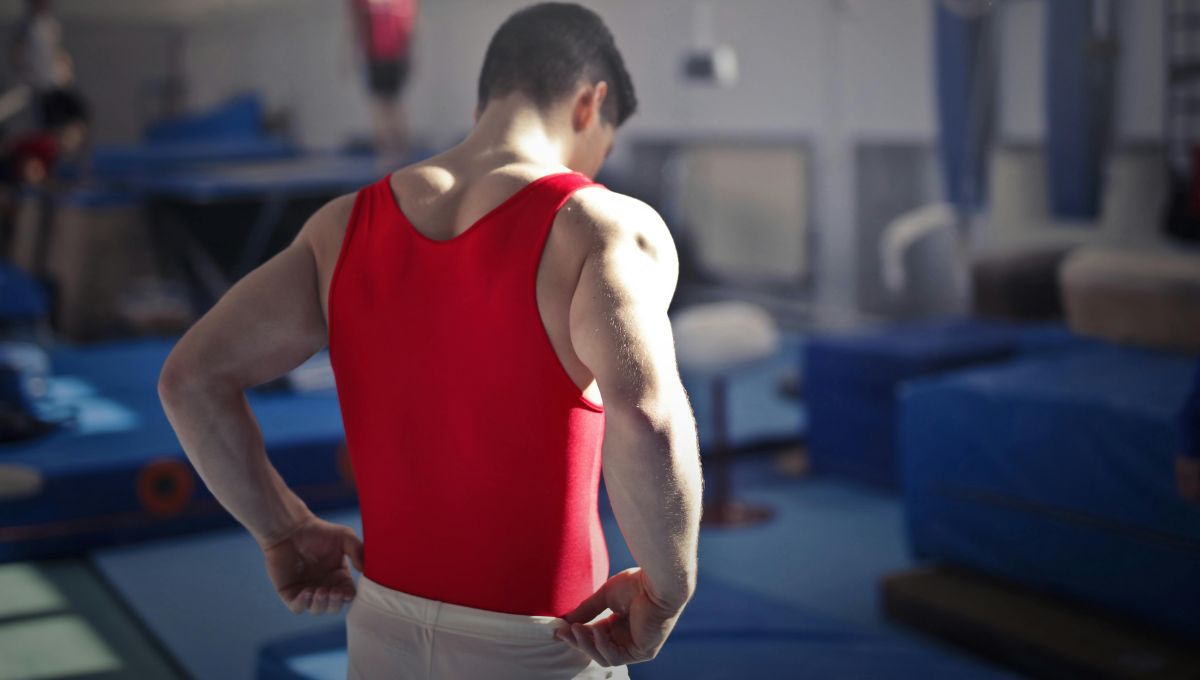


Broad shoulders make the upper body look stronger, more athletic, and more balanced. While overhead presses are useful for building strength and adding muscle to the front of the shoulders, they are not the whole answer if your goal is a wider silhouette. That look depends largely on developing the middle deltoids, while well built rear deltoids add depth when viewed from the side and back.
The challenge is that many lifters repeat the same dumbbell lateral raise and machine press for years. Those exercises can work well, but cables offer a different and highly useful option. They allow you to position resistance from angles that dumbbells cannot easily match, maintain tension through more of the repetition, and train one shoulder at a time with controlled loading.


Research shows that resistance training can produce meaningful muscle growth across a wide range of loads when sets are performed with enough effort. You do not need extremely heavy weights for shoulder isolation work. In fact, lighter to moderate loads are often more practical because they let you control the movement, keep the target muscle working, and avoid turning every repetition into a full body swing. Studies also show that free weights and machines can produce similar hypertrophy outcomes, which supports the idea that the best tool is the one you can use consistently and progressively.
These three cable exercises are less common than standard lateral raises, but each has a clear purpose. Use them to add productive variety to your shoulder training and build the deltoids that create a bigger, wider frame.
Why Cable Work Can Help Build Wider Shoulders
The deltoid has three major portions. The anterior deltoid sits at the front of the shoulder, the middle deltoid sits on the outer side, and the posterior deltoid sits at the back. Pressing movements such as bench presses, push ups, dips, and overhead presses already give the anterior deltoid substantial work. Many lifters therefore need more direct attention on the middle and posterior deltoids.
The middle deltoid is particularly important for shoulder width because it contributes to lifting the arm out to the side. A systematic review of deltoid activation research found that shoulder abduction movements, including lateral raise variations, are among the most effective options for activating the middle deltoid. Activation data does not prove that an exercise automatically produces more muscle growth, but it does help explain why lateral raise patterns belong in a complete shoulder program.
Cables are useful because the direction of resistance comes from the pulley rather than straight down toward the floor. With dumbbells, the movement is hardest when your arm is close to parallel with the floor and very easy at the bottom. A cable can create meaningful resistance earlier in the lift, depending on where you stand relative to the pulley. That can make the movement feel smoother and can help you challenge the muscle over a larger part of the available range.
The goal is not to find a magical exercise. The goal is to find exercises that let you train hard, feel the correct muscles working, progress over time, and recover well enough to repeat the work week after week.
Exercise One: Behind the Body Cable Lateral Raise
The behind the body cable lateral raise is a simple but underused way to train the middle deltoid. It looks similar to a regular cable lateral raise, but the working arm begins slightly behind the torso. This changes the starting position and makes the cable pull against the shoulder from the bottom of the movement.
How to Perform It
Set a single pulley at its lowest setting and attach a single handle. Stand sideways to the cable stack with the working arm farthest from the machine. Reach behind your body to hold the handle with your palm facing inward. Take one or two small steps away from the stack until the cable is already lightly tensioned.
Start with your arm close to your side and your elbow softly bent. Raise your arm out and slightly forward until your upper arm is around shoulder height. Think about moving your elbow away from your body rather than lifting the handle with your hand. Pause briefly at the top, then lower slowly until the shoulder is stretched but still controlled.
Keep your torso tall and your ribs down. Avoid leaning away from the cable, twisting your body, or shrugging hard toward your ear. A small amount of natural shoulder blade movement is normal, but the upper trapezius should not take over the lift.
Why It Works
The most valuable feature of this exercise is its resistance profile. Because the cable is behind you, it provides tension near the bottom position where a dumbbell lateral raise is usually very easy. This can make the exercise feel more demanding without needing to use a heavy weight.
The movement also encourages a single arm approach. Unilateral training makes it easier to identify left to right differences in control and strength. You can use the same load and target repetitions on both sides, then allow the weaker side to determine when the set ends.
Use a weight that lets you complete eight to fifteen controlled repetitions. The final few repetitions should be difficult, but your shoulder should not roll forward and your torso should not start jerking around. Perform two to four hard sets per side.
Exercise Two: Leaning Cable Lateral Raise
The leaning cable lateral raise is an effective variation for lifters who struggle to feel the middle deltoid during regular raises. The position can reduce the temptation to use momentum and may make the arm path easier to control.
How to Perform It
Set a single cable pulley at the lowest setting and attach a single handle. Stand sideways to the cable stack with the working arm farthest from the machine. Hold the upright of the cable station with your free hand at about chest height.
Take the handle in your working hand and step away until the cable is taut. Lean your body slightly toward the machine while keeping both feet firmly planted. Your working arm should begin just in front of your body with a soft bend at the elbow.
Raise the arm out to the side until it reaches shoulder height or slightly below, depending on your comfort and control. Lower the handle steadily and do not relax at the bottom. Keep your wrist neutral and let the elbow lead the movement.
Why It Works
This position creates a stable setup that makes cheating more obvious. When lifters use too much momentum in a standing dumbbell raise, the hips and lower back can do much of the work. Holding the upright gives you a fixed point and helps you focus on moving the shoulder rather than throwing the load upward.
The middle deltoid responds to progressive training, not to a specific rep number. Evidence indicates that muscle growth can occur with both lighter and heavier resistance when training is performed with sufficient effort. That means you can use a moderate load, work in a higher repetition range, and still build muscle as long as the set becomes genuinely challenging.
Aim for twelve to twenty repetitions per side. Start with two or three sets, especially if you already do plenty of pressing. If your shoulders recover well and your performance is improving, gradually build toward four sets.
The biggest mistake is going too heavy. If you cannot pause briefly at the top without pulling your shoulder toward your ear, the load is probably excessive. A lighter weight with a clean path and consistent tension is more useful than a heavier weight that turns into a trap exercise.
Exercise Three: Cross Body Cable Rear Delt Row
The cross body cable rear delt row is an excellent choice for building the back of the shoulders without relying on the same old reverse fly pattern. It combines horizontal arm movement with a setup that can make it easier to keep the rear deltoid under tension.
How to Perform It
Set a cable pulley around lower chest height and attach a single handle. Stand sideways to the machine so the cable crosses in front of your body. Reach across with the arm farthest from the stack and take the handle with a neutral grip.
Step away from the stack until the cable is taut. Bend your knees slightly, brace your trunk, and allow the working arm to extend across your body. Your shoulder should feel stable, not aggressively pulled forward.
Pull your elbow out and back in a wide arc. Think about moving the upper arm away from the center of your body rather than pulling the handle toward your ribs. Stop when your upper arm is roughly in line with your torso. Pause, then return slowly to the starting position.
Do not turn this into a heavy row. If your elbow stays close to your body, the lats and mid back will dominate. If you rotate your torso excessively, the exercise becomes easier but less focused. Use a load that lets you keep your chest quiet and your shoulder position controlled.
Why It Works
Rear deltoids are often undertrained because many programs focus heavily on pressing and vertical pulling. They contribute to the rounded look of the shoulder from the side and help create more upper body depth from the back. Deltoid activation research shows that the posterior deltoid contributes to pulling and horizontal arm movement patterns, supporting the inclusion of direct rear shoulder work alongside presses and lateral raises.
3 Best Barbell Exercises for a Muscular and More Attractive Upper Body
The cross body starting position gives you room to move through a long, controlled arc. You do not need to force an extreme stretch or chase a huge range of motion. The useful range is the one you can own without losing shoulder position.
Perform ten to sixteen repetitions per side for two to four sets. Use a controlled lowering phase of around two seconds. This makes it easier to avoid momentum and gives you more opportunities to assess whether the rear deltoid is actually doing the work.
How to Program These Exercises for Shoulder Growth
You do not need to perform all three exercises in the same session. In fact, most lifters will make better progress by choosing one middle deltoid exercise and one rear deltoid exercise, then training them consistently for several weeks.
A practical approach is to train shoulders two times per week. In the first session, perform the behind the body cable lateral raise after your main pressing work, followed by the cross body cable rear delt row. In the second session, use the leaning cable lateral raise and repeat the rear delt row or choose another rear shoulder movement you can perform well.
Start conservatively. Direct shoulder work can create significant fatigue, particularly if you also bench press, do push ups, perform dips, or train overhead presses. Begin with around six to eight direct sets per week for the middle and rear deltoids combined, then add work gradually if your recovery and performance remain good.
Track your exercises. Write down the weight, repetitions, and quality of each set. When you can reach the top of your chosen repetition range with strong technique, increase the load slightly. This gradual progression is more reliable than changing exercises every session.
Use a full, comfortable range of motion and control the lowering phase. Research on resistance training range of motion suggests that fuller ranges generally provide an advantage for muscle growth compared with partial repetitions alone. You do not need to force painful positions, but you should avoid cutting every repetition short simply to use more weight.
The Bottom Line
Bigger shoulders are built through consistent, progressive resistance training, not by searching for a secret movement. However, unusual cable exercises can solve practical problems that standard dumbbell work sometimes creates. They can provide tension in different parts of the range, make momentum easier to control, and help you train each shoulder independently.
The behind the body cable lateral raise challenges the middle deltoid from a useful starting position. The leaning cable lateral raise offers a stable setup for clean, high quality repetitions. The cross body cable rear delt row gives the back of the shoulders direct attention and helps build a more complete upper body.
Train these movements with patience, keep the weight honest, and focus on gradual progression. That is how you turn cable work into wider, thicker shoulders over time.
Key takeaways
| Exercise | Main target | Best repetition range | Main coaching focus |
|---|---|---|---|
| Behind the body cable lateral raise | Middle deltoid | 8 to 15 per side | Keep the torso still and lead with the elbow |
| Leaning cable lateral raise | Middle deltoid | 12 to 20 per side | Use a light enough load to avoid shrugging |
| Cross body cable rear delt row | Posterior deltoid | 10 to 16 per side | Pull the elbow wide without rotating the torso |
| Weekly approach | Middle and posterior deltoids | 6 to 8 direct sets to start | Increase volume gradually if recovery remains good |
| Progression | All three exercises | Add load after reaching the top of the range | Prioritize controlled repetitions over heavier weight |
References
- Grgic, J., Schoenfeld, B.J., Orazem, J., Sabol, F., Smajić, M., Bishop, D.J. and Pedisic, Z. (2022) ‘Effects of resistance training performed to repetition failure or non failure on muscular strength and hypertrophy: A systematic review and meta analysis’, Journal of Sport and Health Science, 11(2), pp. 202-211.
- Heidel, K.A., Novak, Z.J. and Dankel, S.J. (2022) ‘Machines and free weight exercises: A systematic review and meta analysis comparing changes in muscle size, strength, and power’, Journal of Sports Medicine and Physical Fitness, 62(8), pp. 1061-1070.
- Lasevicius, T., Schoenfeld, B.J., Silva, R.L., Barros, T.S., Leite, T.C., Filho, P.J., Aihara, A.Y., Cardoso, F.N., Tricoli, V. and Ugrinowitsch, C. (2018) ‘Muscle failure promotes greater muscle hypertrophy in low load but not in high load resistance training’, Journal of Strength and Conditioning Research, 36(2), pp. 346-351.
- Rabello, R., Bertozzi, F., de Freitas, I.L.H., Molinari, T., Roncada, C., Sforza, C., Rodrigues, R. and Tiggemann, C.L. (2024) ‘Activation of the three deltoid muscle portions during common strengthening exercises: A systematic review’, Journal of Bodywork and Movement Therapies, 40, pp. 1309-1325.
- Schoenfeld, B.J., Grgic, J., Ogborn, D. and Krieger, J.W. (2017) ‘Strength and hypertrophy adaptations between low versus high load resistance training: A systematic review and meta analysis’, Journal of Strength and Conditioning Research, 31(12), pp. 3508-3523.
- Schoenfeld, B.J., Grgic, J., Van Every, D.W. and Plotkin, D.L. (2021) ‘Loading recommendations for muscle strength, hypertrophy, and local endurance: A re examination of the repetition continuum’, Sports, 9(2), 32.
- Wolf, M., Maroto Izquierdo, S., González de la Flor, Á., Fernández González, F.T., Arent, S.M., Muyor, J.M. and López Valenciano, A. (2023) ‘Which ranges of motion lead to muscle growth? A systematic review of the effects of range of motion on muscle hypertrophy’, Sports Medicine, 53(8), pp. 1597-1617.