

Overall fitness is more than how fast you can run or how many laps you can swim. It includes cardiorespiratory fitness, muscular strength and endurance, mobility, and the ability to perform everyday activities.
Running and swimming can both improve aerobic fitness, but they challenge the body in different ways. The better choice depends on which parts of fitness matter most to you, what you can do consistently, and whether you have any limitations that affect your training.


Research supports health benefits from both activities. A large systematic review covering 2.6 million adults found that recreational running was associated with improvements in cardiorespiratory fitness and body composition. Swimming was associated with improvements in body composition and blood lipids. The researchers also found associations between both activities and a lower risk of death from all causes, although those findings do not prove that either sport alone caused the differences (Oja et al., 2024).
Running and Swimming Both Improve Cardiorespiratory Fitness
Cardiorespiratory fitness describes how well the heart, lungs, and circulatory system support activity. Running and swimming can both provide aerobic training when they raise your breathing and heart rate for long enough. A systematic review and meta-analysis of swim training found that swimming improved maximal oxygen uptake, a commonly used measure of aerobic capacity, compared with control conditions. The review also found improvements in other measures of cardiorespiratory fitness (Lahart and Metsios, 2018).

The training effect depends on the effort you put in, how regularly you train, and how gradually you build your workload. An easy jog and a hard interval session place different demands on the body, just as relaxed lap swimming differs from fast repeats. Neither activity automatically produces better fitness simply because of the sport itself. A manageable program that you can follow consistently is more useful than an ambitious routine you soon abandon.
There is one important distinction: fitness gains are partly specific to the activity. A person who swims regularly may become fitter in the pool, but that does not guarantee the same improvement in running performance. Running requires the body to support and move itself on land, while swimming requires coordinated strokes and propulsion through water. If your goal is to improve at one of these activities, include that activity in your training.
How the Two Activities Challenge Your Muscles
Running mainly trains the lower body through repeated steps. The muscles of the legs and hips help move you forward, while the trunk contributes to posture and stability. The activity also trains muscular endurance because those muscles contract repeatedly over the course of a run. However, running is not a full body strength program. It does not provide the same kind of progressive resistance training as lifting weights.
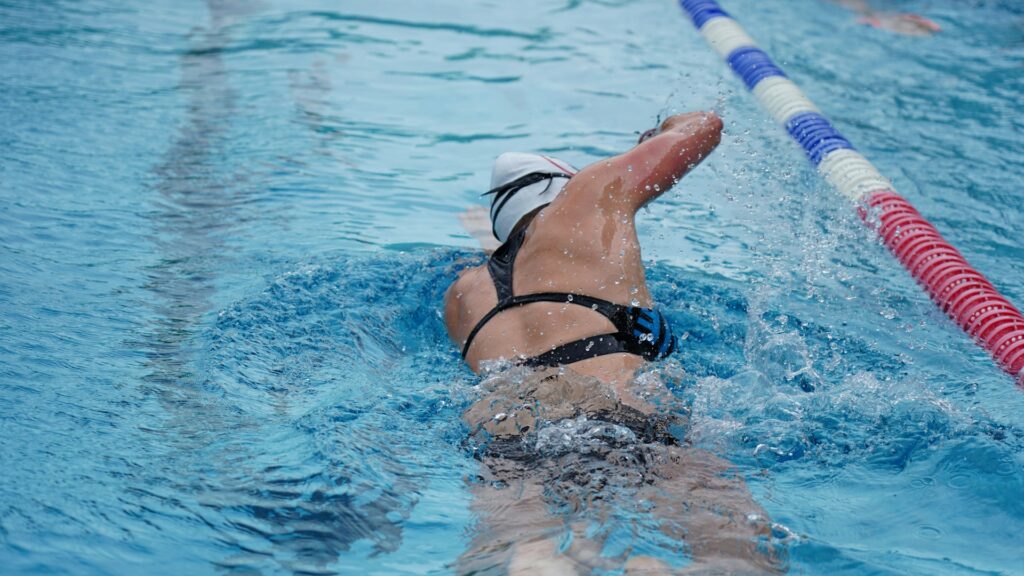
Swimming uses the arms, shoulders, back, trunk, and legs to propel the body through water. The exact demands depend on the stroke and technique. Freestyle, backstroke, breaststroke, and butterfly involve different movement patterns, and a swimmer can use drills or equipment to emphasize particular parts of a session. Swimming can build muscular endurance and improve performance in the water, but regular lap swimming alone should not be treated as a substitute for a balanced strength routine.

For well rounded fitness, include muscle strengthening activity in addition to aerobic exercise. U.S. physical activity guidelines recommend that adults do aerobic activity and muscle strengthening activity that works all major muscle groups. The guidelines call for muscle strengthening on at least two days each week (U.S. Department of Health and Human Services, 2018). That advice applies whether you choose running, swimming, or a mix of both for your cardio.
Running Has a Clearer Role in Weight Bearing Bone Health
Running is a weight bearing activity, meaning the legs and hips support body weight while moving. Swimming is buoyant, so the water supports much of the body and reduces the impact of each movement. That difference matters when considering bone loading. A 2024 systematic review and meta-analysis found that bone mineral density in swimmers was similar to that of non-athletic controls at the lumbar spine, hip, and femoral neck. The authors also reported mixed findings across other bone measures and anatomical regions (Freitas et al., 2024).
These findings do not mean swimming harms bone health, and they do not establish that running will improve bone health for every person. They do show that swimming and running provide different mechanical signals to the skeleton. If bone strength is a priority, it makes sense to include appropriate weight bearing or resistance exercise in a broader program, rather than relying on swimming alone. Individual health history matters, so anyone with osteoporosis, a history of fractures, or another relevant condition should seek advice from a qualified health professional.
Swimming Is Low Impact, but That Does Not Make It Injury Proof
Because water supports the body, swimming usually involves less weight bearing impact than running. That can make it an appealing aerobic option for people who find pounding uncomfortable or who want to vary their training. It still involves repeated movements, especially at the shoulders, and poor technique or a sudden jump in training volume can cause problems. Low impact should not be confused with no risk.
Running exposes the legs to repeated loading, and running related injuries are common enough to be studied in systematic reviews. A review of running injury incidence found that injury definitions and study methods varied, making direct comparisons difficult. It also found that novice runners appeared to face a higher injury rate per hour than recreational runners (Videbæk et al., 2015). That is a reason to build running gradually, not a reason to assume that running is unsafe for everyone.

The practical choice is to match the activity to your current capacity. If you are new to running, start with shorter sessions and add time or distance progressively. If you are new to swimming, allow time to learn efficient technique and build the length of your sessions gradually. Either activity can be adjusted to make training more manageable.
Which Activity Is Better for Weight Management?
Both running and swimming can contribute to weight management as part of a broader routine. Exercise supports energy expenditure, but changes in body weight depend on more than one workout. Food intake, sleep, total daily movement, health conditions, and the ability to sustain a routine also matter. Neither sport guarantees weight loss, and neither should be judged by a single session’s calorie estimate.
The research does not support a universal claim that one activity is best for everyone’s body composition. The review of non-elite swimming interventions found favorable changes in some body composition measures compared with control groups, while the larger review of sports found favorable body composition findings for running and swimming in the available evidence (Lahart and Metsios, 2018; Oja et al., 2024). Those results come from different studies and populations, so they should not be read as a direct contest between running and swimming.
A realistic routine is one you can repeat. If you enjoy running outdoors and can increase your mileage without persistent pain, running may be an easy way to build regular activity. If you prefer the pool, swimming can be an effective aerobic workout. If you enjoy both, alternating them can help add variety and reduce reliance on one movement pattern.
Which One Should You Choose?
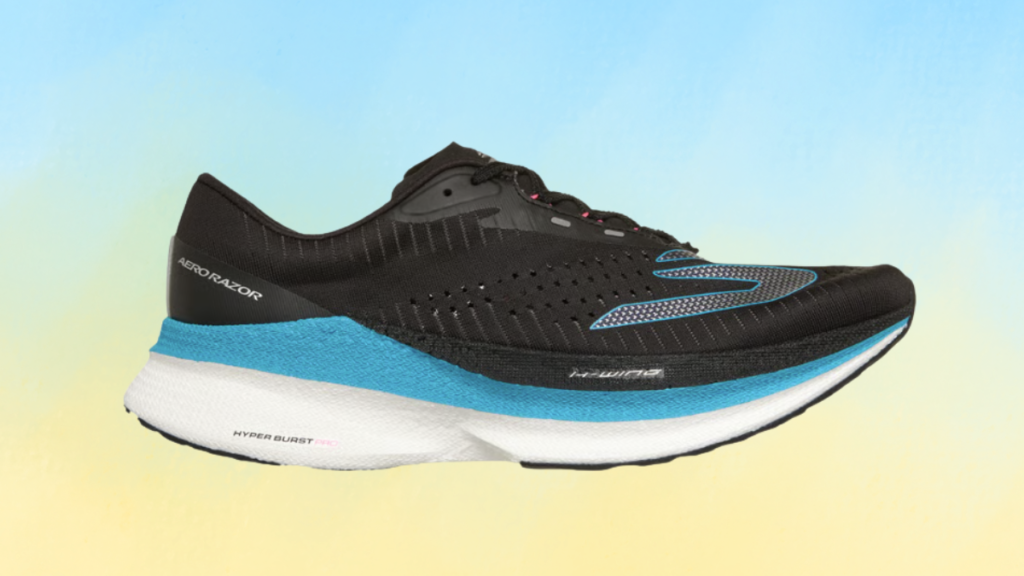
Choose running if you want a simple, accessible way to train aerobic fitness on land and you enjoy the activity. It requires little equipment, but your body needs time to adapt to its repeated impact. Choose swimming if you want a low impact aerobic workout, enjoy time in the water, or need an option that places less weight bearing load on your legs. Swimming does require pool access and enough skill to sustain a safe session.
3 Best Glute Exercises for Beginners in The Gym
For overall fitness, combining the two can be useful if you have access to both and recover well. Swimming can add aerobic work without the same land based impact as running, while running provides weight bearing activity and practice moving on land. Still, cardio alone does not cover every part of fitness. Add strength training for all major muscle groups, and select an activity you can maintain.
The short answer is that neither running nor swimming is universally better. Both can improve aerobic fitness. Running has the advantage of weight bearing movement, while swimming offers a low impact way to train aerobically and uses the upper body as well as the legs. The best option is the one that fits your goals, health, access, and preferences, supported by a balanced weekly routine.
Key Takeaways
| Area | Running | Swimming |
|---|---|---|
| Cardiorespiratory fitness | Can improve aerobic fitness when performed regularly | Can improve aerobic fitness when performed regularly |
| Muscular demands | Emphasizes repeated lower body movement | Uses the arms, trunk, and legs in stroke specific patterns |
| Bone loading | Weight bearing activity | Buoyancy reduces weight bearing impact |
| Training impact | Repeated impact requires gradual progression | Lower impact, though repetitive movement can still cause problems |
| Overall fitness | Pair with strength training for a balanced routine | Pair with strength training and suitable weight bearing activity for a balanced routine |
References
- Freitas, L., Bezerra, A., Boppre, G., Amorim, T., Fernandes, R.J. and Fonseca, H. (2024) ‘Does swimming exercise impair bone health? A systematic review and meta-analysis comparing the evidence in humans and rodent models’, Sports Medicine, 54, pp. 2373–2394.
- Lahart, I.M. and Metsios, G.S. (2018) ‘Chronic physiological effects of swim training interventions in non-elite swimmers: a systematic review and meta-analysis’, Sports Medicine, 48, pp. 337–359.
- Oja, P., Memon, A.R., Titze, S., Jurakic, D., Chen, S.T., Shrestha, N., Em, S., Matolic, T., Vasankari, T., Heinonen, A., Grgic, J., Koski, P., Kokko, S., Kelly, P., Foster, C., Podnar, H. and Pedisic, Z. (2024) ‘Health benefits of different sports: a systematic review and meta-analysis of longitudinal and intervention studies including 2.6 million adult participants’, Sports Medicine – Open, 10, article 46.
- U.S. Department of Health and Human Services (2018) Physical Activity Guidelines for Americans. 2nd edn. Washington, DC: U.S. Department of Health and Human Services.
- Videbæk, S., Bueno, A.M., Nielsen, R.O. and Rasmussen, S. (2015) ‘Incidence of running-related injuries per 1000 h of running in different types of runners: a systematic review and meta-analysis’, Sports Medicine, 45, pp. 1017–1026.