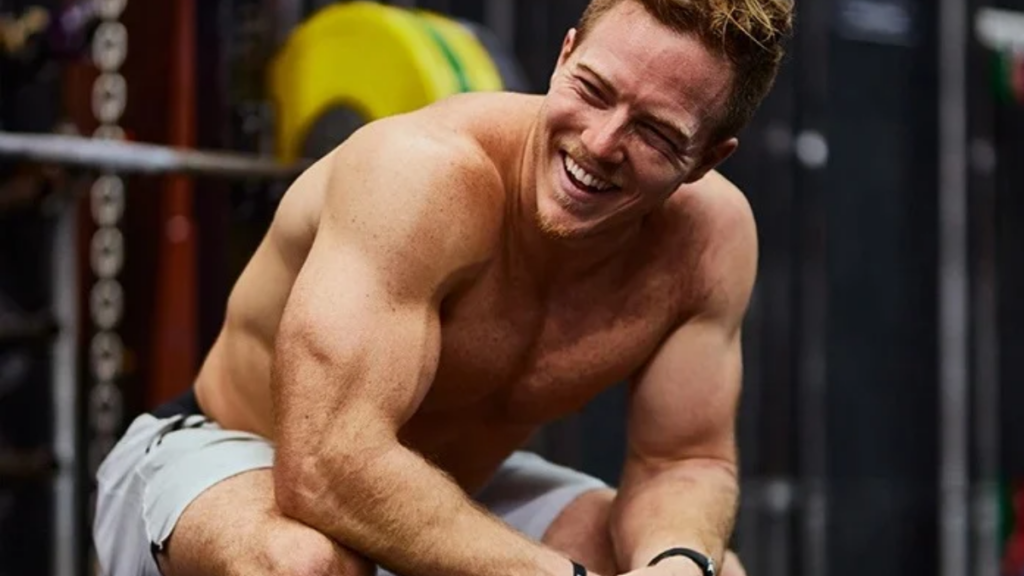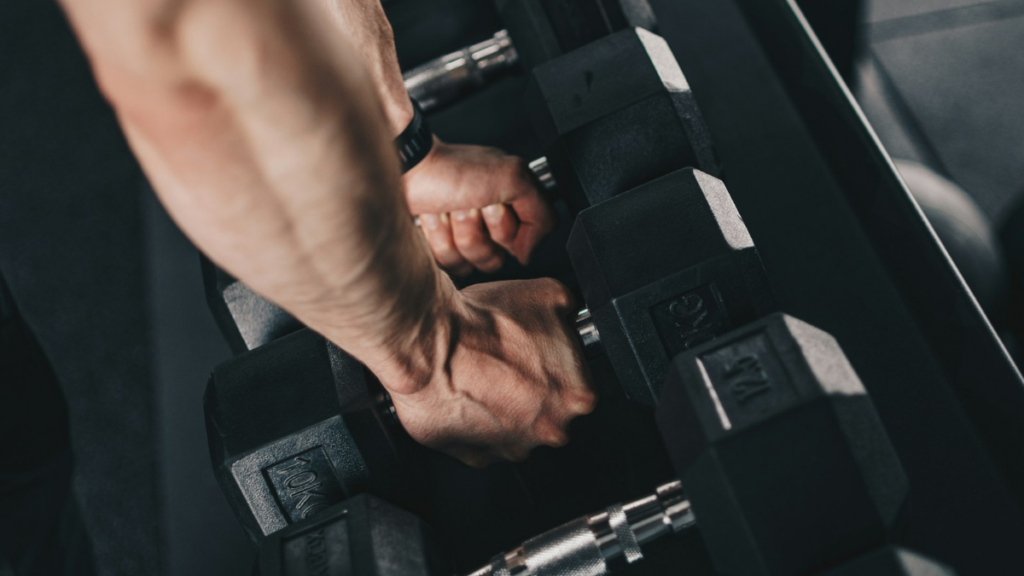


Beginners can build muscle with dumbbells or machines. Current research does not show that one type of equipment consistently produces more muscle growth than the other. In a 2023 review that combined results from multiple studies, muscle growth was similar between people who trained with free weights and people who trained with machines.
A smaller study that followed novice men for 10 weeks also found improvements in muscle size estimates with machine training, free weight training, and a combination of both.
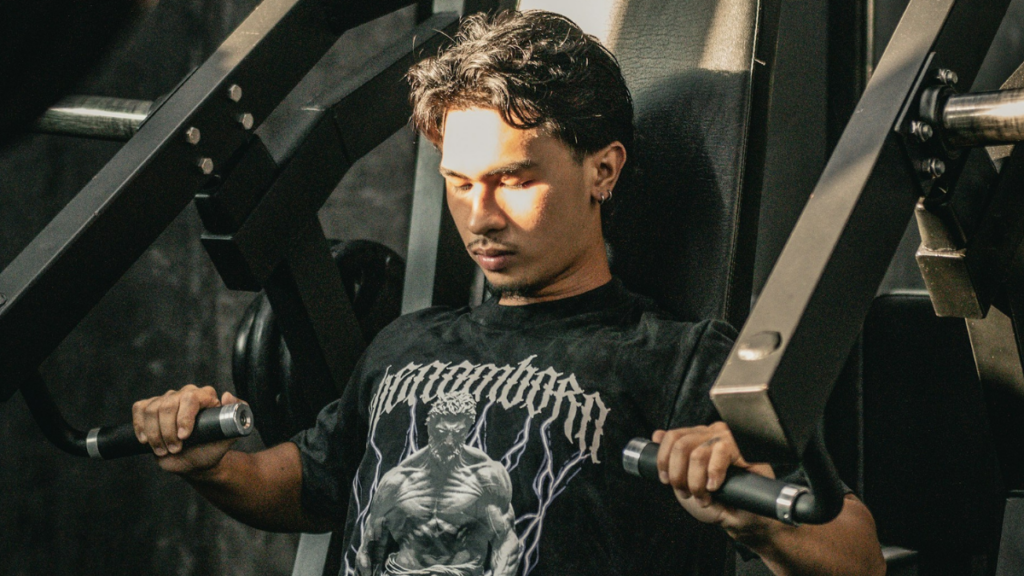
The practical choice is the equipment that lets you train consistently, use a comfortable range of motion, and make your exercises gradually more challenging. Dumbbells can be useful for learning to control a weight and choosing your own movement path. Machines can make it easier to focus on a particular muscle group without balancing the weight. Both can belong in a beginner’s program.
What the research says
Muscle growth is similar
A systematic review and meta-analysis comparing free weights with machines found no clear difference in muscle growth between the two approaches. That finding challenges the idea that dumbbells automatically build more muscle because they require more coordination, or that machines automatically build more muscle because they make it easier to focus on a target muscle.
The evidence has limits. The review included only five studies that measured muscle growth, and those studies differed in their training programs and measurement methods. The result is best read as “neither approach has shown a clear overall advantage,” rather than proof that every exercise, machine, or dumbbell routine produces identical results.
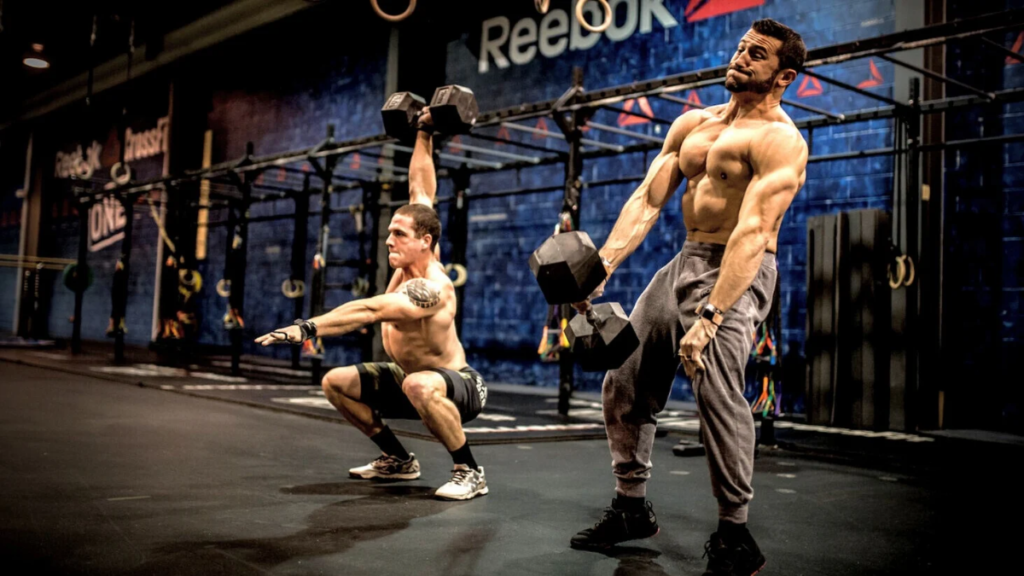
A trial focused on beginners reached a similar practical conclusion. Thirty six novice men completed a 10 week program using machines, free weights, or a mix of the two. Participants in all three groups improved, with no clear overall advantage for one approach. The researchers estimated muscle size using body measurements, so the results are less precise than studies using imaging to measure muscle thickness. Still, the trial offers useful evidence that beginners can make progress with either option.
Strength gains depend partly on what you practice
Muscle size and strength are related, but strength is specific to the movements you practice. Someone who regularly performs a dumbbell chest press is likely to improve at that movement. Someone who practices a machine chest press is likely to improve at the machine version. A review comparing the two approaches found that strength gains tended to be greatest when people were tested on the type of equipment they had trained with.
That matters if you have a specific goal, such as improving a dumbbell lift, getting stronger on a particular machine, or preparing for a sport that uses certain movements. If your main goal is to build muscle, though, you do not have to choose equipment based on strength tests. You can select exercises that train the muscles you want to develop and that you can perform well.
How dumbbells and machines differ
Why a beginner might choose dumbbells
Dumbbells let you move each arm independently and adjust the path of the exercise to suit your body. That can be helpful if a fixed machine path feels uncomfortable. They also allow for exercises such as dumbbell rows, presses, curls, and split squats without needing a large collection of specialized machines.
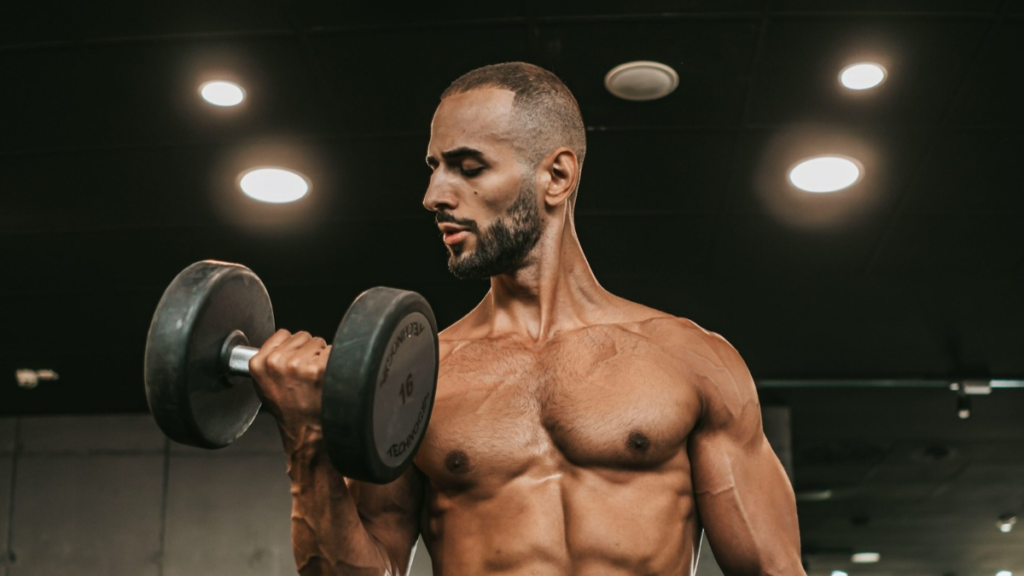
Dumbbells ask you to control the weights as you lift and lower them. This extra coordination can make an exercise feel more demanding, but that does not mean it creates more muscle growth by itself. If balancing the weights or controlling your body position becomes the main difficulty, the target muscles may not be the only factor limiting the set. In that situation, a machine or a more stable dumbbell exercise may help you focus on the intended muscles.
Dumbbells also require you to choose an appropriate weight and set up each exercise safely. Beginners can start with light weights, learn the movement, and increase the load when they can complete the planned repetitions with control. Asking a qualified trainer to check your technique can help you learn unfamiliar exercises.
Why a beginner might choose machines
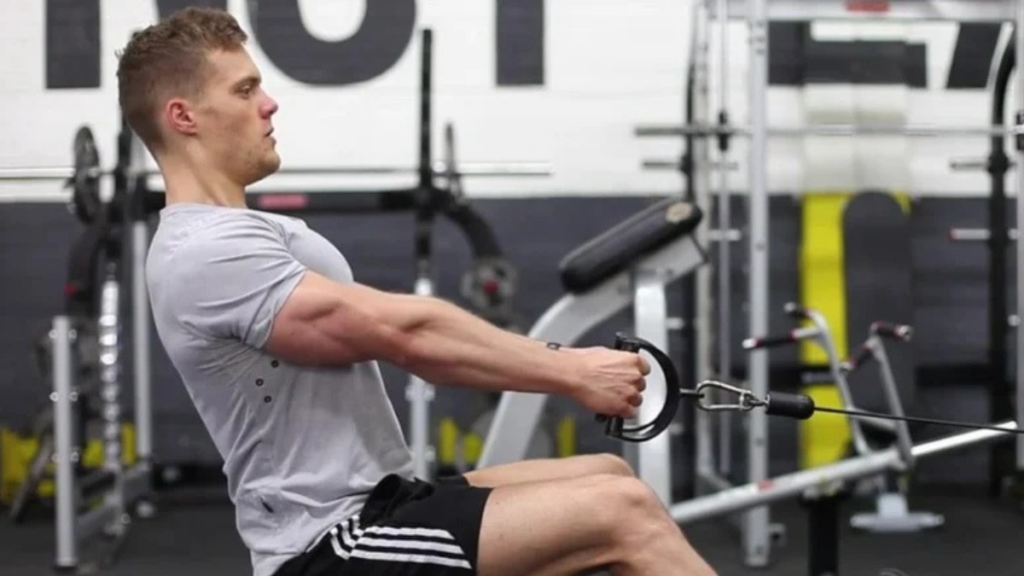
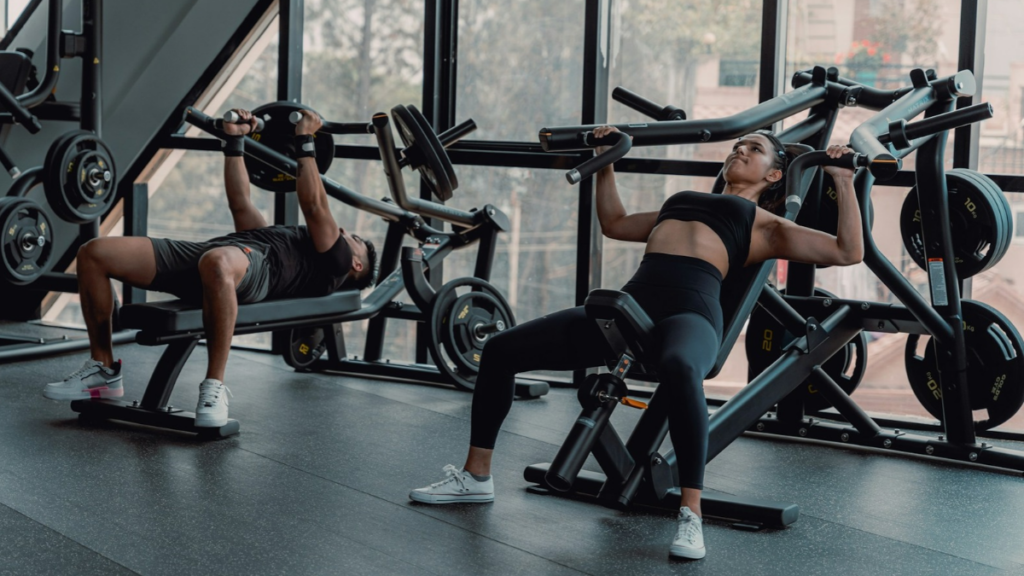
Machines guide the weight along a set path and often provide support for your body. This can make an exercise simpler to set up and easier to repeat from one workout to the next. A leg extension, chest press, or seated row machine can be a straightforward way to train a muscle group while you learn how to use resistance and progress gradually.
The fixed path will not feel right for everyone. Adjust the seat, handles, and range of motion before starting, and use a different machine or exercise if the movement causes discomfort. A machine does not guarantee good technique or remove the need to control the weight. You still need to move smoothly, avoid using momentum, and choose a load you can handle.
Machines can also make it easier to train a muscle when balance or coordination is limiting the exercise. For example, a seated leg curl supports your body while you bend your knees against resistance. That can help you focus on the muscles working in the exercise. It does not make the machine inherently superior for growth; it makes it a useful option for some people and goals.
What matters more than the equipment
Use a challenging load and progress over time
Muscles respond to resistance training when the exercises provide a meaningful challenge. You can use a range of loads and repetitions to build muscle, provided the sets are sufficiently demanding and you can perform the movement with control. Beginners do not need to test their maximum strength or lift to the point where technique breaks down.
Choose a weight that allows you to complete your target repetitions while keeping good form. When you can complete all of your planned sets comfortably, increase the weight slightly or add repetitions. This gradual progression gives you a clear way to make training more challenging over time, whether you are using dumbbells or machines.
The goal is not to add weight at every workout. Some days will feel harder than others, and a small increase in repetitions may be a suitable progression. Keep a simple record of your exercises, weights, and repetitions so you can see whether your performance is improving.
Do enough work consistently
Research on resistance training suggests that doing multiple sets can support muscle growth, and that weekly training volume matters. However, more training is not automatically better, especially when you are new to exercise. A manageable routine that you can repeat and recover from is a useful starting point.
Train the major muscle groups regularly, and give yourself time to learn the exercises. A beginner could start with two or three sets of each exercise and adjust the number of sets as they gain experience. Training each muscle group around twice a week is one practical way to distribute the work, but the exact schedule can vary based on your availability and recovery.
Rest between sets long enough to perform the next set with good technique. If you are still breathing hard or your muscles feel too fatigued to control the weight, take more time. The equipment does not determine whether your routine is effective; the quality and consistency of the training matter.
Choose exercises you can perform comfortably
A good exercise should allow you to move through a controlled range that feels appropriate for your body. Dumbbells offer flexibility in how you position your hands and arms. Machines offer a consistent path and adjustable support. Neither is universally more comfortable, so try both when available.
If an exercise produces sharp pain, stop and reassess rather than trying to push through it. Change the setup, reduce the load, shorten the range of motion if appropriate, or choose another exercise that trains the same area. Persistent pain is a reason to seek advice from a qualified health professional.
Should beginners use both?
Many beginners will benefit from combining dumbbells and machines. You might use dumbbells for exercises that feel natural and machines for movements that are easier to set up or control on a machine. For example, a workout could include a dumbbell chest press, a machine row, a dumbbell Romanian deadlift, and a leg curl machine.
3 Best Isolation Exercises for Wider Biceps
Using both is not necessary for muscle growth, and the evidence does not show that combining them always produces better results. The point is to give yourself options. If a machine is busy, a dumbbell exercise may work. If a dumbbell movement feels unstable, a machine may be a better choice while you build confidence.
Keep your program simple enough to follow. Select exercises that cover the main muscle groups, learn how to perform them, and stay with them long enough to track progress. Changing exercises every workout can make it harder to tell whether you are getting stronger or simply practicing something new.
Which should a beginner choose?
If you are new to the gym, start with whichever option feels easier to learn and use consistently. Machines may feel more approachable when you want guidance through a movement. Dumbbells may suit you if you prefer flexibility and want to practice controlling each arm independently. You can also use both without making the decision complicated.
For muscle growth, the main priorities are regular training, sets that challenge you, gradual progression, and exercises you can perform with control. The research does not give dumbbells or machines a clear overall advantage for hypertrophy. Choose the tools that help you train well and keep showing up.
Table of key takeaways
| Topic | Key takeaway |
|---|---|
| Muscle growth | Research has not shown a clear overall advantage for dumbbells or machines. |
| Strength | You tend to improve most in the type of exercise you practice. |
| Dumbbells | They allow a flexible movement path and require you to control each weight. |
| Machines | They guide the movement and can make it easier to focus on a muscle group. |
| Beginner training | Use controlled sets, progress gradually, and choose exercises you can perform comfortably. |
| Equipment choice | Use dumbbells, machines, or both based on what helps you train consistently. |
References
- Aerenhouts, D. and D’Hondt, E. (2020) ‘Using machines or free weights for resistance training in novice males? A randomized parallel trial’, International Journal of Environmental Research and Public Health, 17(21), 7848.
- Currier, B.S. et al. (2023) ‘Resistance training prescription for muscle strength and hypertrophy in healthy adults: a systematic review and Bayesian network meta-analysis’, British Journal of Sports Medicine, 57(18), pp. 1211–1220.
- Haugen, M.E. et al. (2023) ‘Effect of free-weight vs. machine-based strength training on maximal strength, hypertrophy and jump performance: a systematic review and meta-analysis’, BMC Sports Science, Medicine and Rehabilitation, 15, 103.
- Schoenfeld, B.J., Ogborn, D. and Krieger, J.W. (2017) ‘Dose-response relationship between weekly resistance training volume and increases in muscle mass: a systematic review and meta-analysis’, Journal of Sports Sciences, 35(11), pp. 1073–1082.