Training with friends has a way of pushing effort higher than solo sessions. Add a shared goal, a bit of competition, and a clearly defined challenge, and suddenly everyone is squeezing out extra reps. Chest pump challenges are a simple way to do this.
They focus on creating high levels of muscle activation, metabolic stress, and short-term muscle swelling in the chest, all while keeping the session engaging and social.


This article breaks down three chest pump challenges you can try with friends. Each one is grounded in exercise science, explained in plain language, and structured so that you understand not just what to do, but why it works. The goal is not gimmicks or hype. The goal is effective training that feels hard, delivers a serious pump, and is supported by research.
Before diving into the challenges, it helps to understand what a “pump” actually is from a physiological standpoint.
What a Chest Pump Really Is (And Why It Matters)

The Physiology Behind the Pump
The muscle pump refers to the temporary increase in muscle size during and immediately after resistance training. This happens primarily due to increased blood flow to working muscles and the accumulation of metabolites such as lactate, hydrogen ions, and inorganic phosphate. These factors draw fluid into the muscle cells, creating cell swelling.
Research has shown that this type of metabolic stress is one of the key mechanisms contributing to muscle hypertrophy, alongside mechanical tension and muscle damage. Metabolic stress increases motor unit recruitment, elevates anabolic signaling pathways, and may stimulate muscle growth through cell swelling–induced signaling.
Schoenfeld’s widely cited hypertrophy model identifies metabolic stress as a major driver of muscle growth, particularly when training involves moderate to high repetitions and short rest periods. The pump itself is not the same as muscle growth, but the conditions that create a pump overlap heavily with those that promote hypertrophy over time.
Why Chest-Specific Pump Training Works
The pectoralis major responds well to a combination of moderate loads, longer time under tension, and consistent tension throughout a set. Studies using electromyography (EMG) show high activation of the chest during pressing and fly-type movements, especially when the muscle is kept under continuous tension and trained close to failure.
Pump-style training often involves:
- Higher repetition ranges
- Short rest periods
- Controlled tempos
- Multiple sets taken near muscular failure
These factors increase metabolic stress and intramuscular blood flow, which explains why pump-focused sessions can feel extremely intense even with lighter weights.
Why Training With Friends Amplifies the Effect
Training in groups has been shown to increase effort, adherence, and overall training volume. Social facilitation theory suggests that people perform better on familiar tasks when others are present. In resistance training, this often translates to more reps completed, better consistency, and higher perceived motivation.
Chest pump challenges combine these psychological benefits with physiologically demanding training methods. The result is a session that feels competitive, enjoyable, and brutally effective.
Safety First: How to Approach Chest Pump Challenges
Before starting any of the challenges below, a few evidence-based guidelines matter:
- Warm up properly. A general warm-up followed by light chest-specific sets reduces injury risk and improves performance.
- Use loads you can control. Pump challenges are not about max strength. Using lighter to moderate loads allows better form and sustained tension.
- Train close to failure, not through pain. Muscle fatigue and burning are expected. Sharp pain or joint discomfort is not.
- Rest when needed. Short rest periods are effective, but excessive fatigue can degrade technique.
Research consistently shows that training close to muscular failure is effective for hypertrophy, regardless of load, as long as form is maintained. These challenges are designed with that principle in mind.
Chest Pump Challenge 1: The Descending Time-Under-Tension Press Ladder
How the Challenge Works
This challenge centers on one fundamental movement: the flat dumbbell or barbell bench press. The twist is manipulating tempo and rest to progressively increase metabolic stress.
You and your friends will perform rounds of bench pressing with decreasing tempo durations, creating a ladder structure. Everyone uses the same relative intensity and moves through the ladder together.
Setup
- Choose a load equal to approximately 50–60 percent of one-rep max.
- Use either a barbell or dumbbells.
- Perform all reps with a controlled tempo and full range of motion.
The Ladder Structure
Round 1:
- Tempo: 4 seconds lowering, 1 second lifting
- Reps: 12
- Rest: 60 seconds
Round 2:
- Tempo: 3 seconds lowering, 1 second lifting
- Reps: 12
- Rest: 45 seconds
Round 3:
- Tempo: 2 seconds lowering, 1 second lifting
- Reps: 12
- Rest: 30 seconds
Round 4:
- Tempo: 1 second lowering, 1 second lifting
- Reps: Max reps (stop 1–2 reps before failure)
The challenge ends when everyone completes the final round.
Why This Challenge Works
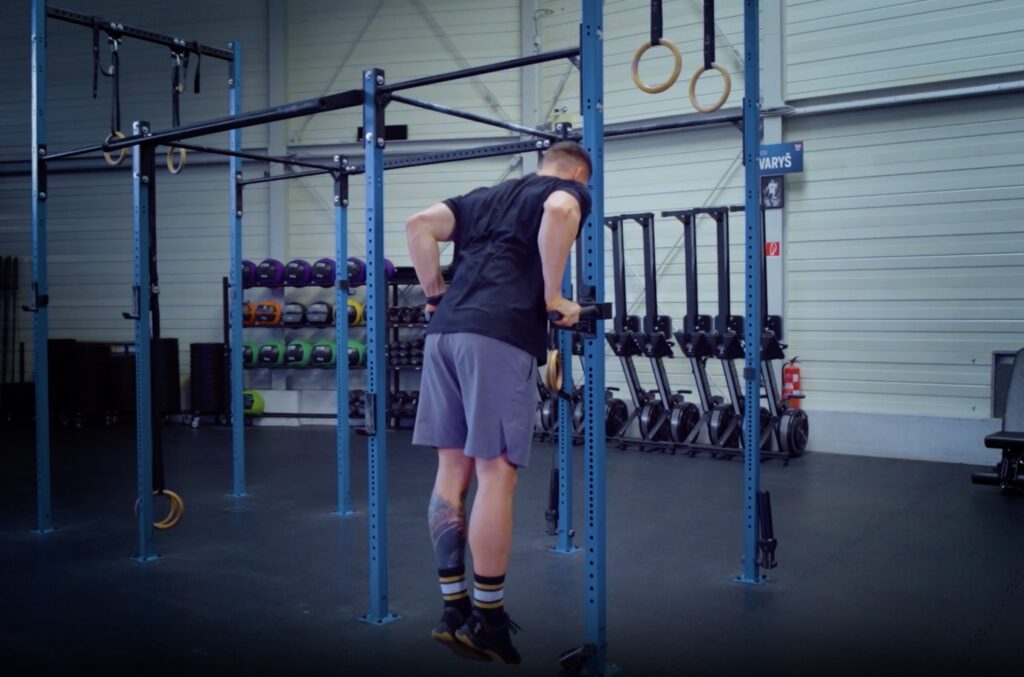
Time under tension is a key variable in hypertrophy-oriented training. Slower eccentric phases increase muscle activation and mechanical tension, while shorter rest periods amplify metabolic stress.
Studies comparing different repetition tempos show that slower eccentrics increase muscle fiber recruitment and elevate markers of metabolic stress. As tempo speeds up across rounds, fatigue accumulates, forcing the chest muscles to work harder to maintain output.
The final round, performed under extreme fatigue, pushes high-threshold motor units to engage despite the relatively light load. This aligns with research showing that low-load training taken close to failure can stimulate hypertrophy comparable to heavy lifting.
Why It Works Well With Friends
Everyone follows the same structure, but individual limits quickly become clear in the final round. The shared suffering builds camaraderie, while the ladder format prevents anyone from sandbagging early sets.
Chest Pump Challenge 2: The Mechanical Drop Set Team Circuit
What Is a Mechanical Drop Set?
A mechanical drop set involves changing body position or exercise mechanics to make a movement easier without reducing the load. This allows continued repetitions beyond initial failure.
For the chest, mechanical drop sets work exceptionally well because pressing angles and leverage can be altered easily.
How the Team Circuit Works
This challenge is performed in teams of two or three. One person works while the others rest, rotate, and coach.
Each round consists of a mechanical drop set sequence that targets the chest from the hardest variation to the easiest.
The Exercise Sequence
Perform the following without rest between movements:
- Feet-elevated push-ups
- Standard push-ups
- Knee push-ups
Reps:
- Perform each variation to near failure before moving to the next.
- One full sequence counts as one round.
Rest:
- 90 seconds between rounds
Total Rounds:
- 3 to 4 rounds per person
Why This Challenge Works
Push-ups produce high pectoral activation, especially when performed to failure. EMG studies show that push-ups can activate the chest at levels comparable to bench pressing when resistance is sufficient.
Mechanical drop sets extend the duration of muscle activation and increase metabolic stress without increasing external load. This leads to greater lactate accumulation, reduced oxygen availability in the muscle, and increased cell swelling.
Research on drop sets shows that they produce similar hypertrophy outcomes to traditional straight sets while requiring less total training time. Mechanical drop sets may be especially effective for inducing metabolic stress because tension is maintained continuously across variations.
The Group Advantage
While one person works, teammates count reps, enforce range of motion, and provide encouragement. This external feedback improves effort and technique. Group-based resistance training has been shown to improve adherence and perceived enjoyment, both of which matter for long-term progress.
Chest Pump Challenge 3: The High-Volume Iso-Hold Finisher
The Concept Behind Iso-Holds
Isometric contractions occur when a muscle produces force without changing length. Isometric holds increase intramuscular pressure, restrict blood flow temporarily, and accelerate metabolite buildup.
When combined with dynamic repetitions, isometric holds can significantly increase metabolic stress and muscle activation.
How the Challenge Is Structured
This is a finisher-style challenge performed at the end of a chest session. Everyone uses the same exercise and timing structure.
Exercise Options:
- Dumbbell chest fly
- Pec deck machine
- Cable fly
Choose one movement and stick with it for the entire challenge.
The Protocol
- Load: Light to moderate (approximately 30–40 percent of one-rep max equivalent)
- Tempo: Controlled throughout
Each round consists of:
- 15 dynamic reps
- Immediately followed by a 20-second isometric hold in the stretched position
- Rest 45 seconds
Total Rounds:
- 4 rounds
The challenge is complete when all rounds are finished with proper form.
Why This Challenge Works
Isometric contractions increase time under tension and restrict venous blood flow, similar to the mechanisms observed in blood flow restriction training. While this challenge does not use external occlusion, the sustained muscle contraction creates a localized hypoxic environment.

Research on isometric training shows increased muscle activation and metabolic stress, particularly when combined with dynamic movements. Cell swelling resulting from this stress has been linked to increased anabolic signaling and reduced protein breakdown.
The relatively light loads reduce joint stress while still producing a powerful pump, making this challenge effective and accessible.
Why It Is Perfect for Groups
Iso-holds are mentally demanding. Having friends count time and push you to hold position prevents early quitting. Shared discomfort increases compliance, and the simplicity of the structure keeps everyone honest.
How Often Should You Do Chest Pump Challenges?
Frequency and Recovery
Pump-focused training is demanding but generally less taxing on the nervous system than maximal strength work. Most people can include one to two pump challenges per week for chest, provided total weekly volume is managed.
Research on training volume suggests that hypertrophy benefits plateau or decline when volume exceeds recovery capacity. These challenges should supplement, not replace, progressive overload-based training.
Where They Fit in a Program
Chest pump challenges work best:
- At the end of a chest or upper-body session
- As a standalone “fun” workout with friends
- During hypertrophy-focused training phases
They are less appropriate during peaking phases for strength or when recovering from injury.
What the Science Says About Enjoyment and Adherence
Enjoyment matters more than most people admit. Studies consistently show that people stick with training programs they enjoy, even when intensity is high.
Group training increases intrinsic motivation, perceived effort tolerance, and long-term adherence. When training feels like a challenge rather than a chore, consistency improves. Over time, consistency drives results more reliably than any single training variable.
Chest pump challenges tap into this by blending physiology and psychology in a practical way.
Final Thoughts
Chest pump challenges are not magic. They do not replace progressive overload, good nutrition, or adequate recovery. What they do provide is a science-backed way to increase metabolic stress, muscle activation, and training enjoyment.
When done correctly and combined with smart programming, these challenges can be a powerful tool for hypertrophy and motivation. Try them with friends, push each other responsibly, and use the pump as a signal that you are training hard, not as the only measure of progress.
Over time, the real payoff comes from showing up consistently, training with intent, and enjoying the process.
References
- Brad Schoenfeld, B.J. (2010) ‘The mechanisms of muscle hypertrophy and their application to resistance training’, Journal of Strength and Conditioning Research, 24(10), pp. 2857–2872.
- Schoenfeld, B.J., Ogborn, D. and Krieger, J.W. (2017) ‘Dose-response relationship between weekly resistance training volume and increases in muscle mass’, Journal of Sports Sciences, 35(11), pp. 1073–1082.
- Burd, N.A. et al. (2012) ‘Muscle time under tension during resistance exercise stimulates differential muscle protein sub-fractional synthetic responses in men’, Journal of Physiology, 590(2), pp. 351–362.
- Wernbom, M., Augustsson, J. and Thomeé, R. (2007) ‘The influence of frequency, intensity, volume and mode of strength training on whole muscle cross-sectional area in humans’, Sports Medicine, 37(3), pp. 225–264.
- Gentil, P. et al. (2017) ‘Effects of equal-volume resistance training with different training frequencies in muscle strength and hypertrophy’, European Journal of Sport Science, 17(6), pp. 665–672.
- Calatayud, J. et al. (2015) ‘Muscle activation during push-ups with different suspension training systems’, Journal of Sports Sciences, 33(12), pp. 1249–1256.