

Building muscle on a vegan diet is not only possible, it is well supported by modern nutrition science. The long standing belief that animal protein is necessary for muscle growth has been challenged by a growing body of research showing that plant based diets can provide all the nutrients required for hypertrophy, strength gains, and recovery. The key is understanding how muscle growth works and choosing foods that deliver sufficient protein, amino acids, calories, and supportive nutrients.
Muscle growth, or hypertrophy, occurs when muscle protein synthesis exceeds muscle protein breakdown over time. Resistance training stimulates this process, but nutrition determines how effectively it happens. Protein intake, especially the essential amino acids and leucine, plays a central role. Carbohydrates support training intensity and recovery, while micronutrients such as iron, zinc, and magnesium support overall performance and adaptation.


This article breaks down five powerful vegan foods that can help you build muscle effectively. Each section explains why the food works, what the science says, and how to use it in your diet.
Understanding Protein Quality on a Vegan Diet
Before diving into the foods, it is important to address a common concern. Plant proteins are sometimes labeled as incomplete because they may be lower in one or more essential amino acids. However, research shows that consuming a variety of plant foods across the day provides all essential amino acids in sufficient amounts for muscle growth.
Another key factor is total protein intake. Studies indicate that consuming around 1.6 to 2.2 grams of protein per kilogram of body weight per day supports optimal muscle growth in resistance trained individuals. This target can be achieved on a vegan diet with thoughtful food choices.
Leucine is particularly important because it acts as a trigger for muscle protein synthesis. While some plant proteins contain slightly less leucine than animal proteins, consuming adequate total protein and combining sources solves this issue.
With that in mind, here are five vegan foods that stand out for muscle building.
1. Lentils
Why Lentils Are Powerful for Muscle Growth
Lentils are one of the most nutrient dense plant protein sources available. They are rich in protein, complex carbohydrates, fiber, and essential minerals like iron and magnesium. One cooked cup provides roughly 18 grams of protein, making lentils a strong base for muscle building meals.
Lentils are also high in lysine, an essential amino acid often limited in grains. This makes them ideal for pairing with foods like rice to create a complete amino acid profile.
Scientific Evidence
Research has shown that legume based proteins can effectively support muscle protein synthesis when consumed in sufficient amounts. Studies comparing plant and animal protein sources have found that total protein intake is the most important factor, rather than the source alone.
Additionally, lentils provide slow digesting carbohydrates that help maintain energy levels during training. This supports better performance and recovery, both of which are essential for muscle growth.
How to Use Lentils
Lentils are extremely versatile and easy to prepare. They can be used in:
• Soups and stews
• Salads
• Curries
• Plant based burger patties
Combining lentils with grains such as rice enhances their amino acid profile and creates a balanced meal for muscle building.
2. Tofu and Tempeh
Why Soy Foods Stand Out
Tofu and tempeh are derived from soybeans, one of the few plant foods that provides a complete protein profile. This means they contain all nine essential amino acids in sufficient quantities.
Tofu is softer and more neutral in flavor, while tempeh is firmer and has a nutty taste due to fermentation. Both are excellent for muscle growth.
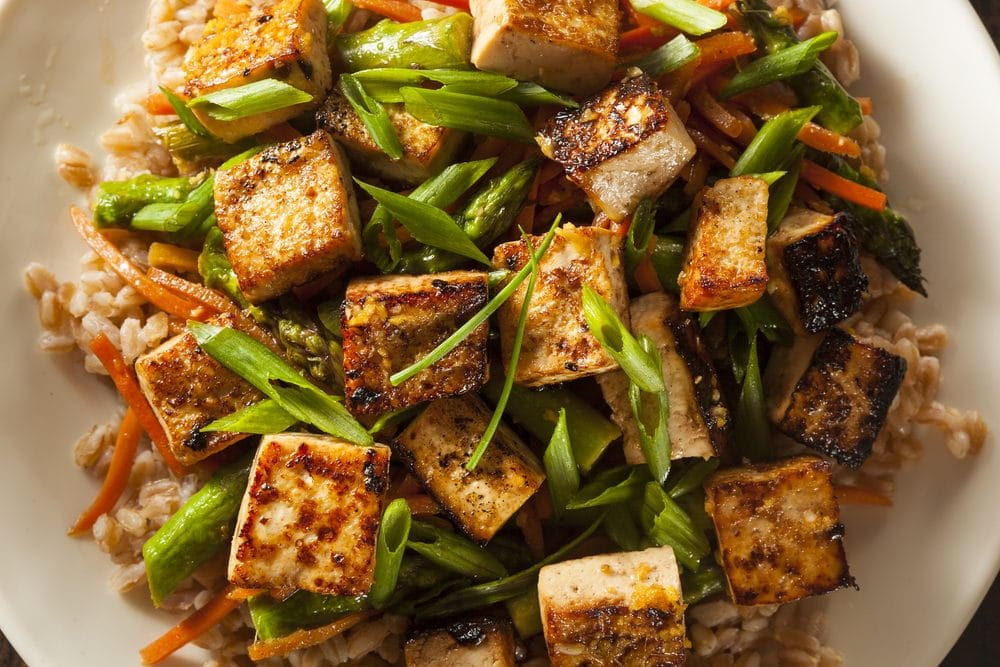
A typical serving of tofu provides around 15 to 20 grams of protein, while tempeh can provide over 20 grams per serving.
Scientific Evidence
Soy protein has been extensively studied and shown to support muscle growth similarly to animal protein when total intake is adequate. Research comparing soy protein to whey protein has found comparable increases in muscle mass and strength over time.
Soy also contains isoflavones, which have been studied for their potential health benefits without negatively affecting testosterone levels in men.
Additional Benefits
Tempeh, being fermented, offers probiotics that support gut health. A healthy gut improves nutrient absorption, which indirectly supports muscle growth.
Soy foods are also rich in calcium and iron, both important for muscle contraction and oxygen transport.
How to Use Tofu and Tempeh
These foods are highly adaptable and can be included in many meals:
• Stir fries
• Sandwiches
• Salads
• Grilled or baked dishes
Marinating tofu or tempeh improves flavor and makes them more appealing.
3. Quinoa
Why Quinoa Is Unique
Quinoa is often referred to as a super grain, although it is technically a seed. It stands out because it is a complete protein, providing all essential amino acids.
One cup of cooked quinoa contains around 8 grams of protein along with fiber, magnesium, and iron.
Scientific Evidence
Quinoa has been shown to provide high quality protein with a good amino acid balance. While it contains less protein per serving than legumes or soy, its complete amino acid profile makes it a valuable addition to a muscle building diet.
Carbohydrates are equally important for muscle growth because they replenish glycogen stores and support training intensity. Quinoa provides complex carbohydrates that release energy steadily.

How Quinoa Supports Training
Consuming carbohydrates alongside protein improves muscle protein synthesis and recovery. Quinoa offers both, making it a convenient option for post workout meals.
How to Use Quinoa
Quinoa can be used in a variety of ways:
• As a base for bowls
• Mixed into salads
• As a side dish instead of rice
• In breakfast dishes with plant milk
It pairs well with legumes, vegetables, and plant based proteins.
4. Chickpeas
Why Chickpeas Are Effective
Chickpeas are another legume that delivers a strong combination of protein and carbohydrates. One cup of cooked chickpeas contains about 15 grams of protein.
They are also rich in fiber, iron, and zinc, which support immune function and recovery.
Scientific Evidence
Legume consumption has been associated with improved muscle mass maintenance and overall health. Chickpeas provide a steady release of energy due to their low glycemic index, helping sustain performance during workouts.
Zinc plays a role in protein synthesis and hormone regulation, making chickpeas particularly valuable for athletes.
How Chickpeas Support Muscle Growth
Chickpeas are not only a protein source but also contribute to overall calorie intake. Achieving a calorie surplus is often necessary for muscle growth, and chickpeas can help meet those needs.
How to Use Chickpeas
Chickpeas are widely used in plant based diets:
• Hummus
• Roasted snacks
• Curries
• Salads
They can also be blended into sauces or used in baking.
5. Peanut Butter and Nuts
Why Nuts Are Important
Peanut butter and other nuts provide a combination of protein, healthy fats, and calories. While they are not as protein dense as legumes, they are calorie dense, which is crucial for muscle gain.
Two tablespoons of peanut butter provide around 8 grams of protein along with healthy fats.
Scientific Evidence
Dietary fat plays an important role in hormone production, including testosterone. Adequate fat intake supports overall muscle building processes.
Nuts are also rich in magnesium, which is involved in muscle contraction and recovery. Research has linked magnesium intake to improved exercise performance.
Calorie Density Matters
For individuals struggling to gain weight or muscle, calorie dense foods like nuts can make a significant difference. Adding peanut butter to meals or snacks increases total calorie intake without requiring large volumes of food.
How to Use Peanut Butter and Nuts
These foods are easy to include:
• Smoothies
• Oatmeal
• Sandwiches
• Snacks
They also pair well with fruit for a balanced snack.
Putting It All Together
Building muscle on a vegan diet requires attention to total protein intake, calorie intake, and nutrient diversity. The five foods discussed here provide a strong foundation, but success comes from combining them effectively.

A sample muscle building approach might include:
• Lentils with rice for lunch
• Tofu stir fry for dinner
• Quinoa as a side or base
• Chickpeas as snacks or in meals
• Peanut butter in smoothies or breakfasts
Spacing protein intake across the day also helps maximize muscle protein synthesis.
Common Mistakes to Avoid
Even with the right foods, some mistakes can limit progress:
Not Eating Enough Protein
Many people underestimate their protein needs. Aim for at least 1.6 grams per kilogram of body weight.
Ignoring Calories
Muscle growth requires a calorie surplus. Even the best foods will not build muscle if total calorie intake is too low.
Lack of Variety
Relying on one or two protein sources can limit amino acid intake. Variety ensures a complete nutrient profile.
Poor Meal Timing
Consuming protein after workouts supports recovery and muscle growth.
Final Thoughts
A vegan diet can fully support muscle growth when it is well planned. Lentils, tofu, quinoa, chickpeas, and peanut butter are powerful tools that provide the protein, calories, and nutrients needed to build muscle effectively.
The science is clear that plant based diets are not a limitation for strength or hypertrophy. With the right approach, they can be just as effective as any other diet.
References
• Phillips, S.M. and Van Loon, L.J.C. (2011). Dietary protein for athletes. Journal of Sports Sciences, 29(S1), pp.S29 to S38.
• Morton, R.W. et al. (2018). A systematic review of protein supplementation and muscle mass. British Journal of Sports Medicine, 52(6), pp.376 to 384.
• Messina, M. (2016). Soy and health update. Nutrients, 8(12), p.754.
• Tang, J.E. et al. (2009). Ingestion of whey hydrolysate, casein, or soy protein isolate. Journal of Applied Physiology, 107(3), pp.987 to 992.
• Gorissen, S.H.M. et al. (2018). Protein content and amino acid composition of plant based protein isolates. Amino Acids, 50(12), pp.1685 to 1695.
• Melina, V., Craig, W. and Levin, S. (2016). Position of the Academy of Nutrition and Dietetics. Journal of the Academy of Nutrition and Dietetics, 116(12), pp.1970 to 1980.