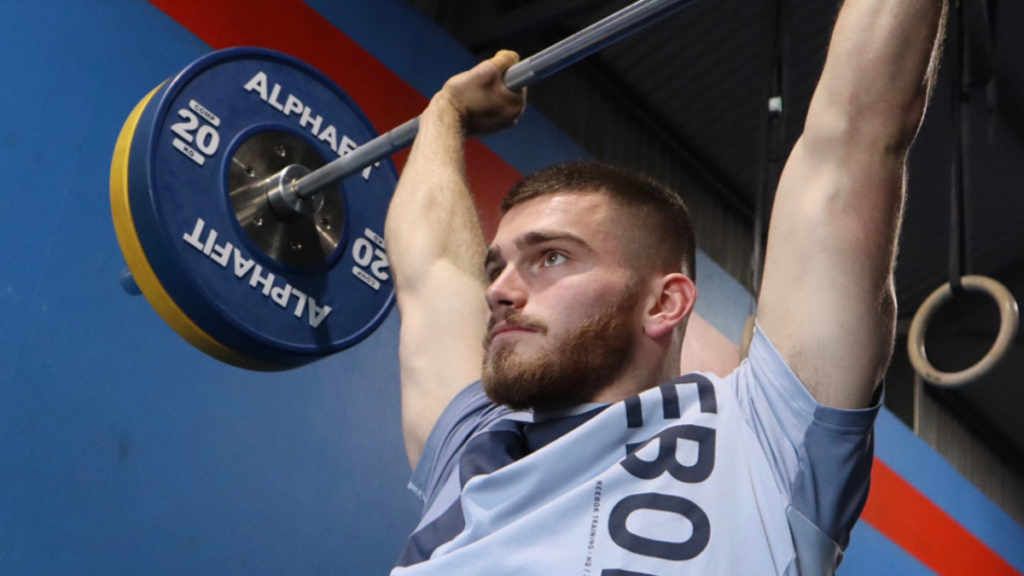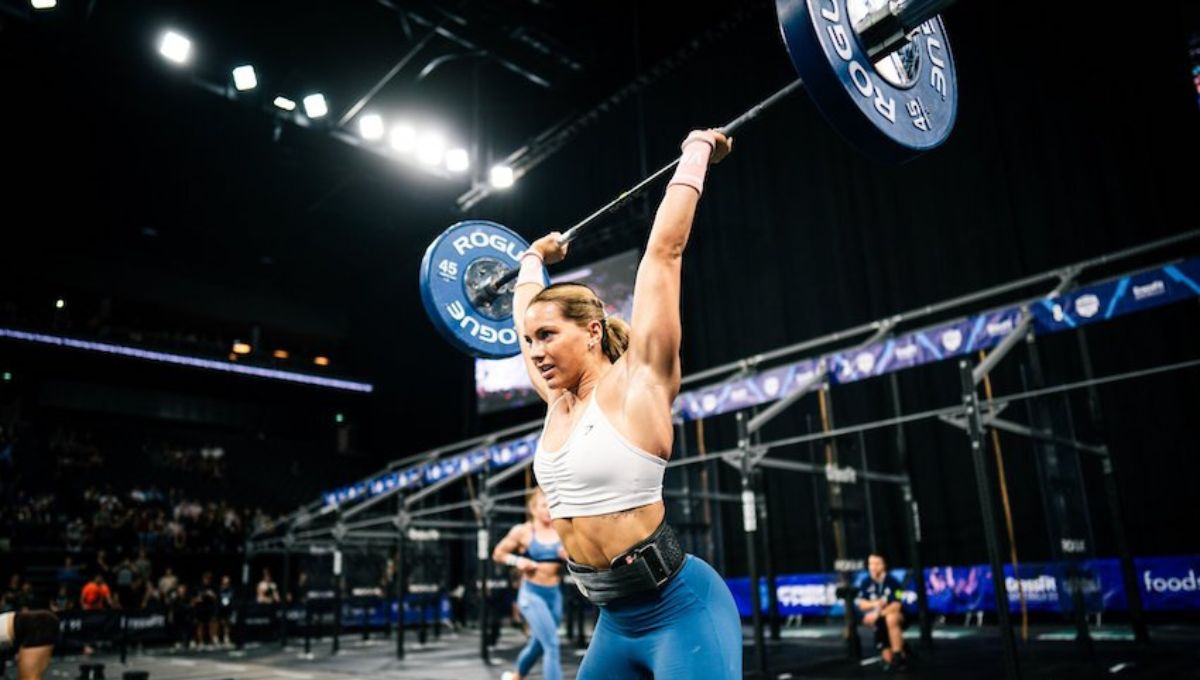


The barbell jerk is one of the most powerful movements in strength and conditioning. Whether performed as a split jerk or power jerk, it is a core component of Olympic weightlifting and a highly effective tool for athletes across sports.
At its core, the jerk is a movement that drives a barbell from the shoulders to an overhead locked-out position using explosive leg drive and precise timing. It demands strength, speed, coordination, mobility, and stability, all at once.


Unlike isolated lifts, the jerk challenges the entire body in a coordinated sequence. That complexity is exactly what makes it so valuable.
Below are five science-backed benefits of the barbell jerk, explained clearly and directly, with research supporting each claim.
1. Develops Explosive Power
Triple Extension and Power Output
The jerk is built around rapid triple extension of the hips, knees, and ankles — the same movement pattern used in sprinting and jumping. This coordinated extension allows athletes to generate high levels of force in a short amount of time.
Research examining Olympic weightlifting derivatives consistently shows that movements like the jerk produce high peak power outputs, often exceeding traditional strength lifts. Studies measuring force and velocity characteristics have demonstrated that Olympic lifts generate significantly greater peak power compared to squats and deadlifts performed at similar relative loads.
Power is defined as force multiplied by velocity. The jerk excels at both. The dip-and-drive phase loads the legs, followed by a rapid upward drive that accelerates the barbell overhead. This ballistic intent is what trains the neuromuscular system to produce force quickly.
Transfer to Athletic Performance
Explosive strength correlates strongly with sprint speed and vertical jump performance. Multiple studies have shown significant relationships between weightlifting performance and sprinting ability. Athletes who improve their Olympic lifting numbers often see improvements in jump height and acceleration.
Research comparing Olympic lifting programs to traditional resistance training has shown superior improvements in vertical jump performance and rate of force development in groups using weightlifting movements.
Because the jerk trains high-velocity force production under load, it directly improves the qualities needed for sports performance: acceleration, jumping, and rapid direction changes.
Rate of Force Development
Rate of force development (RFD) refers to how quickly force can be produced. This quality is critical in most sports, where contact times are brief and maximal force must be produced rapidly.
Studies have found that weightlifting movements significantly improve RFD compared to slower resistance training protocols. The jerk, in particular, requires rapid transition from eccentric dip to explosive concentric drive, reinforcing rapid force production.
For athletes who need to move fast and hit hard, the jerk is one of the most efficient ways to build explosive strength.
2. Increases Total-Body Strength
Lower-Body Strength Under Load
Although the jerk ends overhead, its foundation is lower-body strength. The dip phase requires controlled eccentric loading, and the drive phase requires powerful concentric leg extension.
Biomechanical analyses of Olympic lifts show high knee and hip extensor involvement during the drive phase. Electromyography studies confirm strong activation of the quadriceps, gluteus maximus, and hamstrings.

Because the jerk is typically performed with heavy loads relative to bodyweight, it provides a strong stimulus for lower-body strength development — particularly in athletes who have already built a base through squatting.
Upper-Body Strength and Lockout Stability
The jerk also demands substantial upper-body involvement. While the legs generate most of the upward momentum, the shoulders, triceps, and upper back are responsible for stabilizing and locking the bar overhead.
Studies investigating muscle activation during overhead lifting show significant deltoid and triceps engagement during overhead presses and jerks. The rapid lockout phase requires strong elbow extension and shoulder stabilization under load.
Unlike a strict press, the jerk allows athletes to handle heavier loads overhead, creating greater total-body tension and neural demand.
Neural Adaptations
Heavy compound movements improve strength largely through neural adaptations — increased motor unit recruitment, firing frequency, and synchronization.
Olympic lifting movements, including the jerk, have been shown to improve neuromuscular efficiency due to their explosive nature and high coordination requirements. Research suggests that ballistic resistance training enhances neural drive more effectively than slow-speed lifting.
The jerk forces the nervous system to coordinate rapid, high-force output with precise timing, making it a powerful strength-building tool beyond simple muscle hypertrophy.
3. Enhances Overhead Stability and Shoulder Health
Dynamic Shoulder Stability
The jerk requires the athlete to catch and stabilize a heavy load overhead in a dynamic environment. This is different from pressing slowly into position.
Stability in the jerk depends on coordinated activation of the rotator cuff, scapular stabilizers, and upper back musculature. Studies on shoulder stabilization show that dynamic overhead lifting activates key stabilizers such as the serratus anterior and lower trapezius, which are essential for proper scapular positioning.
Developing these muscles improves shoulder integrity and resilience, especially in athletes involved in overhead sports.
Improved Scapular Control
Proper scapular upward rotation and posterior tilt are critical for safe overhead movement. Research indicates that dysfunction in scapular control contributes to shoulder pain and impingement syndromes.
The jerk reinforces upward rotation and scapular stability under load. Because the bar must remain vertically stacked over the shoulders and hips, the athlete learns to maintain optimal shoulder positioning.
Training these patterns under controlled conditions can enhance movement quality and potentially reduce injury risk.
Force Absorption and Joint Integrity
The receiving phase of the jerk requires absorbing force with a slight knee bend while stabilizing overhead. This teaches the body to handle load in a stacked, efficient alignment.
Studies on joint loading during Olympic lifts show that despite high forces, proper technique distributes stress effectively across joints and musculature. When coached correctly, weightlifting movements demonstrate injury rates comparable to or lower than many common sports.
This suggests that the jerk, when executed properly, is not inherently dangerous and may contribute to joint robustness.
4. Improves Coordination and Motor Control
Intermuscular Coordination
The jerk is not just about strength. It is about timing.
The lift requires a smooth sequence: controlled dip, explosive drive, rapid drop under the bar, and stable lockout. This demands coordination between multiple muscle groups.
Research on motor learning shows that complex, multi-joint movements enhance intermuscular coordination more effectively than isolated exercises. Olympic lifting in particular has been shown to improve neuromuscular coordination due to the precise sequencing required.
Training the jerk reinforces the ability to generate force while maintaining technical precision — a combination critical for athletic performance.
Proprioception and Body Awareness
The overhead receiving position improves proprioception — the body’s awareness of joint position and movement.
Studies on balance and overhead lifting suggest that stabilizing loads above the head challenges postural control systems, improving overall balance and spatial awareness.
The split jerk, in particular, introduces asymmetrical foot positioning, requiring coordination between lower and upper body segments.
This carries over to sports where athletes must control force while in dynamic or uneven positions.
Cognitive Engagement and Skill Development
Complex lifts require concentration and skill refinement. Unlike repetitive machine exercises, the jerk demands focus.
Motor learning research shows that practicing complex movements enhances neural adaptations and skill acquisition, improving overall movement efficiency.
Over time, athletes become more efficient at producing force with less wasted motion — a key trait in high-level performance.
5. Builds Resilience and Bone Density
Mechanical Loading and Bone Health
Resistance training is well established as a powerful stimulus for bone mineral density improvements. High-impact and high-load exercises are particularly effective at stimulating bone formation.
Research shows that weightlifting movements produce significant ground reaction forces and mechanical loading, both of which contribute to bone remodeling.
Studies in both younger and older populations demonstrate that high-intensity resistance training increases bone mineral density and improves skeletal health.
The jerk’s combination of heavy load and rapid force production creates a potent osteogenic stimulus.
Connective Tissue Strength
Tendons and ligaments adapt to mechanical loading. Research indicates that heavy resistance training increases tendon stiffness and strength, improving force transmission and reducing injury risk.
The jerk places substantial demand on the patellar tendon, Achilles tendon, and shoulder connective tissues. Over time, progressive exposure strengthens these structures.
Stronger connective tissues enhance performance and durability.
Injury Rates in Weightlifting
Contrary to common belief, Olympic weightlifting has relatively low injury rates compared to contact sports. Epidemiological research shows injury incidence per 1,000 hours of participation is lower than many team sports.
Properly coached jerks emphasize controlled progression, mobility, and technique. When performed correctly, they build resilience rather than break it down.
Programming Considerations
To maximize the benefits of the jerk:
- Prioritize technique before loading.
- Develop front rack mobility and thoracic extension.
- Build a strong squat foundation.
- Progress from push press to power jerk to split jerk.
- Use moderate to heavy loads for strength.
- Use lighter loads for speed and technique refinement.
Athletes new to the jerk should work with a qualified coach to ensure proper mechanics.
Final Thoughts
The barbell jerk is one of the most effective exercises for developing explosive power, total-body strength, overhead stability, coordination, and structural resilience.
It is not simply an Olympic weightlifting movement. It is a comprehensive athletic development tool.
The research is clear: high-velocity resistance training improves rate of force development, enhances neuromuscular coordination, strengthens connective tissue, and supports bone health. The jerk integrates all of these benefits into one movement.
For athletes who want to jump higher, sprint faster, lift heavier, and move better, the jerk deserves a place in training.
When coached and programmed intelligently, it is one of the most powerful tools available in strength and conditioning.
Key Takeaways
| Benefit | Why It Matters | Scientific Support |
|---|---|---|
| Explosive Power | Improves sprinting, jumping, and rapid force production | Olympic lifts produce high peak power and improve RFD |
| Total-Body Strength | Builds lower-body drive and upper-body lockout strength | EMG and biomechanical analyses show high muscle activation |
| Overhead Stability | Enhances shoulder health and scapular control | Dynamic overhead lifting activates key stabilizers |
| Coordination | Improves intermuscular timing and motor control | Complex lifts enhance neuromuscular coordination |
| Bone and Tissue Resilience | Strengthens bones and connective tissue | High-load resistance training increases bone density |
References
- Comfort, P., Fletcher, C. and McMahon, J.J. (2012) ‘Determination of optimal loading during the power clean, in collegiate athletes’, Journal of Strength and Conditioning Research, 26(11), pp. 2970–2974.
- Cormie, P., McGuigan, M.R. and Newton, R.U. (2011) ‘Developing maximal neuromuscular power: Part 2 – Training considerations for improving maximal power production’, Sports Medicine, 41(2), pp. 125–146.
- Garhammer, J. (1993) ‘A review of power output studies of Olympic and powerlifting: Methodology, performance prediction, and evaluation tests’, Journal of Strength and Conditioning Research, 7(2), pp. 76–89.
- Haff, G.G. and Nimphius, S. (2012) ‘Training principles for power’, Strength and Conditioning Journal, 34(6), pp. 2–12.