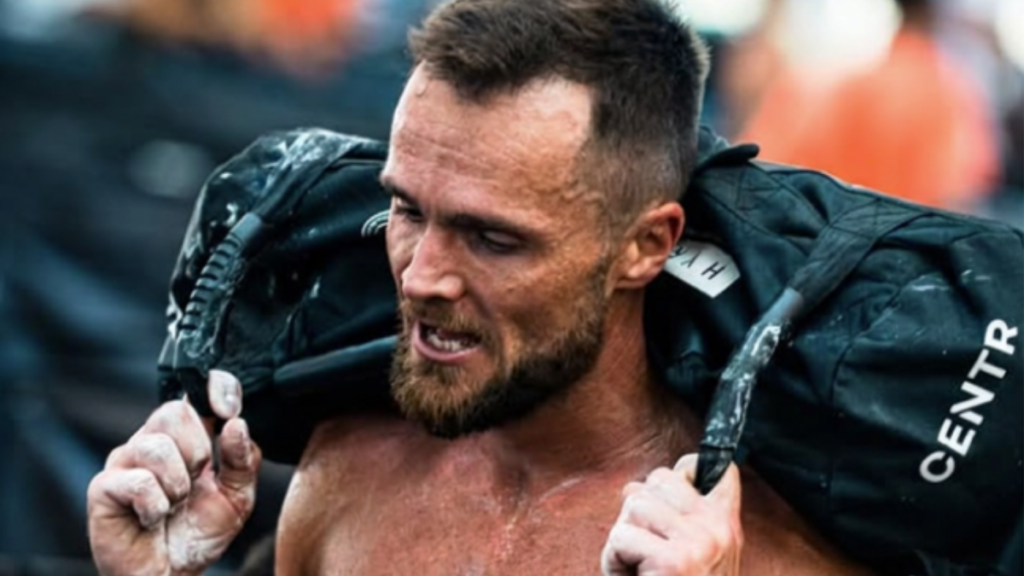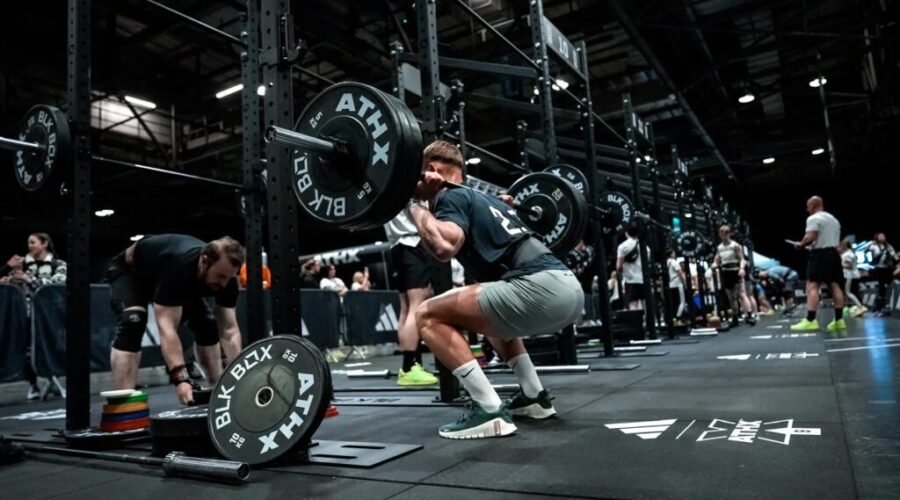


Positioned somewhere between CrossFit and HYROX, the ATHX Games, an event blending strength and endurance, made their debut in France this past weekend. Backed by a newly signed partnership with adidas, the competition could be set for rapid growth in the months ahead.
HYROX returned to the Grand Palais from April 23 to 27 for its second Paris edition, continuing its impressive momentum as one of the most influential fitness trends of recent years. This time, organizers reported 22,000 participants, nearly double last year’s 12,000. Originally popular among dedicated gym-goers, the format has managed to reach a much wider audience in just three years.


That momentum is now fueling the rise of new formats. Among them is the ATHX Games, which held their first-ever French edition last weekend at the Paris Event Center near Porte de la Chapelle.
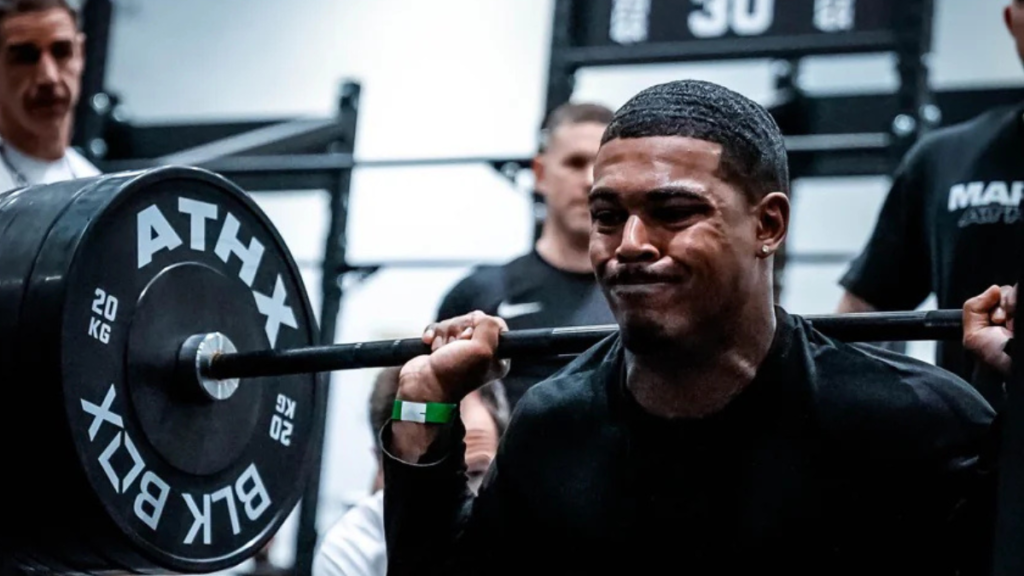
Launched in 2023 after years of testing in the UK, ATHX is structured as a two-and-a-half-hour hybrid competition. Athletes move through six distinct zones, with scheduled breaks built in. The sequence includes a 30-minute warm-up, 20 minutes of strength work, a 10-minute reset, 30 minutes of endurance, 30 minutes of recovery, and a final 25-minute Metcon phase.
“To the untrained eye, HYROX and ATHX can seem very similar,” admits Ollie Marchon, former rugby player and co-founder of the brand.
At first glance, the similarities are obvious: loud music, dramatic lighting, athletes running between stations, lifting weights, and being cheered on by friends and supporters. Many competitors arrive with bags covered in patches from past events—CrossFit, Spartan Race, Ironman, Turf Games—and the crowd looks familiar, right down to the number of shirtless participants.
Still, the experience itself is meant to feel different.
“We sit at the intersection of HYROX and CrossFit, both of which aim to be sports. On our side, we want to be a credible fitness test for anyone who simply enjoys training,” explains Ollie.
“When Mark [Hartnett-Morgan] and I launched our first fitness competition eight years ago, the fitness landscape was very different. Training wasn’t yet seen as a sport, but more as a leisure activity. Back then, it was a way to give more meaning and substance to training. Instead of working out just for health or well-being, weekly sessions became concrete preparation for an event—the climax of a training cycle.”
“In my opinion, it’s going to blow up because frustrated HYROX athletes will switch to ATHX.”
— Kewin Bordas, coach at Barry’s Bootcamp
The Paris event reached full capacity, welcoming 1,500 participants. Among them was Barry’s Bootcamp coach Kewin Bordas, who had already competed in Milan the week before and didn’t want to miss the French debut.
What draws him to ATHX is the balance of physical demands—combining strength, endurance, and cardio—along with a more accessible and social atmosphere.
“Personally, I get more out of it because I come from American football and I didn’t want to become too light,” he explains.
“I think it’s going to explode because frustrated HYROX athletes will move to ATHX. It’s become harder to get tickets, so there’s an opportunity. I also found it more social. You have time to chat with other athletes in the recovery zone, for example.”
The strong turnout in Paris reflects growing interest across Europe, where ATHX is already building momentum through its first major tour. But the ambitions go much further.
“We expect 30,000 participants across 20 events in 2026, and we plan to double the number of dates next year,” says Ollie Marchon.
HYROX By the Numbers
A look at the growth in cities that hosted a Hyrox in the 2023-24 Season and the 2024-25 Season.
Race City Finishers (23–24) Finishers (24–25) % Increase Singapore 3,223 6,164 91% Melbourne 2,864 8,936 212% Sydney 1,382 5,106 269% Stuttgart 1,073 3,824 256% Amsterdam 3,864 10,896 182% Incheon 956 2,007 110% Milan 1,995 7,059 254% Birmingham 5,041 13,831 174% Madrid 3,922 5,859 49% Hamburg 3,376 6,647 97% Mexico City 2,287 4,495 97% Manchester 6,632 8,291 25% Chicago 1,991 4,368 119% Dublin 3,448 8,800 155% Dallas 2,184 5,036 131% Hong Kong 2,050 5,764 181% London 11,481 14,194 24% Anaheim 2,916 3,172 9% Stockholm 1,490 6,449 333% Frankfurt 3,384 8,170 141% Maastricht 3,079 5,792 88% Turin 3,982 8,056 102% Bilbao 2,421 3,872 60% Katowice 1,495 3,189 113% Vienna 2,432 6,289 159% Karlsruhe 3,374 6,514 93% Rotterdam 6,348 12,556 98% Valencia 2,109 4,410 109% Copenhagen 3,257 7,259 123% Houston 2,111 7,719 266% Glasgow 9,069 17,702 95% Malaga 3,122 9,241 196% Washington, DC 1,916 8,262 331% Total 110,274 239,929 118%
A key driver of the expansion of ATHX is the brand’s partnership with adidas.
“That’s what has allowed us to accelerate significantly over the past three to six months, especially digitally. Their strong network of athletes, affiliates, and local partners is a major asset for a competition like ours, making it easier to expand into new cities and markets.”
For adidas, the collaboration provides a platform to highlight both its athletes and its performance gear—especially products like the Dropset 4, a shoe designed specifically for hybrid training, which was prominently featured at the event.
“Following HYROX’s explosive success and its profitable business model, many players are now wondering how to create their own fitness competition.”
— Benoît Mazerat, CEO of Episod
The broader fitness landscape has evolved significantly since CrossFit’s peak in the late 2010s. While CrossFit gyms spread rapidly, its competitions largely remained limited to highly trained athletes and never fully broke into the mainstream.
Part of the challenge was accessibility—technical movements like Olympic lifts and gymnastics made entry more difficult—as well as inconsistent competition formats.
HYROX, by contrast, succeeded in standardizing its model, making it easier to scale and understand. That clarity has inspired others to follow suit.
“Following HYROX’s explosive success and its profitability model, many players are now asking how to create their own fitness competition,” notes Benoît Mazerat, head of Episod, a leading Paris gym network that already offers ATHX-focused classes.
In France alone, HYROX is estimated to have generated between €15 and €20 million in revenue in 2025.
“They understood that a standardized format was key. Today, this new market appeals greatly to our clients because we all need to train for something. People see it as a sport, just like football or tennis.”
According to Ollie Marchon, the rise of these competitions reflects a broader shift in how people approach fitness.
“People want to push themselves more, and they’re also willing to invest more time, energy, and money into their fitness,” he says.
“As I mentioned, ATHX doesn’t aim to become a sport in itself, but builds on the fundamentals of training and physical preparation: becoming stronger and fitter. Our goal was to create a competition that meets both objectives.”
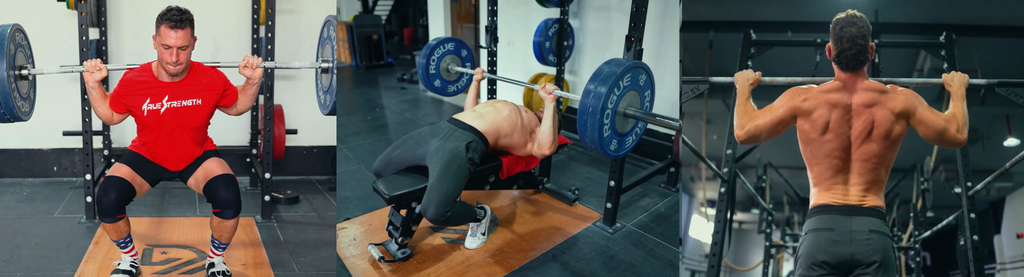
In practice, this means athletes must be comfortable lifting heavy weights—performing movements like squats and deadlifts—while also maintaining strong performance on machines like the rowing erg or SkiErg.
Compared to HYROX, ATHX places greater emphasis on strength, though in a more approachable way than CrossFit.
“If you’re a great runner but not very good at the stations in HYROX, you can still get a good time. It’s different with ATHX—you need to be at least average everywhere,” says Kewin Bordas with a smile.
Ultimately, ATHX seems better suited to athletes with a strength-oriented background, while HYROX continues to appeal more to endurance-focused competitors.
Both formats reflect the changing nature of gym culture—and both are being amplified by social media, where communities and content around these competitions are rapidly growing.
One thing is certain: you’ll be seeing a lot more ATHX content in the near future.
What Does CrossFit Games Champion Jeff Adler Think About HYROX?