

A well developed upper chest can completely change the look of your physique. It creates a fuller appearance near the collarbone, improves upper body proportions, and gives the chest a more athletic shape. Yet despite spending years bench pressing, many lifters still struggle to build noticeable upper chest size.
The reason is simple. Most chest workouts are heavily focused on flat pressing movements that primarily target the middle portion of the pecs. While those exercises can build strength and mass, they often fail to maximize development of the clavicular head of the pectoralis major, which is the upper chest.



If you want to grow the upper chest faster, you need smarter exercise selection, proper training angles, enough weekly volume, and a structured progression plan.
Understanding Upper Chest Anatomy
The chest is mainly made up of the pectoralis major, a large fan shaped muscle with two primary regions.
- The clavicular head, often called the upper chest.
- The sternocostal head, commonly called the middle and lower chest.
Although the chest works as one muscle, different fibers become more active depending on the angle of movement. When you press upward on an incline, the clavicular fibers become more involved. This is why incline exercises are widely considered the foundation of upper chest development.
Research using electromyography has repeatedly shown that moderate incline pressing increases activation of the upper chest compared to flat pressing.
That does not mean flat benching is useless. It simply means that upper chest growth requires targeted work.
Why Most People Struggle to Grow the Upper Chest
There are several common reasons why upper chest development lags behind.
Too Much Flat Bench Pressing
The flat barbell bench press is excellent for overall chest strength and mass, but it does not specifically prioritize the upper chest. Many lifters build strong middle pecs while the area near the collarbone remains underdeveloped.
Poor Incline Angles
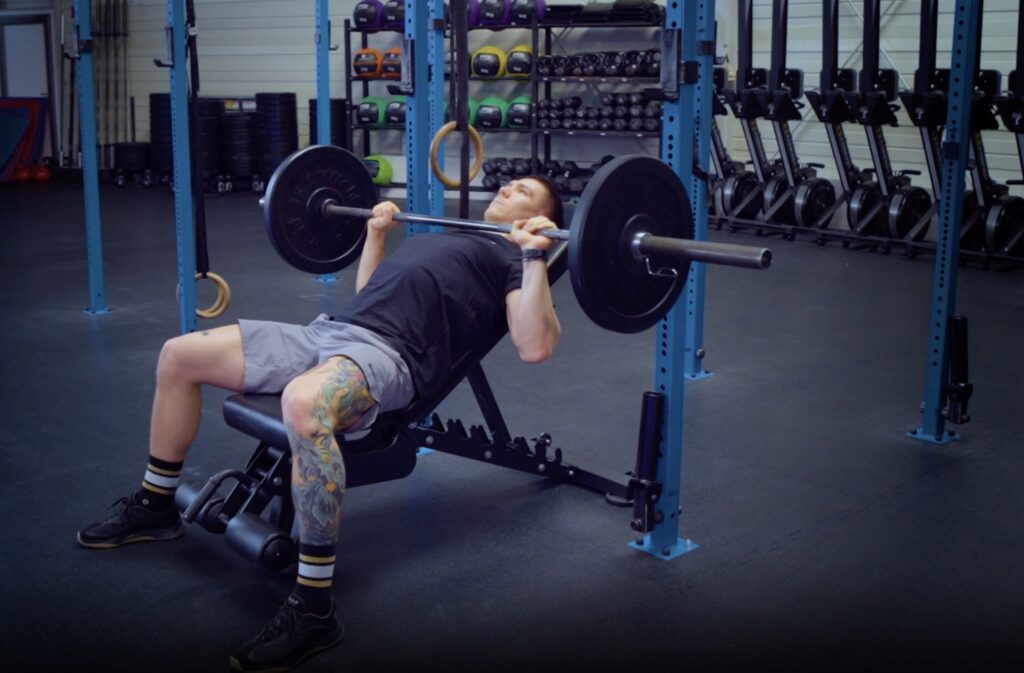
A common mistake is using an incline that is too steep. Once the bench angle rises too high, the front deltoids begin taking over. Research suggests moderate incline angles around 15 to 30 degrees tend to work best for upper chest activation.
Lack of Progressive Overload
Muscle growth requires increasing demands over time. If your incline pressing numbers stay the same for months, your upper chest has little reason to grow.
Weak Mind Muscle Connection
Many lifters turn chest exercises into shoulder exercises. Proper control and chest engagement are essential.
The Science of Muscle Growth
To build the upper chest faster, you need to understand what drives hypertrophy. Research identifies three major mechanisms associated with muscle growth:
- Mechanical tension
- Metabolic stress
- Muscle damage
Mechanical tension is considered the most important factor. This occurs when muscle fibers produce force under resistance. Heavy presses, controlled eccentrics, and full range of motion all contribute to greater tension.
Metabolic stress occurs when metabolites build up during training. This often happens with moderate to high rep sets. Muscle damage results from challenging training that disrupts muscle fibers, especially during the eccentric phase. Effective upper chest training combines all three.
Exercise 1: Incline Dumbbell Press
The incline dumbbell press is arguably the best overall exercise for upper chest hypertrophy.
Why It Works
Dumbbells allow a greater range of motion than barbells. This deeper stretch may improve muscle fiber recruitment and hypertrophy. Another advantage is independent arm movement. Each side works separately, helping reduce muscular imbalances.
The incline position biases the clavicular fibers, especially when performed at moderate angles. Studies examining muscle activation consistently show strong upper chest involvement during incline dumbbell pressing.
How to Perform the Incline Dumbbell Press
- Set the bench to around 30 degrees.
- Sit with the dumbbells resting on your thighs.
- Lie back while bringing the dumbbells into position.
- Retract your shoulder blades.
- Lower the weights slowly until your elbows move slightly below torso level.
- Press upward while keeping tension on the chest.
- Stop just before the dumbbells touch.
Best Rep Range
For hypertrophy:
- 3 to 4 sets
- 6 to 12 reps
- 90 to 120 seconds rest
Why It Belongs in a upper chest Workout
The incline dumbbell press combines stretch, stability, and high upper chest activation, making it one of the most effective movements in a upper chest focused chest program.
Exercise 2: Incline Barbell Bench Press
The incline barbell bench press is a classic mass builder.
Why It Works
Barbells allow heavier loading than dumbbells. This makes them excellent for creating high mechanical tension. Strength progression on incline presses is strongly associated with upper chest growth. The movement also allows consistent overload tracking over time.
How to Perform the Incline Barbell Bench Press
- Set the bench between 15 and 30 degrees.
- Grip the bar slightly wider than shoulder width.
- Retract your shoulder blades.
- Lower the bar toward the upper chest.
- Press upward while maintaining upper back tightness.
- Keep your feet planted firmly.
Best Rep Range
For upper chest growth:
- 3 to 5 sets
- 5 to 10 reps
- 2 to 3 minutes rest
Why It Belongs in a upper chest Workout
The incline barbell bench press is one of the best overload tools available for building upper chest thickness and overall pressing power.
Exercise 3: Low to High Cable Fly
The low to high cable fly is one of the best isolation movements for targeting the upper chest.
Why It Works
Cables provide constant tension throughout the entire movement. Unlike dumbbells, the resistance does not disappear at the top. The upward path closely matches the direction of the clavicular fibers. This creates excellent upper chest stimulation, especially in the contracted position.
How to Perform the Low to High Cable Fly
- Set both pulleys to the lowest position.
- Grab the handles and step slightly forward.
- Maintain a slight bend in the elbows.
- Sweep the handles upward and inward.
- Finish around upper chest level.
- Squeeze the chest at the top.
- Lower slowly under control.
Best Rep Range
For hypertrophy:
- 3 to 4 sets
- 10 to 15 reps
- 60 to 90 seconds rest
Why It Belongs in a upper chest Workout
The low to high cable fly provides constant tension and excellent peak contraction, making it a perfect complement to heavy pressing exercises in a upper chest training routine.
Exercise 4: Reverse Grip Bench Press
The reverse grip bench press is one of the most underrated upper chest exercises.
Why It Works
The supinated grip changes shoulder positioning and increases upper chest involvement. Research comparing grip variations has shown greater activation of the clavicular head during reverse grip pressing compared to standard flat pressing. Many lifters also find the movement more comfortable on the shoulders.
How to Perform the Reverse Grip Bench Press
- Lie flat on a bench.
- Grip the bar with palms facing toward you.
- Keep the grip slightly wider than shoulder width.
- Lower the bar carefully toward the lower chest.
- Press upward while maintaining wrist control.
- Use a spotter whenever possible.
Best Rep Range
For hypertrophy:
- 3 to 4 sets
- 8 to 12 reps
- 90 to 120 seconds rest
Why It Belongs in a upper chest Workout
The reverse grip bench press provides a different stimulus than traditional pressing exercises and can help break upper chest growth plateaus.
Exercise 5: Feet Elevated Push Up
Push ups are often overlooked, but feet elevated push ups can be highly effective for upper chest development.
Why It Works
Elevating the feet shifts emphasis toward the upper chest and shoulders. Push ups also allow natural scapular movement, which may improve shoulder comfort. Adding resistance with bands, chains, or weighted vests can significantly increase difficulty. Research comparing push ups to bench press training has shown similar muscle activation when loading is comparable.
How to Perform Feet Elevated Push Ups
- Place your feet on a bench or box.
- Position your hands slightly wider than shoulder width.
- Keep the body rigid.
- Lower until the chest nearly touches the floor.
- Press upward explosively.
- Maintain chest tension throughout.
Best Rep Range
For hypertrophy:
- 3 to 4 sets
- 10 to 20 reps
- 60 to 90 seconds rest
Why It Belongs in a upper chest Workout
Feet elevated push ups are joint friendly, effective, and easy to overload progressively, making them a valuable addition to a upper chest focused chest session.
The Best Bench Angle for Upper Chest Growth
Bench angle plays a major role in upper chest activation, yet many lifters mistakenly assume that a steeper incline automatically leads to better upper chest development. In reality, excessively steep angles tend to increase front delt involvement and reduce the emphasis on the clavicular fibers of the chest. Research generally supports moderate incline angles between 15 and 30 degrees for maximizing upper chest activation while keeping shoulder contribution under control.
Individual anatomy still matters, however, since some lifters feel stronger chest engagement closer to 20 degrees, while others respond better to 30 degrees. This is why experimentation is important when trying to find the most effective setup for upper chest growth.
How Often Should You Train the Upper Chest?
Training frequency influences both recovery and total weekly training volume, which are two major factors in muscle growth. For most people, training the chest twice per week produces excellent results because it provides enough high quality volume to stimulate hypertrophy without creating excessive fatigue.
A practical setup often includes one heavier upper chest focused session built around compound pressing movements and another moderate volume hypertrophy session using a mix of presses and isolation work. More advanced lifters may be able to tolerate slightly higher training volume or frequency, but recovery quality becomes increasingly important as workload increases.
Sample upper chest Upper Chest Workout
Workout A
- Incline Barbell Bench Press
- 4 sets of 6 to 8 reps
- Incline Dumbbell Press
- 3 sets of 8 to 10 reps
- Low to High Cable Fly
- 3 sets of 12 to 15 reps
- Feet Elevated Push Ups
- 2 sets close to failure
Workout B
- Reverse Grip Bench Press
- 4 sets of 8 reps
- Incline Dumbbell Press
- 3 sets of 10 reps
- Low to High Cable Fly
- 3 sets of 15 reps
- Push Ups
- 2 burnout sets
Progressive Overload for Faster Upper Chest Growth
Progressive overload is essential for hypertrophy. Without increasing demands, muscle growth eventually stalls. You can apply progressive overload by:
- Increasing weight
- Performing more reps
- Improving technique
- Increasing range of motion
- Reducing rest periods strategically
Small consistent improvements matter more than random aggressive jumps in training load.
Nutrition for Building the Upper Chest
Training provides the stimulus. Nutrition provides the building blocks.
Protein Intake
Research suggests protein intake around 1.6 to 2.2 grams per kilogram of bodyweight supports hypertrophy effectively. High quality protein sources include:
- Eggs
- Lean meat
- Fish
- Greek yogurt
- Whey protein
- Cottage cheese
- Tofu
Calorie Intake
Building muscle is easier in a slight calorie surplus. A moderate surplus around 200 to 300 calories daily is often enough.

Carbohydrates and Training Performance
Carbohydrates support glycogen replenishment and workout performance. Poor energy intake often leads to weaker training sessions.
Hydration
Hydration affects strength, endurance, and recovery. Even mild dehydration can reduce performance.
Sleep and Recovery
Recovery is where muscle growth actually happens. Sleep deprivation can negatively affect:
- Testosterone levels
- Recovery quality
- Muscle protein synthesis
- Training performance
Aim for seven to nine hours of quality sleep per night. Stress management also matters. High stress can impair recovery and performance.
Common Upper Chest Training Mistakes
Training Too Heavy All the Time
Excessively heavy lifting often reduces chest activation and shortens range of motion.
Ignoring Isolation Work
Compound presses are important, but isolation exercises provide additional targeted stimulus.
Poor Exercise Execution
Rushing reps and using momentum reduce tension on the chest.
Inconsistent Training
Muscle growth requires months of consistent effort.
Neglecting Recovery
More volume is not always better. Recovery quality influences adaptation.
Can Beginners Build the Upper Chest Quickly?
Beginners often experience rapid progress because their bodies are highly responsive to resistance training. A simple program built around incline pressing, push ups, progressive overload, and consistent nutrition can produce noticeable upper chest improvements within just a few months.
As training experience increases, however, progress tends to slow down, which is why advanced lifters usually need more training volume, exercise variation, and carefully structured programming to continue building the upper chest effectively.
How Long Does Upper Chest Growth Take?
Upper chest development depends on:
- Genetics
- Training quality
- Nutrition
- Recovery
- Consistency
- Training experience
Beginners may notice visible changes within eight to twelve weeks. More advanced lifters may need several months of focused specialization. Patience and consistency are critical.
Final Thoughts
The upper chest can be stubborn, but it responds extremely well to intelligent training. The five exercises in this article are effective because they align closely with what current hypertrophy research suggests works best for clavicular chest development.
The incline dumbbell press provides excellent stretch and activation. The incline barbell bench press allows heavy overload. The low to high cable fly creates constant tension. The reverse grip bench press adds a unique upper chest stimulus. Feet elevated push ups deliver high quality volume with minimal equipment.
When combined in a structured upper chest training plan with progressive overload, proper recovery, and smart nutrition, these exercises can dramatically improve upper chest size and overall chest aesthetics. Consistency matters most.
Train hard, recover well, and focus on long term progression.
Key Points Summary
- Moderate incline angles around 15 to 30 degrees are ideal for upper chest activation.
- Incline dumbbell pressing is one of the best exercises for upper chest hypertrophy.
- Progressive overload is essential for continued muscle growth.
- Combining free weights, cables, and bodyweight training improves stimulus variety.
- Training the chest twice weekly works well for most lifters.
- Sleep and nutrition strongly influence recovery and hypertrophy.
- Controlled eccentric reps improve tension and exercise quality.
- Isolation exercises complement heavy pressing movements.
Key Takeaways Table
| Topic | Key Takeaway |
|---|---|
| Best Overall Exercise | Incline dumbbell press is highly effective for upper chest growth |
| Ideal Incline Angle | Around 15 to 30 degrees |
| Training Frequency | Two chest sessions weekly works well for most people |
| Best Rep Range | 6 to 15 reps for hypertrophy |
| Key Principle | Progressive overload drives long term growth |
| Best Isolation Exercise | Low to high cable fly targets clavicular fibers effectively |
| Recovery Factor | Sleep and nutrition strongly affect muscle growth |
| Common Mistake | Using incline angles that are too steep |
| Home Exercise Option | Feet elevated push ups effectively train the upper chest |
| Best Combination | Use barbells, dumbbells, cables, and bodyweight exercises together |
Bibliography
- Barnett, C., Kippers, V. and Turner, P. (1995) ‘Effects of variations of the bench press exercise on the EMG activity of five shoulder muscles’, Journal of Strength and Conditioning Research, 9(4), pp. 222 to 227.
- Calatayud, J., Borreani, S., Colado, J., Martin, F., Rogers, M. and Andersen, L. (2015) ‘Bench press and push up at comparable levels of muscle activity results in similar strength gains’, Journal of Strength and Conditioning Research, 29(1), pp. 246 to 253.
- Gentil, P., Soares, S. and Bottaro, M. (2015) ‘Single versus multi joint resistance exercises effects on muscle strength and hypertrophy’, Asian Journal of Sports Medicine, 6(2), pp. 1 to 6.
- Glass, S. and Armstrong, T. (1997) ‘Electromyographical activity of the pectoralis muscle during incline and decline bench presses’, Journal of Strength and Conditioning Research, 11(3), pp. 163 to 167.
- Grgic, J., Schoenfeld, B. and Latella, C. (2019) ‘Resistance training to muscle failure promotes greater muscle hypertrophy in trained individuals’, Sports Medicine, 49(10), pp. 1547 to 1560.