

Building muscle does not require a complicated workout plan or dozens of different exercises. For beginners, the fastest progress usually comes from mastering a small number of movements that train the largest muscles in the body while allowing steady increases in weight over time. This approach builds strength, improves coordination, and creates the foundation for long term muscle growth.
Research consistently shows that beginners respond exceptionally well to resistance training because their bodies adapt quickly to new training demands. In the first several months, almost any well designed strength program produces noticeable improvements in muscle size and strength. However, some exercises deliver far greater returns than others because they recruit multiple muscle groups at the same time and allow progressive overload.


The three exercises in this guide stand above the rest for beginners because they train nearly every major muscle group, teach fundamental movement patterns, and can continue producing results for years. Combined with good nutrition, sufficient protein intake, and proper recovery, these movements offer one of the fastest paths to building muscle.
Why Beginners Build Muscle So Quickly
Many people believe muscle growth takes years before visible results appear. While building an impressive physique certainly requires patience, beginners often experience rapid improvements during their first several months of consistent training.
When someone starts lifting weights, their nervous system becomes much better at activating muscles. Coordination improves, lifting technique becomes more efficient, and muscle fibers receive a stronger training stimulus. At the same time, the muscles themselves begin increasing their rate of protein synthesis, leading to measurable muscle growth.
Jeff Cavaliere Shares the 16 Biggest Muscle-Building Mistakes He Wishes He Avoided
Studies have shown that resistance training significantly increases muscle protein synthesis and stimulates hypertrophy across a wide range of populations, including previously untrained adults. Research also demonstrates that beginners can make substantial gains with relatively modest training volumes provided they consistently challenge themselves.
The key is selecting exercises that train a large amount of muscle mass in every workout instead of isolating small muscles one at a time.
What Makes an Exercise Great for Muscle Growth?
Not every exercise contributes equally to building muscle. The best beginner exercises share several important characteristics. They train multiple joints simultaneously, involve large muscle groups, allow gradual increases in resistance, and can be performed safely with proper instruction.
These compound movements also create greater mechanical tension across more muscle tissue than isolation exercises. Mechanical tension is widely recognized as one of the primary drivers of muscle hypertrophy. Another major advantage is efficiency. Instead of spending an hour performing numerous machine exercises, beginners can stimulate nearly every major muscle group with just a handful of compound lifts.
Among dozens of effective options, three exercises consistently stand out for building muscle quickly.
1. The Back Squat
The back squat is often called the king of strength exercises for good reason. Few movements recruit as much muscle mass simultaneously.

During a properly performed squat, the quadriceps, glutes, hamstrings, adductors, calves, spinal erectors, abdominal muscles, and upper back all work together to move and stabilize the body. Because so many muscles contribute, squats allow beginners to lift relatively heavy loads compared to most other exercises. Heavy loading increases mechanical tension, which is one of the strongest signals for muscle growth.
Why Squats Build Muscle So Effectively
Squats place significant demands on the largest muscles in the body. The quadriceps and gluteus maximus experience particularly high activation levels throughout the movement, while the trunk muscles work continuously to stabilize the spine. This combination not only stimulates lower body growth but also increases overall training efficiency.
Large compound exercises also create greater systemic training stress than smaller isolation exercises. Although muscle growth occurs locally within trained muscles, compound lifts allow beginners to train more total muscle tissue in less time.
How Beginners Should Perform the Squat
Start with bodyweight squats until movement quality becomes consistent. Once comfortable, progress to a goblet squat using a dumbbell before learning the barbell back squat. Maintain a neutral spine throughout the movement. Keep the feet roughly shoulder width apart and descend until the thighs are at least parallel to the floor while maintaining control. Push through the entire foot during the ascent and stand fully upright at the top. Beginners should focus on smooth technique before adding heavier weights.
Common Squat Mistakes
Many beginners sacrifice depth to lift heavier loads. Others allow their knees to collapse inward or round their lower back near the bottom of the movement. These issues usually improve by reducing the load, improving ankle and hip mobility, and practicing consistent movement patterns.
Perfect technique is not required from day one, but controlled repetitions with good posture should always be the goal.
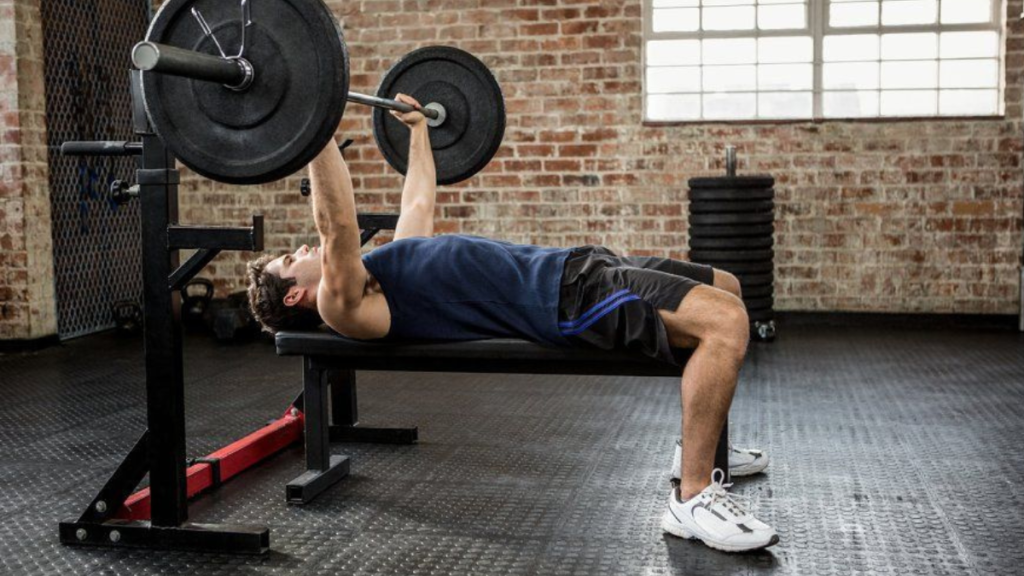
2. The Bench Press
The bench press is one of the most effective upper body exercises for increasing muscle mass and strength. It primarily trains the chest, shoulders, and triceps while requiring stabilization from the upper back and core. As strength increases, beginners can progressively overload the movement for years.
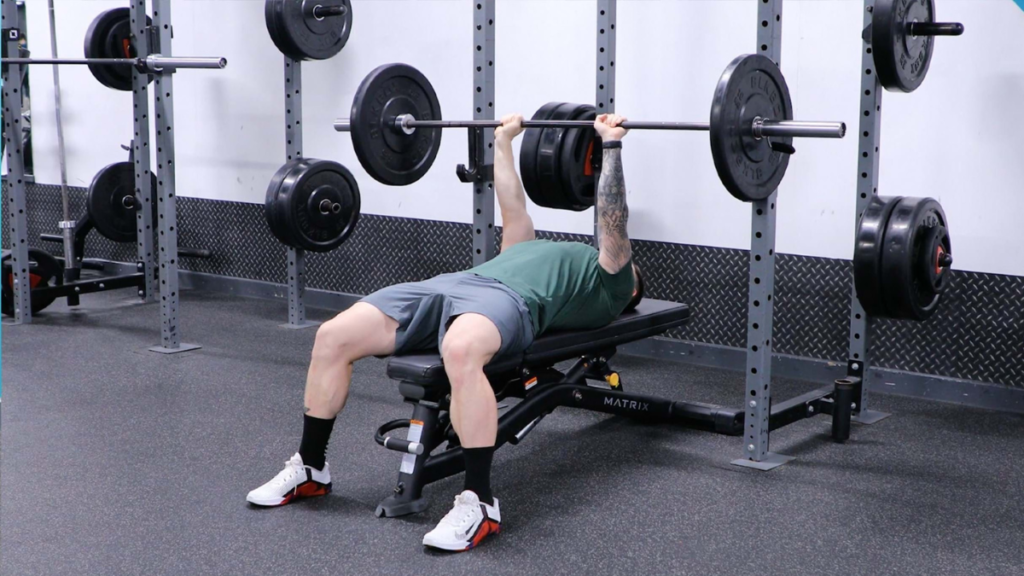
Unlike many machine based chest exercises, the bench press teaches coordination between multiple muscle groups while allowing measurable strength progression.
Why the Bench Press Works
Research examining muscle activation consistently shows that the bench press effectively recruits the pectoralis major, anterior deltoids, and triceps brachii. Because multiple muscles contribute to every repetition, beginners can use challenging loads that maximize mechanical tension while developing pressing strength.
The exercise also carries over well to everyday pushing movements and athletic performance.
Proper Bench Press Technique
- Lie flat on the bench with the eyes positioned under the bar.
- Grip the bar slightly wider than shoulder width.
- Retract the shoulder blades and maintain a stable upper back throughout the lift.
- Lower the bar under control until it touches the middle of the chest, then press upward until the elbows are fully extended without aggressively locking them.
- Control is far more important than speed.
- Using a spotter is recommended whenever heavier loads are attempted.
Common Bench Press Errors
One of the most common mistakes is allowing the elbows to flare excessively, which may increase shoulder stress. Another frequent error is bouncing the bar off the chest instead of lowering it under control.
Many beginners also neglect upper back tightness, reducing overall stability and force production. Learning proper technique early creates safer lifting habits and better long term progress.
3. The Deadlift
The deadlift may be the single best exercise for developing total body strength. Although often viewed as a back exercise, it trains the glutes, hamstrings, spinal erectors, quadriceps, trapezius, forearms, abdominal muscles, and numerous stabilizing muscles simultaneously.
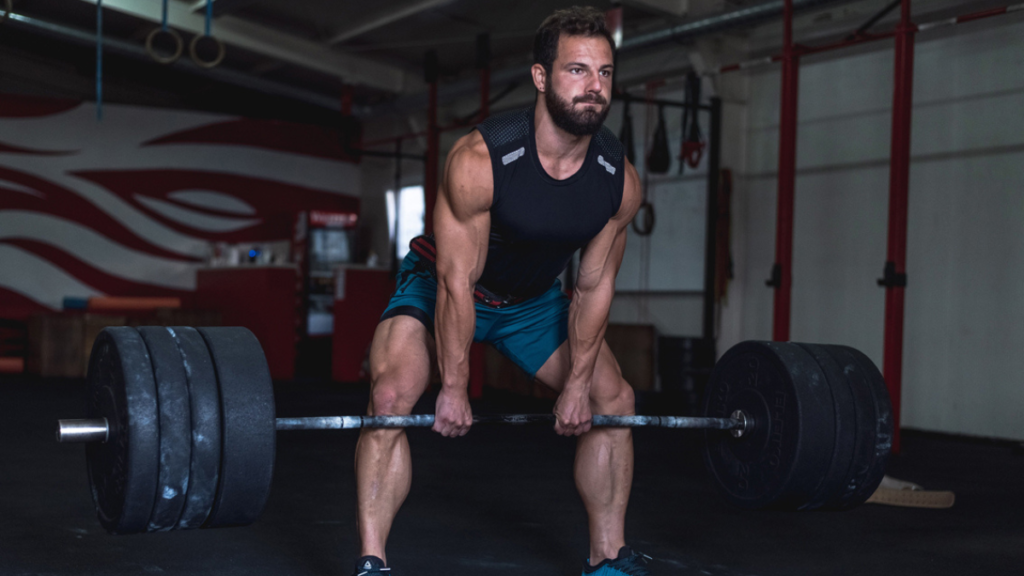
Few exercises challenge so much muscle mass with a single repetition.
Why Deadlifts Accelerate Muscle Growth
The deadlift combines heavy loading with extensive muscle recruitment. The posterior chain, including the glutes and hamstrings, performs most of the work while the upper body stabilizes the load throughout the movement.
Research demonstrates high muscle activation across the hip extensors and spinal muscles during deadlifting, making it one of the most productive compound lifts available. The ability to progressively increase weight over time makes the deadlift especially valuable for long term hypertrophy.
Learning the Deadlift
- Stand with the bar positioned over the middle of the feet.
- Hinge at the hips while maintaining a neutral spine and grip the bar just outside the legs.
- Before lifting, create tension throughout the body by tightening the core and engaging the upper back.
- Drive through the floor while extending the hips and knees together.
- Stand tall at the top without leaning backward.
- Lower the bar under control by reversing the movement.
Many beginners benefit from learning the hip hinge using a dowel or light kettlebell before progressing to a loaded barbell.
Mistakes Beginners Should Avoid
The most common technical mistake is rounding the lower back while lifting. Another error is allowing the bar to drift away from the body, increasing unnecessary stress on the spine.
Trying to lift maximal weights too early often leads to poor technique. Consistent practice with manageable loads builds better movement quality than chasing heavy numbers.
Why Compound Exercises Beat Isolation Exercises
Many beginners are tempted to spend most of their workout performing curls, triceps extensions, calf raises, and other single joint exercises. These movements certainly have value later in a training program, but they should not replace compound lifts.
Compound exercises recruit significantly more muscle tissue during each repetition, allowing greater overall training stimulus within the same workout. They also improve coordination, balance, stability, and total body strength while burning more energy and producing greater hormonal responses associated with resistance exercise.
Isolation work can complement these foundational lifts, but beginners should prioritize the exercises that produce the largest overall return.
How Often Should Beginners Perform These Exercises?
Most research suggests that training each major muscle group at least twice per week produces excellent results for muscle growth. For beginners, a simple full body routine performed three times weekly works extremely well.
Each workout can include the squat, bench press, and deadlift alongside a few accessory exercises for muscles such as the upper back, shoulders, and core. Beginners do not need marathon workouts. Approximately forty five to sixty minutes of focused resistance training performed consistently often produces outstanding results. Recovery between sessions allows muscles to repair and grow stronger.
Progressive Overload Is the Secret to Continuous Growth
Choosing the right exercises is only the first step. Muscle growth occurs when training gradually becomes more challenging. Progressive overload means increasing the demands placed on the muscles over time. This can involve lifting slightly heavier weights, performing additional repetitions, improving exercise technique, or completing more total training volume.
Even small improvements each week accumulate into significant muscle gains over months and years. Keeping a training log helps beginners monitor progress and ensures workouts continue moving forward instead of repeating the same effort indefinitely.
Final Thoughts
If your goal is to build muscle as quickly as possible, simplicity often beats complexity. The squat, bench press, and deadlift have remained foundational exercises for decades because they consistently produce results. They train the largest muscles in the body, allow steady progression, and develop strength alongside muscle size.
Beginners do not need dozens of exercises or constantly changing workout programs. Mastering these three compound lifts, applying progressive overload, eating enough high quality protein, and recovering properly will produce impressive improvements in both strength and physique.
Instead of chasing the newest training trend, focus on getting stronger in these timeless movements. Consistency with the basics remains one of the fastest ways to build muscle.
Key Takeaways
| Topic | Key Point |
|---|---|
| Best beginner exercise | The back squat develops the lower body and core while recruiting the greatest amount of muscle mass. |
| Best upper body exercise | The bench press effectively builds the chest, shoulders, and triceps while allowing long term progression. |
| Best total body exercise | The deadlift strengthens the posterior chain, grip, core, and upper back with heavy compound loading. |
| Training frequency | Beginners should train each major muscle group at least twice weekly, with three full body sessions being highly effective. |
| Progressive overload | Gradually increasing resistance or repetitions is essential for continued muscle growth. |
| Nutrition | Consuming adequate calories and approximately 1.4 to 2.2 g of protein per kilogram of body weight supports hypertrophy. |
| Recovery | High quality sleep and sufficient recovery between workouts maximize muscle growth and strength gains. |
References
- American College of Sports Medicine. (2009) ‘Progression models in resistance training for healthy adults’, Medicine & Science in Sports & Exercise, 41(3), pp. 687 to 708.
- Bird, S.P., Tarpenning, K.M. and Marino, F.E. (2005) ‘Designing resistance training programmes to enhance muscular fitness’, Sports Medicine, 35(10), pp. 841 to 851.
- Grgic, J., Schoenfeld, B.J., Orazem, J. and Sabol, F. (2020) ‘Effects of resistance training performed to repetition failure or non failure on muscular strength and hypertrophy’, Journal of Sport and Health Science, 10(3), pp. 275 to 283.
- Morton, R.W., Murphy, K.T., McKellar, S.R., Schoenfeld, B.J., Henselmans, M., Helms, E., Aragon, A.A., Devries, M.C., Banfield, L., Krieger, J.W. and Phillips, S.M. (2018) ‘A systematic review, meta analysis and meta regression of the effect of protein supplementation on resistance training induced gains in muscle mass and strength in healthy adults’, British Journal of Sports Medicine, 52(6), pp. 376 to 384.
- Phillips, S.M. and Winett, R.A. (2010) ‘Uncomplicated resistance training and health related outcomes’, Current Sports Medicine Reports, 9(4), pp. 208 to 213.
- Schoenfeld, B.J. (2010) ‘The mechanisms of muscle hypertrophy and their application to resistance training’, Journal of Strength and Conditioning Research, 24(10), pp. 2857 to 2872.
- Schoenfeld, B.J., Ogborn, D. and Krieger, J.W. (2016) ‘Effects of resistance training frequency on measures of muscle hypertrophy. A systematic review and meta analysis’, Sports Medicine, 46(11), pp. 1689 to 1697.
- Wackerhage, H., Schoenfeld, B.J., Hamilton, D.L., Lehti, M. and Hulmi, J.J. (2019) ‘Stimuli and sensors that initiate skeletal muscle hypertrophy following resistance exercise’, Journal of Applied Physiology, 126(1), pp. 30 to 43.