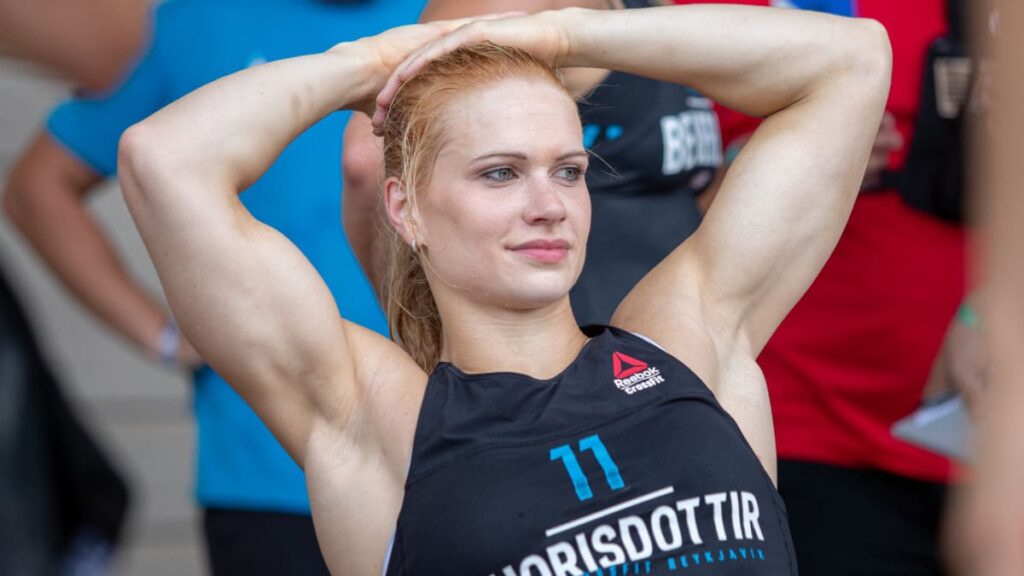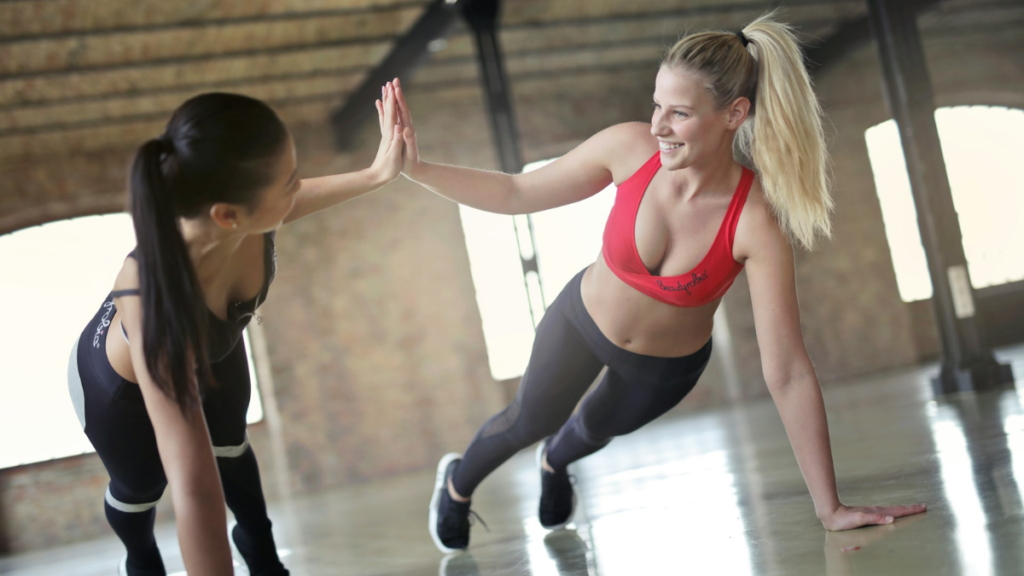


Most people still think core training means getting on the floor and grinding through endless sit ups. While sit ups can strengthen the muscles that flex your spine, they are far from the best choice if your goal is building a stronger, more athletic, and more resilient body.
The reality is that your core has a much bigger job than simply bending your torso forward. During almost every athletic movement, your abdominal muscles, obliques, spinal erectors, diaphragm, pelvic floor, and deep stabilizing muscles work together to resist movement, transfer force, and protect your spine while your arms and legs produce power.



That is exactly why the front squat deserves far more attention as a core exercise.
The front squat is often viewed as a leg movement because it heavily trains the quadriceps and glutes. However, research and biomechanical analysis consistently show that it places enormous demands on the muscles of the trunk. Unlike sit ups, which train the core in isolation, the front squat teaches your entire core to stabilize your body under significant load while producing force through the lower body.
If you want stronger abs that actually improve your lifting, running, jumping, and everyday performance, the front squat may be the best core exercise you are not doing.
Why Your Core Is Designed to Resist Movement
Many people think the purpose of the abdominal muscles is creating movement. In reality, one of their most important jobs is preventing unwanted movement.
Your core creates stiffness around the spine so force generated by your legs can travel efficiently into your upper body. Without adequate core stiffness, energy leaks during movement, reducing strength, power, and efficiency.
This explains why elite athletes spend so much time training anti extension, anti rotation, and anti lateral flexion patterns rather than simply performing hundreds of crunches. During a properly executed front squat, your core must prevent your torso from collapsing forward while your legs generate force. Every repetition becomes a full body challenge that requires constant coordination between the abdominal muscles, spinal stabilizers, hips, and upper back.
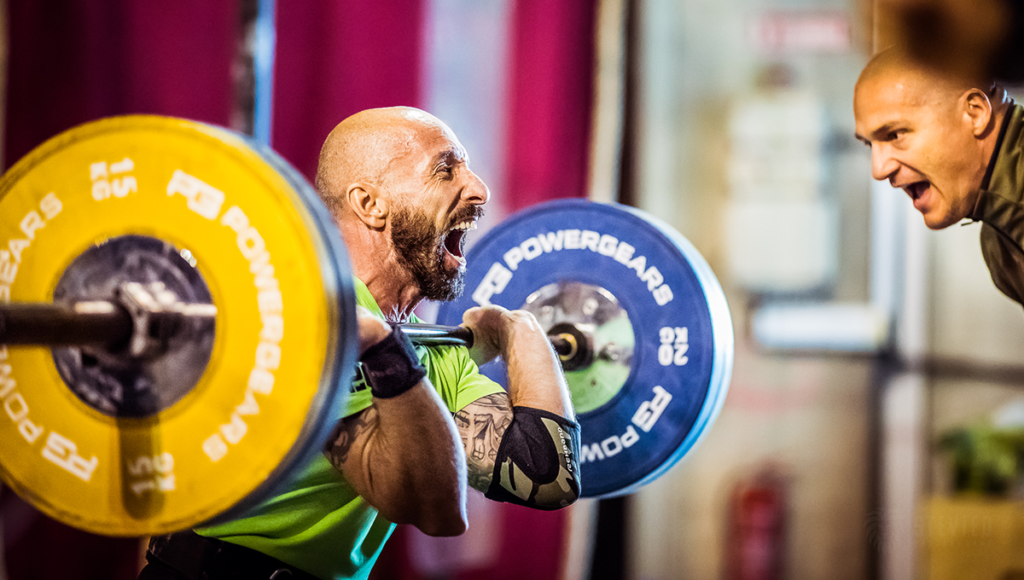
This creates a training effect that closely resembles how your core functions during sports and daily life.
What Makes the Front Squat Different?
The placement of the bar completely changes the exercise. Instead of resting across the upper back as it does during a back squat, the barbell sits across the front of the shoulders. This shifts the center of mass forward and immediately increases the challenge placed on the torso.
If your core cannot maintain stiffness, your chest falls, your elbows drop, and the bar rolls forward. Your abdominal muscles have no choice but to work continuously throughout every repetition.
Researchers comparing front squats and back squats have found that the front squat produces similar muscle activation in the lower body while reducing compressive forces on the knee and creating a more upright trunk position. Maintaining that upright posture requires substantial activation throughout the core. Rather than isolating one abdominal muscle, the exercise trains the entire system.
The Science Behind Front Squats and Core Activation
Electromyography studies have consistently demonstrated that free weight compound exercises activate the trunk muscles far more than many traditional abdominal exercises.
The front squat requires continuous co contraction of the rectus abdominis, transverse abdominis, internal and external obliques, multifidus, erector spinae, diaphragm, and pelvic floor. These muscles work together to create intra abdominal pressure, which stiffens the spine and improves force transfer.
Research investigating trunk muscle activation during heavy resistance exercises has shown that squats create high levels of abdominal activation because maintaining spinal stability becomes essential as external load increases.
Biomechanical research has also demonstrated that front squats produce greater trunk inclination demands than many other lower body exercises because the load naturally wants to pull the body forward. Your core must constantly resist this force. Unlike sit ups, which repeatedly flex the spine under load, the front squat trains the core to maintain a neutral spine while resisting movement. This is much closer to how the core functions during lifting, sprinting, jumping, throwing, and carrying.
Many spine researchers argue that resisting excessive spinal movement is one of the most important functions of the core during athletic performance.
The Front Squat Builds Functional Strength
Functional strength is often misunderstood, but one simple definition works well. A functional exercise improves your ability to perform real world tasks and athletic movements.
The front squat checks every box. As you descend, your hips, knees, ankles, upper back, shoulders, and core all coordinate to maintain balance and posture. As you stand, your entire body must produce force together. The core acts as the bridge between your upper and lower body.
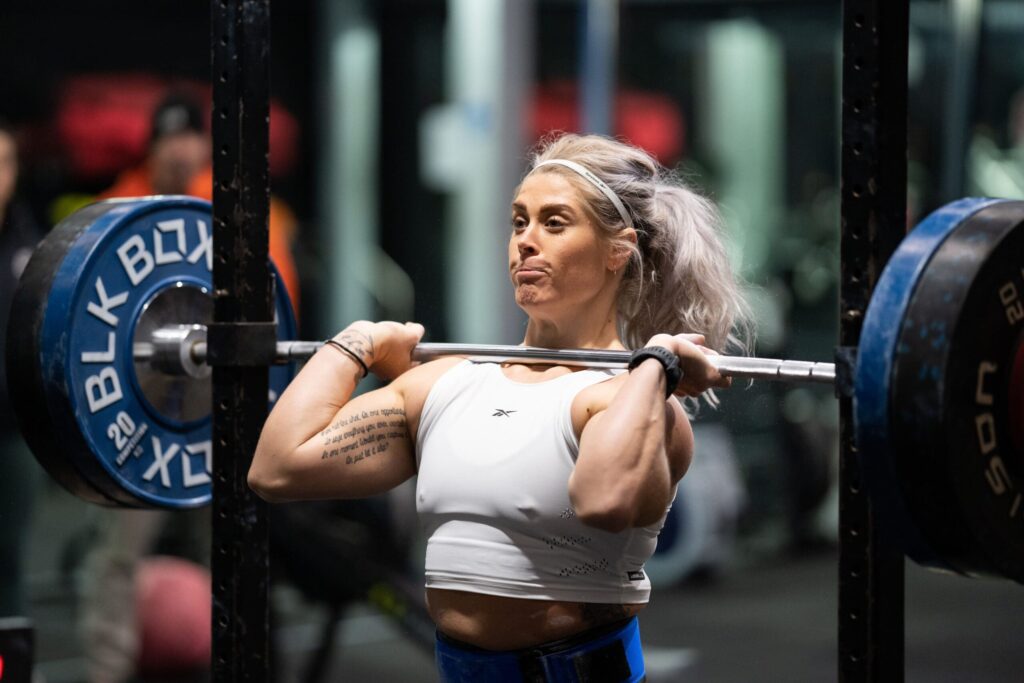
This coordinated activation closely resembles the demands seen in jumping, sprinting, Olympic lifting, football, rugby, wrestling, CrossFit, and many other sports. Even everyday activities such as lifting groceries, carrying children, climbing stairs, or moving furniture rely on similar trunk stabilization.
Better Posture Through Better Core Strength
Modern lifestyles often involve prolonged sitting, which encourages rounded shoulders, stiff hips, and reduced upper back mobility. The front squat directly challenges these problems. Because the load sits in front of the body, you must maintain a tall chest, active upper back, and stable trunk throughout every repetition.
Poor posture immediately makes the exercise more difficult. Over time, this reinforces better movement habits while strengthening the muscles responsible for maintaining upright posture.
Although no exercise permanently fixes posture on its own, stronger spinal stabilizers and improved movement quality often contribute to better alignment during daily activities.
Improved Athletic Performance
Nearly every explosive movement begins with force generated through the ground. That force travels upward through the hips, trunk, and shoulders before reaching the arms or transferring into movement. Any weakness in the core reduces the efficiency of this force transfer.
Research consistently demonstrates that stronger trunk muscles improve balance, stability, force production, and athletic performance across numerous sports. The front squat trains these qualities while simultaneously developing leg strength. Instead of dedicating one part of your workout to legs and another to abs, you develop both at the same time.
This makes your training more efficient without sacrificing results.
Breathing Makes the Exercise Even Better
One reason the front squat is such an effective core exercise is the way it teaches proper breathing mechanics. Before descending into the squat, experienced lifters take a deep breath into the abdomen and brace their core. This increases intra abdominal pressure, creating a natural support system around the spine.
The diaphragm, abdominal wall, spinal muscles, and pelvic floor all contribute to this pressure. Research has shown that proper bracing increases spinal stability and allows athletes to lift heavier loads safely. Learning to brace effectively during front squats often carries over into deadlifts, presses, carries, and many daily lifting tasks.
Mobility Is Part of the Challenge
The front squat demands mobility in several joints simultaneously. Limited ankle mobility can cause the heels to lift. Poor hip mobility can prevent reaching full depth.
Restricted thoracic mobility often causes the chest to collapse. Tight shoulders or wrists can make the front rack position uncomfortable. Rather than avoiding the movement, improving these mobility limitations often leads to better overall movement quality. Using clean grip, crossed arm grip, or lifting straps can help beginners gradually develop the front rack position while continuing to build strength.
How to Perform the Perfect Front Squat
- Start by positioning the bar across the front of your shoulders rather than holding it with your hands.
- Raise your elbows until your upper arms are nearly parallel to the floor.
- Stand with your feet roughly shoulder width apart.
- Take a deep breath into your abdomen and brace your core firmly.
- Begin the squat by sitting between your hips while allowing your knees to move naturally forward.
- Keep your chest tall and your elbows high throughout the movement.
- Descend until your thighs reach at least parallel with the floor, provided your mobility allows good technique.
- Drive through your entire foot while maintaining your torso position.
- Exhale after passing the most difficult part of the lift.
- Every repetition should feel controlled and balanced.
Who Should Add Front Squats?
Almost everyone can benefit from front squats.
- Strength athletes use them to improve Olympic lifts and overall leg strength.
- CrossFit athletes rely on them for cleans, thrusters, and high intensity workouts.
- Field sport athletes benefit from stronger force transfer and improved trunk stability.
- Recreational lifters can replace some isolated abdominal exercises with front squats to make training more efficient.
- Even older adults with appropriate coaching may benefit from improved balance, leg strength, and functional movement capacity when resistance training is properly supervised.
The Verdict
Sit ups have been part of fitness culture for decades, but our understanding of core training has evolved considerably. The core is not simply a collection of muscles designed to bend the spine. It is a sophisticated stabilization system that protects the spine, transfers force, and allows powerful movement throughout the body.
The front squat trains these functions better than almost any traditional abdominal exercise. It develops leg strength, upper back stability, trunk stiffness, breathing mechanics, coordination, and athletic performance in one movement. If your goal is building a stronger core that actually improves how you move, lift, and perform, it is time to spend less time counting sit ups and more time mastering the front squat.
Key Takeaways
| Takeaway | Why It Matters |
|---|---|
| Front squats train the entire core | The exercise develops the abdominal muscles, obliques, spinal stabilizers, diaphragm, and pelvic floor together. |
| Core stability is more important than spinal flexion | Your core primarily resists unwanted movement during sport and daily life. |
| Front squats outperform sit ups for functional strength | They teach the body to stabilize heavy loads while generating force through the legs. |
| Better posture comes naturally | The movement reinforces an upright torso and strengthens the upper back. |
| Proper breathing improves performance | Bracing increases intra abdominal pressure and spinal stability during lifting. |
| One exercise trains multiple qualities | Front squats simultaneously improve leg strength, balance, coordination, mobility, and core function. |
References
- Escamilla, R.F., Fleisig, G.S., Zheng, N., Barrentine, S.W., Wilk, K.E. and Andrews, J.R. (2001) ‘Biomechanics of the knee during closed kinetic chain and open kinetic chain exercises’, Medicine & Science in Sports & Exercise, 33(4), pp. 556 to 569.
- Gullett, J.C., Tillman, M.D., Gutierrez, G.M. and Chow, J.W. (2009) ‘A biomechanical comparison of back and front squats in healthy trained individuals’, Journal of Strength and Conditioning Research, 23(1), pp. 284 to 292.
- Hamlyn, N., Behm, D.G. and Young, W.B. (2007) ‘Trunk muscle activation during dynamic weight training exercises and isometric instability activities’, Journal of Strength and Conditioning Research, 21(4), pp. 1108 to 1112.
- McGill, S.M. (2010) Ultimate Back Fitness and Performance. 4th ed. Waterloo: Backfitpro Inc.
- Schoenfeld, B.J. (2010) ‘The mechanisms of muscle hypertrophy and their application to resistance training’, Journal of Strength and Conditioning Research, 24(10), pp. 2857 to 2872.
- Vera Garcia, F.J., Elvira, J.L.L., Brown, S.H.M. and McGill, S.M. (2007) ‘Effects of abdominal stabilization maneuvers on the control of spine motion and stability against sudden trunk perturbations’, Journal of Electromyography and Kinesiology, 17(5), pp. 556 to 567.
- Willardson, J.M. (2007) ‘Core stability training. Applications to sports conditioning programs’, Journal of Strength and Conditioning Research, 21(3), pp. 979 to 985.