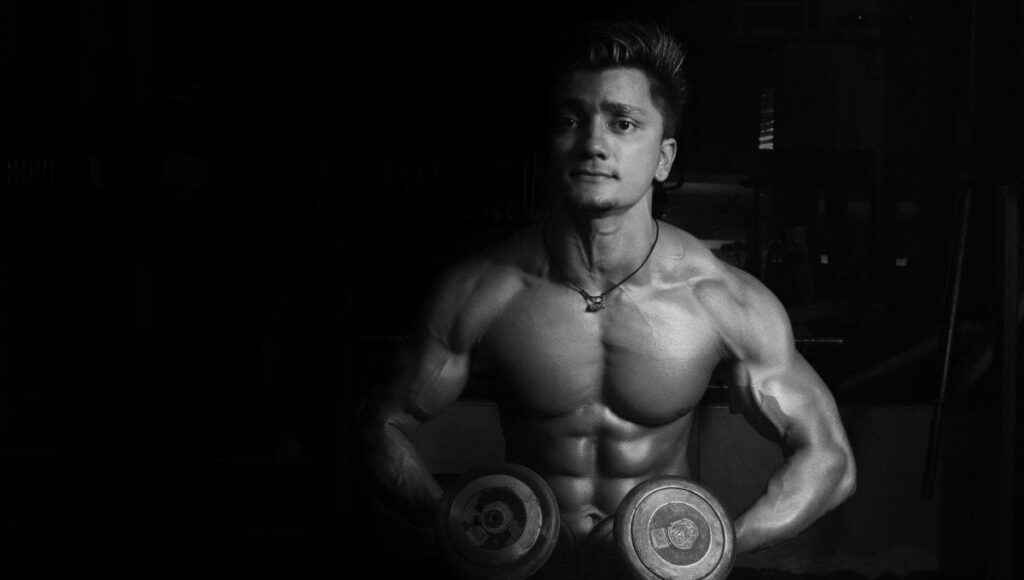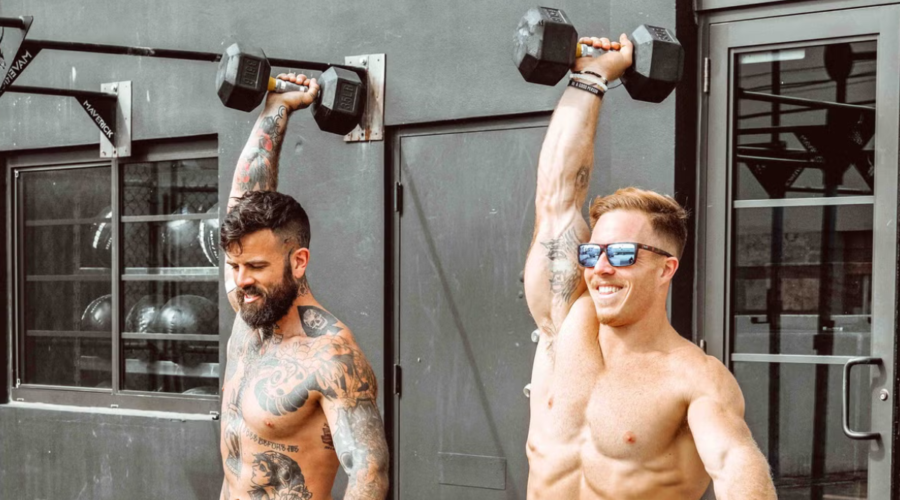


A wide upper back, broad shoulders, and a relatively narrow waist create what most people call the V shaped torso. It is one of the most recognizable signs of an athletic physique and has long been associated with strength, health, and muscular development.
The good news is that beginners do not need dozens of complicated exercises or endless hours in the gym to start building that shape. In fact, research consistently shows that a small number of well chosen compound exercises can stimulate significant muscle growth when performed consistently with progressive overload.


If your goal is to build an impressive upper body, three exercises deserve a permanent place in your routine. They train the muscles responsible for creating width, thickness, and shoulder development while teaching movement patterns that will benefit every future workout. In this article, you will learn why these exercises work, how to perform them correctly, and how science supports their effectiveness.
What Creates a V Shaped Torso?
Before choosing exercises, it helps to understand what actually creates the look. The V taper comes from maximizing upper body width while avoiding unnecessary fat gain around the waist. The primary muscles involved include the latissimus dorsi, which are the large muscles running down each side of the back. These muscles dramatically increase upper body width when developed.
How to Build Wider Shoulders Without Overhead Pressing
The lateral deltoids add width to the shoulders and make the upper body appear broader. The upper back muscles, including the trapezius and rhomboids, create thickness and improve posture, making the chest appear larger. A lean waist enhances the visual contrast. While you cannot change your bone structure, reducing body fat and increasing muscle mass creates the illusion of a much wider upper body.
Research consistently shows that resistance training combined with adequate protein intake and progressive overload is the most effective strategy for increasing skeletal muscle mass.
Why Beginners Should Prioritize Compound Exercises
Many beginners believe isolation exercises are the fastest route to bigger muscles. While isolation movements certainly have their place, compound exercises recruit more muscle mass, allow heavier loading, and teach coordination between multiple muscle groups.
Studies comparing multi joint and single joint exercises have found that compound lifts can produce similar muscle growth while improving strength more efficiently. They also allow beginners to make faster progress because every repetition trains multiple muscles simultaneously. The following three exercises offer the greatest return on investment for building a V shaped torso.
Exercise One: Pull Ups or Assisted Pull Ups
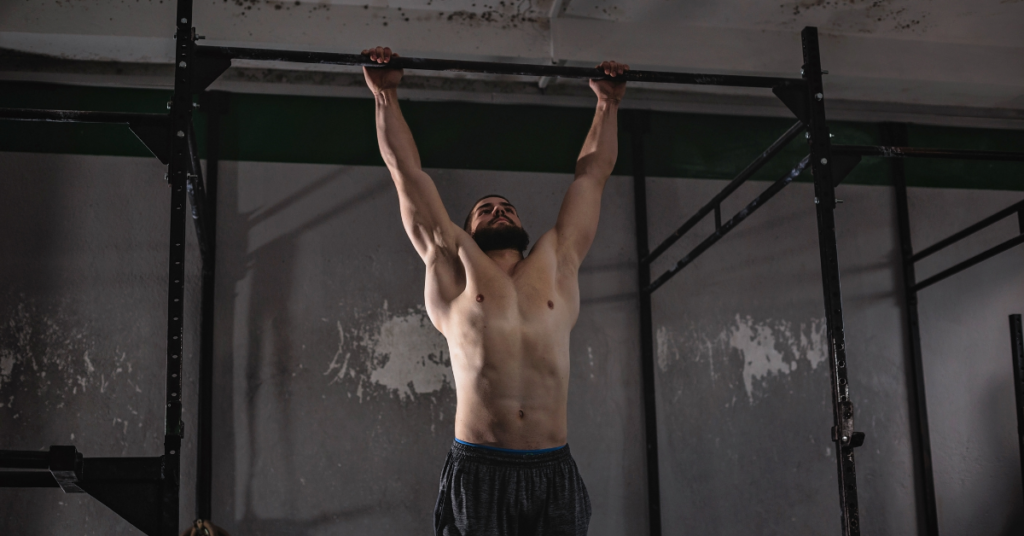
Why Pull Ups Are So Effective
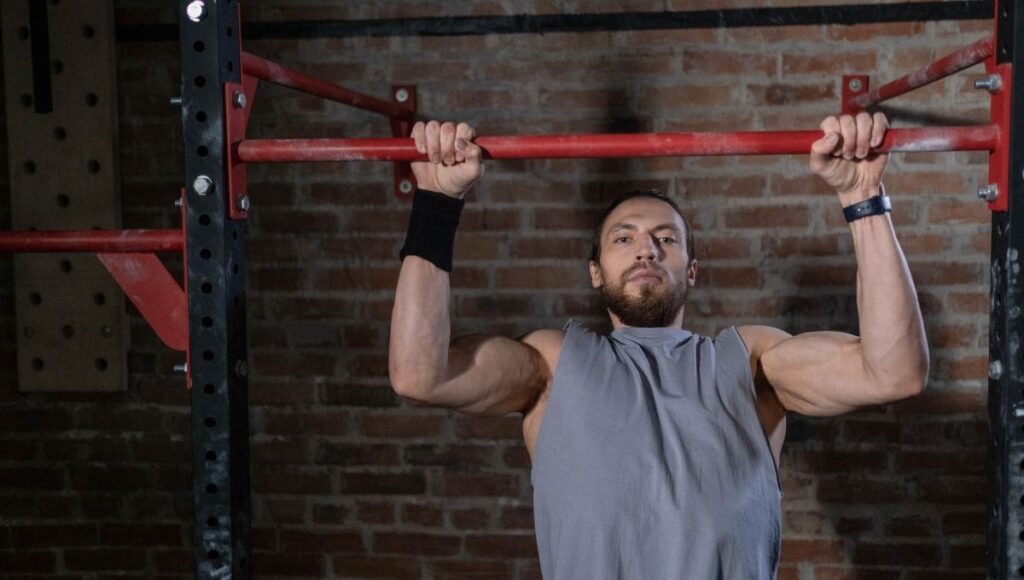
If there were only one exercise for building a wide back, it would probably be the pull up. Pull ups heavily activate the latissimus dorsi while also training the biceps, lower trapezius, rhomboids, posterior deltoids, forearms, and core.
Electromyography studies consistently show high activation of the lats during vertical pulling exercises, making pull ups one of the best options for increasing back width. Because you lift your own bodyweight, the exercise naturally becomes more challenging as strength increases.
If you cannot perform a full pull up yet, assisted pull up machines or resistance bands provide excellent alternatives that still produce high muscle activation.
How to Perform Pull Ups
- Begin by gripping the bar slightly wider than shoulder width with your palms facing away.
- Start from a dead hang with your shoulders active rather than relaxed.
- Pull your elbows down toward your ribs while driving your chest upward.
- Continue until your chin clears the bar.
- Lower yourself under control until your arms are fully extended.
- Avoid swinging your body or kicking your legs to generate momentum.
- Focus on controlling every repetition.
Common Beginner Mistakes
Many beginners pull with their arms instead of their back. Think about driving your elbows toward your hips rather than pulling your chin toward the bar.
Another mistake is using only partial repetitions. Research suggests that training through a full range of motion generally produces superior muscle growth compared with consistently using shortened ranges.
Exercise Two: Dumbbell Lateral Raises
Why Lateral Raises Build Wider Shoulders
Shoulder width is one of the defining characteristics of a V shaped physique. Although overhead pressing builds overall shoulder strength, it emphasizes the front deltoids more than the side deltoids.
The lateral raise directly targets the middle deltoid, which contributes most to shoulder width. Research examining muscle activation demonstrates that lateral raises produce significantly greater middle deltoid activation than many pressing movements. For beginners, this means a simple isolation exercise can have a major visual impact.
How to Perform Lateral Raises
- Stand upright holding a dumbbell in each hand.
- Keep a slight bend in your elbows throughout the movement.
- Raise your arms to shoulder height while leading with your elbows.
- Pause briefly at the top.
- Lower the weights slowly and under control.
- Use a weight that allows strict technique.
- Swinging heavy dumbbells shifts tension away from the deltoids and increases injury risk.
Common Beginner Mistakes
The biggest mistake is lifting weights that are too heavy. Another common error is shrugging the shoulders during each repetition, which causes the upper trapezius to dominate the movement.
Instead, keep your shoulders relaxed and think about moving the dumbbells outward rather than upward.
Exercise Three: Chest Supported Row
Why Rows Complete the V Shape
Pull ups create width. Rows create thickness. The chest supported row is especially beginner friendly because it removes much of the lower back fatigue associated with traditional bent over rows.
It allows beginners to focus entirely on pulling with the upper back while maintaining proper posture. The exercise develops the rhomboids, middle trapezius, posterior deltoids, teres major, and latissimus dorsi. Strong upper back muscles also improve posture, allowing the shoulders to sit in a stronger and wider position. Research has repeatedly shown that rowing variations effectively stimulate nearly every major muscle of the upper back.
How to Perform Chest Supported Rows
- Set an adjustable bench to an incline.
- Lie face down with a dumbbell in each hand.
- Allow your arms to hang naturally.
- Pull both elbows backward until they move slightly behind your torso.
- Squeeze your shoulder blades together.
- Lower the weights slowly until your arms are fully extended.
- Maintain control throughout the movement.
- Avoid jerking the weights or bouncing your chest against the bench.
Common Beginner Mistakes
Many people turn rows into biceps exercises. Instead of thinking about your hands, think about moving your elbows backward.
Another mistake is shortening the lowering phase. The eccentric portion of resistance training contributes significantly to muscle growth and should never be rushed.
Why Progressive Overload Matters More Than Exercise Variety
Many beginners constantly search for better exercises. In reality, progress usually depends far more on improving performance over time. Progressive overload simply means gradually asking your muscles to do more work.
This may involve lifting slightly heavier weights, performing more repetitions, completing additional sets, or improving technique. Research consistently identifies progressive overload as one of the primary drivers of muscular adaptation. If you perform these three exercises twice each week and gradually improve your performance, your physique will change.
How Many Sets and Repetitions Should Beginners Perform?
Scientific reviews suggest that beginners can build muscle effectively using moderate training volumes. For most people, performing two to four sets of each exercise with eight to fifteen repetitions is sufficient. Choose a weight that leaves one to three repetitions in reserve at the end of each set.
Training extremely close to muscular failure may increase fatigue without providing substantially greater muscle growth for beginners. Instead, focus on consistent quality repetitions.
Putting It All Together
You do not need complicated bodybuilding routines to begin building an impressive upper body. Pull ups develop the wide lats that create upper body width. Lateral raises increase shoulder width and improve the appearance of the V taper.
Chest supported rows build the thick upper back that gives the torso depth and improves posture. Combined with progressive overload, adequate protein, sufficient sleep, and consistent training, these three exercises provide nearly everything a beginner needs to start developing a muscular V shaped physique.
Master these movements before chasing advanced techniques. Strong fundamentals almost always outperform complicated programs.
Key Takeaways
| Focus | Key Point |
|---|---|
| Best exercise for width | Pull ups primarily develop the latissimus dorsi and increase upper body width. |
| Best exercise for shoulders | Lateral raises emphasize the middle deltoids that create broader looking shoulders. |
| Best exercise for thickness | Chest supported rows develop the upper back while reducing lower back strain. |
| Weekly training | Perform each exercise two times per week using two to four sets of eight to fifteen repetitions. |
| Progressive overload | Gradually increase weight, repetitions, or training quality over time. |
| Nutrition | Consume adequate protein and total calories to support muscle growth. |
| Recovery | Prioritize seven to nine hours of quality sleep each night for optimal recovery. |
| Long term success | Consistency over months matters far more than constantly changing exercises. |
References
- American College of Sports Medicine. (2009). Progression models in resistance training for healthy adults. Medicine & Science in Sports & Exercise, 41(3), 687–708.
- Baz Valle, E., Fontes Villalba, M., Santos-Concejero, J. and Balsalobre-Fernández, C. (2022). Total number of sets as a training volume quantification method for muscle hypertrophy. Journal of Strength and Conditioning Research, 36(12), 3383–3393.
- Grgic, J., Schoenfeld, B.J. and Latella, C. (2020). Resistance training to muscle failure or not to failure. Scandinavian Journal of Medicine & Science in Sports, 30(10), 1725–1737.
- Lasevicius, T., Ugrinowitsch, C., Schoenfeld, B.J., Roschel, H., Tavares, L.D., De Souza, E.O. and Tricoli, V. (2019). Effects of different intensities with equated volume load on muscle strength and hypertrophy. Journal of Strength and Conditioning Research, 33(Suppl 1), S34–S43.
- Morton, R.W., Murphy, K.T., McKellar, S.R., Schoenfeld, B.J., Henselmans, M., Helms, E., Aragon, A.A., Devries, M.C., Banfield, L., Krieger, J.W. and Phillips, S.M. (2018). A systematic review, meta analysis and meta regression of protein supplementation on resistance training induced gains in muscle mass and strength in healthy adults. British Journal of Sports Medicine, 52(6), 376–384.
- Schoenfeld, B.J. (2010). The mechanisms of muscle hypertrophy and their application to resistance training. Journal of Strength and Conditioning Research, 24(10), 2857–2872.
- Schoenfeld, B.J., Ogborn, D. and Krieger, J.W. (2017). Dose response relationship between weekly resistance training volume and increases in muscle mass. Journal of Sports Sciences, 35(11), 1073–1082.
- Schoenfeld, B.J. and Grgic, J. (2020). Effects of range of motion on muscle development during resistance training interventions. Sports Medicine, 50(1), 169–180.
- Signorile, J.F., Zink, A.J. and Szwed, S.P. (2002). A comparative electromyographical investigation of muscle utilization patterns using various hand positions during the lat pull down. Journal of Strength and Conditioning Research, 16(4), 539–546.
- Wakahara, T., Fukutani, A., Kawakami, Y. and Yanai, T. (2013). Nonuniform muscle hypertrophy. Medicine & Science in Sports & Exercise, 45(11), 2151–2159.