

There is no single number of push ups that every beginner should be able to do. Your starting point depends on your strength, body size, training history, age, and the version of the exercise you are doing. For one beginner, a good first set might be a few full push ups. For another, it might be a controlled set of push ups with the hands raised on a bench or counter.

A useful beginner target is to build toward 5 to 10 full push ups with consistent form. Treat that as a practical milestone, not a pass or fail standard. If you cannot do one yet, that is a starting point for your training, not a sign that you are unfit. A raised hand position or another easier variation lets you practice the same pushing pattern while building capacity.


The short answer
If you are new to push ups, aim first for 5 to 10 repetitions that you can complete with steady control and a consistent range of motion. If you can already do that, gradually work toward more repetitions while keeping the same standards. If you cannot do a full push up yet, choose a variation that lets you complete several controlled repetitions.
The most useful number is the one you can perform well. A set of 10 repetitions with your hips sagging, elbows flaring sharply, or chest barely lowering does not tell you as much as a smaller set performed with control. Technique also matters when comparing your performance with a test or a published standard, because different tests use different positions, tempos, and rules for counting repetitions.
Why there is no universal beginner standard
Published push up norms are designed to compare people who completed a particular test. They are not universal targets for every beginner. Some tests count repetitions until a person reaches fatigue, while others use a set time limit or a set pace. Standards may also vary by age, sex, or the type of push up performed.
That makes simple comparisons tricky. Five knee push ups, five push ups with your hands on a bench, and five full push ups are different tasks. They can all be useful training steps, but they should not be treated as interchangeable scores. Your body weight and proportions also affect how demanding a push up feels, so two people with similar general fitness may have different repetition counts.
A good first goal is therefore based on your current ability: find a version you can perform neatly, practice it consistently, and progress when the current version feels manageable.
What counts as a good push up?
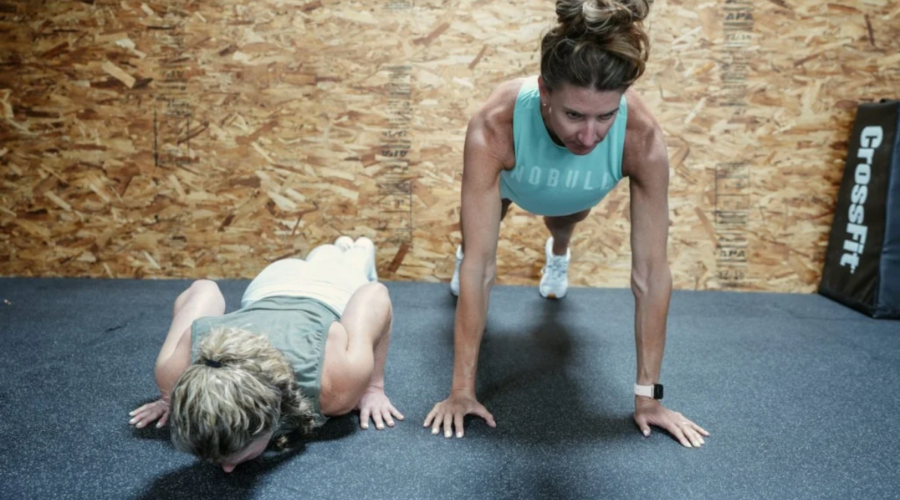
For a standard push up, begin with your hands on the floor around shoulder width apart and your body supported by your hands and toes. Brace your midsection so your torso stays steady from shoulders to hips. Bend your elbows to lower your chest toward the floor, then press back to the starting position without letting your lower back sag or your hips lift first.
Use a range of motion that you can control. A test may prescribe a specific depth or pace, so follow those instructions if you are measuring your score. For ordinary training, keep the movement consistent from repetition to repetition. Stop the set when you can no longer maintain that control, rather than trying to add repetitions by shortening the movement.
3 Best Glute Exercises for Beginners in The Gym
A laboratory study comparing push ups and bench presses found broadly similar patterns of muscle activity in the main upper body muscles among the tested variations. The researchers also found no significant difference between knee and toe push ups in the proportional contribution of the primary muscle groups in their small group of active men. This supports using knee push ups as one possible training option, but it does not mean every variation feels equally difficult or provides the same challenge for every person.
How to find your starting level
Start with a version that lets you complete about 5 to 10 smooth repetitions without pain or a loss of body position. If a full push up is too difficult, raise your hands onto a sturdy bench, countertop, or wall. A higher hand position reduces the challenge, and you can gradually lower the surface as you get stronger.
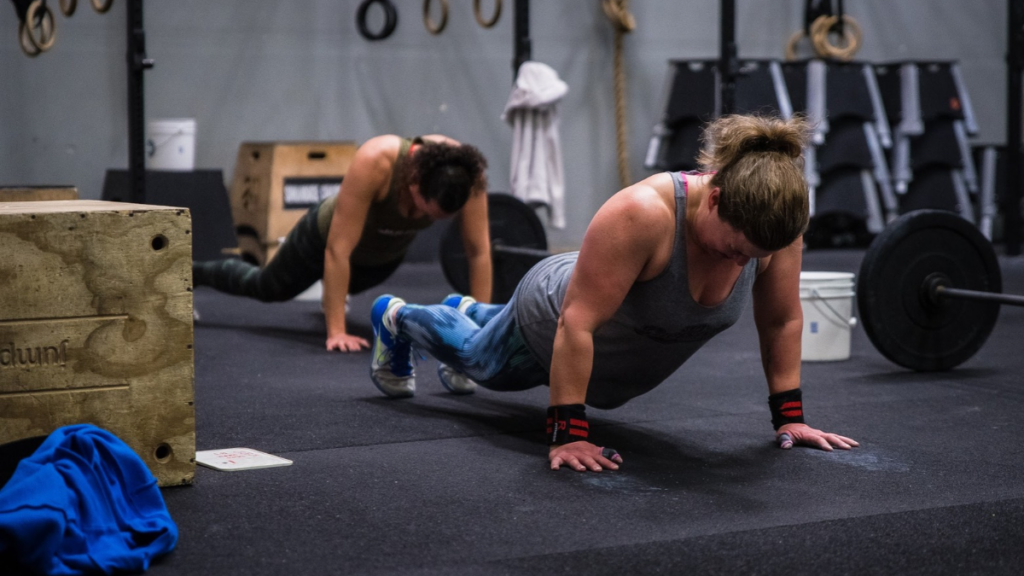
If you can perform full push ups but only for a few repetitions, keep the sets short and stop before your form breaks down. For example, if your current maximum is 4 clean repetitions, practice sets of 2 or 3 rather than repeatedly testing your maximum. This gives you practice without turning every set into a struggle.
Knee push ups are another option. Keep your body in a straight line from your head to your knees, rather than folding at the hips. You can also combine variations in the same workout, using full push ups for a few controlled repetitions and an easier variation for additional practice.
A simple way to build your push up count
Practice push ups two or three times per week, leaving time between harder sessions for recovery. In each session, perform a few sets of a variation that you can control. Rest between sets long enough to regain your breathing and repeat the movement with good technique.
When you can complete all of your planned repetitions without your form changing, make a small increase. You might add one repetition to a set, add another set, or lower the surface for an incline push up. Change one part of the challenge at a time so you can tell how your body responds.
For example, a beginner who can do 3 full push ups might start with several sets of 1 or 2 full repetitions, then use incline push ups for additional work. When the full push ups become easier, that person can add a repetition or two over time. Someone who cannot yet do a full repetition can begin with wall or countertop push ups and lower the hand position as strength improves.
You do not need to test your maximum every workout. Frequent all out tests can make it harder to practice crisp repetitions, and your score may vary with sleep, fatigue, and how recently you trained. Check your progress every few weeks under similar conditions, using the same hand position, range of motion, and counting rules.
When should you move to a harder variation?
Move to a harder version when your current one feels controlled across all of your sets. For example, if you can do several sets of 10 incline push ups at a particular height with a steady body position, try a slightly lower surface. If knee push ups are comfortable for multiple sets, test a small number of full push ups while fresh.
You do not have to wait until you can do a large number of knee push ups before trying a full push up. The goal is to practice the skill at an appropriate level. If full push ups are still too difficult, return to an incline or knee variation for the remaining repetitions.
What push up numbers can tell you about fitness
Push up tests can provide a simple measure of upper body muscular endurance, but a single score does not describe your overall health or fitness. One longitudinal study followed 1,104 occupationally active adult men, mostly firefighters, and found that higher push up capacity was associated with a lower incidence of cardiovascular events during follow up. The authors cautioned that the findings might not apply to women, older adults, inactive people, or the general population, and that the study showed an association rather than proof that doing more push ups prevents heart disease.
That research is interesting, but it should not turn 40 push ups into a health requirement. The test group was specific, and the researchers used a standardized protocol. For a beginner, a more useful focus is improving your own score while keeping your movement consistent.
Your next target
If you are a beginner, aim to complete 5 to 10 clean repetitions of the most challenging version you can control. That may be a full push up, a knee push up, or a push up with your hands raised. Record the variation you use along with your repetitions, then work toward more total controlled repetitions before making the movement harder.
A first full push up is a worthwhile milestone, and building from one to five or from five to ten can be meaningful progress. Let your technique and consistency guide you. The right number is not the one someone else can do. It is the next achievable step from where you are now.
References
- Payne, N., Gledhill, N., Katzmarzyk, P.T. and Jamnik, V.K. (2000) ‘Canadian musculoskeletal fitness norms’, Canadian Journal of Applied Physiology, 25(6), pp. 430–442.
- Yang, J., Christophi, C.A., Farioli, A., Baur, D.M., Moffatt, S., Kales, S.N. and Kales, S.N. (2019) ‘Association between push-up exercise capacity and future cardiovascular events among active adult men’, JAMA Network Open, 2(2), e188341.
- Yoon, J.G., Park, S.Y., Lee, M.M. and Lee, D. (2018) ‘Muscle activity patterns do not differ between push-up and bench press exercises’, Journal of Applied Biomechanics, 34(6), pp. 442–447.
Key Takeaways
| Key Takeaways | Summary |
|---|---|
| Beginner target | Build toward 5 to 10 controlled repetitions of a suitable variation. |
| No universal standard | Push up scores depend on the test, technique, variation, and individual factors. |
| Easier variations count | Start with raised hands or knee push ups if full push ups are too difficult. |
| Progress gradually | Add repetitions or make the variation harder when your form stays consistent. |
| Track your own progress | Compare scores using the same variation and movement standards. |