

A broad upper body that tapers down to a narrow waist has long been considered one of the most athletic physiques. Often called the V shaped torso, this look is created by building wide shoulders, well developed latissimus dorsi muscles, and a strong upper back while keeping body fat under control.
Many beginners assume they need expensive gym memberships or complicated cable machines to achieve this appearance. Fortunately, that is not true. Your own bodyweight can provide more than enough resistance to build impressive muscle during your first months or even years of training.



Research consistently shows that bodyweight resistance training can stimulate muscle growth and strength gains when exercises are challenging enough and performed close to muscular failure. Progressive overload remains the key factor, regardless of whether the resistance comes from weights or your own body.
The three exercises below target the muscles most responsible for creating a wider upper body. Together, they build stronger shoulders, larger lats, and a thicker upper back while improving overall athleticism.
What Creates a V Shaped Torso?
Your bone structure determines part of your natural shape, but muscle development has a major influence on how broad your upper body appears.
The muscles that contribute most include the latissimus dorsi, which create width beneath the shoulders, the lateral deltoids, which increase shoulder breadth, and the trapezius and rhomboids, which improve upper back thickness and posture. Well developed chest muscles also help create a balanced appearance, although they contribute less directly to the V shape. Equally important is maintaining a relatively lean waistline. Increasing abdominal muscle size alone will not create the illusion of width if body fat around the midsection is high.
Resistance training combined with sensible nutrition remains the most effective strategy for improving body composition and muscle definition.
Why Beginners Can Build Muscle Quickly
One of the biggest advantages beginners have is their ability to gain muscle rapidly during the first year of consistent training. Researchers often refer to this period as the novice adaptation phase. During this time, improvements occur because the nervous system becomes more efficient while muscle protein synthesis increases after resistance exercise.
5 Perfect Exercises for Every Beginner that Wants a Muscular and Strong Chest
Studies have repeatedly shown that beginners experience significant increases in muscle size and strength with relatively simple training programs performed two or three times per week.
This means you do not need dozens of exercises. Mastering a few highly effective movements is often the fastest path to noticeable results.
Exercise 1: Pull Ups
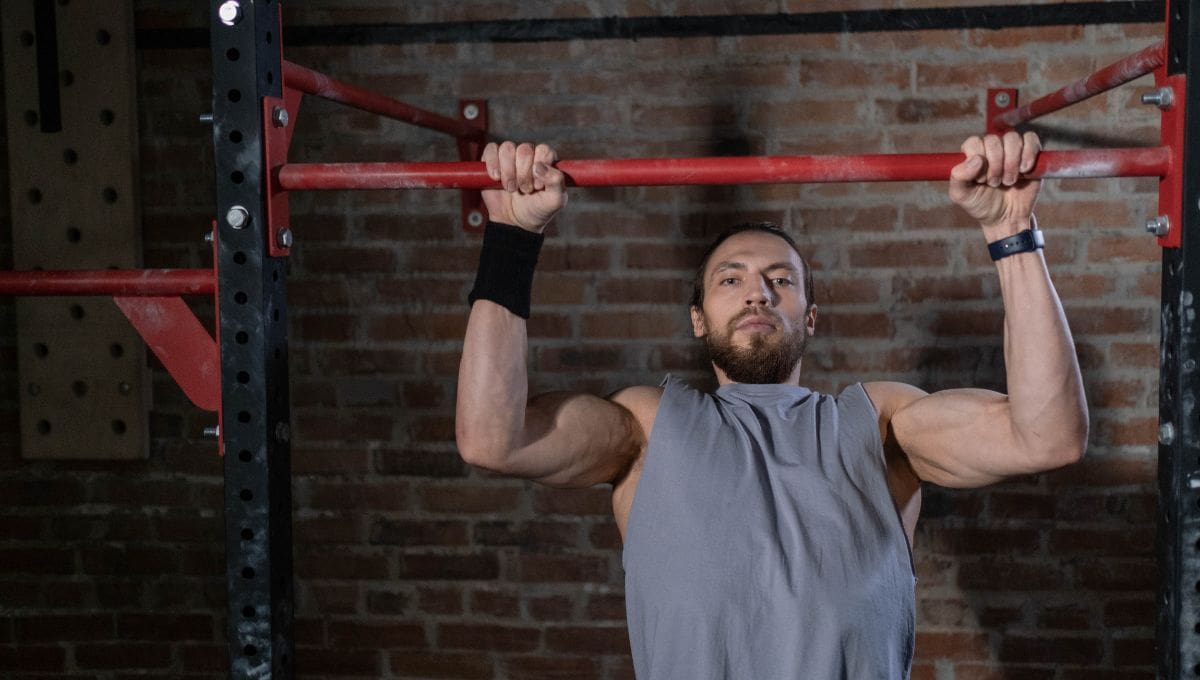
Pull ups are arguably the single best bodyweight exercise for creating a wider back.
Why Pull Ups Build Width
The primary muscle worked during pull ups is the latissimus dorsi. These large muscles extend from the upper arm down toward the lower back and are largely responsible for creating the classic V taper.

Pull ups also recruit the teres major, rhomboids, trapezius, posterior deltoids, biceps, forearms, and core muscles.
Electromyography research has consistently demonstrated high activation of the latissimus dorsi during pull up variations, making them one of the most effective exercises for developing upper body pulling strength.
Compared to many machine exercises, pull ups require greater stabilization and coordination, providing additional functional benefits.
How to Perform Pull Ups
- Grip a sturdy pull up bar slightly wider than shoulder width with your palms facing away from you.
- Begin from a full dead hang with your shoulders engaged rather than completely relaxed.
- Pull your elbows down toward your ribs while driving your chest upward.
- Continue until your chin clears the bar.
- Lower yourself under control until your elbows are fully extended before beginning the next repetition.
- Avoid swinging or using momentum throughout the movement.
If You Cannot Do One Pull Up Yet
Many beginners struggle with their first pull up. Start with slow negative repetitions by stepping to the top position and lowering yourself over five to eight seconds.
You can also perform inverted rows beneath a sturdy table or suspension trainer to strengthen similar muscles while building toward full pull ups. Research has shown that eccentric training is highly effective for increasing strength because muscles can produce greater force while lengthening.
Exercise 2: Pike Push Ups
The shoulders are essential for creating visual width. While regular push ups emphasize the chest, pike push ups shift much more of the workload onto the deltoid muscles.
Why Pike Push Ups Work
Pike push ups primarily target the anterior deltoids while also recruiting the lateral deltoids, triceps, upper chest, and upper trapezius. As you become stronger, this exercise serves as a stepping stone toward handstand push ups, one of the most demanding bodyweight shoulder exercises.
Strong shoulders not only improve appearance but also enhance overhead strength and shoulder stability. Research demonstrates that progressive overload through increasingly difficult bodyweight variations produces meaningful improvements in upper body strength and muscle development.
How to Perform Pike Push Ups
- Start in a push up position.
- Walk your feet toward your hands until your hips rise into an inverted V position.
- Keep your legs relatively straight and your head between your arms.
- Lower yourself by bending your elbows until the top of your head approaches the floor.
- Push back to the starting position while maintaining your hip position.
- Focus on controlling the movement rather than performing fast repetitions.
Make the Exercise Harder Over Time
As your strength improves, elevate your feet on a bench, chair, or sturdy box. Increasing the angle places greater demands on the shoulders and more closely resembles a vertical pressing movement. This gradual progression follows one of the most important principles in exercise science, progressive overload.
Exercise 3: Inverted Rows
Many beginners perform plenty of pushing exercises but neglect pulling movements. This imbalance often leads to poor posture, weaker upper backs, and limited shoulder development. Inverted rows solve this problem with minimal equipment.
Why Inverted Rows Are So Effective
Inverted rows develop the rhomboids, middle trapezius, posterior deltoids, lats, and biceps. These muscles improve upper back thickness while helping pull the shoulders into better alignment.
Good posture alone can make your shoulders appear broader and your torso more athletic. Research consistently associates balanced resistance training with improved shoulder health and muscular symmetry.
How to Perform Inverted Rows
- Position yourself beneath a sturdy horizontal bar.
- Grip the bar slightly wider than shoulder width.
- Keep your body straight from shoulders to heels.
- Pull your chest toward the bar while squeezing your shoulder blades together.
- Pause briefly before lowering yourself under complete control.
- Maintain a rigid core throughout the movement.
Easy Ways to Progress
- Move your feet farther away so your body becomes more horizontal.
- Elevate your feet to increase difficulty.
- Slow down the lowering phase to increase muscular tension.
- Pause for one or two seconds at the top of every repetition.
These methods all increase training stimulus without requiring external weights.
Common Beginner Mistakes
Many people chase dozens of exercises instead of mastering a few basics. Others perform repetitions too quickly, reducing muscular tension and making each set less effective.
Is the Jefferson Squat the Perfect Lower Body Exercise for Athletic Legs?
Skipping pulling exercises while only doing push ups is another common mistake that limits upper back development. Many beginners also fail to progress their workouts. If you perform the same repetitions with the same level of difficulty every week, your body has little reason to continue adapting. Finally, many people underestimate recovery. Muscles grow during recovery, not while you are training.
The Bottom Line
Building a V shaped torso does not require expensive gym equipment or complicated workout routines. Pull ups, pike push ups, and inverted rows train the muscles that matter most for creating broader shoulders and a wider back. They also improve posture, functional strength, and muscular balance.
Scientific evidence consistently supports progressive resistance training as the foundation of muscle growth. Whether that resistance comes from barbells or your own bodyweight matters far less than training consistently, progressing gradually, eating enough protein, and recovering properly. Master these three exercises, perform them consistently each week, and you will build the strength and muscle needed to develop a more athletic upper body.
Key Takeaways
| Topic | Main Point |
|---|---|
| Best exercise for width | Pull ups provide exceptional stimulation for the latissimus dorsi and upper back. |
| Best shoulder builder | Pike push ups emphasize the deltoids and improve overhead pressing strength. |
| Best posture exercise | Inverted rows strengthen the upper back and improve muscular balance. |
| Training frequency | Perform two to three full body sessions each week. |
| Sets and repetitions | Complete three to five challenging sets per exercise while staying close to muscular failure. |
| Progression | Increase difficulty by adding repetitions, slowing tempo, or using harder exercise variations. |
| Nutrition | Consume adequate protein and enough calories to support muscle growth. |
| Recovery | Prioritize seven to nine hours of sleep and allow recovery between sessions. |
References
- American College of Sports Medicine. (2009). Progression models in resistance training for healthy adults. Medicine and Science in Sports and Exercise, 41(3), 687 to 708.
- Gentil, P., Fisher, J. and Steele, J. (2017). A review of the acute effects and long term adaptations of single and multi joint exercises during resistance training. Sports Medicine, 47(5), 843 to 855.
- Grgic, J., Schoenfeld, B.J., Orazem, J. and Sabol, F. (2022). Effects of resistance training performed to repetition failure or non failure on muscular strength and hypertrophy. Journal of Sport and Health Science, 11(2), 202 to 211.
- Kikuchi, N. and Nakazato, K. (2017). Low load bench press and push up induce similar muscle hypertrophy and strength gain. Journal of Exercise Science and Fitness, 15(1), 37 to 42.
- Morton, R.W., Murphy, K.T., McKellar, S.R., Schoenfeld, B.J., Henselmans, M., Helms, E., Aragon, A.A., Devries, M.C., Banfield, L., Krieger, J.W. and Phillips, S.M. (2018). A systematic review, meta analysis and meta regression of protein supplementation on resistance training induced gains in muscle mass and strength in healthy adults. British Journal of Sports Medicine, 52(6), 376 to 384.
- Schoenfeld, B.J. (2010). The mechanisms of muscle hypertrophy and their application to resistance training. Journal of Strength and Conditioning Research, 24(10), 2857 to 2872.