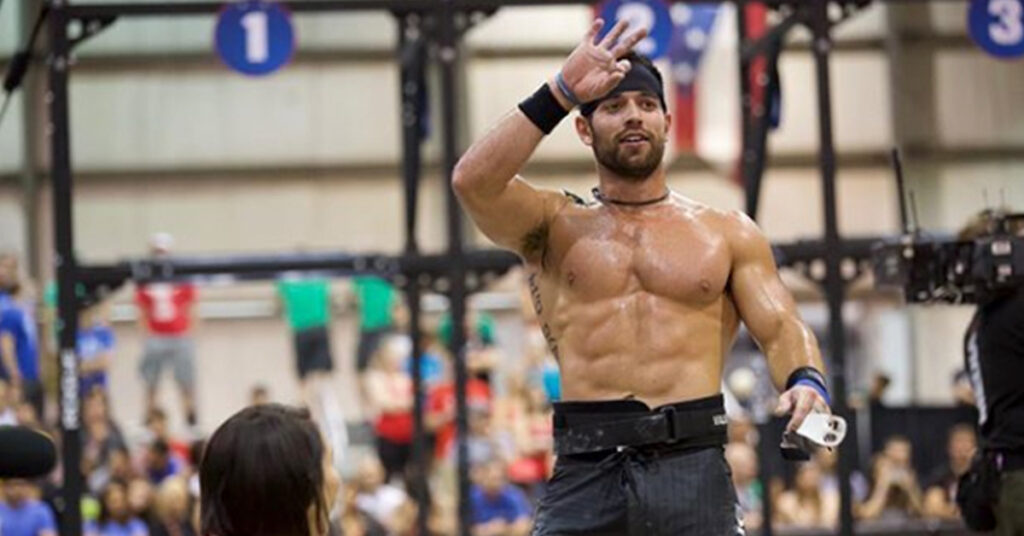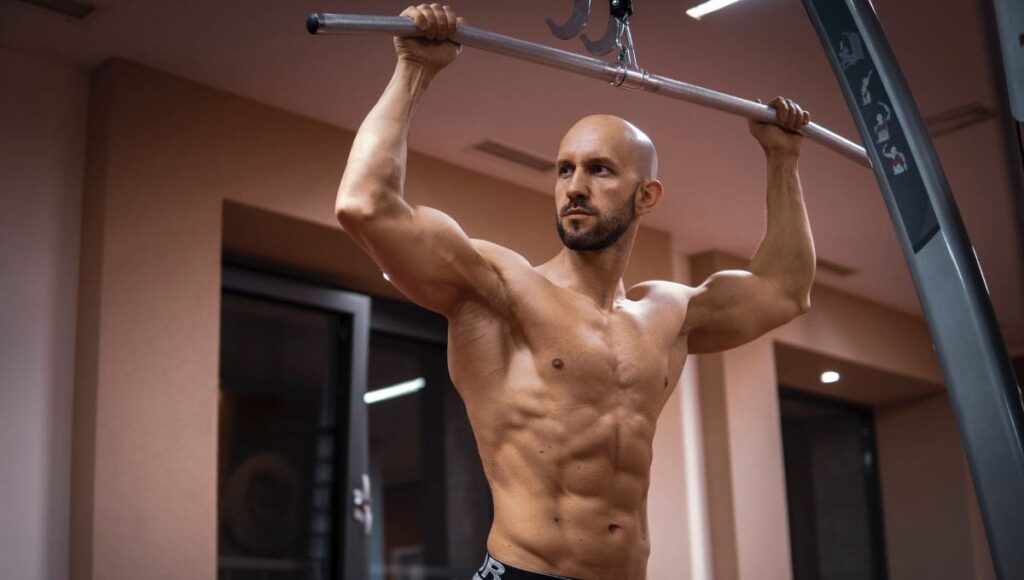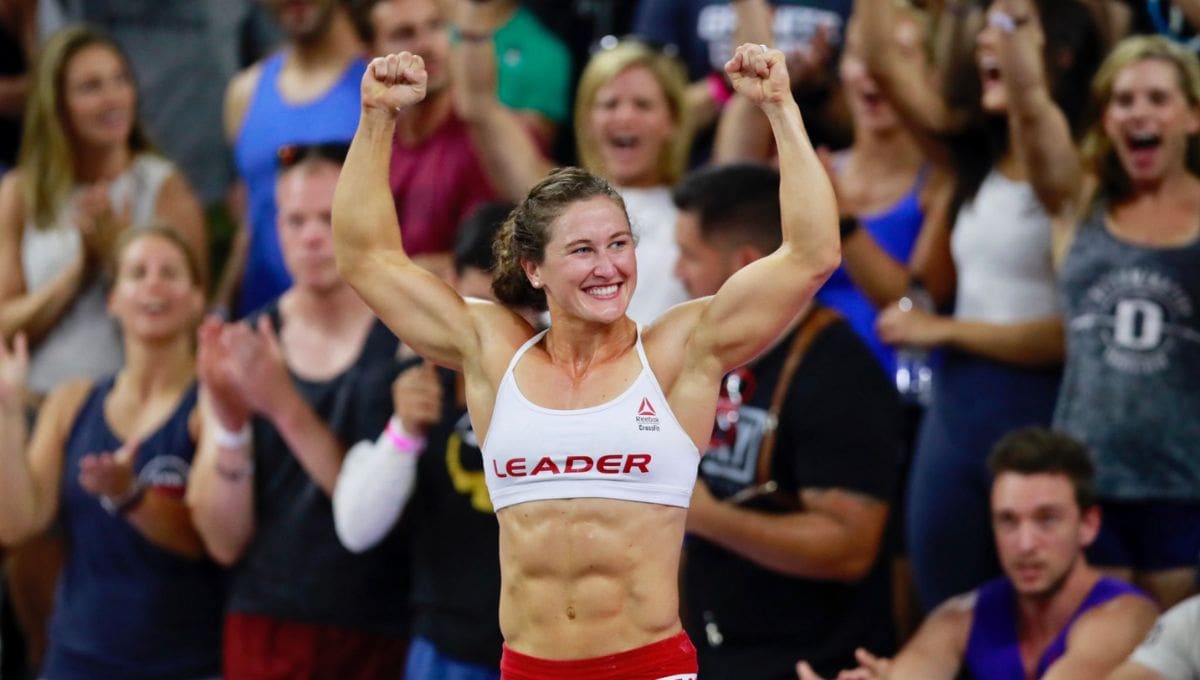


Getting a defined six pack is one of the most common fitness goals, but it is also one of the most misunderstood. Many beginners spend countless hours doing endless crunches, hoping that more repetitions will magically reveal their abs. Unfortunately, that approach rarely works.
Visible abdominal muscles depend on two major factors. First, the abdominal muscles must become stronger and thicker through progressive training. Second, body fat levels must be low enough for those muscles to become visible. Exercise alone cannot guarantee a six pack, but the right exercises can build impressive abdominal muscles that become visible as body composition improves.



The good news is that you do not need expensive equipment or a commercial gym. Your own bodyweight is enough to build a strong core, improve athletic performance, protect your spine, and develop impressive abdominal muscles.
Research consistently shows that bodyweight core exercises can effectively activate the rectus abdominis, internal and external obliques, and deeper stabilizing muscles when performed correctly. For beginners, mastering a few high quality movements is far more effective than trying dozens of complicated exercises. Here are the three best beginner bodyweight exercises for building stronger, more muscular abs.
Why Bodyweight Exercises Work for Building Abs
Many people assume that bodyweight training is only useful for improving endurance. Scientific research suggests otherwise. Muscles respond to tension, not equipment. As long as an exercise creates enough mechanical tension and can be progressively made more challenging, muscle growth can occur.
Why Spending 5 Minutes in a Deep Squat Could Improve Mobility, According to Strength Side
The abdominal muscles are no different from the chest, legs, or arms. They become larger and stronger when repeatedly challenged beyond their current capacity.
Your abdominal wall is made up of several muscles.
- The rectus abdominis creates the classic six pack appearance.
- The external and internal obliques rotate and stabilize the torso.
- The transverse abdominis acts like a natural weightlifting belt, helping stabilize the spine and transfer force throughout the body.
The best beginner exercises challenge all of these muscles while teaching proper movement patterns and core control.
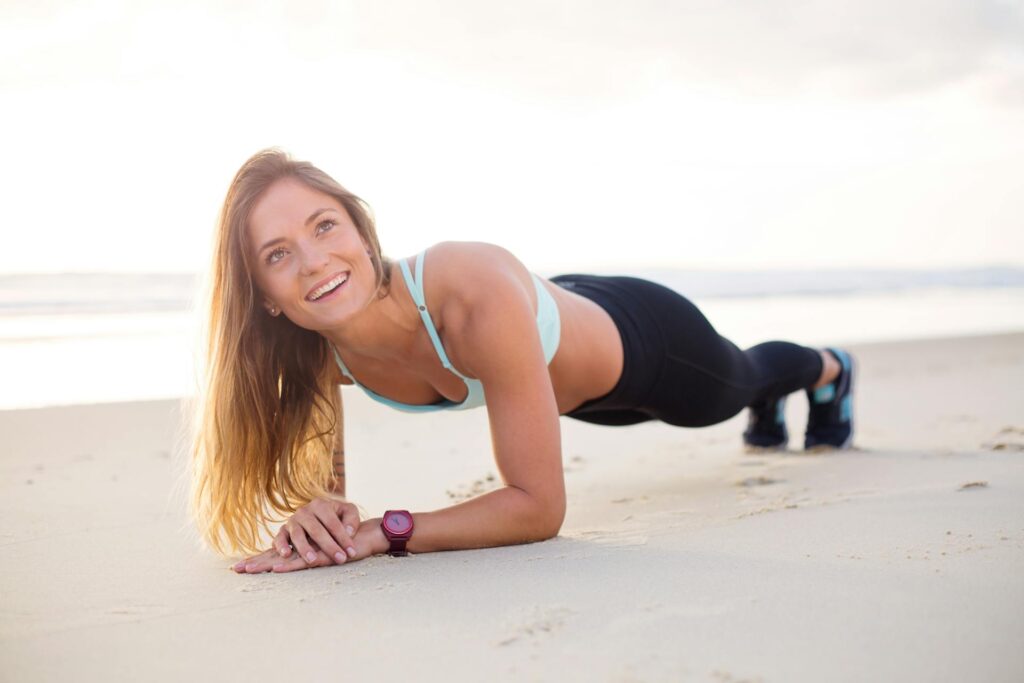
Exercise 1: The Front Plank
Why It Works
The front plank is often dismissed as too easy, but it remains one of the best foundational exercises for beginners. Unlike crunches, the plank teaches the core to resist movement rather than create movement. This ability, known as anti extension, is one of the primary functions of the abdominal muscles during daily life and athletic performance.
Electromyography studies have shown that properly performed planks create substantial activation throughout the rectus abdominis and deep stabilizing muscles while placing relatively low stress on the spine compared to repeated spinal flexion exercises.
A stronger core also improves posture, lifting mechanics, balance, and overall movement quality.
How to Perform the Front Plank
- Start by lying face down on the floor.
- Place your forearms directly beneath your shoulders.
- Lift your body onto your toes while squeezing your glutes and tightening your abs.
- Your body should form one straight line from your shoulders to your ankles.
- Avoid letting your hips sag toward the floor or rise too high.
- Continue breathing normally while maintaining full body tension.
- Focus on creating maximum tension instead of simply surviving the time.
Common Beginner Mistakes
Many beginners allow their lower back to arch as fatigue develops. Others forget to breathe or relax their abdominal muscles halfway through the hold. Quality matters far more than duration. A perfect twenty second plank is much more valuable than a sloppy two minute effort.
How to Progress
Begin with sets lasting twenty to thirty seconds. Gradually increase to sixty seconds while maintaining perfect technique. Eventually you can progress to single arm planks, shoulder tap planks, or extended lever planks.
Exercise 2: Reverse Crunch
Why It Works
The reverse crunch directly targets the lower portion of the rectus abdominis by emphasizing pelvic movement rather than simply lifting the head and shoulders.
Although people often refer to the lower abs as a separate muscle, the rectus abdominis functions as one continuous muscle. However, certain exercises create greater activation in the lower fibers through specific movement patterns. The reverse crunch also minimizes excessive neck strain that many beginners experience during traditional crunches. Because the pelvis lifts from the floor, the abdominal muscles must generate significant force while limiting momentum.
How to Perform the Reverse Crunch
- Lie flat on your back.
- Bend your knees to ninety degrees.
- Lift your feet until your thighs are perpendicular to the floor.
- Brace your core.
- Slowly curl your pelvis upward by lifting your hips a few inches from the floor.
- Focus on rolling your spine upward rather than swinging your legs.
- Pause briefly before lowering yourself under complete control.
- Perform each repetition slowly and deliberately.
Common Beginner Mistakes
The biggest mistake is swinging the legs to generate momentum. Another common error is lifting the knees toward the chest without actually rolling the pelvis upward. The abdominal muscles should perform the work instead of the hip flexors.
3 Best Beginner Exercises for a Bigger and Stronger Chest Without Machines
How to Progress
Start with eight to twelve controlled repetitions. Once this becomes comfortable, slow the lowering phase to three or four seconds. Eventually progress toward straight leg reverse crunches or hanging knee raises.
Exercise 3: Dead Bug
Why It Works
The dead bug may not look impressive, but it is one of the most effective beginner core exercises supported by scientific research. Its primary goal is teaching the core to stabilize the spine while the arms and legs move independently.
This improves trunk stability, coordination, balance, and overall athletic performance. Studies investigating spinal stability consistently identify exercises like the dead bug as highly effective for activating deep core muscles while minimizing compressive forces on the lower back. For beginners, this creates the perfect combination of strength and safety.
How to Perform the Dead Bug
- Lie on your back.
- Raise both arms straight above your shoulders.
- Lift your knees until both hips and knees are bent to ninety degrees.
- Flatten your lower back gently against the floor.
- Slowly lower your right arm behind your head while extending your left leg toward the floor.
- Only lower the leg as far as you can while keeping your lower back pressed into the ground.
- Return to the starting position.
- Repeat on the opposite side.
- Move slowly throughout the exercise.
Common Beginner Mistakes
The most common mistake is allowing the lower back to arch away from the floor. Another mistake is rushing through the movement without maintaining abdominal tension. Slow movement creates significantly greater muscular demand.
How to Progress
Start with six to ten repetitions per side. Gradually increase to fifteen repetitions. Eventually progress to longer lever variations or perform the exercise with slower movement tempos.
You Cannot Out Train Body Fat
No discussion about six packs would be complete without addressing nutrition. Thousands of crunches will not reveal abdominal muscles if body fat remains too high. Research consistently shows that visible abdominal definition primarily depends on overall body fat percentage rather than performing large numbers of abdominal exercises.
For most men, visible abs often begin appearing around ten to fifteen percent body fat, although genetics create substantial variation. For many women, visible abdominal definition typically appears at body fat percentages that are both higher than men and highly individual. Extremely low body fat may not be healthy or sustainable for everyone.
A balanced nutrition plan, sufficient protein intake, regular resistance training, and consistent physical activity remain the foundation for reducing body fat while preserving muscle.
How Often Should Beginners Train Their Abs?
The abdominal muscles recover relatively quickly because they contain a high proportion of fatigue resistant muscle fibers. Most beginners benefit from training their core two to four times each week.
Each session can include all three exercises. Focus on quality rather than quantity. One focused fifteen minute workout performed consistently produces better long term results than random high repetition sessions performed occasionally. Allow at least one day of recovery between intense abdominal sessions if significant soreness develops.
Sample Beginner Bodyweight Ab Workout
This simple workout can be completed in about fifteen minutes. Perform one exercise before moving to the next.
Complete three rounds.
- Hold the front plank for thirty to sixty seconds.
- Perform eight to twelve reverse crunches.
- Perform six to ten dead bugs on each side.
- Rest for sixty to ninety seconds before repeating the circuit.
As your strength improves, gradually increase the duration, repetitions, or exercise difficulty while maintaining perfect technique.
Building Abs That Actually Last
The best abdominal training program is the one you can continue for months and years. Complex social media exercises often look impressive, but beginners rarely need advanced movements. Mastering simple bodyweight exercises creates the strength, stability, and movement quality needed for long term progress.
The front plank builds total core stability. The reverse crunch strengthens the rectus abdominis through controlled pelvic movement. The dead bug teaches spinal control while strengthening the deep core muscles. Combined with smart nutrition and consistent full body training, these three exercises provide everything most beginners need to build stronger, more muscular abs without using any equipment.
Key Takeaways
| Exercise | Primary Benefit | Beginner Goal |
|---|---|---|
| Front Plank | Builds full core stability and anti extension strength | Hold 30 to 60 seconds with perfect technique |
| Reverse Crunch | Strengthens the rectus abdominis through controlled pelvic movement | Perform 8 to 12 slow repetitions |
| Dead Bug | Improves deep core stability and coordination | Perform 6 to 10 repetitions per side |
| Weekly Frequency | Promotes consistent strength development | Train 2 to 4 times per week |
| Biggest Success Factor | Visible abs require both muscle development and lower body fat | Combine training with proper nutrition |
References
- American College of Sports Medicine. (2021). ACSM’s Guidelines for Exercise Testing and Prescription. 11th ed. Philadelphia: Wolters Kluwer.
- Escamilla, R.F., Lewis, C., Bell, D., Bramblet, G., Daffron, J., Lambert, S., Pecson, A., Imamura, R., Paulos, L. and Andrews, J.R. (2010). Core muscle activation during Swiss ball and traditional abdominal exercises. Journal of Orthopaedic and Sports Physical Therapy, 40(5), pp.265 to 276.
- Hibbs, A.E., Thompson, K.G., French, D., Wrigley, A. and Spears, I. (2008). Optimizing performance by improving core stability and core strength. Sports Medicine, 38(12), pp.995 to 1008.
- McGill, S.M. (2010). Core training evidence translating to better performance and injury prevention. Strength and Conditioning Journal, 32(3), pp.33 to 46.
- Schoenfeld, B.J. (2010). The mechanisms of muscle hypertrophy and their application to resistance training. Journal of Strength and Conditioning Research, 24(10), pp.2857 to 2872.
- Schoenfeld, B.J., Grgic, J., Ogborn, D. and Krieger, J.W. (2017). Strength and hypertrophy adaptations between low load and high load resistance training. Journal of Strength and Conditioning Research, 31(12), pp.3508 to 3523.