For generations, building muscle has meant loading barbells, grabbing dumbbells, and stacking weight plates. But according to Dr. Mike Israetel, advances in electric resistance technology could eventually solve several limitations that have existed in strength training for decades.
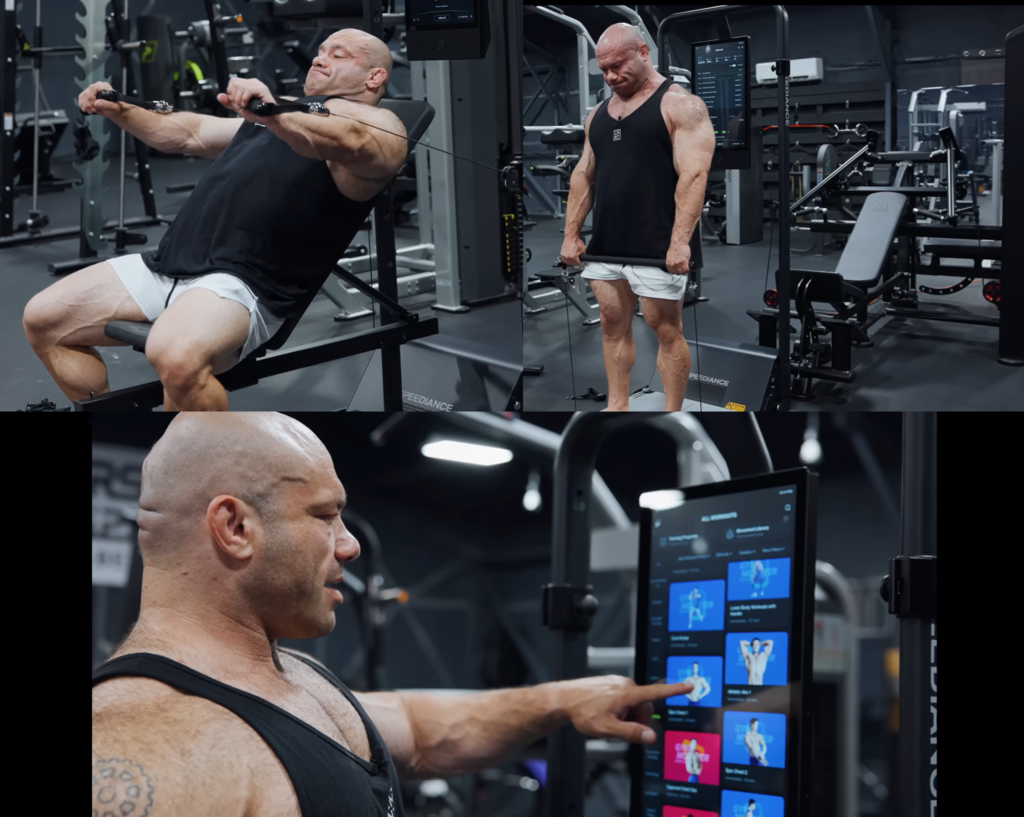
In a recent Renaissance Periodization (RP) YouTube video, Israetel reviewed the Speediance smart home gym while exploring whether programmable electric resistance machines could improve hypertrophy training. Although he isn’t ready to replace free weights, he believes the technology offers several advantages that traditional equipment simply can’t match.


Why Traditional Weights Still Have Limitations
Dr. Mike begins by making one thing clear: free weights remain incredibly effective.
“What’s wrong with free weights? Well, nothing at all.”
Instead, he explains that conventional equipment has unavoidable mechanical limitations. Exercises like dumbbell lateral raises provide very little tension where muscles are most stretched, despite research suggesting stretch-mediated tension plays a major role in hypertrophy.
He also points out that many pressing and fly variations lose resistance near lockout, while most machines provide the same resistance throughout an exercise instead of matching a muscle’s natural strength curve.
Traditional equipment also limits progression with large jumps in weight. Moving from 10-pound to 15-pound dumbbells can represent a significant increase for smaller muscle groups. On top of that, free weights apply identical resistance during both the concentric and eccentric phases, even though current research suggests heavier eccentrics may offer additional muscle-building benefits.
How Electric Resistance Could Improve Training
Programmable electric resistance could address many of those shortcomings.
“Electric motors are programmable. Cables don’t care where resistance comes from.”
According to Israetel, electric machines can increase resistance in stretched positions, maintain tension throughout an entire movement, and match resistance to an individual’s strength curve.
Perhaps even more impressive is automatic eccentric overload. The machine increases resistance only during the lowering portion of the lift, allowing users to train with heavier eccentrics without needing a spotter.
Motorized resistance also enables one-pound progression increments and automatic drop sets, making long-term progressive overload much more precise than traditional plates and dumbbells.
Dr. Mike’s Biggest Criticisms
Despite praising the concept, Israetel found several areas where the Speediance machine could improve.
“None of these are deal breakers. They’re just areas where I think improvements could be made.”
His biggest criticisms included an overly busy touchscreen interface, a maximum resistance of 220 pounds that could limit stronger lifters, and the lack of a dedicated stretch-biased resistance mode.
He also questioned the included bench, noting that it doesn’t lock into the machine and can slide during pressing or rowing movements. Fixed cable spacing and limited vertical pulling options further reduce exercise variety compared to commercial cable systems.
Features That Impressed Dr. Mike
While acknowledging its weaknesses, Israetel was genuinely impressed by several aspects of the machine.
“After using it, returning to traditional free weights feels surprisingly primitive.”
He praised the excellent build quality, exceptionally smooth motorized resistance, and the eccentric overload mode, which transitions seamlessly between lifting and lowering phases.
Other standout features included Chain Mode for explosive athletic movements, a large library of guided workouts, one-pound resistance adjustments, and a wearable finger controller that allows users to change resistance or activate drop sets without letting go of the handles.
For home gym users, he described these additions as genuinely innovative.
Electric Machines Are Another Tool, Not a Replacement
Despite the impressive technology, Israetel doesn’t believe free weights are going anywhere.
“Electric machines aren’t replacing free weights. They’re becoming another valuable tool. A new teammate.”
He concludes that commercial gyms still provide the greatest flexibility for maximizing strength, muscle growth, and athletic performance. However, for people with limited training space, larger budgets, and a preference for home workouts, electric resistance machines offer a compelling alternative.
Rather than replacing barbells and dumbbells, Dr. Mike believes programmable resistance represents the next evolution of home fitness equipment, expanding the ways athletes can train while complementing traditional strength training methods.
About the Author
Jeremiah Oliva

Jeremiah Oliva is a writer passionate about fitness, sports, and active living. He has experience in songwriting and managing content and social media for online radio and magazine platforms.
He covers HYROX, CrossFit®, and competitive fitness, with a focus on performance, mindset, and athlete development.
Outside of writing, Jeremiah trains in boxing, cycles, explores the outdoors with his kids, and plays the guitar.